

Private architecture has been forced to contend with new pressures in recent years, especially amid the shift to remote work and study. Multiple functions, prolonged time at home and greater dependence on indoor environmental conditions are changing the way we perceive the home. In this reality, the term wellness, once seen as a marketing slogan associated with lifestyle, has undergone a profound transformation.
The current professional discourse focuses on indoor environmental quality: light, air, acoustics, thermal comfort, friendly materials and the user’s level of control over the space. It is a comprehensive planning approach that examines how the indoor environment affects sleep, concentration, nervous system regulation, breathing, cognitive load and well-being — far beyond an aesthetic corner meant to convey calm.

Acoustics: From space planning to managing household load
The contemporary home must simultaneously contain video calls, deep work, study, instruction, rest and sleep. In such situations and scenarios, acoustics are a matter of comfort as well as optimal function. Environmental noise is now linked to sleep disruption, cognitive harm, mental strain and other health effects.
Quality planning, therefore, does not stop at insulation. It creates a clear acoustic hierarchy: separating concentration areas from circulation areas, incorporating walls and ceilings with high and controlled absorption levels, designing openings that limit outside noise and creating infrastructure that allows multiple uses to coexist within the same shell. Pastoral quiet is not a luxury here, but a basic condition for the ability to think, learn and cope.
Thermal comfort and energy savings: A functional shell
A quality home does not rely on air-conditioning systems as its primary solution, but is planned so the shell itself reduces thermal loads in advance and stabilizes indoor conditions over time. Thermal comfort is now defined through a combination of temperature, radiation, air movement, humidity and usage habits. Planning must therefore address orientation, shading, natural ventilation, thermal mass, insulation and a balanced calculation of openings.
Beyond energy savings, we achieve greater sensory stability throughout the day and across seasons when the building stops fighting the climate and starts working with it. The result is less dependence on systems and more inherent performance by the structure itself.
Light as a primary planning tool
Natural light synchronizes the biological clock, supports alertness during the day and helps prepare the body for sleep at night. The question, therefore, is not whether to bring in more light, but what kind of light, from which direction, at what time and with what level of control and filtering.
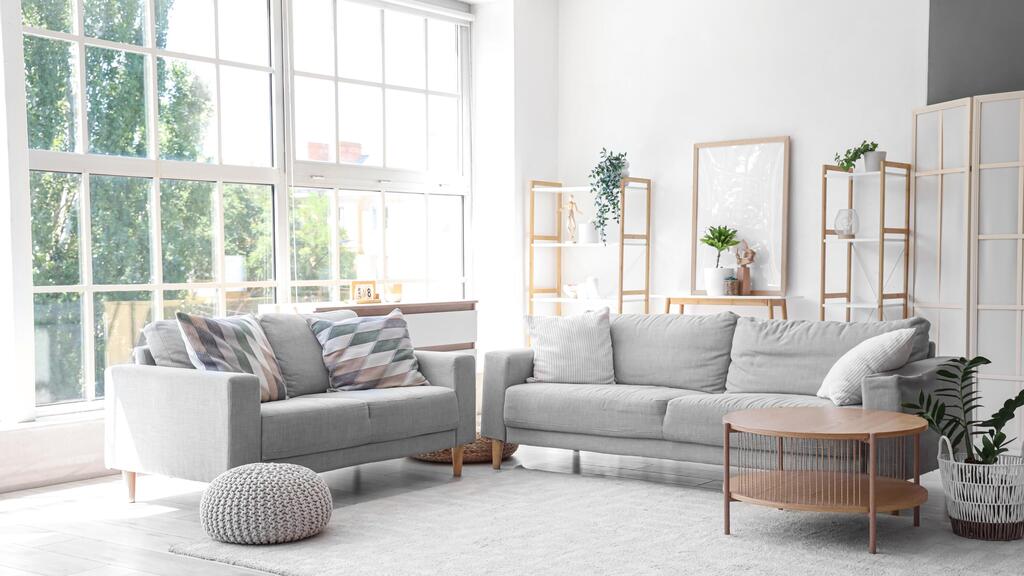
The question is not whether to bring in more light, but what kind of light, from which direction and with what level of filtering
(Photo: Pixel-Shot/Shutterstock)
Work and study stations should be determined according to the quality and angle of light. Good architecture does not simply add windows; it organizes residents’ daily routines through light, shading, glare control and depth of penetration.
Friendly materials
In an age when most of our lives take place within four walls, the choice of materials and flooring is no longer limited to shade or texture. It has become a decisive health decision in the planning process.
Today, the home must function as an active filter that directly affects the user’s vitality: from controlling pollution sources through low-emission materials that prevent “silent pollution,” to installing filtered ventilation systems that preserve fresh air without energy loss.
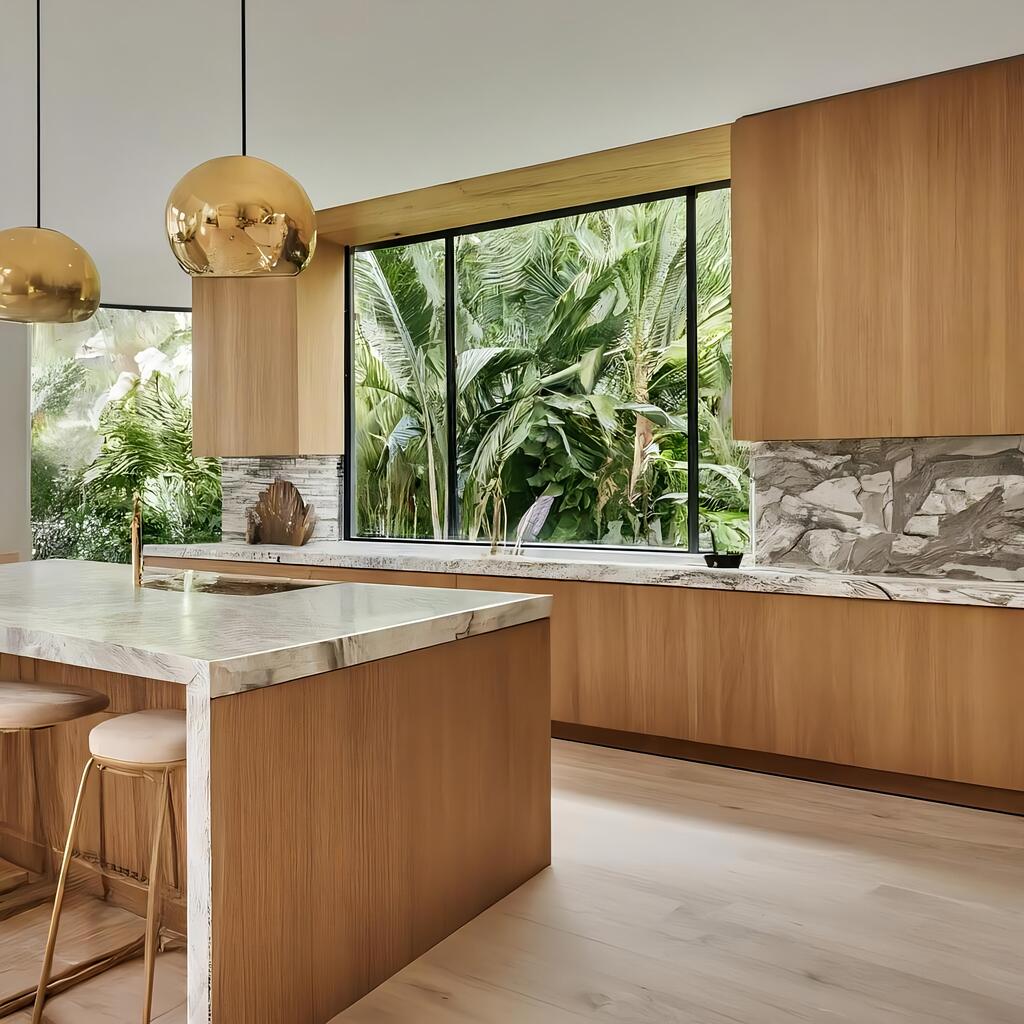
The traditional boundaries between the living room, kitchen and work spaces, the components of the day wing, have blurred
(Photo: Shutterstock AI)
Flooring, meanwhile, serves as an active thermal infrastructure, with high conductivity for underfloor heating and dimensional stability that prevents cracks and bacterial buildup. This is the shift from a decorative shell to a smart performance system, one that manages the relationship between heat conduction, acoustics and hygiene to create a true wellness space in which the technical specifications serve the person.
The home has been transformed from static structure to dynamic hybrid system
The traditional boundaries between the living room, kitchen and work spaces, the components of the day wing, have blurred. In their place is a need for advanced infrastructure that supports multiple stations, continuous communication and responsive lighting.
This is where AI tools enter the picture. They allow us to analyze data in real time, examine precise planning alternatives and create an optimal fit between user patterns and the physical envelope. Future planning will not be limited to decorating the space, but to computational optimization — learning, adapting and responding to changing needs.
 Architect Kobi Gal, co-founder of GMA ArchitectsPhoto: courtesy of GMA
Ultimately, true wellness in the modern home is measured by performance: the level of acoustic insulation that enables privacy amid intensive activity at home, the envelope’s ability to balance thermal loads while minimizing energy waste and the quality of natural light that accompanies the user throughout the day.
We must stop talking about “style” and start talking about “data-based user experience” in order to create a relevant living space. The home is not only a place to live; it is the most significant tool for maintaining our physical and mental well-being.
The writer is an architect and partner at Gal & Matsliah Architects (GMA)
First published: 14:20, 05.10.26