

After a year of searching for a promising property, Sapir Avraham, 32, an interior designer, and Niv Gelb, 35, a real estate investor and entrepreneur, found a preserved building in Jaffa’s Ajami neighborhood that had stood abandoned for years and once served as a horse stable. What began as an entrepreneurial project, buying, upgrading and selling the property, became a complex design journey that included digging into the building’s historical layers, restoring original openings and planning around its unusual restrictions.
The home that was once an abandoned stable in Jaffa
(Video: Noam Ron)


To maximize the space, the couple dug into the ground, added a sleeping gallery and created a precise, multi-level home. But the real twist came only after the work was done: the building, designed and furnished as a polished Jaffa living-and-vacation fantasy for future buyers, ultimately became their own home.
“The house in Jaffa is the first real project we did together,” Avraham says. “Niv wanted to learn how to do a flip, i.e., buying, improving and selling a property, and I wanted to plan and design a space somewhere between a hotel room and a residential apartment. We were looking for a complex and interesting deal. After a year of searching, we found a special, authentic preserved building with unrealized potential.”
The façade was completely sealed with bricks
(Photo: Michael Shvadron)
“The house had stood abandoned for many years,” Gelb adds. “You can’t build something like this today. If you try to recreate arches and stone walls from scratch, it will always feel fake or overdone. Only historic spaces have that kind of power, and this one immediately drew us in. We made a small layout plan to make sure everything could work, then decided to go for it. The goal was to turn the space into a luxurious, hotel-like apartment for a couple, and then sell it.”
The renovation and design
“The entire facade had been sealed with bricks, so we had to reopen and restore it,” Avraham says. “We were surprised to discover that despite facing east, the house gets a lot of light. We started with a very precise program and spent a great deal of time working through the section and the stairs. We knew that maximizing the space would require adding a gallery, but it was important that it not feel like a compromise.”
“We dug almost a meter down so we could add another level, which sent us on a small archaeological journey. During the excavation, we discovered layers of stones in different positions, and brought in an engineer who helped us make the right decisions on site. The excavation essentially defined the division of the house.”
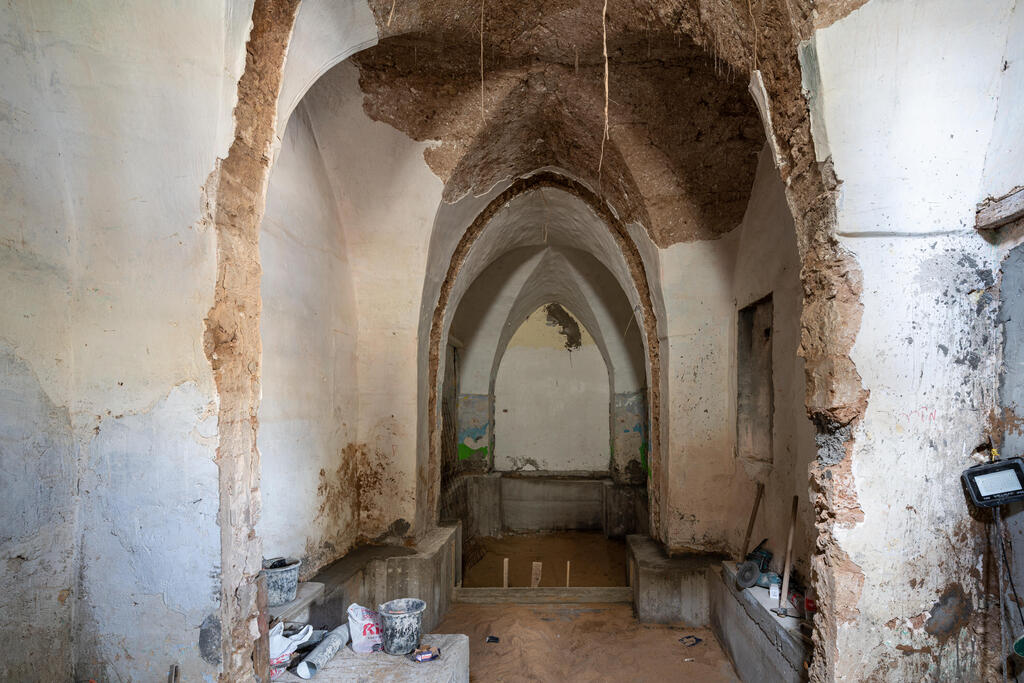
During the renovation
(Photo: Sapir Avraham)
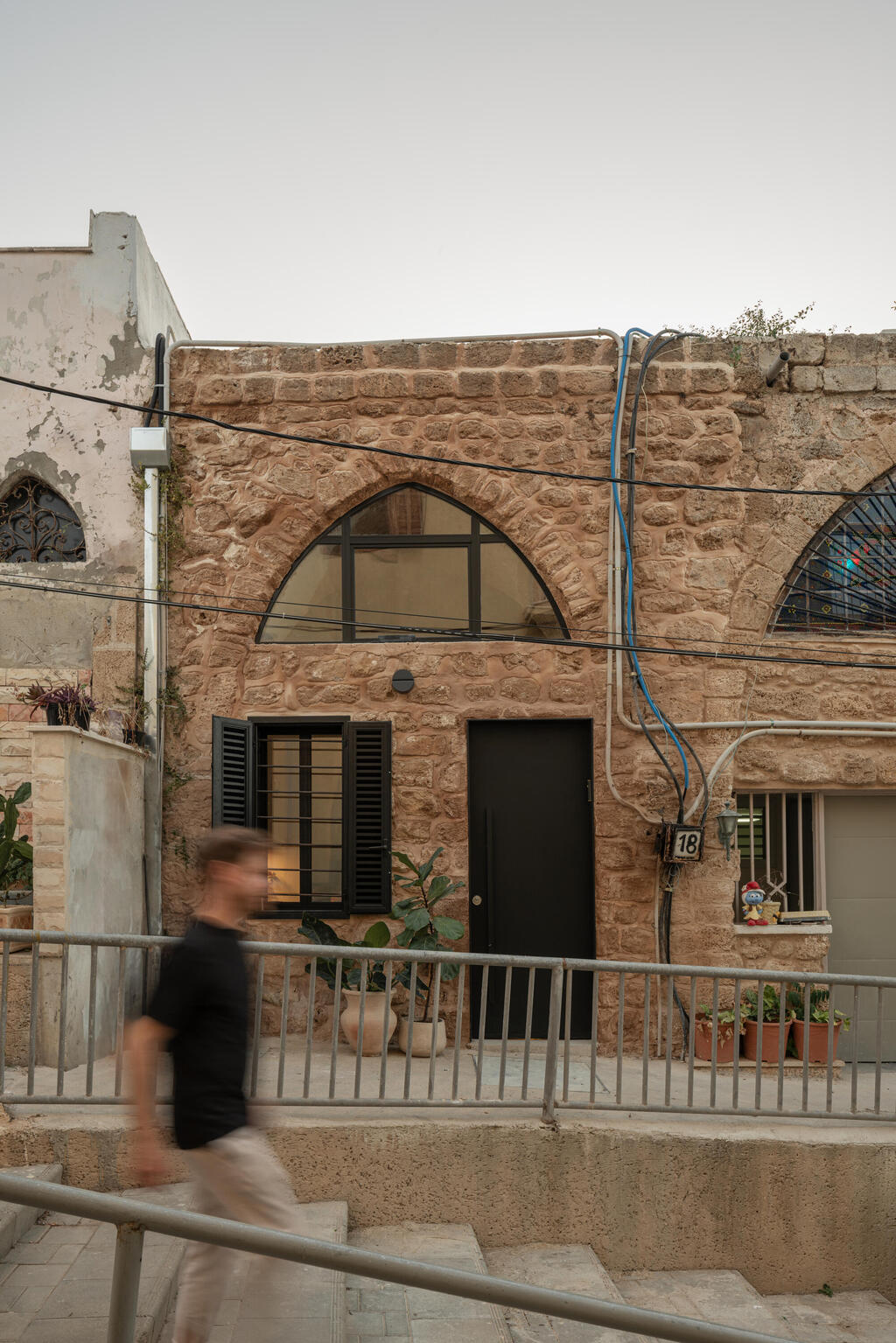
The building from the outside
(Photo: Michael Shvadron)
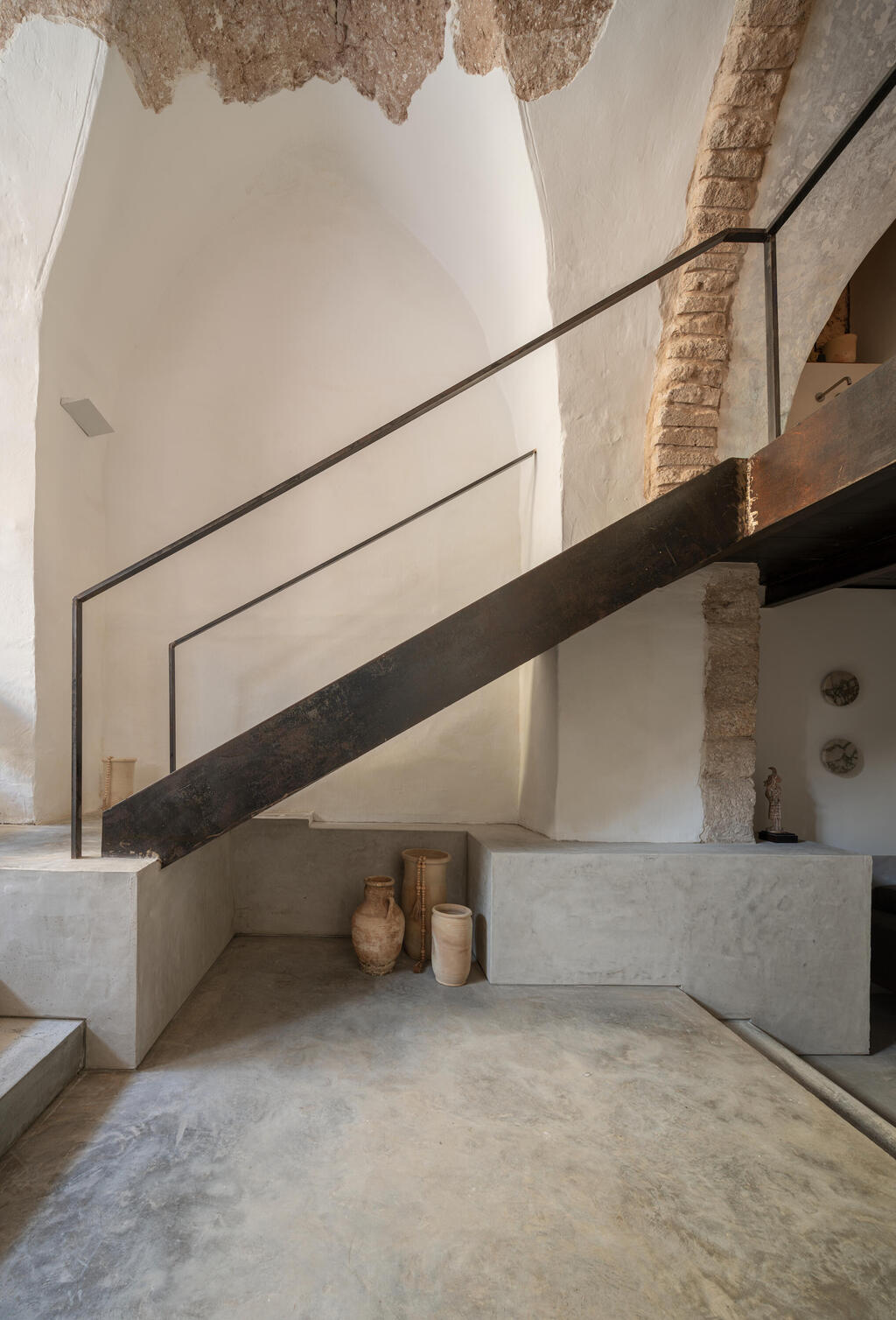
The floor was cast as a single concrete slab
(Photo: Michael Shvadron)
The floor was cast as one continuous concrete slab, a deliberate modern layer set against the building’s historic stone walls. “The new floor tells the story of the contemporary addition, while the walls tell the story of the past,” Avraham says. “We barely touched them. Instead, we used mirrors strategically, creating two mirrored surfaces that bring in more light and make the home feel larger. When used correctly, mirrors can completely change the experience of a space. Every piece of furniture, all the carpentry and each storage solution were custom-designed for the home’s unusual dimensions.”
The plot twist
“We planned the apartment as the fantasy of a Jaffa vacation home,” Avraham says. “We invested in the furniture, styling and every small detail so it would feel as high-end as possible. Then the war began on October 7, and we understood that the whole sale process would be postponed. We sublet the apartment we were renting in South Tel Aviv, packed a suitcase and moved here in a rush, thinking it would be a temporary solution. In the end, we stayed for two and a half years.
“In retrospect, it was a gift. Living here really does feel like a dream. We fell in love with Jaffa and kept discovering things about the house that we hadn’t fully understood while planning it. The different levels create encounters, sightlines and interactions we never expected, and we suddenly realized how pleasant it is to live and host here. We also began hosting photo shoots and bridal preparations under the name The Jaffa House. It complicates daily life a bit, but seeing people walk in and get excited about what we created has been the most satisfying part of the entire process.”
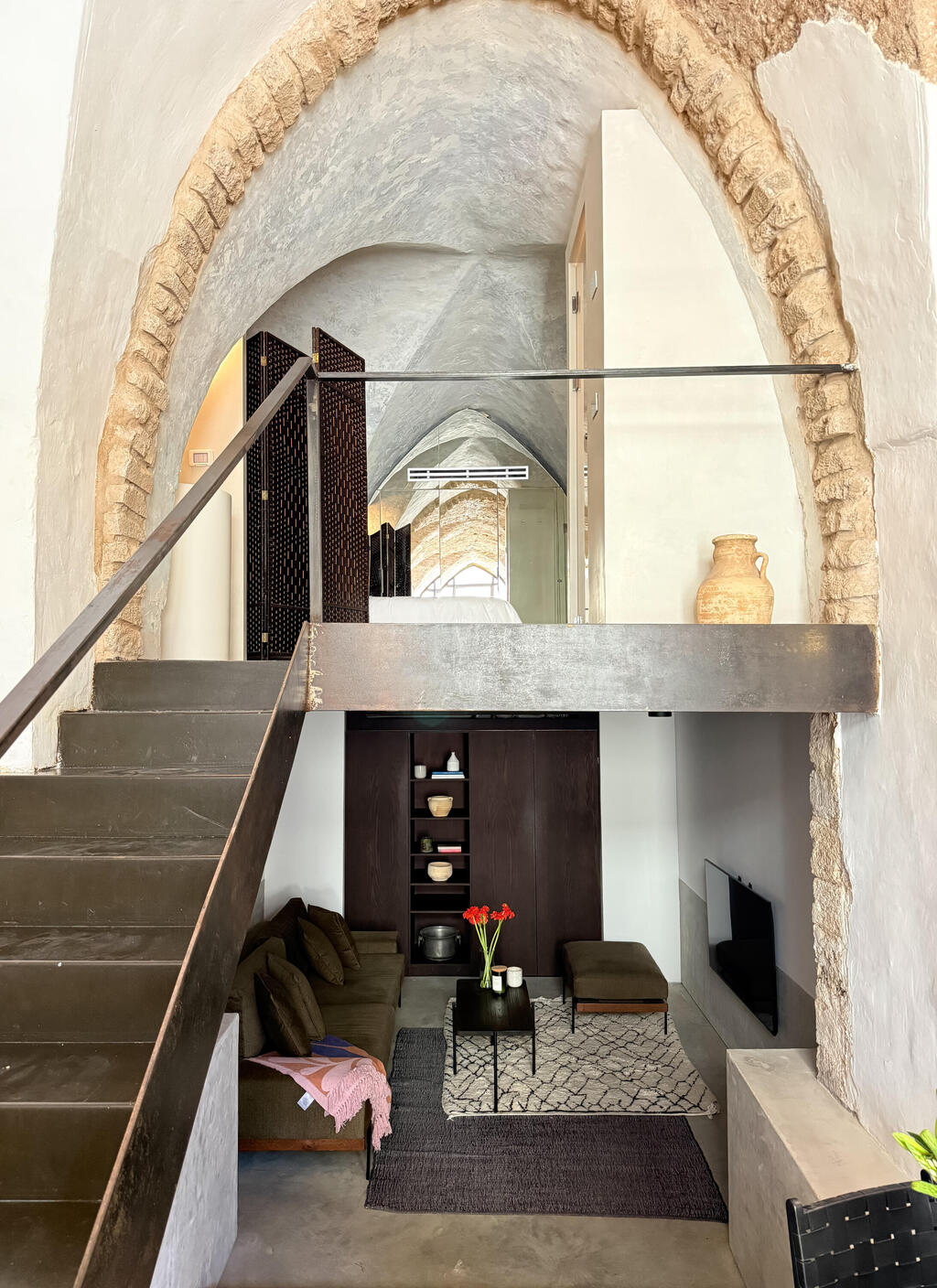
They excavated the ground to deepen the property
(Photo: Noam Ron)
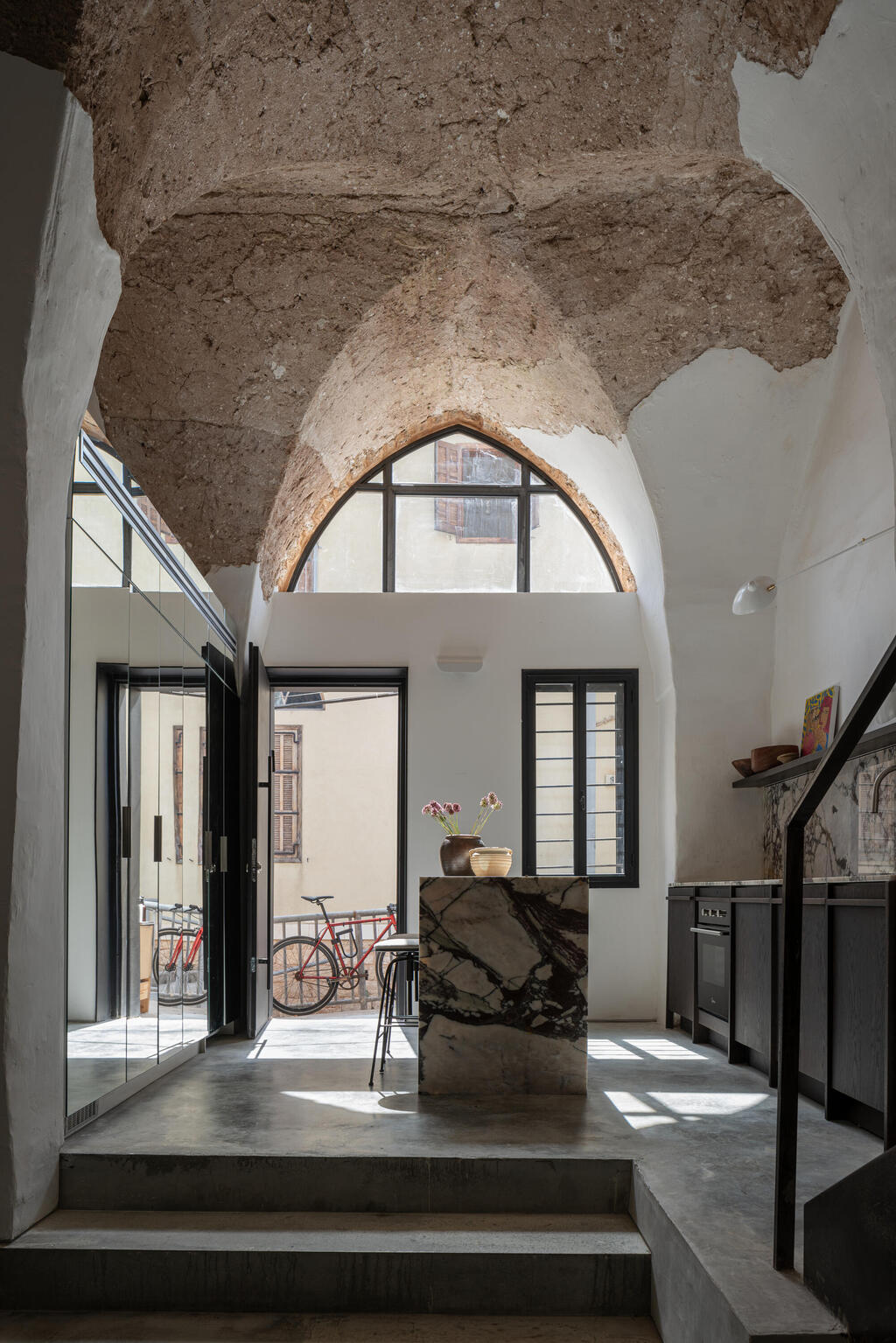
The kitchen and entrance
“Niv designed the entrance door,” Avraham says. “We also restored the upper window on the facade and installed an electric opening mechanism to create another air route. We did not want to give up on an impressive entrance area or on a well-equipped, comfortable kitchen, so the entire mirrored wall is actually an integrated kitchen. Everything is hidden behind mirrored cabinets to blur the kitchen at the entrance.”
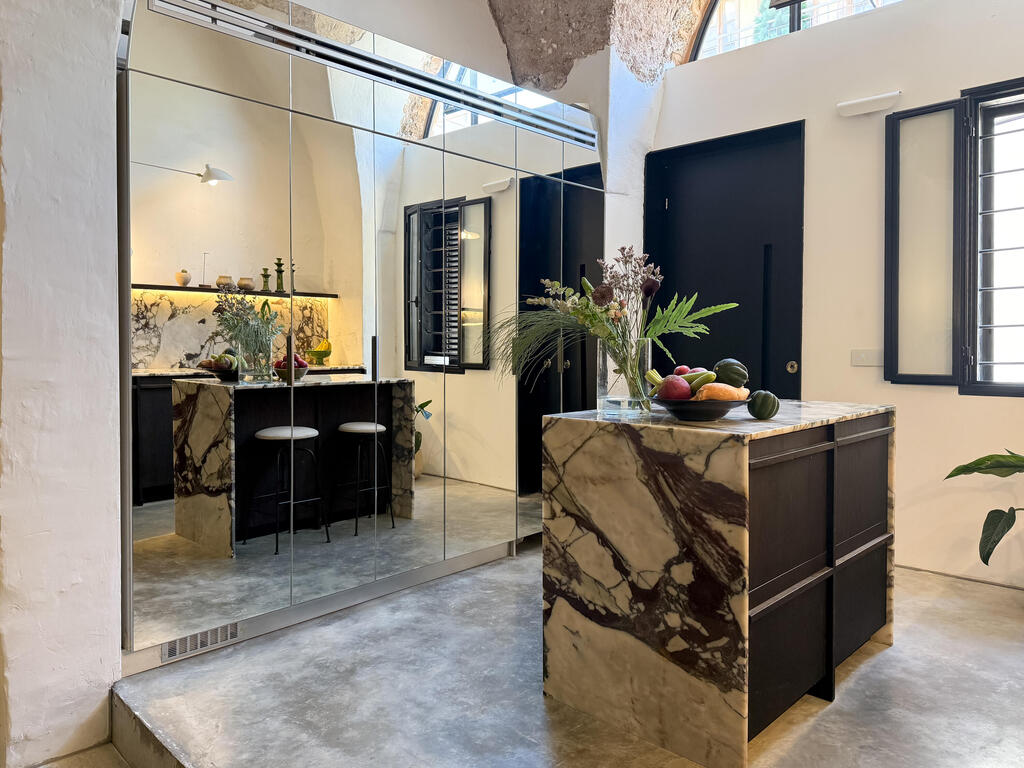
The kitchen
(Photo: Noam Ron)
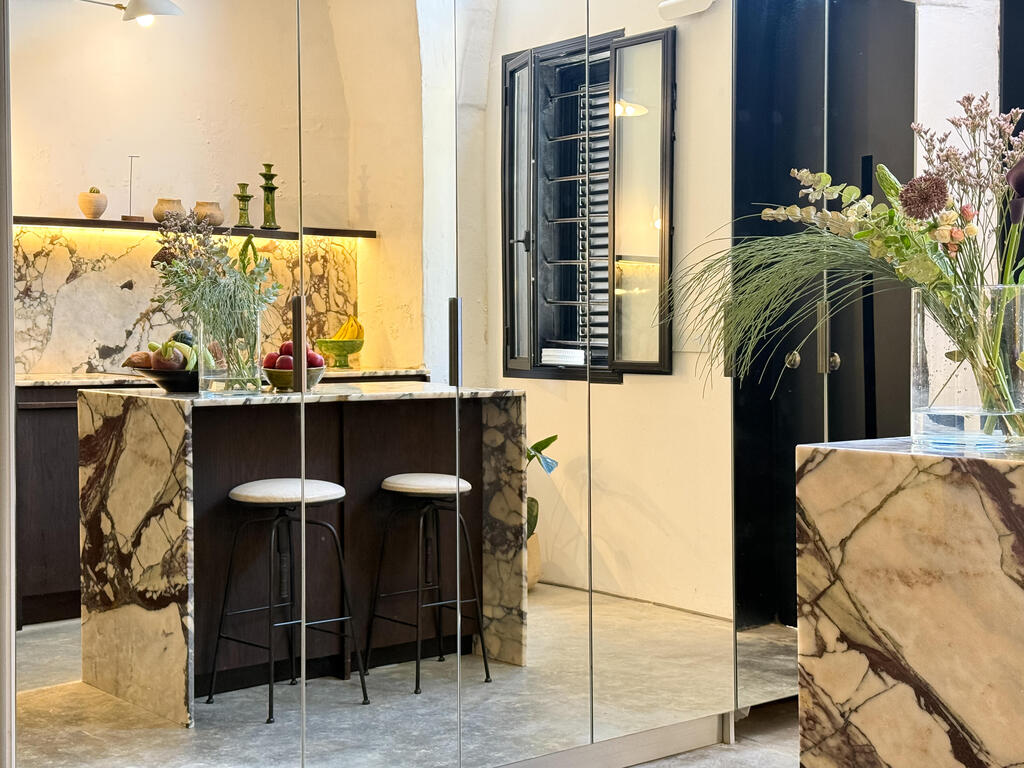
Extensive use of mirrors creates a sense of space
(Photo: Noam Ron)
Inside the cabinets are a coffee corner, refrigerator, washing machine, pantry and cleaning-supplies cabinet. A concealed air conditioner is installed in the upper section. The island is a cube of natural stone marble, and the cabinets are clad in stained veneer. “When we host, the island becomes the main buffet,” Avraham says.
The gallery: bedroom and bathroom
“We added the gallery during the renovation, and it contains the bedroom and bathroom,” Avraham says. “It was important to us to separate the bathroom functions and not close them all inside one room, both to create a hotel-like feeling and so our toilet could also serve as a guest bathroom.”
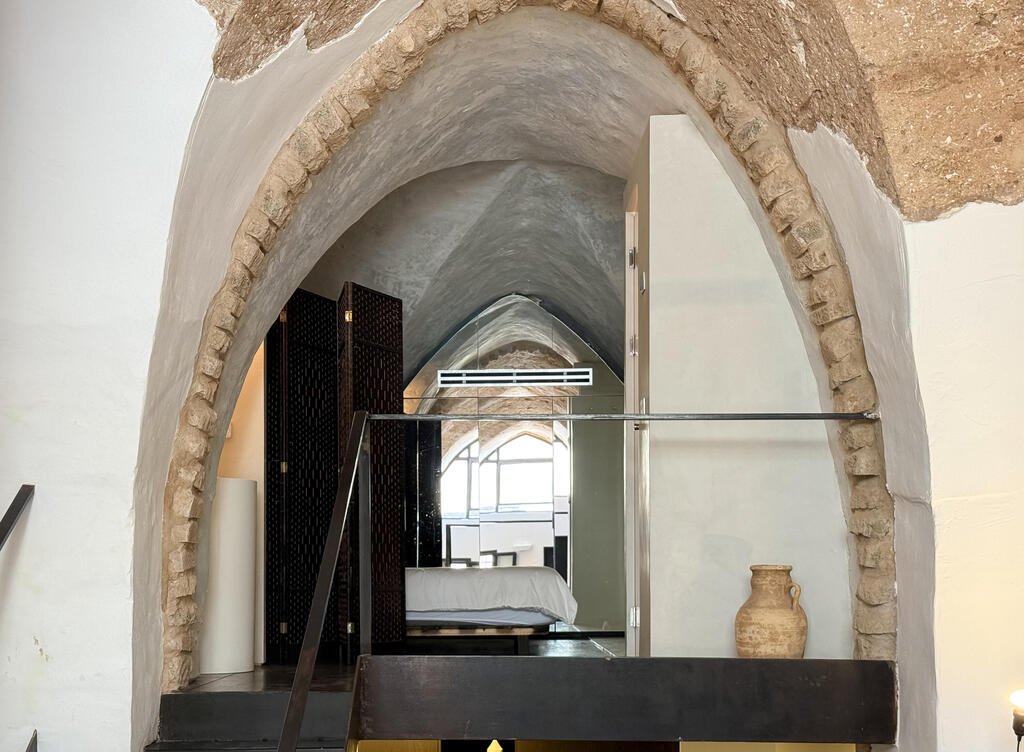
The sleeping gallery, entered through stone arches
(Photo: Noam Ron)
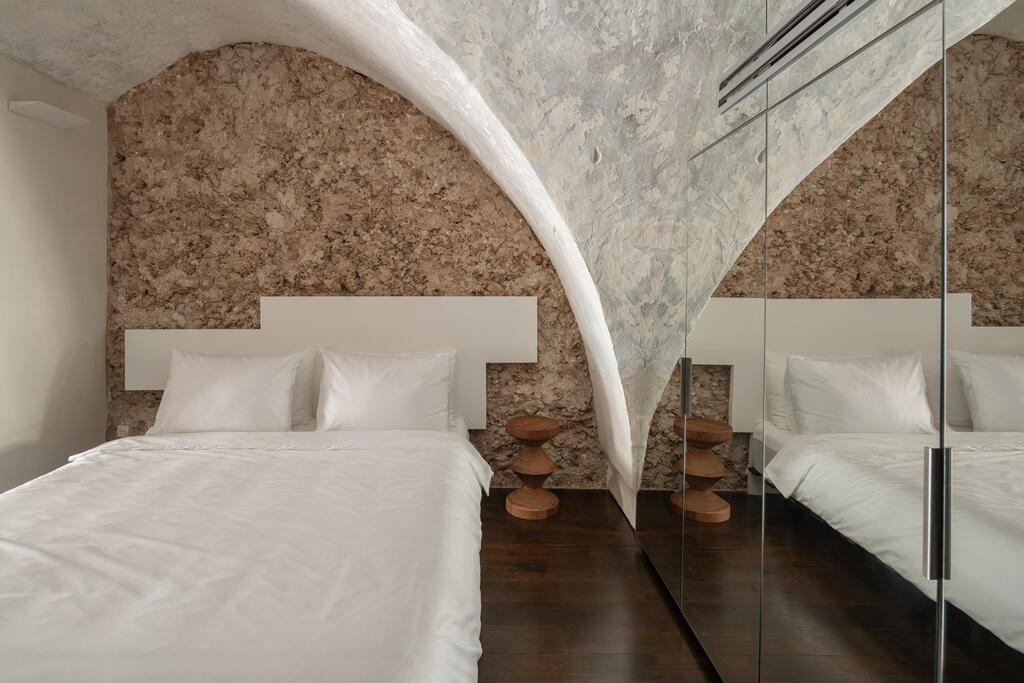
The bedroom with mirrors and arches
(Photo: Michael Shvadron)
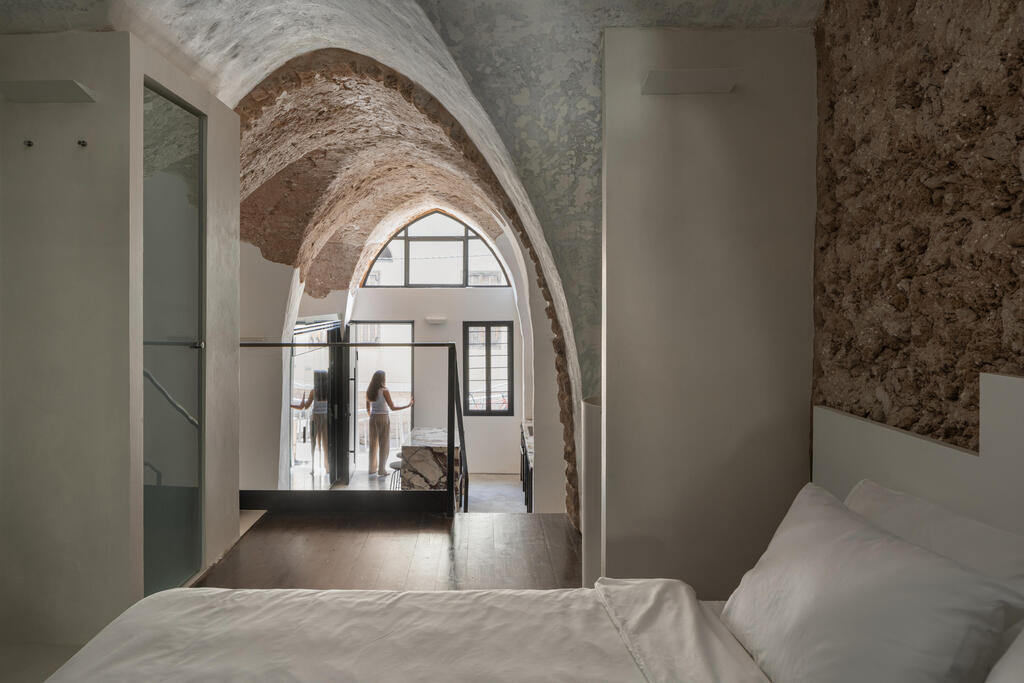
The façade lets light inside
(Photo: Michael Shvadron)
"I designed the toilet as a frosted-glass cube next to the stairs. Opposite it, we added a freestanding sink in addition to the sink cabinet in the bathroom area. That way, when we host, we can close off the sleeping area with a screen and create privacy,” she says.
The separation between the sleeping and bathing areas was created through flooring: resin in the wet area and parquet in the dry area. Keeping everything level required meticulous work. “It was important to us that everything be flush, so we played with the section of the wooden beams in the floor and measured each layer down to the millimeter,” Avraham says.
The shower was designed as a relatively large glass cube with a concealed drainage detail. The bathroom cabinet uses the same marble as the kitchen, topped with a stainless-steel sink.
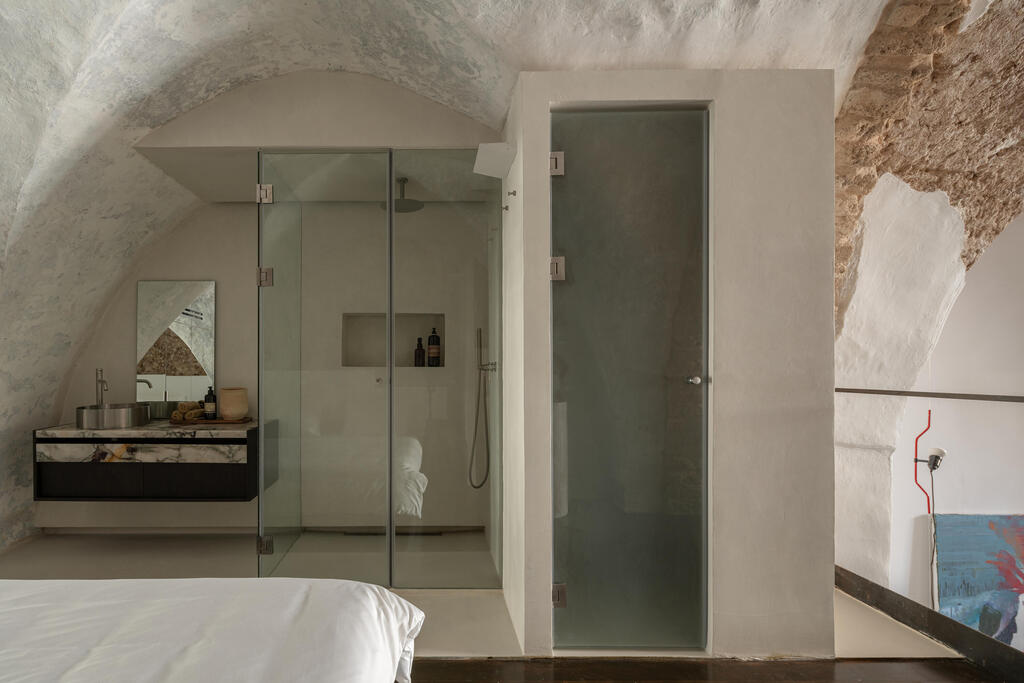
The bathroom
(Photo: Michael Shvadron)
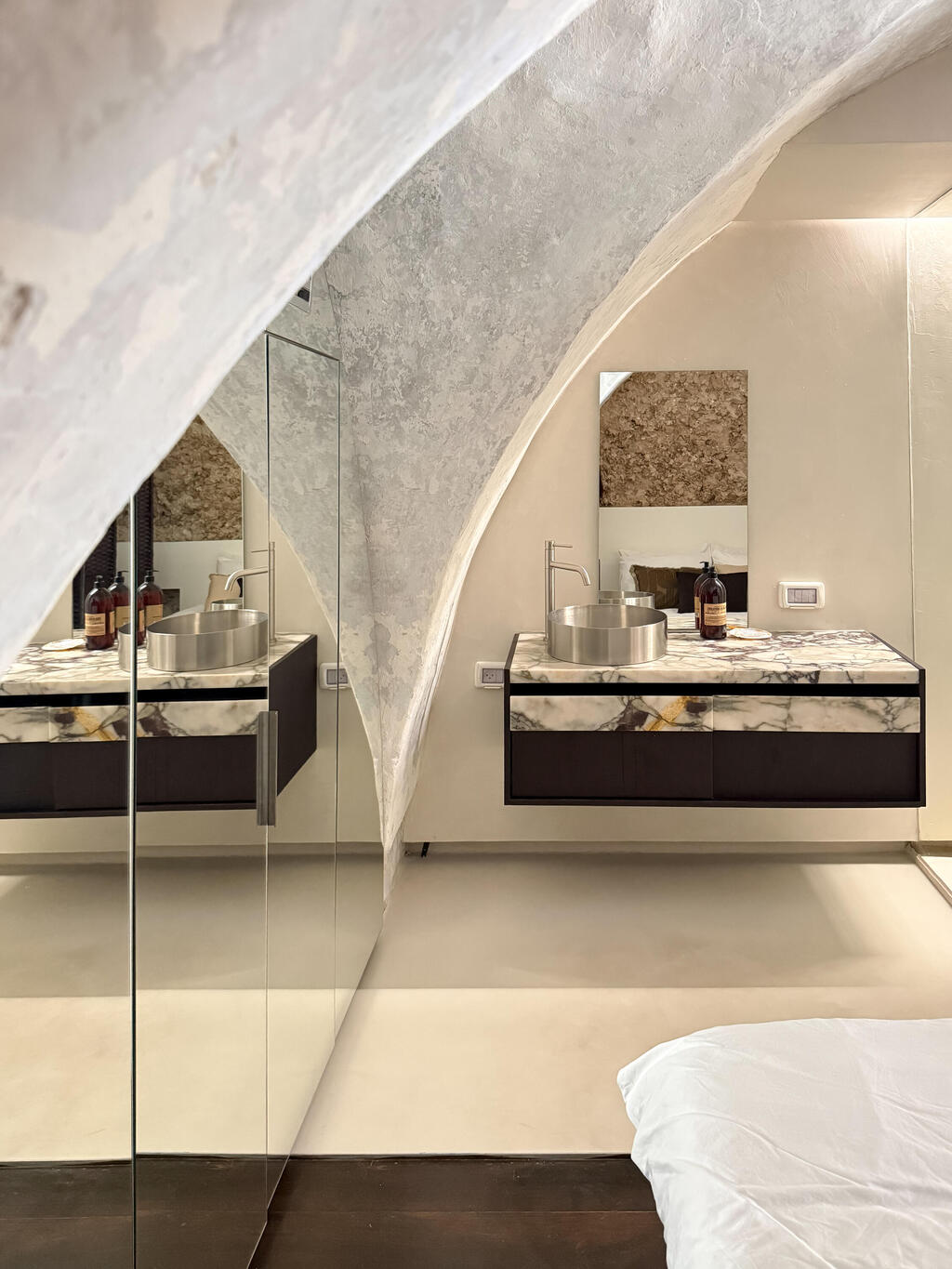
The marble from the kitchen appears here too
(Photo: Noam Ron)
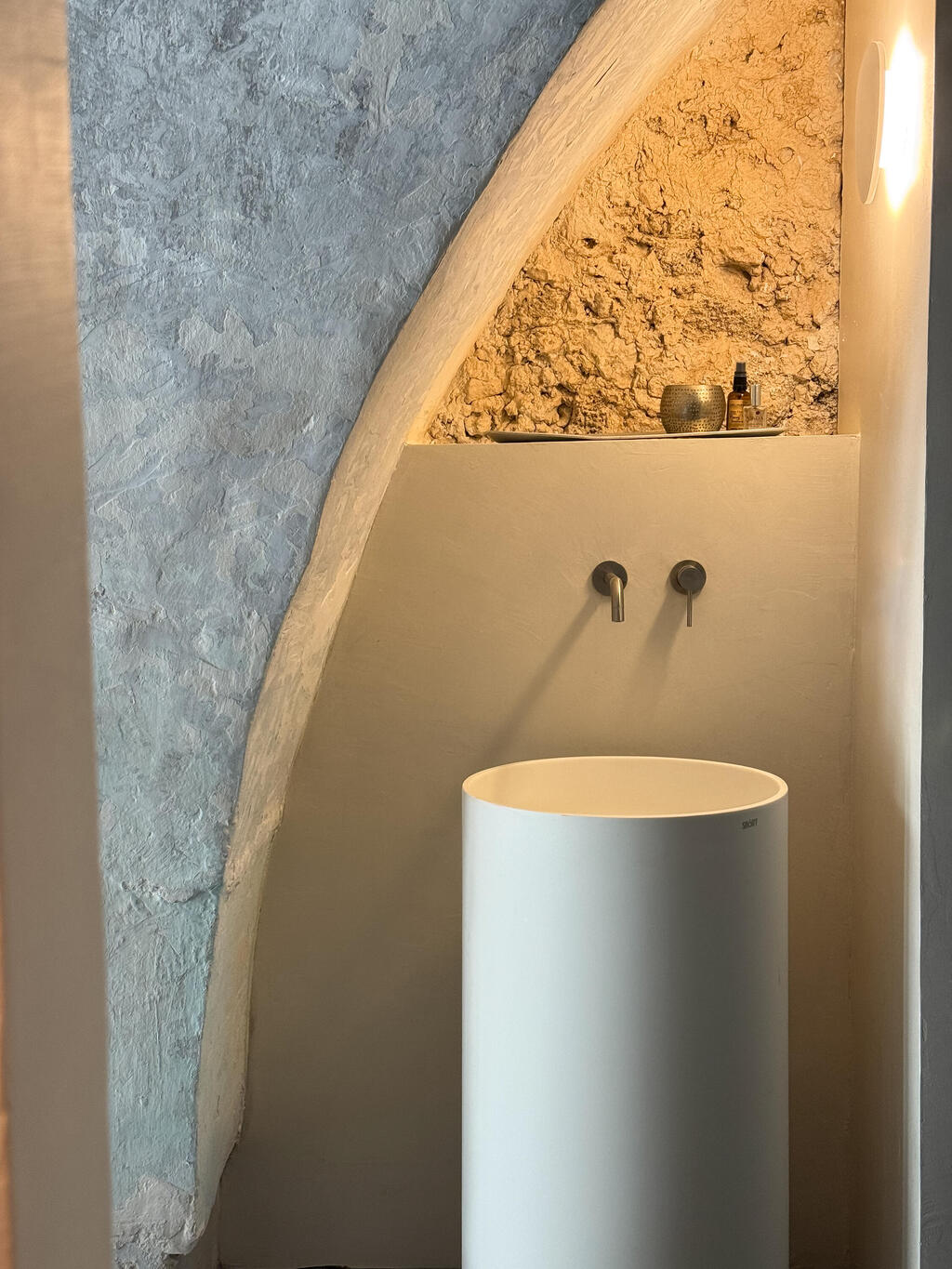
Another sink
(Photo: Noam Ron)
In the sleeping area, the wall behind the bed was left exposed, revealing the original sandstone bricks. Gelb designed a headboard that still allows the couple to lean back comfortably. The wardrobe is clad in mirrors, reflecting the light that enters from the façade and creating a greater sense of space.
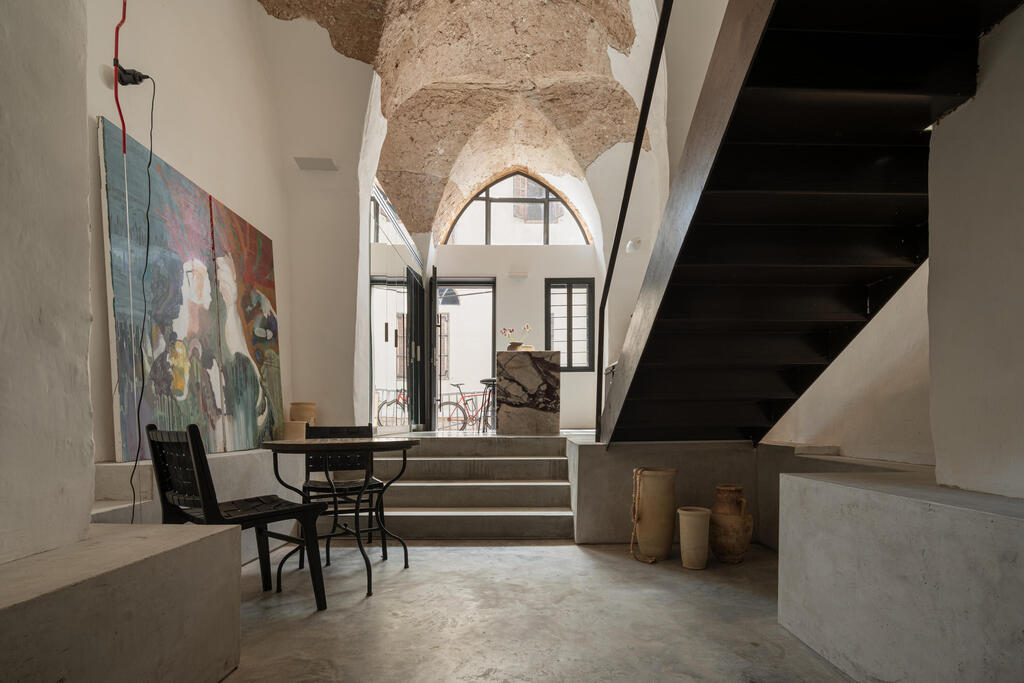
The dining area
“We planned the dining area on the intermediate level, between the kitchen and the living room, to make the best use of the excavated area,” Gelb says. “We had to create a massive concrete belt to support the existing columns, and we decided to turn it into a decorative element. We made it into a continuous shelf and placed Sapir’s collection of jugs on it. Her hobby is collecting Hebron clay jugs.”
“We wanted an intimate dining area for two", Avraham adds. "We bought the mosaic table from a store that imports furniture from Morocco, and found the black chairs at Sage. In the polished concrete floor, I created a very delicate separation detail to soften the roughness of the space and the materials we used.”
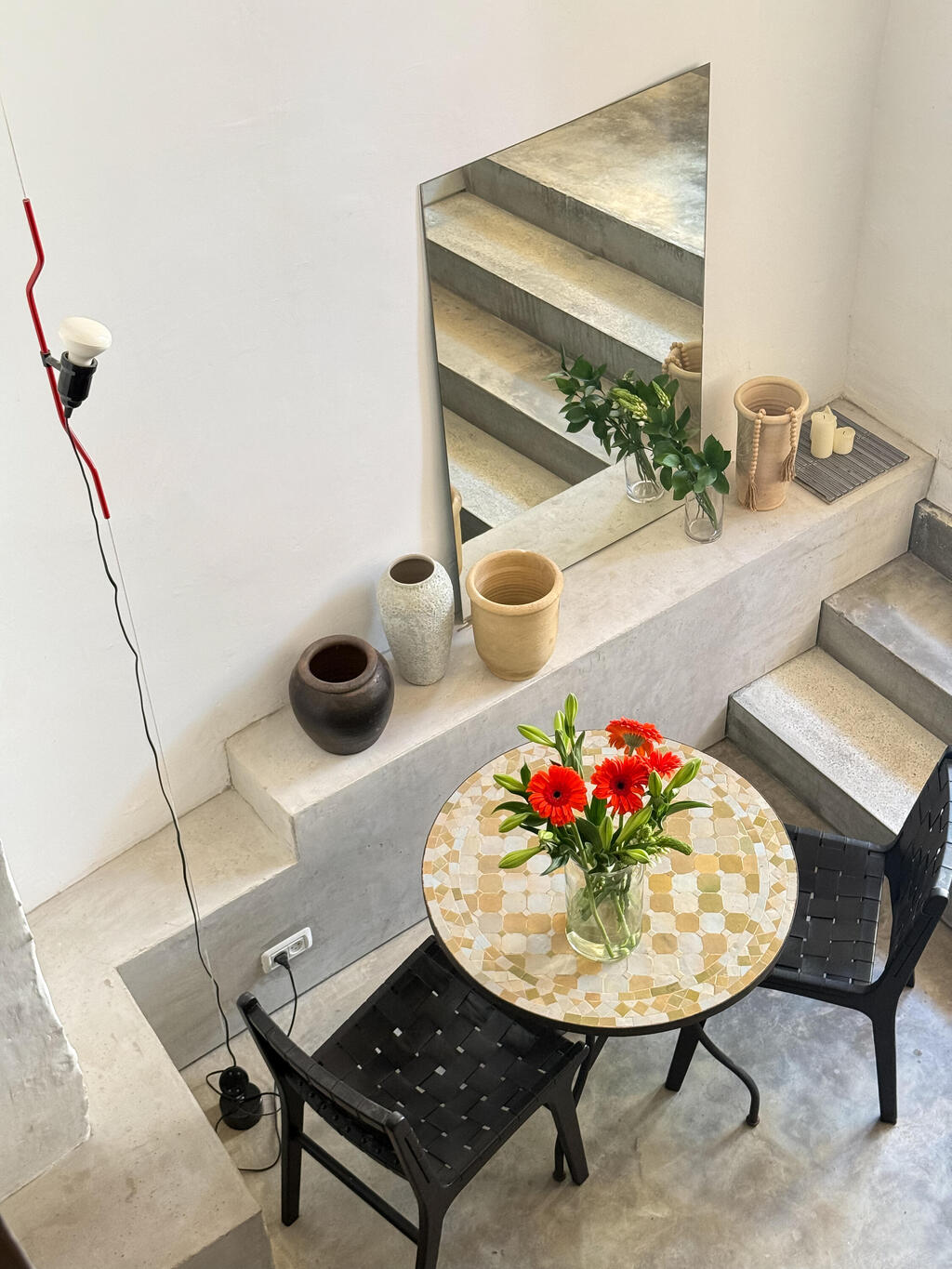
An intimate dining corner for two
(Photo: Noam Ron)
The living room
“The living room came out really dark and cozy, and we call it ‘the cave,’” Avraham says. “We left the underside of the gallery exposed and did not cover it with drywall because we wanted to preserve the brown ceiling that gives the space that enveloping feeling.”
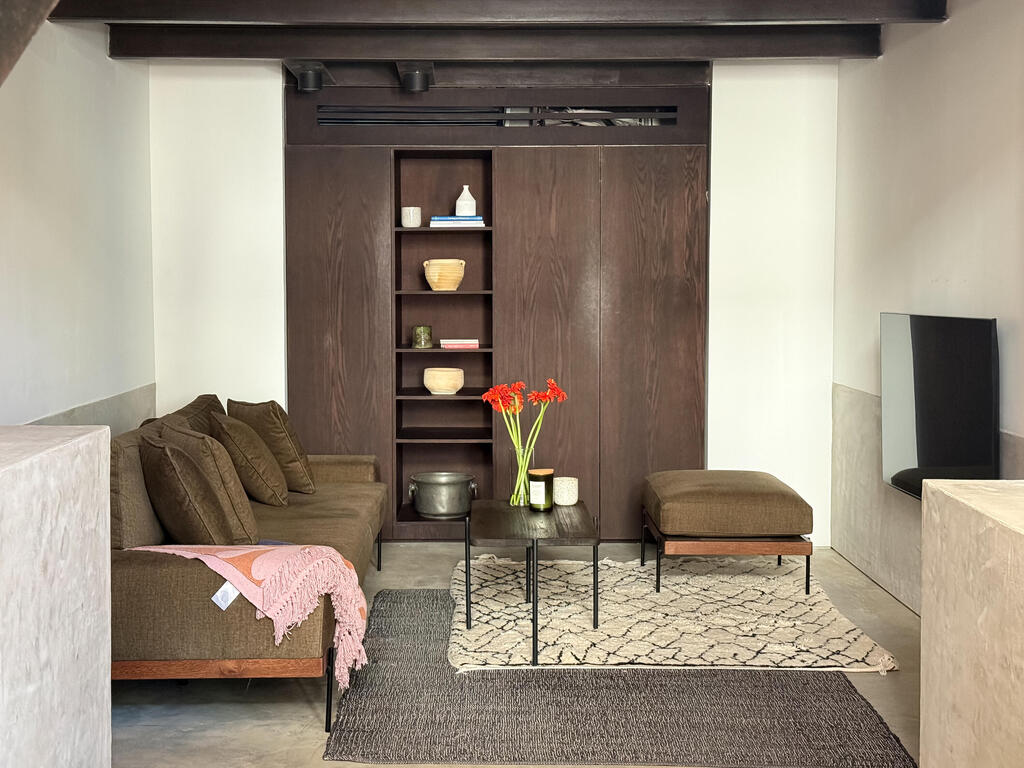
The living room
(Photo: Noam Ron)
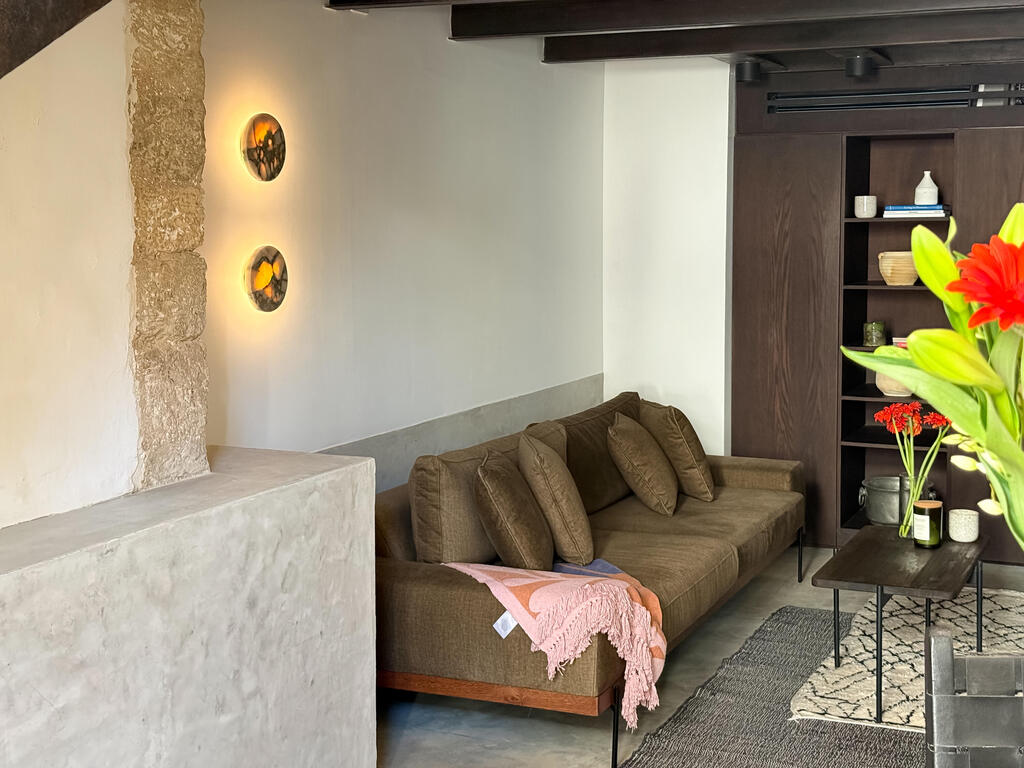
Cozy and warm
(Photo: Noam Ron)
The wall is divided by the line of the step and is partly clad in concrete and partly in plaster. The sofa was custom-made by an upholsterer according to the home’s measurements. The rug was also imported from Morocco, and the armchair came from Sage.
“In general, all the furniture was bought especially for the space because everything here has to be extremely precise in size,” Avraham says. “In the living room, Niv designed a unique light fixture made from leftover marble from the kitchen. The cabinet in the living room provides another essential storage space, with room for shoes and coats.”