

The match between the Netherlands and Morocco is one of the most compelling ties of the first knockout round. African teams faced plenty of criticism after the tournament expanded, with some pundits mocking them for their supposed lack of tactical discipline. Yet nine of the continent's 10 representatives reached the knockout stage, and Morocco — a World Cup semifinalist at the previous tournament — has once again emerged as Africa's standard-bearer.
The Netherlands, meanwhile, along with France, has been Europe's most impressive team at the tournament. Both have scored 10 goals, making them the competition's most prolific attacks (Germany also scored 10, though seven came against minnows Curaçao), with the Dutch doing so in a far stronger and more competitive group.
The Netherlands also boasts another remarkable statistic: since Andrés Iniesta's winning goal in the 2010 World Cup final, the Dutch have not lost a match in the tournament. Their only eliminations came in penalty shootouts against Argentina, while they failed to qualify altogether in 2018.
Adding to the stakes, the winner will enjoy what appears to be a favorable path in the next round, facing the winner of Canada versus South Africa.
So why, despite the match's enormous sporting significance, has the result become almost secondary in the Netherlands, home to a large Moroccan community?
"Whatever happens," an Israeli living in Amsterdam told me, "people here are expecting the worst — or something even worse. There won't be any celebrations. No sensible person is going to watch this match at a public viewing event."
When the past meets the present
Dutch police and security forces have reinforced their presence and have been given broader powers to stop and detain people. Large numbers of officers are stationed in central squares while police boats patrol Amsterdam's canals.
Still, authorities have not gone as far as they did four years ago, when Amsterdam, The Hague, Rotterdam and Utrecht completely banned public screenings of Morocco's matches. This time, because the Dutch national team is playing, public viewing areas will remain open — but police are far better prepared for worst-case scenarios.
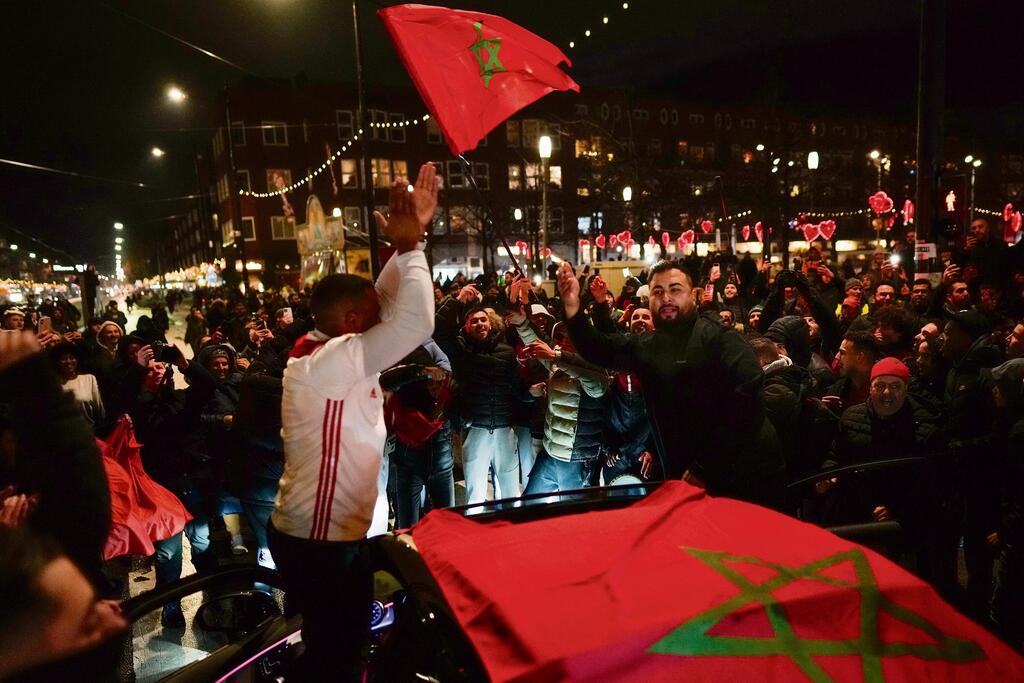
Four years ago, thousands of Moroccan fans poured into the streets to celebrate victories over Portugal and Spain. The unrest had already begun after Morocco's win over Belgium, when celebrations quickly turned into riots involving torched and overturned cars, stones thrown at vehicles, bottles hurled at police and fireworks fired at officers trying to restore order.
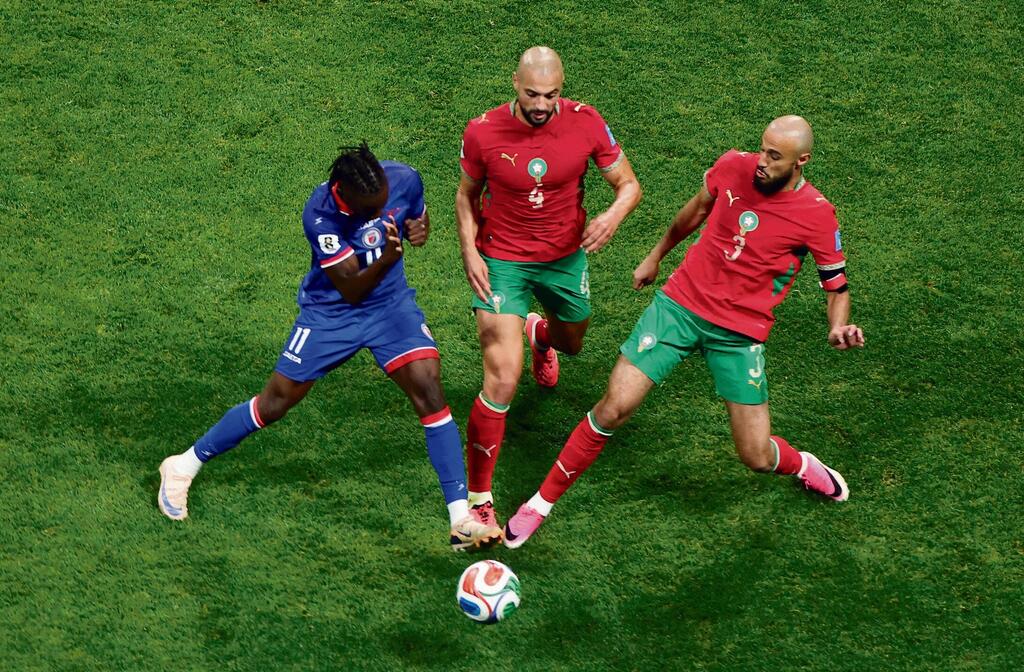
Dutch born in Morocco: Noussair Mazraoui
and Sofyan Amrabat
(Photo: REUTERS/Siphiwe Sibeko)
The violence spread rapidly from one city to another, catching authorities off guard. It ended, almost miraculously, with only dozens injured and hundreds arrested.
This time, the concern is that it could be much worse.
Now the Netherlands itself is directly involved. The Dutch national team is facing one of the country's largest minority communities. If riots erupted when the Netherlands wasn't even playing, what happens if the Dutch eliminate Morocco? And based on past experience, a Moroccan victory would almost certainly trigger major unrest as well.
Add Dutch football hooligans to the mix, along with the rise of right-wing nationalism whose political platform is built in part on hostility toward immigrants. Then factor in a 3 a.m. local kickoff, meaning tens of thousands of people fueled by alcohol and looking for confrontation.
The result is a volatile recipe. Amsterdam and other Dutch cities could wake up on Tuesday morning to a workday where anything is possible.
A community caught between two worlds
About 420,000 people of Moroccan origin live in the Netherlands, making them the country's second-largest immigrant community. They account for just 2.4% of the population, but because of settlement patterns their presence is concentrated in the country's major cities.
Unlike some other immigrant groups, Moroccans have no colonial grievance with the Netherlands. They arrived as guest workers in the 1960s, taking the manual jobs locals did not want and eventually settling permanently. A decade later, after Dutch family reunification laws were introduced, their relatives joined them, and Moroccan communities, cultural centers and mosques began to take root in the major cities.
The problem — and responsibility lies on both sides — is that immigrants from the Maghreb remained workers and, in many ways, remained guests. One side was reluctant to integrate and embrace the values of its new country. The other never made a genuine effort to fully integrate them into Dutch society.
The tensions came to a head in the late 1990s, when the children of those immigrants reached adulthood.
Born in the Netherlands, many struggled to gain access to higher education, were funneled into manual labor and faced high unemployment. Many experienced a deep personal and cultural identity crisis. They grew up in Moroccan households in Amsterdam neighborhoods.
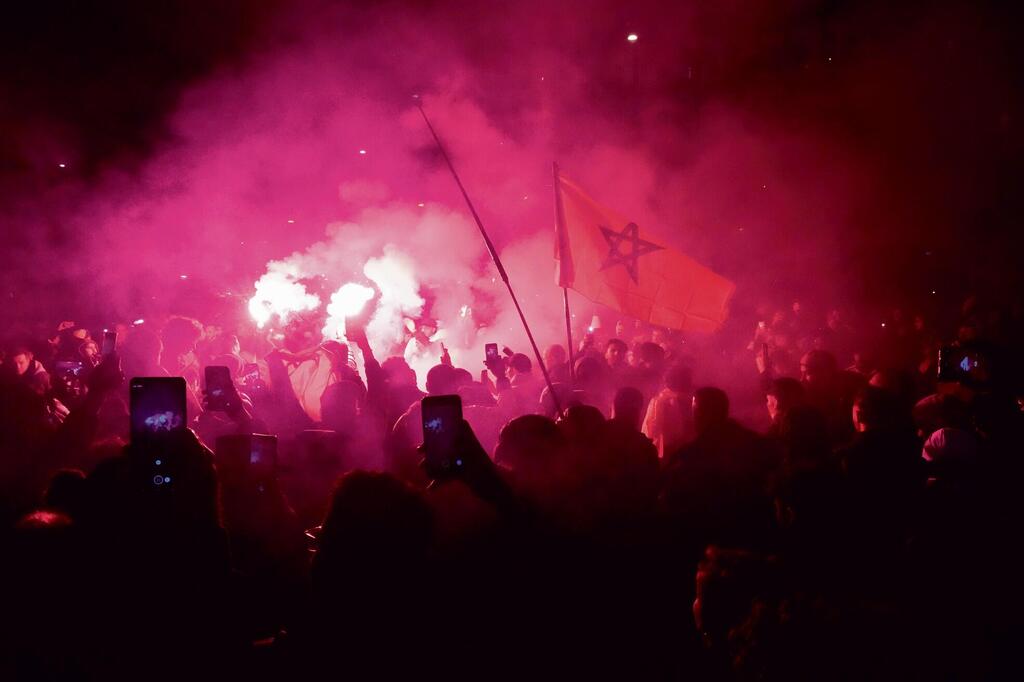
What awaits us tonight?
(Photo: AP/Peter Dejong)
When your past collides with your present, which team are you supposed to support?
Same date, different backdrop
Since then, Dutch society has undergone profound change. The liberal, open society that once defined the country has seen the far right and anti-immigration movements move from the political fringes into the mainstream. Ideas once confined to private conversations have spilled into public life.
At the same time, parts of the immigrant community have also become more radicalized. Many of those involved in attacks on Maccabi Tel Aviv supporters in Amsterdam were Moroccan immigrants. Geert Wilders' far-right party won the largest share of the vote in the 2023 general election, capturing nearly a quarter of all ballots.
The Netherlands beat Morocco 2-1 in the group stage the only time the two sides met at a World Cup, in 1994. That match was also played on June 29.
The backdrop, however, was entirely different.
This time, both teams arrive ranked among the world's top 10. Both collected seven points in the group stage. Morocco's squad includes three players who grew up on the streets and football pitches of Amsterdam or Utrecht.
The Netherlands opened the tournament poorly with a draw against Japan, largely because of Ronald Koeman's tactical mistakes. He adjusted his lineup afterward and the team clicked into gear.
Morocco boasts one of the tournament's toughest defenses.
The head-to-head battle promises to be fascinating.
A match with enormous stakes. Let's hope it doesn't end in bloodshed.