

While the world chases chatbots that can write text and generate images, industrial giants were looking for something entirely different: AI that understands physics, materials and real engineering. A new partnership between Nvidia and Dassault Systèmes aims to turn factories, aircraft and pharmaceuticals into precise simulations of the real world.
Global technology giants have spent the past two years trying to convince the public that artificial intelligence and large language models will change the world, but mechanical engineers, materials scientists and factory managers have remained largely skeptical.
A language model can write a brilliant poem about aerodynamics, but it cannot predict what will happen to an airplane wing traveling at 900 kph (~560 mph) in temperatures of minus 50 degrees Celsius. Betting on a wrong answer from generative AI in the engineering world can cost millions of dollars and at times human lives.
To solve this built-in flaw, Dassault Systèmes, which dominates the industrial design and simulation software market, unveiled a new architecture called 3D UNIV+RSES. It is the seventh generation of the company’s work environments and redefines the concept of the “virtual twin.” Put simply, instead of guessing, the system predicts physical reality.
Where physics meets silicon
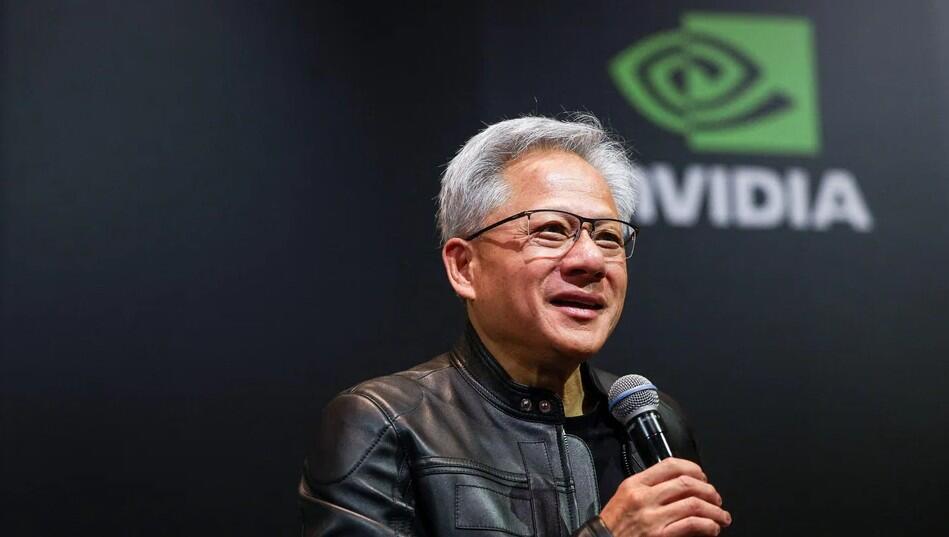
The industry’s most significant announcement came from Dassault Systèmes CEO Pascal Daloz and Nvidia CEO Jensen Huang, who in recent months unveiled a broad strategic partnership between the two companies.
The firms are building industrial AI infrastructure that combines Dassault’s design platform with the industrial metaverse platform Nvidia Omniverse and CUDA-X computing libraries.
To explain the difference between familiar AI and physical AI, Huang used a simple example: a dog catching a ball in the air does not solve differential equations, it intuitively predicts where the ball will land based on experience.
The industrial world models being trained by Dassault and Nvidia do exactly that. They have learned from decades of engineering data and physical experiments, and can now predict the behavior of materials and systems many times faster than classical simulation without losing scientific accuracy.
The technology is built around three main areas. In life sciences, the BIOVIA model integrates with Nvidia’s BioNeMo platform to design molecules and proteins for drug development. In engineering, SIMULIA tools use Nvidia’s processing power for immediate load prediction.
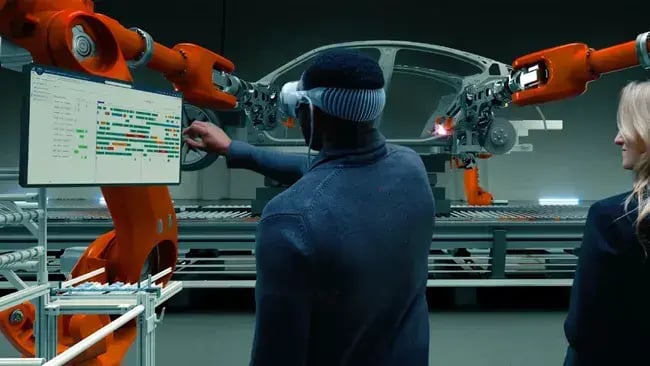
In manufacturing, the DELMIA platform connects to Omniverse, allowing factories to test robots and fully autonomous systems in a virtual environment before a single bolt is fastened on the production floor.
Say goodbye to ChatGPT
Industry does not need a chat window that invents recipes, but work partners that understand blueprints. Dassault has launched three “virtual companions” embedded directly into professional work environments. These assistants understand engineering context, draw conclusions and perform actions within design files themselves.
Dassault and Nvidia technologies
(Photo: Dassault Systèmes)
The first companion, AURA, is designed for managing complex projects and synchronizes knowledge, requirements and changes across organizational teams to prevent human error. The second, LEO, is an engineering assistant built to solve multidisciplinary design challenges.
An engineer can present it with an initial sketch or voice command, and LEO will generate a complete 3D engineering model that complies with manufacturing standards. The third companion, MARIE, specializes in deep science and helps researchers test hypotheses in chemistry and materials science.
At a time when industrial espionage and intellectual property leaks are real threats, Dassault stresses that all information and knowledge gathered by these assistants remains under the organization’s full data sovereignty. The data is not uploaded to a public cloud and is not used to train models for other companies.
Another layer of the platform comes through a strategic partnership with Apple. A new application called 3DLive allows virtual twins to leap from flat screens directly into physical space through Apple Vision Pro headsets.
The integration allows engineering teams worldwide to examine full-scale models of cars, passenger aircraft and production lines, and interact with them physically and accurately in real time.
At the same time, a consumer version called HomeByMe Reality allows architects and real estate agents to present interior designs to clients in a realistic format. Based on hands-on experience with the technology during a company conference in Paris last summer, the shift appears to fundamentally change how engineers can tackle real-world challenges without building physical models every time they want to test a new design or development.
Dassault versus the software giants
Dassault Systèmes is not operating in a vacuum. The engineering software market is locked in fierce competition with giants such as Ansys, Siemens and Autodesk.
Ansys, a leader in complex physical simulations, recently signed a major merger agreement with Synopsys and offers its own AI tools for predicting thermal and electromagnetic loads. Siemens, meanwhile, operates the Xcelerator platform and is advancing close partnerships with Microsoft to integrate AI assistants into factory floors.
Dassault’s apparent advantage in the seventh generation lies in deep integration: while some competitors offer point solutions or rely on adapted general-purpose language models, Dassault presents a holistic operating system for industry backed by Nvidia’s dedicated hardware and Apple’s visualization ecosystem.
For Israeli companies such as Kornit Digital and global giants like Tesla and Danone, these tools are no longer futuristic concepts, but the new standard for the development and manufacturing world.
So the next time you buy a car, there is a good chance artificial intelligence helped design and manufacture it.