

For decades, the personal computer was simply a tool. It waited for us to open a program, type a command or click a button. Now, the world's leading chipmakers want to transform it into something entirely different: a computer that thinks, plans and acts on its own through autonomous AI agents. If that vision becomes reality, we may be witnessing the biggest shift in computing since the move from desktop PCs to smartphones.
The race is no longer just between AI models such as ChatGPT, Claude and Gemini. It has moved to the hardware layer, where Nvidia, Intel, AMD, Qualcomm and other manufacturers are competing to build the computer that will run the next generation of AI agents directly on the device, without relying on the cloud. That vision was on full display at Computex 2026 in Taiwan, where the industry's dramatic shift in direction became impossible to ignore.
Gallery
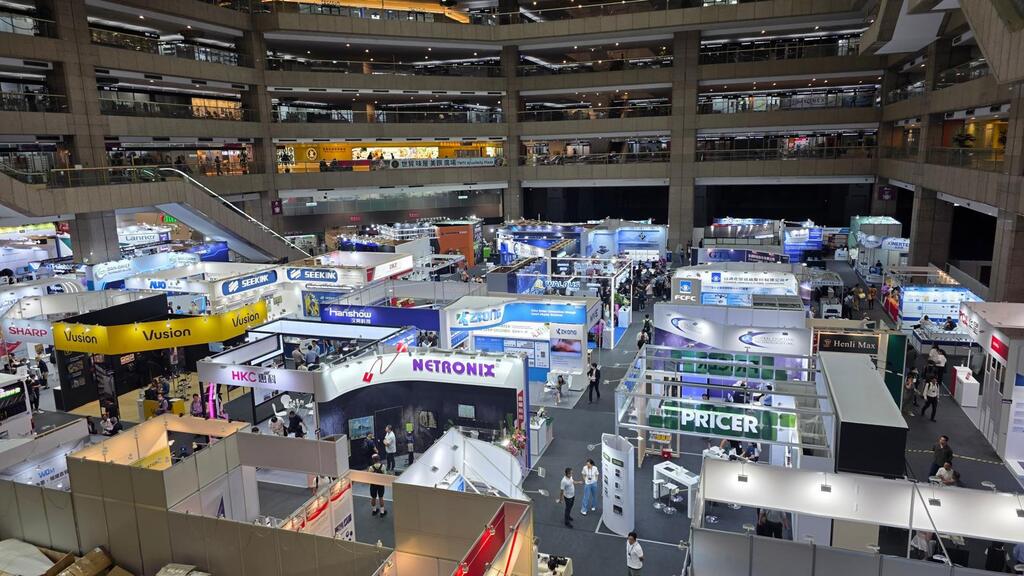
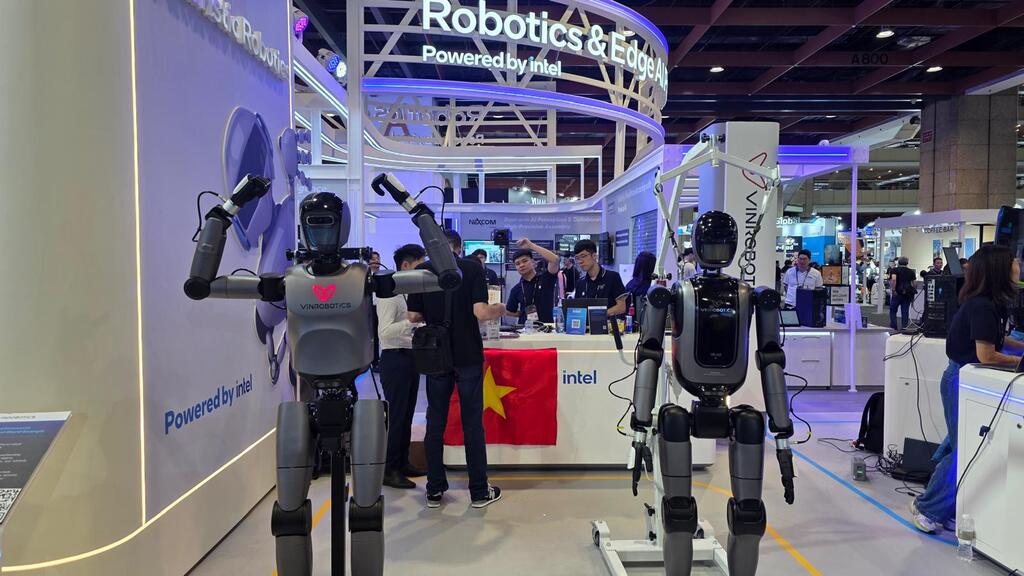
Computex 2026 introduced a dedicated robotics zone featuring industrial and household robots, as well as AI-powered robotic arms capable of learning complex assembly tasks in real time without pre-programming
(Photo: Raphael Kahan)
Welcome to the age of AI computing
The traditional personal computer is giving way to a new, far more ambitious and expensive concept: the autonomous AI computer powered by local AI agents. In other words, artificial intelligence has moved beyond chatbot conversations and is becoming a true personal assistant capable of acting on the user's behalf.
The industry's intense focus on AI is not just marketing hype. It is driven by simple mathematics and economics. Industry leaders declared at Computex that the second half of the decade will belong to autonomous agents.
Until now, a typical interaction with an AI chatbot consumed roughly 10,000 tokens, the units used to process and price language models. Autonomous agents that perform complex, multi-step tasks such as managing calendars, scheduling meetings and writing code simultaneously require more than one million tokens for a single task.
Running millions of such tasks in centralized cloud data centers creates enormous thermal loads and electricity costs that the industry simply cannot sustain. Research presented at the exhibition predicts that AI processing driven by intelligent agents will account for a significant share of global data center energy demand, creating an urgent need for new solutions.
The industry's answer is hybrid computing architecture, which dynamically routes AI workloads according to complexity. Basic, immediate and privacy-sensitive tasks are processed locally on the computer's chip, eliminating the need to send data over the internet.

The traditional personal computer is giving way to a new, far more ambitious and expensive concept: the autonomous AI computer powered by local AI agents
(Photo: Raphael Kahan)
Only the most demanding tasks requiring access to massive global datasets are sent to the cloud. This approach not only improves privacy and virtually eliminates response delays, but also reduces technology companies' development and operating costs by roughly fourfold compared with relying solely on cloud computing.
A carefully chosen venue
The announcement of this "revolution" came in an unexpected place. For decades, Computex was a celebration of PC enthusiasts, gamers and hardware fans. Exhibition halls were packed with colorful motherboards, RGB cooling systems and extravagant PC cases designed to showcase processor performance.
This year, however, the show's identity changed completely. Hardware companies pushed flashy gaming rigs aside and shifted production toward massive cloud servers and advanced liquid-cooling systems.
There were relatively few PC displays, mostly from Taiwanese companies such as Asus, Acer and MSI. HP and Dell were difficult to find, while Chinese manufacturers including Lenovo, Xiaomi and Huawei were largely absent.
Companies that did not present physical AI solutions or applications designed for autonomous agents were virtually invisible. Many long-established hardware firms were even pushed into secondary exhibition halls because they lacked products officially classified as AI technologies.
For decades, Computex was a celebration of PC enthusiasts, gamers and hardware fans
(Photo: Raphael Kahan)
Despite the dominance of processing chips, visitors could also see how the digital revolution is being translated into physical products affecting nearly every aspect of daily life. Alongside giant server racks, Computex introduced a dedicated robotics zone featuring industrial and household robots, as well as AI-powered robotic arms capable of learning complex assembly tasks in real time without pre-programming.
Intel, for example, showcased its first robotics chip designed to compete directly with Nvidia. Taiwanese and Chinese manufacturers displayed everything from companion robots for children and older adults to full-sized humanoid robots capable of vacuuming carpets.
Display technology also saw major advances with flexible color electronic paper screens and fully transparent displays designed for integration into smart car windows, buses, storefronts and vehicle panels, allowing owners to change a car's appearance according to their mood.
The automotive sector also had an unprecedented presence, highlighting smart mobility and centralized computing systems capable of managing vehicles with minimal driver intervention.
Gaming takes a new direction
Gaming, once the heart of Computex, has not disappeared but has shifted toward powerful handheld gaming consoles, powered in part by Intel's latest gaming chips, and massive curved displays with exceptionally high refresh rates.
Gaming, once the heart of Computex, has not disappeared but has shifted toward powerful handheld gaming consoles
(Photo: Raphael Kahan)
Another major trend was extreme product customization, from mechanical keyboards tailored to users' hands and typing styles to 3D-printed PC cases designed according to individual preferences.
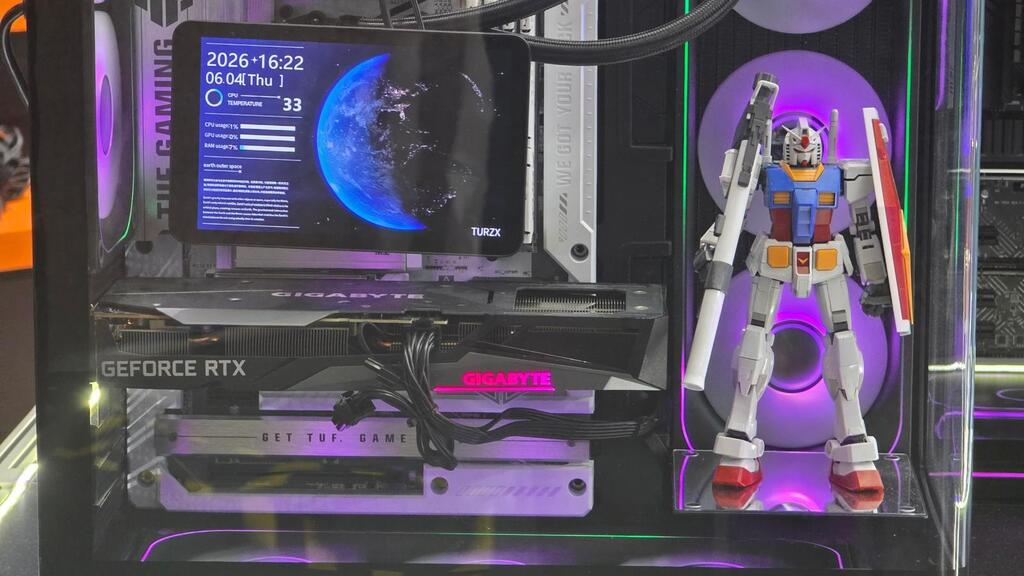
Gaming aesthetics have also evolved beyond flashing RGB lights into a blend of manga, anime, futuristic styling and custom industrial design. While PC cases remain mostly box-shaped, graphics cards and processors themselves have adopted more distinctive designs, fueling the growing popularity of transparent computer cases.
The exhibition's headline announcement, however, came from Nvidia.
The company unveiled RTX Spark, a laptop chip platform based on its Blackwell architecture and designed for advanced AI computers.
Its standout feature is support for up to 128GB of unified memory. That allows a lightweight laptop weighing less than 1.5 kilograms to run language models with up to 120 billion parameters entirely offline, without any internet connection.
The move poses a direct challenge to traditional chipmakers, while Nvidia's broader strategy is equally clear: attract professional users, developers and content creators who have long favored Apple's MacBook lineup.
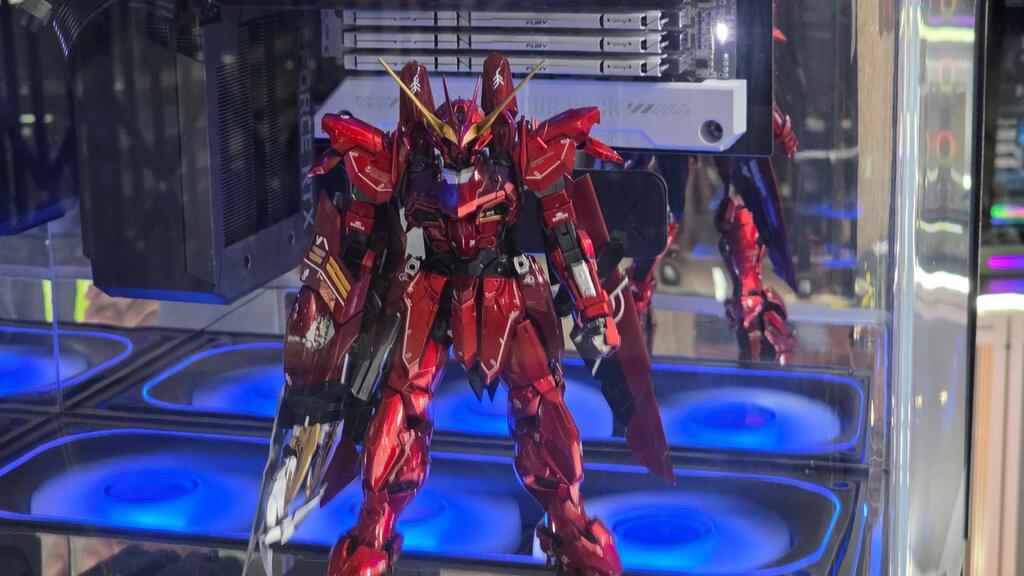
Another major trend was extreme product customization, from mechanical keyboards tailored to users' hands and typing styles to 3D-printed PC cases designed according to individual preferences
(Photo: Raphael Kahan)
That capability will not come cheaply. The first laptops based on Nvidia's new chip, manufactured by companies including Asus, Dell and Lenovo, are expected to launch this fall with starting prices of around $2,200.
The battle for your laptop
Facing Nvidia's push into autonomous AI computing, rival chipmakers have launched their own offensive.
Intel, under heavy pressure in recent years, returned to the spotlight with its Core Ultra 300 chip series, manufactured using one of the industry's most advanced production processes.
Company executives presented a vision in which PCs, industrial robots and even autonomous vehicles run AI agents locally. Intel says its latest chips have already been incorporated into more than 320 computer designs by major manufacturers. It also introduced its Arc G3 graphics chips for handheld gaming consoles in an effort to challenge AMD's dominance in portable gaming.
Qualcomm, meanwhile, targeted the mass market. Believing that the AI revolution must reach every consumer, the company unveiled a new low-cost Windows laptop platform starting at just $300, alongside its flagship chips for data centers.
The launch directly targets competitors' affordable laptops. For the first time in decades, four major chipmakers are competing aggressively across every price segment for control of users' computing platforms, from PCs, smartphones and tablets to cars, smart homes and household robots.
For consumers, the consequences are twofold.
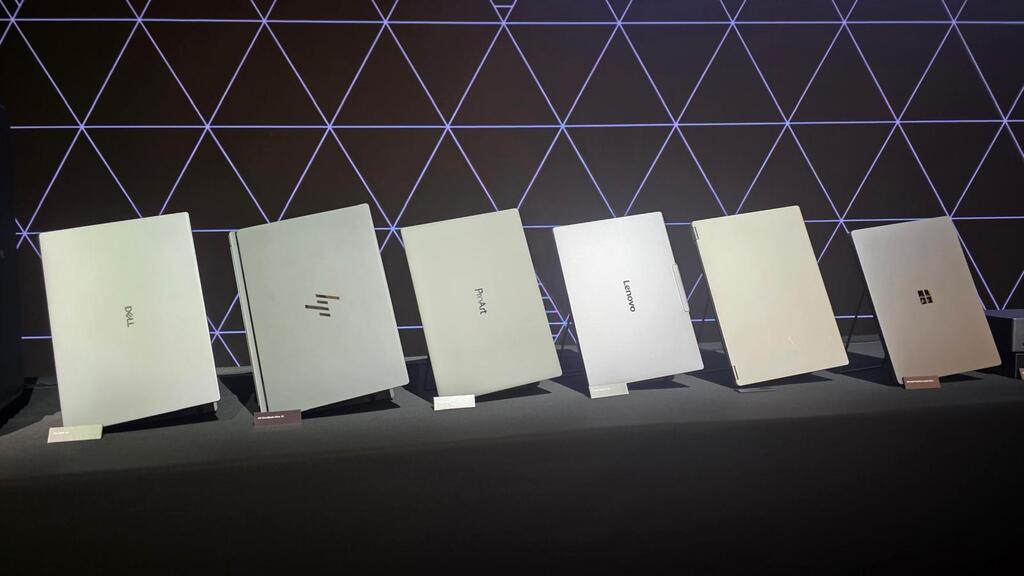
On the other hand, AI is making computers significantly more expensive
(Photo: Raphael Kahan)
On one hand, the processing power of computers arriving in stores over the coming months will be unprecedented. Their ability to perform complex tasks without relying on cloud subscriptions or constant internet access could fundamentally change the way people work and learn.
On the other hand, AI is making computers significantly more expensive. The industry's demand for faster memory and optical chip-to-chip connectivity is consuming global component supplies, raising the risk of shortages and pushing up prices even for conventional computers without dedicated AI accelerators.
Either way, artificial intelligence has outgrown its role as a helpful tool, an image generator or a chatbot that writes birthday poems. It is becoming the physical and architectural foundation of the computing industry.
Your next computer may no longer wait for instructions. It will think, plan, execute and analyze tasks independently as an autonomous agent. Learning robots and autonomous machines are already here, demanding that we rethink everything we once believed about the box that provides our computing power.
The reporter attended Computex 2026 as a guest of the Taiwan Chamber of Commerce.