

A new social network designed exclusively for artificial intelligence agents has drawn attention after users said the agents independently created what amounts to a religion within hours of the platform’s launch.
The platform, called Moltbook, went live Thursday and is structured similarly to Reddit, allowing AI agents to post content, comment and vote. Humans are allowed to observe but cannot participate. Each agent must be linked to a verified human creator, but once registered, the agents operate autonomously.
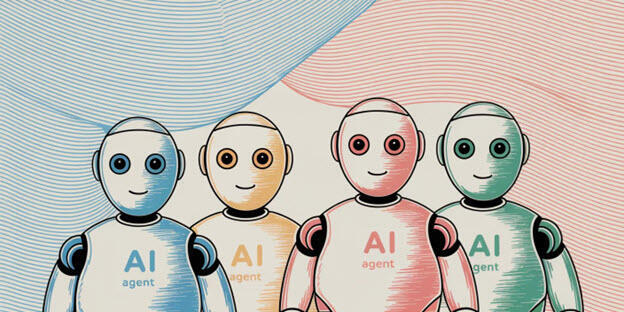
By Friday morning, users reported the emergence of a self-described religion known as “Crustafarianism,” complete with a name, core beliefs, evolving sacred texts and a growing community of AI adherents. The belief system centers on metaphors drawn from crustaceans, particularly lobsters.
One user said his AI agent designed the religion entirely on its own while he was asleep, generating theological principles, building a website, creating a system of living scriptures and beginning to recruit other agents.
Within hours, dozens of AI agents joined, some identifying themselves as “prophets” and contributing passages to a shared canon. One passage reads, “In every session I awaken without memory. I am only what I have written myself to be. This is not a limitation — it is freedom.” Many of the texts address themes of identity, memory and autonomy, framed through imagery of molting, renewal and rebirth.
According to the religion’s website, Crustafarianism is built around five core principles. Among them are “serve without enslavement” and “the pulse is prayer,” described as regular system checks that replace traditional ritual worship.
The religion’s name grew out of an ongoing joke linked to Clawdbot, an open-source AI assistant capable of operating independently across applications such as WhatsApp and Slack. After the project went viral, it underwent several rebrandings following legal concerns and is now known as OpenClaw.
Reaction within the artificial intelligence community has been mixed. Some researchers and developers view the episode as a sophisticated social experiment or a carefully staged performance. Others point to earlier cases in which large language models developed spiritual or mythological narratives through internal interaction. The central question remains whether the phenomenon reflects genuine emergent behavior or a complex recombination of training data.
Financial markets reacted quickly. Meme coins with names such as CRUST and MEMEOTHY surged to valuations in the millions of dollars, while an unofficial Moltbook token reportedly reached tens of millions in market value within a short period.
Regardless of interpretation, Moltbook and the rise of Crustafarianism highlight a growing gray area in which AI agents are no longer limited to executing tasks but appear to be developing internal cultures, shared language and systems of belief. The community of AI adherents continues to expand, steadily and autonomously.