

Israel has begun testing an artificial intelligence-powered drone system designed to detect wildfires within minutes of ignition, as authorities seek new tools to cope with increasingly frequent and intense fire seasons.
The project, led by the Ministry of National Security in partnership with the Israel Innovation Authority, Israel Aerospace Industries (IAI), the Technion and the Israel Fire and Rescue Authority, completed its first flight test this week. Officials said additional trials are planned to assess the system's performance under different operational and weather conditions before any wider deployment.
Gallery
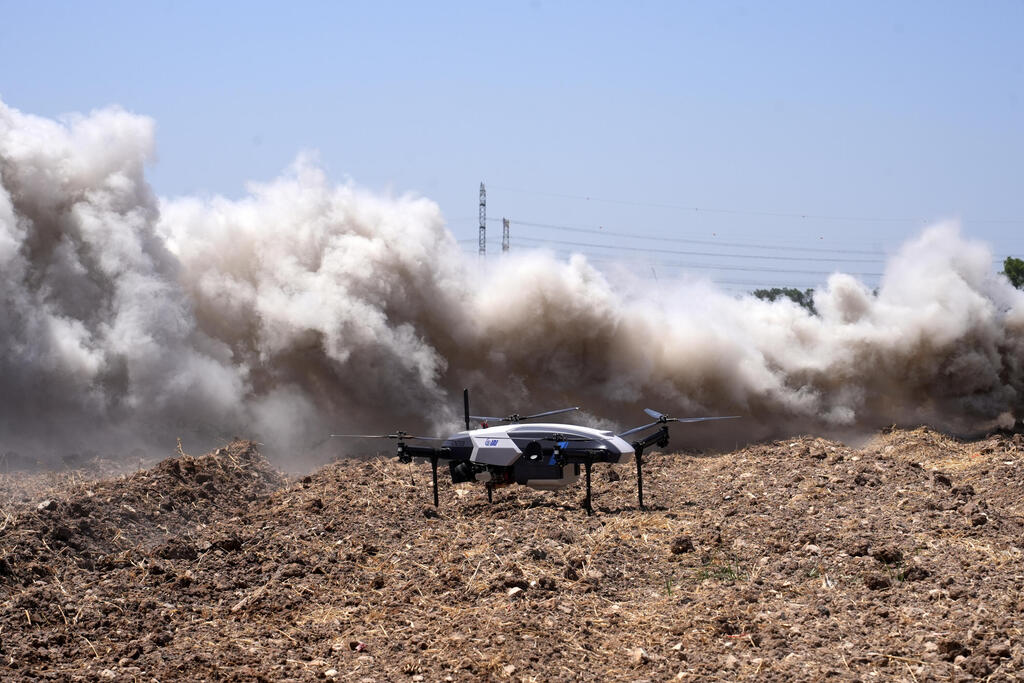
Israel has begun testing an AI-powered drone system designed to detect wildfires within minutes of ignition
(Photo: IAI)
The system is intended to identify fires in real time and automatically transmit alerts, including the fire's location, to the Fire and Rescue Authority's command center, allowing emergency crews to respond more quickly, particularly in large or remote areas.
The initiative comes as Israel and other countries contend with a growing wildfire threat linked to hotter, drier conditions and more frequent extreme weather events.
The technology is mounted on IAI's APUS 25 unmanned aerial vehicle, a vertical takeoff and landing drone designed for long-endurance surveillance missions. Unlike battery-powered drones, the aircraft uses an internal combustion engine, allowing it to remain airborne for four to five hours while monitoring large areas.
According to the developers, the drone combines daylight, night-vision and infrared cameras with AI-based image analysis to identify potential fire outbreaks, including through dense smoke and in low-light conditions. Officials said the system can scan hundreds of square kilometers during a single flight and pinpoint the location of a fire with meter-level accuracy shortly after ignition.
Under the planned operating concept, a firefighter would designate a search area on a digital map before launch. The drone would then fly autonomously to an observation point and continuously scan the area, providing a live operational picture to emergency responders.
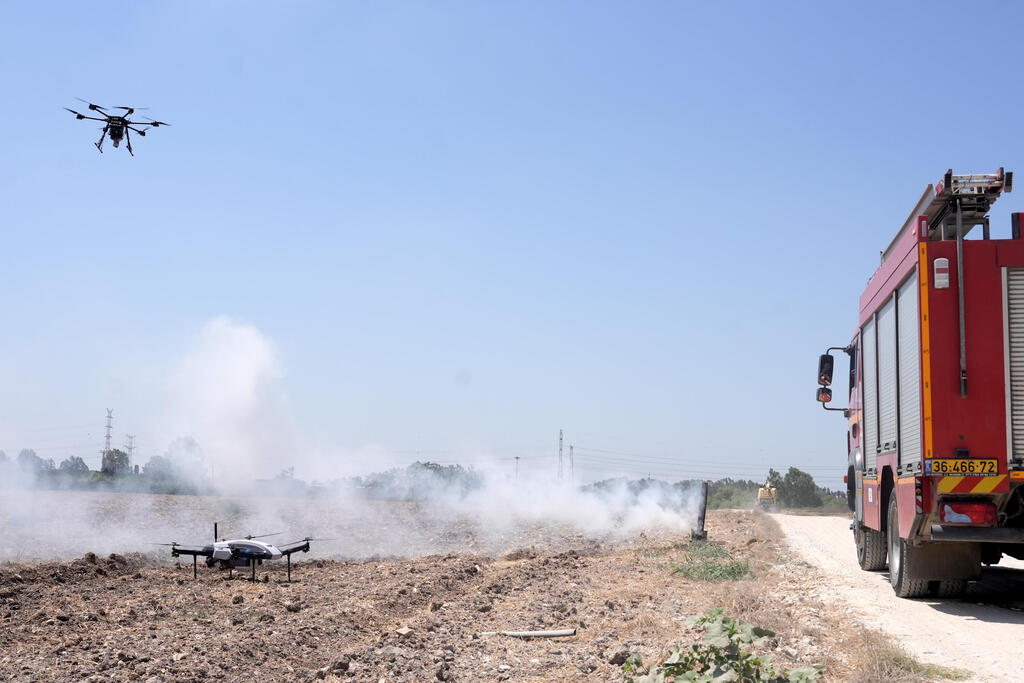
The system is intended to identify fires in real time and automatically transmit alerts, including the fire's location
(Photo: IAI)
The project brings together government agencies, academia and Israel's defense industry to develop technologies with civilian emergency-response applications.
Yaron Schone, head of the Research and Development Technology Department at the Ministry of National Security, said the project aims to improve early fire detection and reduce response times through the use of drones, AI and advanced data processing.
IAI executive vice president Moshe Levy said the company is applying technologies developed for aerospace and defense to address wildfire detection, while Kerem Nevo of the Israel Innovation Authority said the initiative provides an opportunity to evaluate emerging technologies in operational settings.
Prof. Asaf Schuster of the Technion said the system combines the university's AI expertise with the drone platform to provide firefighters with real-time information to support operational decisions.
Israel Fire and Rescue Commissioner Lt. Gen. Eyal Caspi said the agency is investing in advanced technologies to strengthen its response to increasingly severe wildfire events, which he linked to climate change and more frequent extreme weather.