

There is one claim that must be stated clearly and unequivocally today: artificial intelligence is not limited to large language models alone. A country that measures its standing in AI solely by its success in developing LLMs is missing the full picture and, more importantly, the real technological and economic opportunities.
It is true that Israel is not a leader in developing the largest models themselves. But it is unquestionably one of the strongest countries in the world in almost every other layer of the AI ecosystem — and that is precisely where its strategic advantage lies.
Gallery

From right: Elon Musk, Google CEO Sundar Pichai, Jeff Bezos, Lauren Sanchez and Mark Zuckerberg at Donald Trump's inauguration
(Photo: Saul Loeb, Reuters)
In public discourse, AI is often equated entirely with generative models. Yet these are only one layer in a far more complex system. Behind every such model stand hardware infrastructures, communication systems, data management, performance optimization and security solutions — and above them, an application layer that translates all of this into real solutions for global markets. Without these components, even the most advanced model will not function.
Over decades, Israel has developed deep expertise in complex systems, in smart integration between hardware and software, and in infrastructure solutions that are critical for AI at industrial scale. Israeli companies are already active in nearly every infrastructural component of AI: dedicated chips, advanced connectivity solutions, systems for managing massive data repositories and data centers, software infrastructure, security and energy efficiency. This is not the periphery — it is the beating heart of the AI revolution.
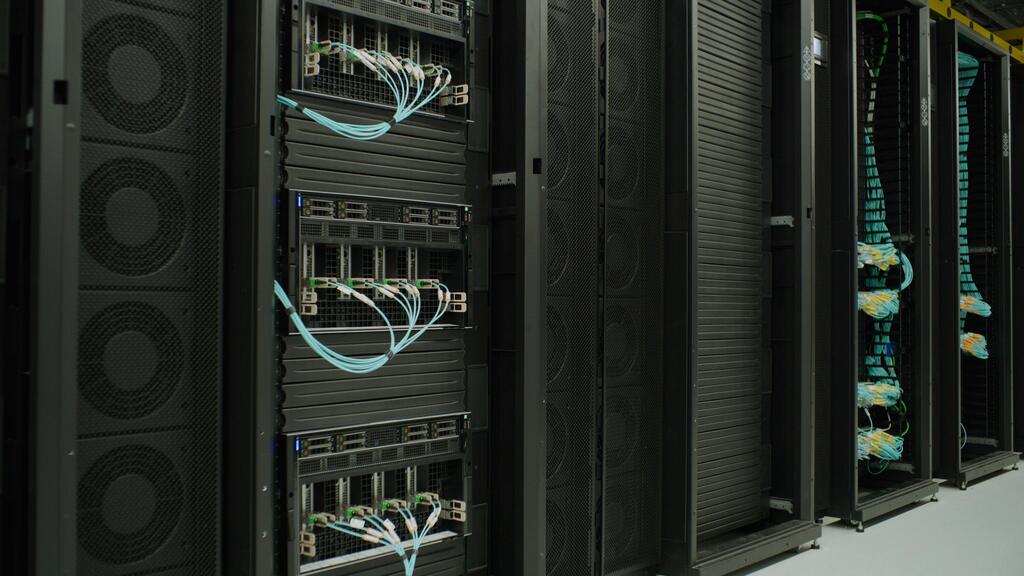
A supercomputer in Israel
(Photo: Nvidia)
And this is not theoretical. The growing activity of global technology giants in Israel in recent years clearly demonstrates it. The most prominent example is chip and software giant Nvidia, which has deepened its presence here through a wave of acquisitions (such as Deci AI and Run:AI) and the expansion of its northern development center with investments totaling billions of dollars.
At the same time, yesterday’s announcement by Astera Labs that it will establish an R&D center in Israel joins a clear trend: the world recognizes a unique advantage here, and Israel is becoming a significant force in the development of AI chips.
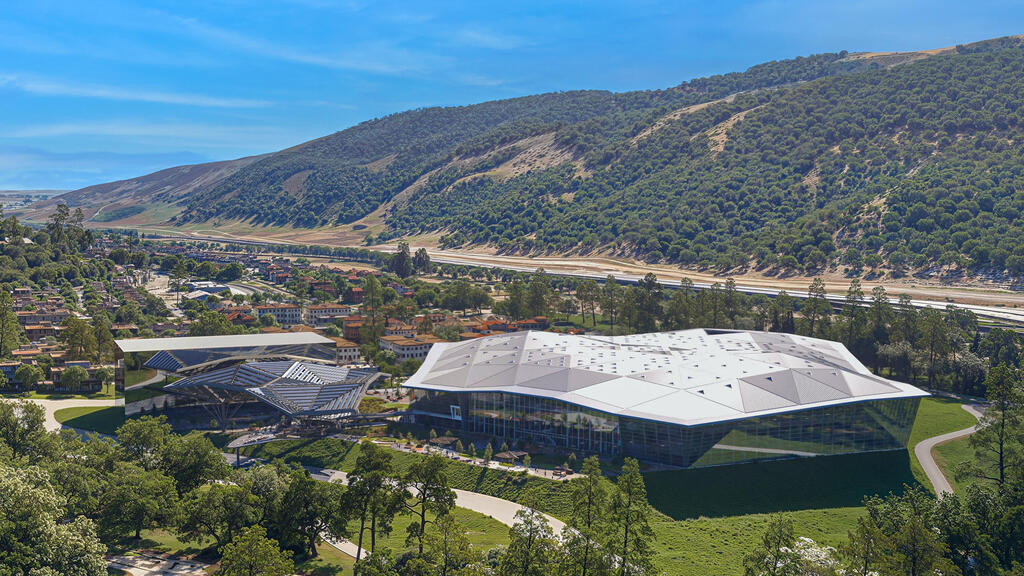
A rendering of Nvida's planned campus in Kiryat Tivon
(Photo: Nvidia)
In parallel, Israel also leads in the application layer — that is, in its ability to leverage AI into products and solutions for real problems in global markets. This is a longstanding strength of Israeli high tech: identifying a need, building a product and entering the market quickly.
As a result, AI-based solutions are being developed in Israel in cybersecurity, health care, fintech, smart industry, agritech, energy and transportation — products that generate tangible global impact and enormous economic value.
It is important to stress another truth: Israel neither needs nor can compete with superpowers in building capital-, land- and energy-intensive supercomputers. The real battle — where the highest economic value is created — takes place elsewhere.
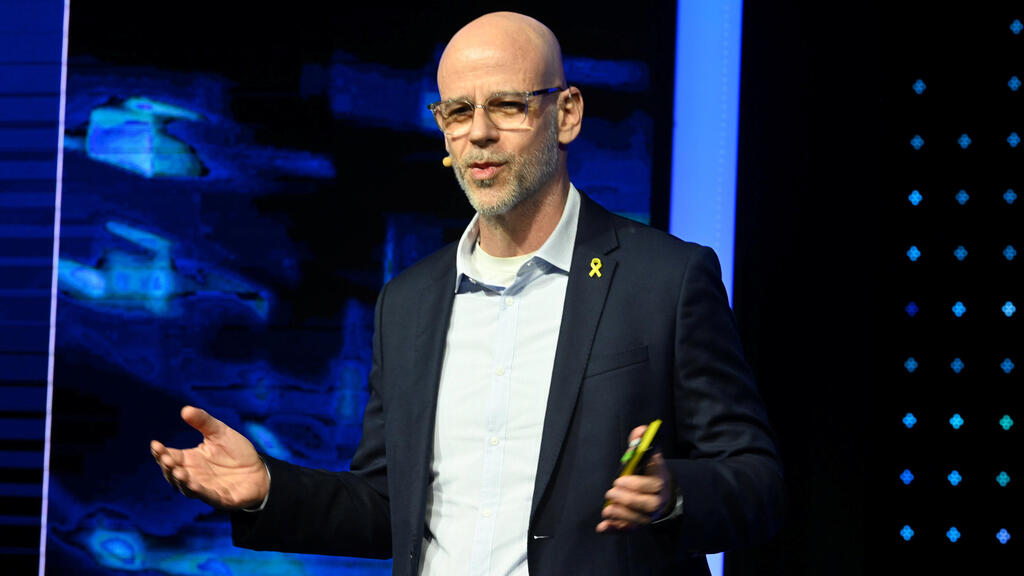
Dror Bin, CEO of the Israel Innovation Authority
(Photo: Kobi Koeneks)
It happens in research and development, architecture, algorithms, communications, data management, cybersecurity, deep software and the ability to translate all of this into business applications. While major powers compete over gigawatts, Israel can and should compete over brainpower.
Beyond economics, this is also about technological sovereignty. AI infrastructures are not off-the-shelf products; they are strategic assets that affect independence, security and national resilience. A country that holds assets in these critical layers is a country with substantial power on the global front.
The conclusion is simple: if we continue to narrow the AI conversation to large models alone, we will miss reality and weaken ourselves. If we understand the full picture and invest wisely across all layers of artificial intelligence — infrastructure, research and development, and applications — Israel will not only remain relevant, but will be one of the most important countries in the AI world of the coming decade.