

Following the unusual terror incident aboard a flydubai flight to Israel, which avoided disaster only thanks to the quick thinking of the captain and passengers, attention has once again turned to how security authorities can identify threats originating from within a flight crew. Against this backdrop, Israeli company SDS recently unveiled an artificial intelligence system that screens employees through their smartphones, without physical contact, and flags potentially suspicious individuals within minutes.
How do you deal with a threat inside the cockpit?
The serious incident has brought one of civil aviation's greatest nightmares back into focus: a threat originating inside a locked cockpit. It highlights a troubling security gap that has plagued the industry for decades. Ground security systems can prevent weapons and explosives from being brought aboard aircraft, but they struggle to predict when an authorized crew member who has passed routine background checks might decide to act against the plane and its passengers.
Gallery
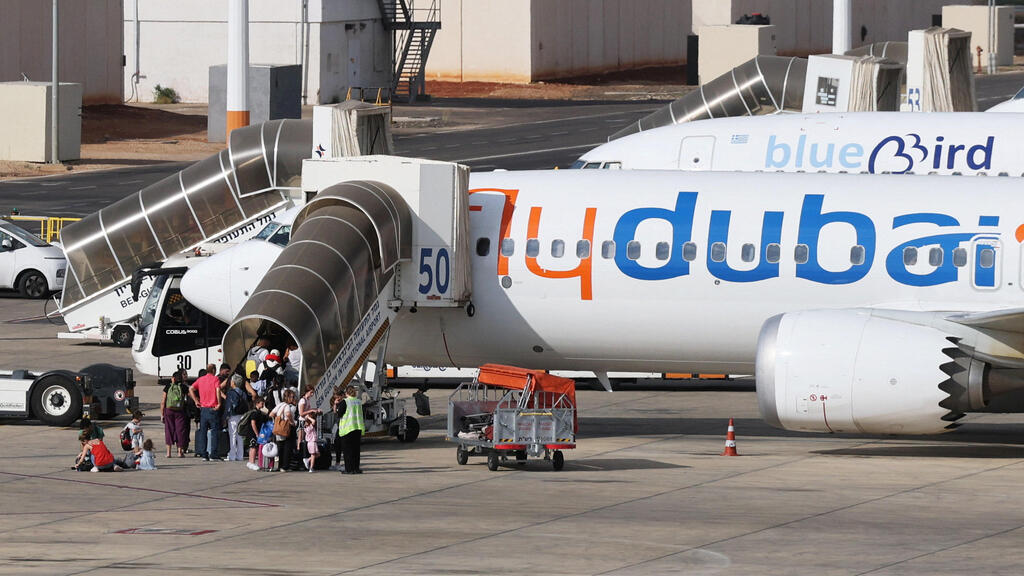
One of civil aviation's greatest nightmares is the threat originating inside a locked cockpit
(Photo: Ammar Awad/Reuters)
Aviation history is marked by disasters caused by precisely this kind of threat. In March 2015, a Germanwings co-pilot deliberately crashed Flight 9525 into the French Alps, killing all 150 passengers and crew members. Official investigations also concluded that the 1999 crash of EgyptAir Flight 990 off the U.S. coast and the 2013 crash of LAM Flight 470 were caused by deliberate actions taken by a crew member in the cockpit.
These incidents demonstrated the limitations of periodic screening, leaving regulators struggling to address scenarios in which the threat comes from the person at the aircraft's controls.
An Israeli company is now seeking to address that gap. SDS (Suspect Detection Systems), which has operated in the security screening industry for years, has introduced TruthAI, a smartphone-based artificial intelligence application designed to replace initial security interviews with an automated screening process that takes only a few minutes.
The person being screened answers a series of questions by tapping the phone's touchscreen. A machine-learning algorithm then analyzes psychophysiological and cognitive responses, compares them with a large database and produces a binary result: suspicious or not suspicious.
The system's roots lie in the company's earlier COGITO technology, developed in response to the September 11 attacks with funding from the U.S. Transportation Security Administration (TSA).
While the original system required physical contact with polygraph-like sensors and was used mainly at border crossings and sensitive security facilities, the latest version seeks to advance screening through a contactless approach.
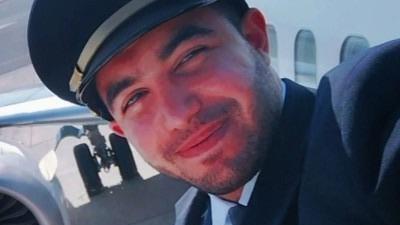
Flydubai's terrorist pilot
According to the company, knowledge accumulated over two decades of work with intelligence organizations, police forces and airlines has been incorporated into software capable of operating on any smartphone.
In Israel, SDS was selected to participate in a Finance Ministry initiative focused on contactless security screening as part of an assessment of future technologies for border crossings.
Accuracy remains a major challenge
Despite the technological promise, the system faces significant scientific and practical challenges.
Tests based on physiological and cognitive responses have imperfect accuracy rates, even when their performance is considered relatively high. In contactless screening, the false-positive rate, in which an innocent person is incorrectly flagged as suspicious, stands at 4%. The false-negative rate, in which a person with malicious intent passes through the system undetected, reaches 10%.
These are far from negligible figures. Screening 1,000 crew members a day could send dozens of innocent employees for further questioning, while one in 10 individuals posing a genuine threat could pass through the screening process without being detected.
Beyond questions of accuracy, the technology faces an almost insurmountable obstacle in the international arena.
In the United States, although the federal government funded the original research, the Obama administration and subsequent administrations restricted the use of psychophysiological questioning technologies within the country, following strong opposition from civil liberties organizations and stringent privacy protections.
In Europe, the situation is even more complicated. Data protection regulations under the General Data Protection Regulation (GDPR), together with the European Union's AI Act, impose substantial restrictions on AI systems that analyze emotions and psychological states in public spaces and workplaces, treating certain applications as posing unacceptable risks.
By contrast, East Asian countries, particularly Singapore and border crossings with Malaysia, have been more receptive to autonomous screening systems, which have been operating in the field for years. In China, surveillance systems that analyze facial expressions and behavior are already deeply integrated into public spaces, railway stations and airports, reflecting a security approach that gives little weight to individual privacy rights.
In Israel, where security authorities enjoy broader legal and public flexibility in responding to terrorist threats, officials are considering the possibility of requiring preliminary screening of foreign airline crew members as a condition for obtaining landing clearance.
Nevertheless, as long as the technology faces such strong international opposition, it is doubtful that a smartphone-based polygraph will soon become a mandatory standard across the aviation industry. Instead, individual countries or airlines may adopt such systems according to their local legal frameworks.