

After nearly four years in which ChatGPT, Claude and Gemini redefined the world of AI, Apple on Monday unveiled its answer to the biggest technological revolution of recent years at its annual WWDC 2026 developers conference: the new, smarter Siri.
So what did Apple announce, and when will the new system reach users?
Siri gets smarter, for real this time
For Apple, this is far more than another software update. The company hopes to turn the iPhone from a device that waits for user commands into one that understands context, identifies intent and carries out tasks on its own. If that vision succeeds, Siri could evolve from a voice assistant long seen as fairly limited into a personal AI agent that accompanies users through almost every action.
The move comes after a difficult period for the company. While rivals have rolled out new AI models at a dizzying pace in recent years, the Cupertino tech giant has been perceived as lagging far behind.
The pressure on Apple was so intense that the company rushed to announce its AI system, Apple Intelligence, two years ago, before it truly had a finished product. It struggled to deliver the capabilities it had promised and recently agreed to pay $250 million in a class-action settlement over claims it misled consumers about the system’s availability and capabilities.
Now, according to Apple, Siri AI has been rebuilt from the ground up to become the ultimate smart agent. It is designed to understand natural language, hold continuous conversations, remember context and use personal information to help users carry out complex tasks.
Gallery
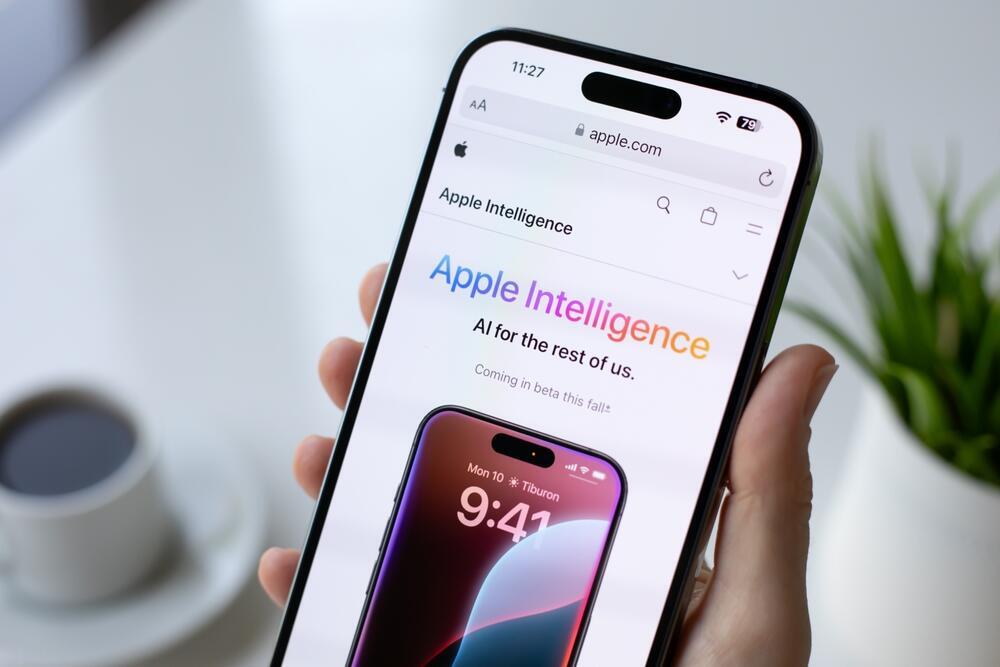
Apple Intelligence — Apple’s artificial intelligence; for real this time
(Photo: DenPhotos / Shutterstock.com)
Users will be able, for example, to ask it to find a restaurant a friend recommended in a message two weeks earlier, locate an old order number in an email, pull up photos from a family vacation or draft a new message based on information stored on the device.
The biggest innovation, however, is its understanding of personal context. Siri will be able to combine information from messages, emails, photos, files and different apps to answer questions or perform actions, and Apple says third-party apps will also be able to integrate with the system in the future.
The way users talk to Siri is also changing. Instead of responding to one command at a time, Siri AI is supposed to conduct natural dialogue, understand follow-up questions and continue a conversation without requiring users to repeat every detail. It will also be able to use up-to-date information from the web to answer questions on almost any topic.
The new Siri can also understand what appears on the screen. If a friend sends you a message about dinner, for instance, you will be able to ask Siri to suggest a recipe, find an idea for a dish and add it directly to the Notes app. If a document, photo or website is open, Siri will be able to answer questions about it without leaving the app.
Siri AI in action
(Video: Apple)


For the first time, Apple is also launching a dedicated Siri app that will save conversation history and sync it across all company devices via iCloud. Users will be able to start a conversation on a Mac, continue it on an iPhone and finish it on an iPad or even on Vision Pro glasses.
At the same time, Siri AI will be more deeply integrated into Apple’s operating systems. On Mac and iPad, it will become part of the Spotlight search engine, allowing users to ask questions about files, photos or documents directly from the system. On Vision Pro, it will appear as a 3D interface that can be placed in space and operated by gaze and voice.
Siri enters the camera system
The camera is also becoming an AI tool. A new mode called Siri Mode will allow users to point the iPhone at an object, document or plate of food and receive information or perform actions based on what Siri identifies. Apple demonstrated capabilities such as identifying nutritional values, explaining different objects and even splitting a bill among friends using Apple Cash.
But Siri is only part of the story. Nearly every major Apple app is receiving new AI features. The Photos app can now expand images, change composition and remove objects more realistically, while Image Playground can create photorealistic images from text prompts and edit existing photos.
As with other AI systems, Apple stresses that every image created or edited using Siri will include a hidden SynthID marker, designed to identify it as an AI-edited image.
Smart payment with Siri AI
(Video: Apple)
Safari becomes almost an AI browser
Apple’s veteran browser, Safari, is also set to change. The browser will be able to organize tabs by topic, track price drops or product restocks and notify users when a change occurs. Users will also be able to create new browser extensions using a simple natural-language description.
In practice, Apple is trying to turn AI into a background layer across its operating system. Instead of opening a chatbot and asking for help, the iPhone will be able to suggest creating a calendar event from a message you received, replace a weak password, draft an email response, find a specific photo or build a new automation, all from within the apps you already use.
According to the company, all these capabilities are based on a combination of models that run directly on the device and Private Cloud Compute, a dedicated cloud environment meant to enable more complex tasks without storing personal information on Apple’s servers. The company also stresses that even Apple itself does not have access to the information processed in the cloud.
The clash with the European Union
But as Apple tries to convince users that the future belongs to Siri AI, it turns out that hundreds of millions of iPhone and iPad users in Europe will not receive it, at least not at first. The reason is not a development issue or technical delay, but a sharp dispute with the European Union, which Apple warns could harm user privacy.
According to Apple, the EU’s Digital Markets Act requires it to grant outside companies access to its operating system so they can offer their own AI agents on the iPhone instead of Siri AI. The company warns that such access could allow AI systems to read messages, operate apps and perform actions on behalf of users without the safeguards Apple sees as essential.
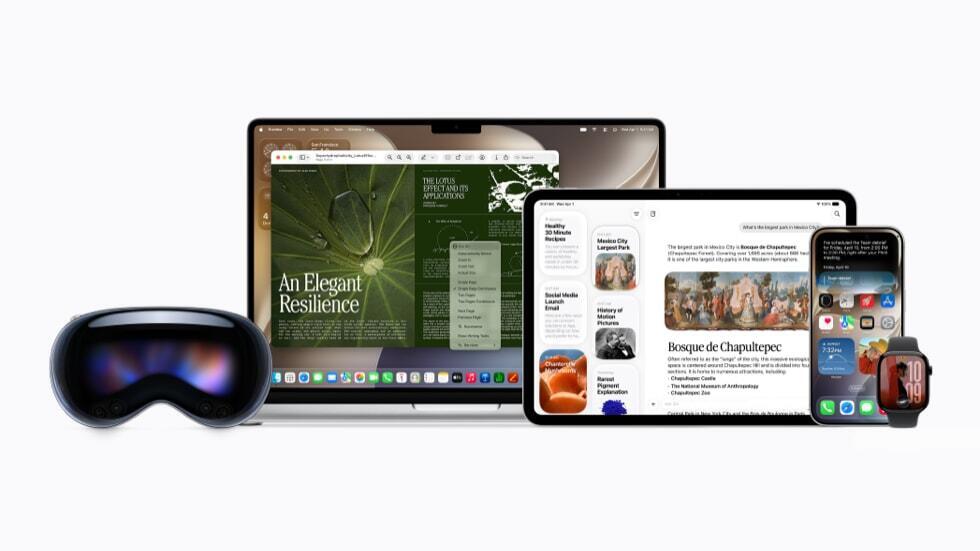
Siri AI enters all of Apple’s operating systems
(Photo: Apple)
The European Union, by contrast, views the demand as part of its effort to open Apple’s operating system to fairer competition among digital service providers. Put simply, while Apple wants to keep its system as a closed and exclusive “walled garden,” the EU is demanding that it allow users to choose between different service providers.
Apple said it proposed a new mechanism called Trusted System Agent, which was meant to serve as a secure mediation layer between AI systems and the operating system, and even offered to roll it out gradually over 18 months. According to Apple, the European Commission rejected all the proposals and approved none of the compromises presented.
As a result, when iOS 27 and iPadOS 27 reach users later this year, iPhone and iPad owners in the European Union will not receive Siri AI, the new conversation app, the writing tools, Visual Intelligence or the other new AI features.
Developers in Europe will also not initially be able to test these features for their apps. MacBook, Apple Watch and Vision Pro users in the EU, however, will be able to use Siri AI and the other smart features, as long as their devices are set to a supported language.
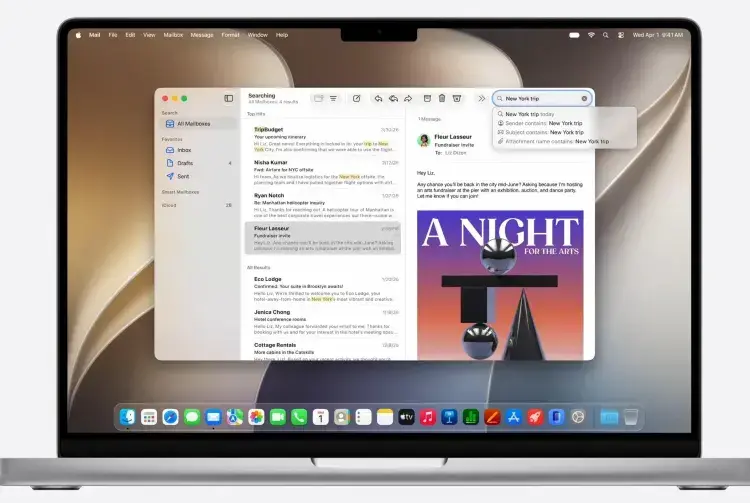
The new macOS Golden Gate 27 operating system; at least Mac users in Europe will get to see Siri AI
(Photo: Apple)
When will all this reach us?
In terms of availability, Siri AI and the many new features announced Monday will roll out gradually. Apple is expected to release iOS 27 and its other new operating systems in September, but some of the new AI capabilities will arrive later through software updates.
The company also said Siri AI will initially launch in beta for devices set to English and will later expand to additional languages. Apple’s announced list of supported languages includes Danish, Dutch, French, German, Italian, Norwegian, Portuguese, Spanish, Swedish, Turkish, Vietnamese, Chinese, Japanese and Korean. Hebrew, unfortunately, is not currently on the list.