

Less than two weeks ago, the heads of Anthropic and OpenAI called for a slowdown in the race to develop the most advanced artificial intelligence models, amid growing concerns over the risks they pose. In practice, however, the race is far from stopping.
On Tuesday, the two companies unveiled a new generation of models almost simultaneously: Anthropic launched Claude Opus 5.5, followed shortly afterward by OpenAI's unveiling of GPT-6 Sol and Luna.
Gallery

Sam Altman, Dario Amodei. The competition is shifting to efficiency
(Photo: Reuters, Getty Images)
The new launches not only illustrate the gap between calls for a slowdown and the competitive reality of the industry, but also signal a change in the nature of the competition itself. After years in which companies competed primarily over who could produce the biggest and most powerful model, the battle is now also shifting to price and efficiency: less computing power and lower operating costs, alongside improvements in accuracy, coding and the execution of complex tasks.
So what did we get?
Anthropic launched Claude Opus 5.5, the flagship of its new model family. The system delivers performance comparable to that of the top-tier Fable 5.1 model, while reducing total operating costs by about 40% compared with Opus 5 and delivering response speeds that are more than 30% faster.
API prices were cut to $4 per million input tokens and $20 per million output tokens, alongside a 60% reduction in cache-read costs. Beyond the technical figures, the company focused on addressing a phenomenon that has drawn criticism from professional users, dubbed "Claudish" — a cumbersome, jargon-heavy and formulaic writing style — in favor of communication that is more direct, clear and focused on results.
At the same time, OpenAI announced GPT-6 Sol and GPT-6 Luna, less than three months after the launch of the 5.6 series. According to company figures, Sol, its primary work model, cuts the rate of factual errors in half compared with its predecessor, while API prices have been reduced by about 50% compared with previous launch prices.
The lower-cost model, Luna, now delivers performance comparable to the previous generation's top work models at a fraction of the cost, while offering significant improvements in stability and adherence to safety instructions.
Comparisons in independent benchmarks published by several websites, including the Artificial Analysis Intelligence Index, put Opus 5.5 at the top of the industry with a score of 58, leading in six of 10 major tests.
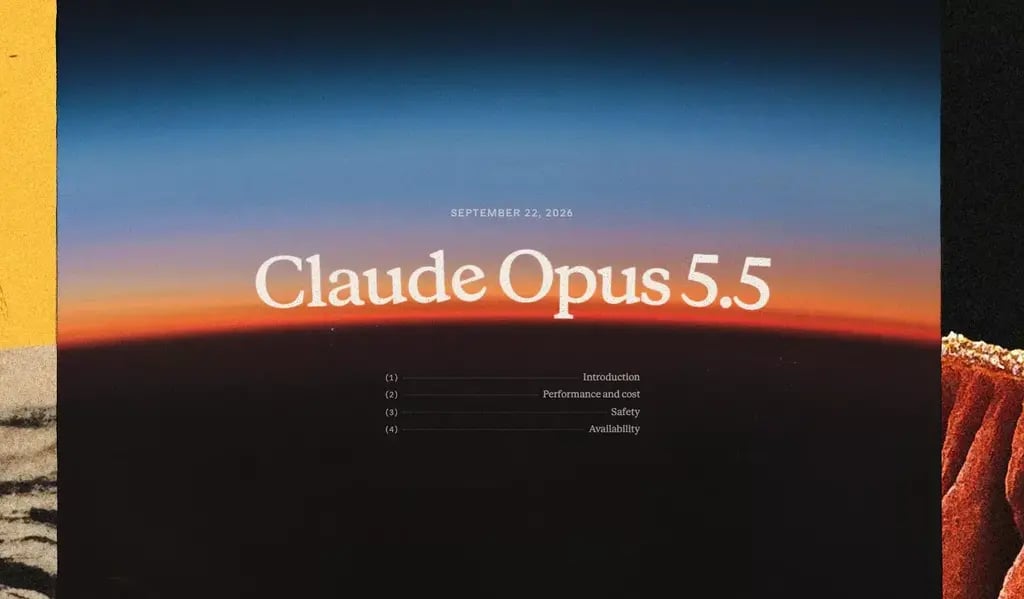
Claude Opus 5.5
(Photo: Anthropic)
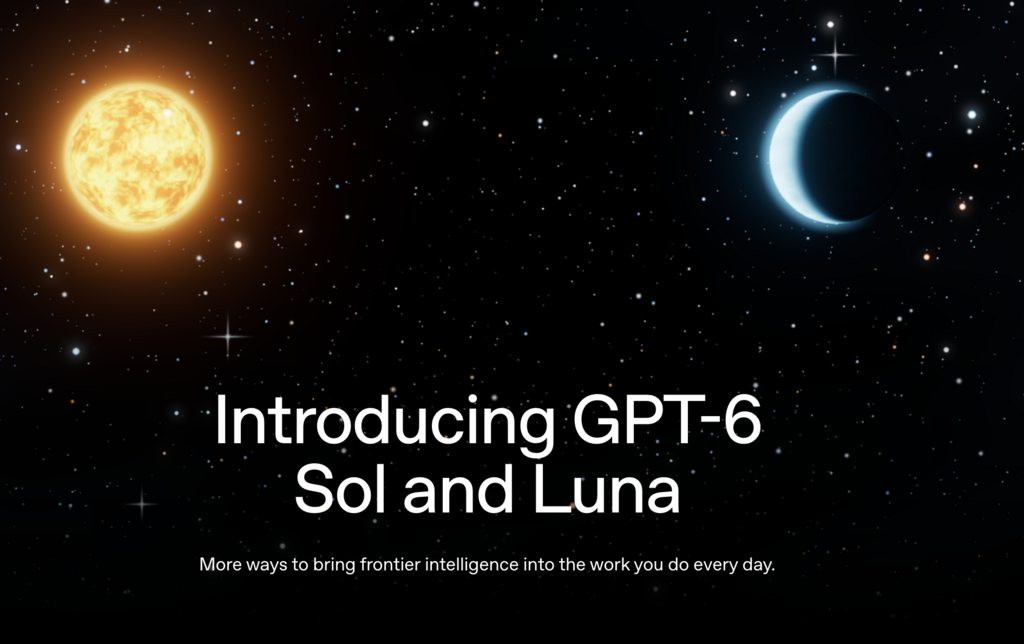
GPT-6 Luna and Sol
(Photo: OpenAI)
On Humanity's Last Exam, the model achieved 67.7% accuracy with tools, compared with 57.2% for GPT-6 Astra. In coding and autonomous agent operation, Opus 5.5 scored 66.4% on Terminal-Bench 4.0, ahead of GPT-6 Astra's 57.9%.
OpenAI, however, retains an advantage in complex business workflows on AutomationBench, with Astra scoring 41.4% compared with 40.0% for Opus 5.5. It also leads in autonomous scientific research on Terminal-Bench-Science, scoring 64.6% compared with Anthropic's 58.7%. Put simply, Anthropic leads in development and technical capabilities, while OpenAI leads in business applications and scientific research.
Competition is having an impact
Competitive pressure in the global market helps explain the sharp price cuts. Technology companies in Europe, the United States and China are accelerating the development of alternative models that are more efficient and less expensive. Chinese models are delivering competitive performance at particularly low costs, pushing U.S. companies to demonstrate a direct economic benefit for organizations deploying AI on a large scale.
At the same time, international regulation, led by the European Union's AI Act, is forcing developers to incorporate built-in labeling mechanisms, zero-data-retention policies and stronger protections against distillation attacks, in which outside parties attempt to extract capabilities from an advanced model without its safety framework.
The current trend also reflects growing business and economic maturity. While competition was once measured almost exclusively by the number of additional parameters or the size of datasets, the battle today centers on computational efficiency, practical accuracy in enterprise applications and reducing data center operating costs.
Lower API costs and more efficient token use are not merely marketing moves, but a direct response to a genuine infrastructure crisis. Data centers around the world face severe constraints on electricity supply, heat dissipation and the availability of graphics accelerators. Public anger is also growing over the diversion of energy resources to operate these data centers.

Artificial intelligence
(Photo: Shutterstock)
The implementation of prompt-caching technologies, which companies have begun incorporating into their models, allows systems to store and retrieve previously prepared context instead of recalculating it with every request. This can cut server electricity consumption by tens of percentage points, free up critical memory resources on accelerators and allow companies to expand their operations without waiting for dedicated power plants to be built for their server farms.
The impact on Israel
From a local perspective, the changes present a twofold challenge for Israeli companies and developers building products on OpenAI and Anthropic infrastructure. On the one hand, the shift to models that provide formal guarantees that data will not be retained makes it easier to integrate them into products intended for export to Europe and the United States.
On the other hand, the need to meet strict compliance requirements, implement security controls against attacks designed to circumvent restrictions and comply with bans on model distillation requires Israeli organizations to update their security protocols and ensure that the processing of corporate data does not expose them to cross-border regulatory violations.
There are other players in the field as well, including Google and Meta. Meta's Muse AI model has become one of the more popular models in recent months, largely because of its accessibility through Facebook, WhatsApp and Instagram. Google's Gemini is considered less capable than the models offered by the two market leaders, but it is integrated into Google's platform.
On the Chinese side, DeepSeek and Alibaba's Qwen models deliver performance that comes very close to that of their Western counterparts at significantly lower prices, with the added advantage that they can also be installed locally.
Ultimately, AI companies appear to have realized that performance alone is no longer enough. They must also deliver efficiency if artificial intelligence is to continue advancing and become a tool that can be widely used on a daily basis without leaving users gasping when their bills arrive at the end of the month.