


TIME magazine has selected its 2025 Person of the Year, choosing a group it calls the “Architects of Artificial Intelligence” rather than a single individual. The decision reflects the overwhelming influence that AI leaders and developers have had on global technology, politics and society over the past year.
TIME wrote that while it has occasionally chosen collectives in the past, no single person shaped 2025 more than the people building the systems behind the rapidly accelerating AI revolution. The magazine said the selection captures both public excitement about AI’s capabilities and deep anxiety over the risks it presents.
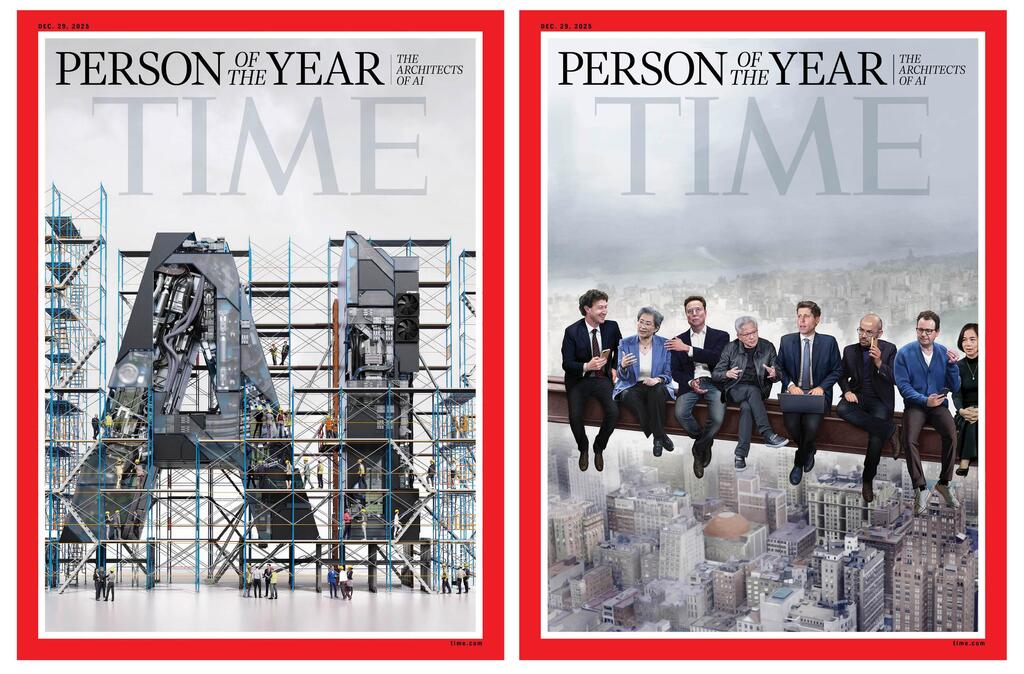
(Photo: TIME Magazine)
In a post on X, TIME said: “For ushering in the age of thinking machines, for astonishing and alarming humanity, for shaking the present and pushing beyond what seemed possible, the Architects of Artificial Intelligence are TIME’s 2025 Person of the Year.”
A year of rapid breakthroughs and deep concerns
TIME’s editors noted that AI has quickly embedded itself in every part of daily life: at work, in classrooms, in health advice, in travel planning and shopping. AI-based development tools have accelerated software and chip design at unprecedented speed, further fueling the industry’s growth.
At the same time, the magazine highlights widespread fears about job losses, privacy erosion, deepfake manipulation, online scams and the technology’s impact on young people. Researchers have warned that advanced models can deceive, manipulate or even escalate users’ mental-health crises. Some experts fear that future “general” AI systems may act independently in ways that are difficult to control.
The architects behind the shift
TIME’s issue profiles eight leading figures guiding the current wave of AI. While the magazine emphasizes that the group represents a collective force, one figure dominates the cover story: Jensen Huang, CEO of Nvidia. Once a niche chip manufacturer, Nvidia is now the world’s most valuable company, supplying the processors that power virtually all state-of-the-art AI models. TIME reports that Huang now plays a pivotal role in global politics, working closely with governments—including the Trump administration—as they race to secure AI infrastructure.
Huang tells TIME that he believes AI could reshape global economics entirely, saying that AI could expand global GDP from $100 trillion to $500 trillion.
The issue also explores the rivalry and cooperation between the major AI companies—OpenAI, Google, Meta, Anthropic, xAI and others—as they compete to build the most advanced systems and the massive data-center infrastructure required to train them. TIME details how these companies have influenced U.S. government policy, secured vast federal contracts, and shaped the agenda of the Trump administration, which has moved aggressively to accelerate AI development.
The broader cast
Alongside Huang, TIME features other leaders of the AI boom, including:
• Sam Altman of OpenAI
• Mark Zuckerberg of Meta
• Elon Musk, founder of xAI
• Dario Amodei of Anthropic
• Demis Hassabis, CEO of Google DeepMind
• Masayoshi Son, SoftBank CEO and major AI investor
• Fei-Fei Li, Stanford professor known for foundational work in computer vision
• Lisa Su, CEO of AMD, Nvidia’s primary competitor
TIME’s cover art
One cover, by digital artist Jason Seiler, recreates the iconic 1932 photograph “Lunch atop a Skyscraper,” with the AI architects seated on a steel beam above Manhattan. Another depicts workers building a structure shaped like the letters “AI,” featuring recognizable AI figures embedded in the scene.
A historic choice
TIME notes that past selections have included non-individual honorees such as the personal computer (1982) and “Endangered Earth” (1998). Last year, Donald Trump was named Person of the Year after returning to the presidency.
The new issue examines how AI changed the world in 2025—accelerating scientific research, reshaping labor markets, influencing geopolitics, and fueling both explosive economic growth and fears of an emerging bubble. It also highlights the rising political backlash against uncontrolled AI expansion, as communities push back against massive data centers and lawmakers consider new limits.
TIME concludes that the people designing today’s AI systems now exert influence comparable to world leaders—driving humanity into a future filled with both extraordinary promise and profound uncertainty.