

Choosing a college degree is a gamble on a future several years away. Students enroll today, invest years of their lives and considerable sums of money, and hope that employers will still need their skills when they graduate. But in the age of artificial intelligence, the usual uncertainty comes with an increasingly uncomfortable question: How much of the work they are studying to do will AI be capable of performing by the time they receive their diplomas?
Just last week, Nvidia founder and CEO Jensen Huang offered an optimistic prediction at the company's GTC Berlin 2026 conference, arguing that artificial intelligence would not eliminate programmers but instead increase the number of people writing software with the help of new tools. Even if that prediction proves accurate, it leaves a crucial question unanswered: What skills will those workers need, and how should universities prepare them?

The concern is particularly acute for young people entering the workforce. Writing drafts, gathering information, preparing presentations and producing basic code have traditionally been among the assignments through which new employees learn their professions. These are also precisely the tasks that AI tools are increasingly capable of handling. For employers, that represents an opportunity to save time and resources. For graduates, it creates a troubling dilemma: How do you gain experience when the work that once helped you get started is being handed over to machines?
‘No junior employees today, no senior professionals tomorrow’
For universities, these questions strike at the heart of the degrees they offer. Simply adding an artificial intelligence course to an existing curriculum is no longer sufficient. Institutions must explain what students will gain from the rest of their education, how they can acquire practical experience before graduating and what will enable them to adapt as technologies and working methods continue to evolve.
Dr. Ayelet Ben-Ezer Gelbard, CEO of Israel's Reichman University, is not ready to declare the traditional academic degree obsolete or identify specific fields students should avoid. But she acknowledges that universities have a responsibility to rethink how they prepare the next generation of workers.
"The real risk is not that a profession will disappear. The risk is that we will continue training young people as though the job market has not changed," she told ynet.
Asked what she would recommend to someone beginning a bachelor's degree today, Ben-Ezer Gelbard cautioned against trying to predict which professions would remain in demand. Had experts attempted to forecast today's job market 15 years ago, she argued, they would probably have failed to anticipate many of its most important developments. The more important question, she believes, is not only what students choose to study, but how they learn and which abilities they develop along the way.
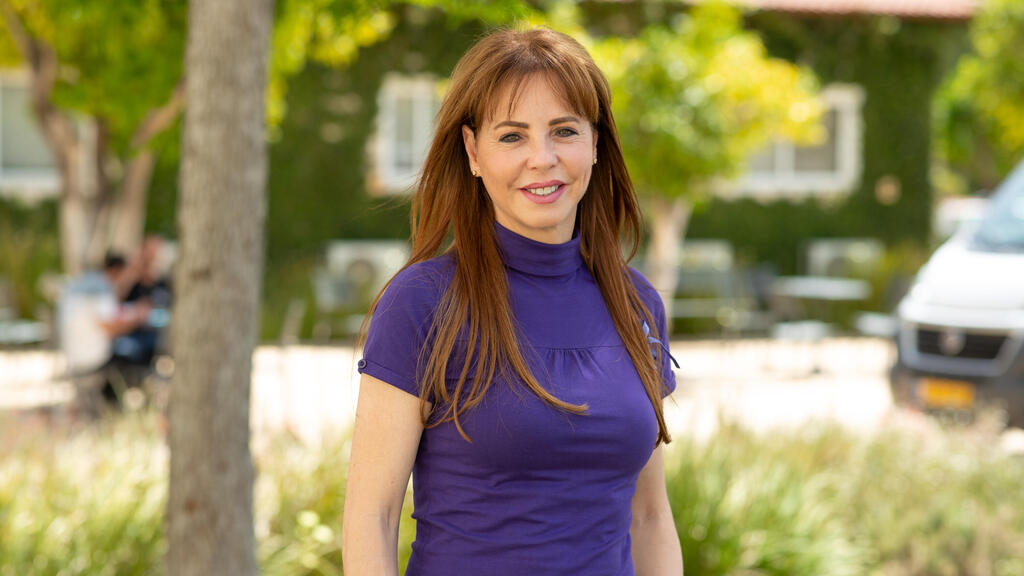
Dr. Ayelet Ben-Ezer Gelbard, CEO and vice president of Reichman University
(Photo: Daniel Stravo)
"Young people today are entering a world in which professions change faster than ever before, new technologies are entering almost every field, and nobody knows for certain what the job market will look like in 10 or 15 years," she said. The most sought-after professionals, she believes, will be those who combine specialized expertise, technological skills and an understanding of people. She recommends choosing a field that genuinely interests students while developing critical thinking, creativity, problem-solving abilities, interpersonal communication, lifelong learning skills and AI literacy.
But the most immediate challenge may be the disappearance of traditional entry-level assignments. Ben-Ezer Gelbard noted that junior employees have historically learned their professions by performing relatively basic tasks, from preliminary research and analysis to writing drafts, preparing presentations and producing simple code. As AI becomes increasingly capable of performing these assignments, employers must reconsider how inexperienced workers develop their skills.
"If there are no junior employees today, there will be no senior professionals in five or 10 years," she warned. Organizations cannot develop future experts and managers without giving people opportunities to gain experience. The solution, she argued, is not to abandon entry-level recruitment but to redesign those positions around working with AI. Rather than concentrating on repetitive technical tasks, junior employees will increasingly need to define problems, operate AI tools, evaluate their outputs, identify errors and biases, and exercise independent judgment.
Are universities preparing students for yesterday's jobs?
Despite fears of a lost generation of graduates who spend years earning degrees only to discover that their chosen professions have changed beyond recognition, Ben-Ezer Gelbard rejects the idea that higher education is approaching a crisis of irrelevance. Instead, she sees a profound transition that universities must acknowledge.
She argues that academic institutions cannot continue treating the acquisition of knowledge as their primary objective while postponing practical experience until after graduation. Universities that continue teaching as they did a decade or two ago, she warns, will struggle to remain relevant. The value of a degree will increasingly depend on whether it prepares students to operate in a changing professional environment rather than simply mastering a fixed body of knowledge.
At Reichman University, she said, the response has included a broad academic reform and the introduction of new degree programs designed for an AI-driven economy. The university has sought to build on its emphasis on innovation, entrepreneurship, interdisciplinary education and connections with industry, treating the technological revolution as an opportunity to reconsider the entire model of higher education.

(Photo: Getty Images)
"A university that wants to lead cannot settle for isolated adjustments. It must become a living laboratory for a new model of higher education, one that identifies changes in the job market early and responds before they become reality," she said.
Not every student, however, needs to become an AI engineer or algorithm developer. Ben-Ezer Gelbard believes the distinctly human advantages of multidisciplinary thinking, creativity, critical analysis and adaptability will become increasingly important as technology advances. To develop those capabilities, Reichman has introduced MAHAR, a flexible multidisciplinary bachelor's degree in social sciences that allows students to combine different fields of knowledge and design personalized academic paths.
The same philosophy applies to computer science, a degree long considered one of the safest routes to financial security. Despite AI's rapidly improving ability to write code, analyze data and solve programming problems, Ben-Ezer Gelbard remains convinced that the discipline is worth studying.
"I still believe computer science is an excellent degree," she said. Its value, she explained, extends far beyond learning to write code. Students develop an understanding of complex systems, logic, computational thinking, problem-solving and the ability to lead technological development. The more code AI can produce, she argued, the more important it becomes to understand the underlying systems, identify the right problems and evaluate whether the solutions are effective. Computer science is not losing its value, but universities must change how they teach it.
A degree must prepare students for a lifetime of change
If she could change one thing about how Israeli universities prepare students for employment, Ben-Ezer Gelbard said she would place significantly greater emphasis on practical experience and professional skills during undergraduate studies. Students should learn not only the theoretical foundations of their disciplines, but also how to apply their knowledge, evaluate results and exercise judgment when working alongside AI systems.
At Reichman, AI tools are being integrated directly into different academic disciplines rather than taught exclusively through standalone courses. The university has also established a skills division offering instruction in critical thinking, data analysis and communication, while expanding practical training opportunities and partnerships with industry.

(Photo: Shutterstock)
Another initiative involves developing a virtual platform where students can complete assignments that simulate professional work and build portfolios before graduation. The goal is to ensure that graduates encounter the demands of their future professions while they are still studying, rather than discovering them for the first time after entering the job market.
Ben-Ezer Gelbard also believes universities must develop more flexible academic structures that allow graduates to return throughout their careers to acquire new knowledge and update their skills. In an economy where technologies and professional requirements can change repeatedly over a working lifetime, education can no longer be treated as a process that ends with graduation.
A degree, she argues, must still provide a strong professional foundation. But its lasting value will increasingly depend on something more fundamental: whether it teaches graduates how to keep learning long after they leave the classroom.