

The Trump administration used a special version of Elon Musk’s Grok artificial intelligence chatbot to help launch thousands of missiles at Iran, the U.S. Department of War said in an official statement.
Cameron Stanley, the Pentagon’s chief digital and artificial intelligence officer, disclosed the use in sworn testimony in a Mississippi court. The testimony came in a lawsuit against Musk alleging that a data center operated by his AI company, xAI, uses dozens of gas turbines that cause pollution and endanger nearby residents.
The Iranian school reportedly struck by the US during the war after a suspected AI targeting error


The lawsuit was filed by the NAACP, one of the oldest and most influential civil rights organizations in the United States.
Stanley testified that continued operation of the chatbot, which is supported in part by the data center, is a matter of “paramount national security.” He said it helped fire more than 2,000 munitions at thousands of targets within 96 hours.
The testimony marked the first explicit acknowledgment by a senior U.S. official that the military used an AI-based chatbot in strikes on Iran.
Stanley said the Mississippi data center, along with others, is positioned to provide a “critical surge” in energy capacity in the event of a conflict or other urgent circumstances affecting national security.
He said Grok, developed by xAI, is among four AI models currently capable of supporting national security applications and one of three products ready to support mission-critical operations in highly classified environments.
According to the filing, any court ruling barring deployment of the model would “severely” affect the Pentagon. Stanley wrote that data centers powering AI products for government use are a long-term strategic tool essential to maintaining the U.S. technological edge over adversaries.
Following the testimony, U.S. media revisited reports from the start of the Iran war that American forces were responsible for a strike on a girls’ school in Minab, Iran, that killed at least 175 people, the deadliest incident for civilians during the war.
Analysts have said the strike was likely caused by a combination of AI-driven targeting and human error, including a failure to verify whether maps were up to date.
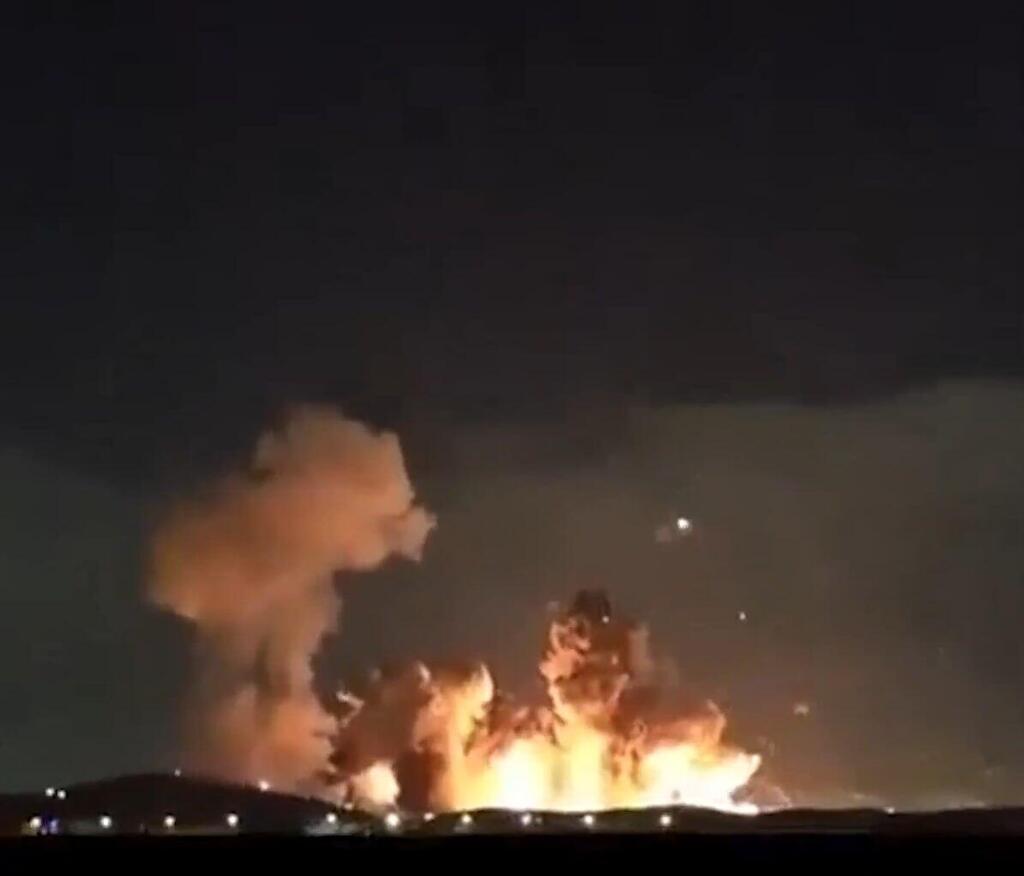
A US strike on an ammunition depot in Isfahan, Iran
The Pentagon is known to use Maven Smart, a system operated by the National Geospatial-Intelligence Agency that uses AI to display data and identify potential points of interest. The system originally used Anthropic’s Claude model before a dispute emerged between the company and the administration.
In court documents, the Pentagon also disclosed that it uses a special version of Grok called Grok Gov, a product suite designed for federal agencies with features it said are not available in other front-facing AI models.
Several Democratic senators said they are preparing legislation to restrict the military’s use of AI. A bill from Sen. Kirsten Gillibrand would seek to ensure that only human commanders make life-and-death decisions and would bar AI use in nuclear weapons, surveillance of civilians and autonomous weapons systems.
“Right now, the Pentagon is moving toward deploying incredibly powerful AI technology without commonsense guardrails in place, which could have catastrophic consequences that make all of us less safe,” Gillibrand said. “We must act now – not to stifle technological progress, but to establish clear rules of the road that keep humans in charge and keep AI’s use in warfare smart and safe.”

Grok
(Photo: Primakov/Shutterstock)
Separately from the Iran strikes, the Pentagon is also involved in a legal fight over use of Anthropic’s AI tools. The company failed to reach an agreement with the Department of War after the administration refused to commit to limits on their use.
The Pentagon has described Anthropic as a “supply-chain risk to national security,” a designation that could endanger the company’s future government contracts and has prompted an ongoing legal battle.