

Amid significant delays in departures from Ben Gurion Airport, which at times are also affecting arriving passengers who wait hours for their luggage, current and former airport employees say inadequate preparation for the summer has led to staffing shortages. They argue that the problem stems from the Israel Airports Authority’s employment model, which results in high staff turnover and means that enough workers are not always recruited in time.
“There is no strike and there was no strike. A plane can sit for two hours without being handled and that is not a strike, that’s just how it always is," one employee said. "There is a huge amount of work and not enough manpower. Every winter they let go of veteran workers who are approaching permanent status, and then in the summer there aren’t enough workers.”
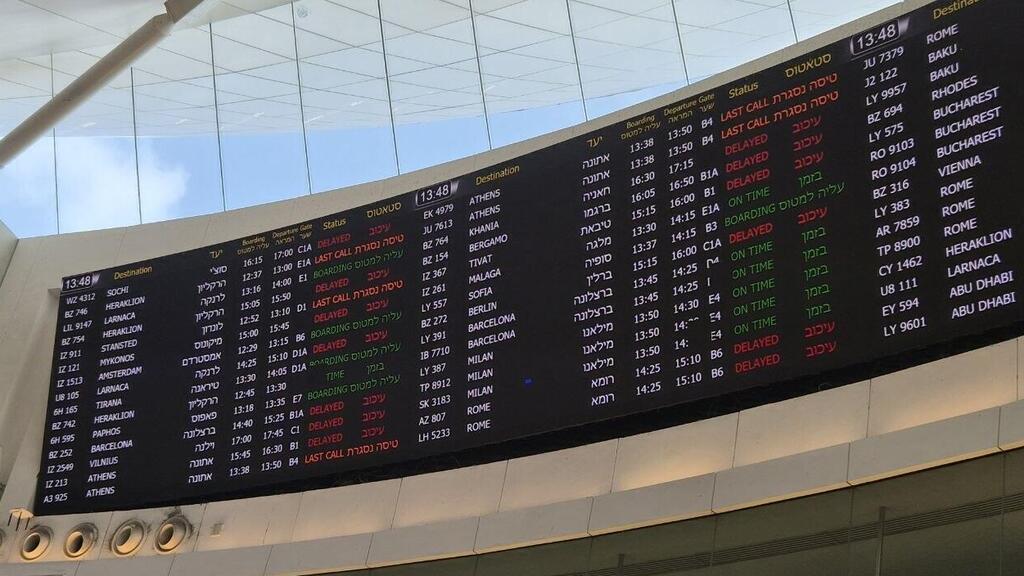
This is not the only reason for the delays at Ben Gurion Airport. The Airports Authority attributes them to a chain reaction involving congestion, U.S. refueling aircraft and unusually heavy traffic in Greek airspace and along regional flight routes. But airport employees say the staffing shortage is one of the main reasons the airport is struggling to cope with the complex situation. Last Friday, for example, hundreds of passengers were stuck on planes that could not take off because baggage handlers had not yet loaded their luggage, while passengers who had landed in Israel waited hours for their bags.
'No one wants to work here'
The Airports Authority says the employment model at Ben Gurion Airport is approved by the state, anchored in labor law and based on a clear operational constraint: work at the airport is seasonal. The model consists of three groups — permanent employees, temporary employees covered by a collective agreement and temporary workers who sign two-year contracts in advance. The authority argues that because enormous staffing levels are needed at the height of summer while the volume of flights drops significantly in winter, there is neither justification nor room to employ the entire workforce with permanent status.
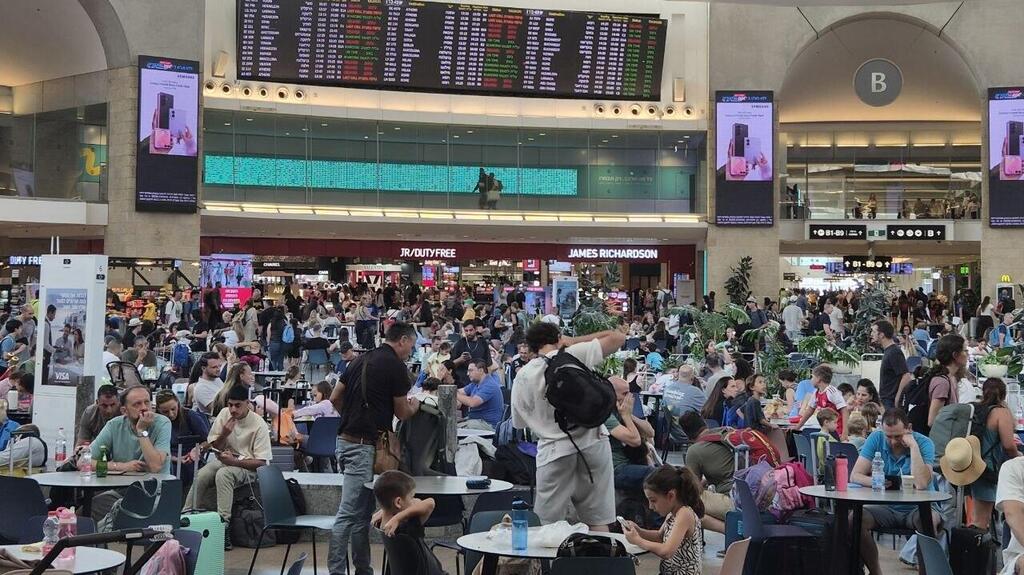
The congestion at the duty-free area in Terminal 3
The result is that the authority frequently parts ways with workers regardless of their skills or contribution, in order to avoid having too many permanent employees, particularly during periods when activity declines sharply. In doing so, the authority avoids the long-term financial and organizational commitments that come with permanent employment and maintains managerial, operational and budgetary flexibility. But workers say the price is a recurring labor shortage during peak periods, because the authority struggles to recruit replacements for those who leave.
One employee said that as a result of this employment model, “no one wants to work in a place like this. No one wants to bust their ass during the hardest period and then be let go in the winter. Because of the war with Iran, when the airport was barely operating, workers left, and the authority failed to recruit new ones. Only 15 came instead of 30.”
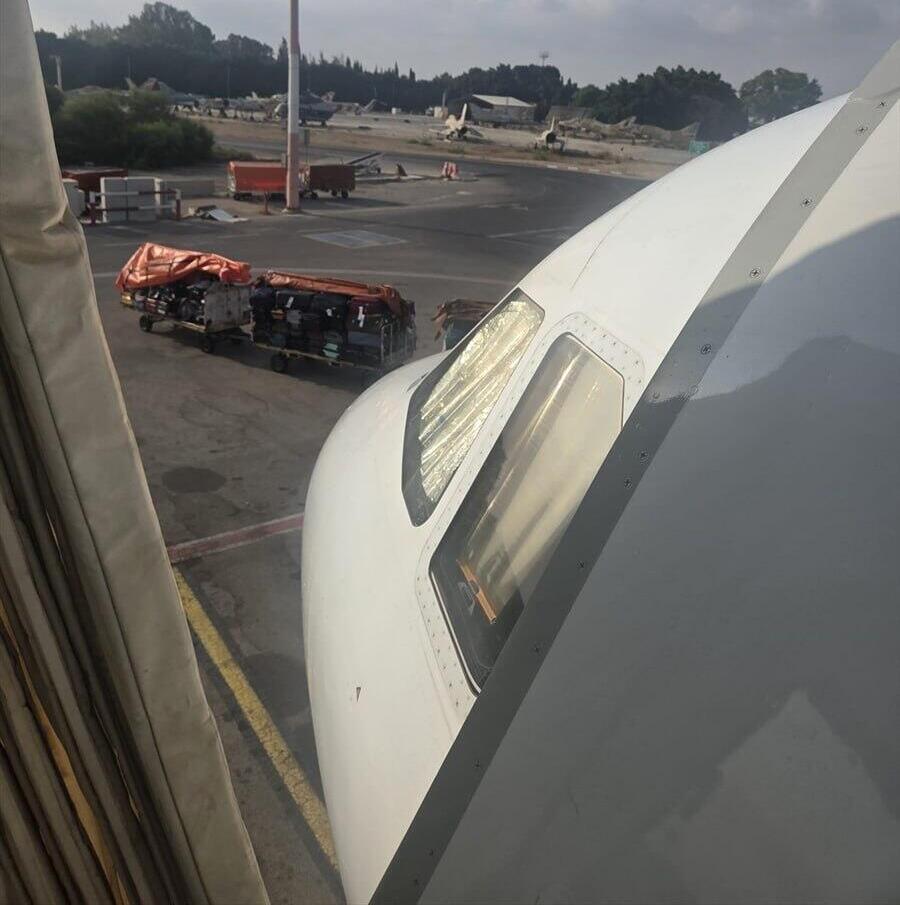
Israir plane to Salzburg does not take off last Friday because luggage was not loaded
One baggage handler described the workload caused by the staffing shortage: “On Friday they told us, ‘Work according to procedure,’ and that was it. Each team gets to an aircraft, and we handle two planes at once. Three people handle one aircraft, and you end up doing 14 planes in a shift instead of the standard four to six. We are flooded with work, and that’s why the pressure is so intense. A severe manpower shortage has developed, and the baggage handlers who are left are breaking their backs. People here are taking painkillers.”
A former employee also criticized the Airports Authority’s conduct. “Every year since COVID, you can see the same overload during the summer months, and it’s not by accident. There is a worker shortage. This time too, there was no work slowdown. No one understands that it’s always the same story,” he said.
He also blamed the overload on the authority’s frequent dismissal of workers. “They say there are cutbacks, but everyone knows the truth,” he said. “There are X number of people who will get permanent status, and all the other workers — who busted their asses every summer — will be thrown in the trash in November.”
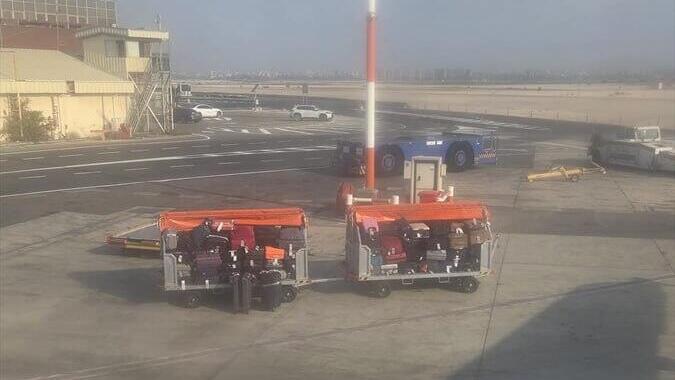
Luggage left off an Arkia plane
(Photo: Avi Naorv)
“I was fired along with about 30 other workers, and they told me to my face that there had been no problem with me, but certain people had priority,” he claimed. “It had nothing to do with the contract. A few months later, when there was heavy congestion, they recruited me again and I went back to work. The entire conduct and treatment of workers there is disgraceful. Every week you see people disappearing, and many take sick leave because they no longer have the physical strength to work under such pressure.”
Why aren’t they striking?
Despite the harsh allegations, Ben Gurion Airport employees have not declared a strike or a labor dispute. The reason is the lack of legal grounds: Their employment is terminated in accordance with the temporary contracts they signed before starting work. People close to the authority view the complaints as a kind of arm-twisting by temporary workers whose employment period has ended and who are now demanding permanent status.
Management, in any case, is well aware of the heavy burden on employees, which naturally contributes to significant flight delays. Acting Ben Gurion Airport director Zohar Gefen recently sent employees a letter in which he wrote: “I and the entire management team stand fully behind you. We are doing and will continue to do everything necessary to support you, back you and provide the resources and tools you need for the tasks you are carrying out — both in dealing with the routine pressures of August and in preparing for emergencies.
“I would like to express my deep appreciation and sincere thanks to you. You are the ones on the front line of the work, doing the hard job day after day and demonstrating loyalty, dedication and full commitment to the organization and to the public whose fate is entrusted to us. Through joint effort, professionalism and responsibility, we will get through the coming month with great success and continue to serve as a strong source of support for the public.”
The Israel Airports Authority said in response: “The claims raised in the article are factually incorrect. The attempt to link the congestion and delays at Ben Gurion Airport to the employee employment model is baseless. The recent congestion stems, among other things, from restrictions in European airspace, particularly around Greece and Cyprus, as well as from the activity and presence of refueling aircraft. This has no connection whatsoever to the authority’s employment model. What matters is the number of employees, not the method by which they are employed.
“Everyone wants permanent status, but that is not necessarily the solution. The employment periods of seasonal and temporary workers are defined in advance and regulated by collective agreements signed between the Israel Airports Authority, the Histadrut labor federation and employee representatives. These workers are made aware from the outset that their employment is for a fixed period. The authority recruits employees throughout the year and is stepping up recruitment at this time in order to meet growing demand.
“The authority’s staffing levels are adjusted throughout the year to changing levels of activity, including the additional manpower needed during peak periods and the summer season. This is an agreed and regulated model within the framework of collective labor relations with the workers’ committees and the Histadrut, not a measure designed to circumvent the granting of permanent status.”