

As some 8 million Hungarians head to the polls Sunday in elections widely described as the most dramatic since the fall of communism in 1989 — and whose results are expected to have implications far beyond Hungary itself — the vote is being closely watched.
These elections go well beyond a local political contest over the cost of living, immigration or the state of the health care system. They represent a global test of strength between Viktor Orbán’s “illiberal” model and a dramatic attempt to replace it, with the outcome set to resonate in Washington, Moscow, Kyiv and Brussels.
Orbán, who has served as prime minister for the past 16 years, has turned Hungary into a controversial political laboratory, where the boundaries between party, state and media have become almost entirely blurred. He has consolidated his rule through constitutional changes and near-total control of the media. These moves have drawn sanctions from the European Union, including the freezing of aid funds worth tens of billions of euros.
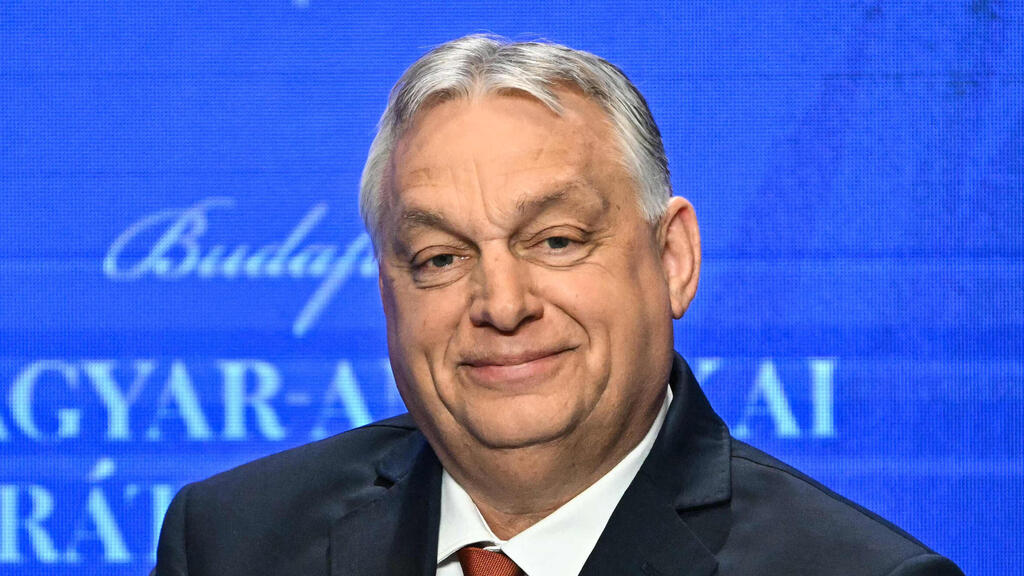
Viktor Orbán has turned Hungary into a controversial political laboratory,
(Photo: Attila Kisbenedek / AFP)
Today’s vote is seen as a historic turning point because, for the first time in years, Hungary’s opposition has managed to bridge ideological divides — from the liberal left to the conservative right — and present a united front. Orbán now faces a rival who speaks his language: Péter C, a 45-year-old conservative who until just over two years ago was part of Orbán’s own establishment. Magyar has succeeded in uniting the fragmented opposition and has become his opponent’s most formidable electoral challenge.
Magyar and his Tisza movement are not only seeking to replace the government, but also to “save the country’s democratic structure,” as they see it. To do so, they would need a decisive victory — ideally a two-thirds majority in parliament (at least 132 seats), which would allow them to enact constitutional changes.
For Orbán’s supporters and his ruling Fidesz party, however, the election is a battle for Hungary’s sovereignty against what they describe as the “cultural and political coercion of the European Union and global actors.” The results will have consequences far beyond Hungary: another Orbán victory would strengthen the populist bloc in Europe and give momentum to other governments seeking to adopt similar reforms in the judiciary and media.
Tensions between Budapest and Brussels extend beyond budget disputes — they reflect a deeper struggle over the definition of European values. If Orbán wins again, the European Union will have to acknowledge that his model is resilient to external pressure, potentially leading to greater paralysis in EU decision-making, where Hungary frequently uses its veto power to block initiatives that do not align with its interests.
The elections are taking place against the backdrop of the war in Ukraine, which has turned Orbán’s close ties with Russian President Vladimir Putin into a complex political liability. Under Orbán, Hungary has become the “problem child” of both the EU and NATO. He has not only cultivated close — even dependent — relations with Putin, but has also blocked aid to Ukraine and used his veto power to extract concessions from Brussels.
A victory by Magyar could remove that obstacle, unlock billions of euros frozen over rule-of-law concerns in Hungary, and bring the country back into alignment with liberal Western values. By contrast, a fifth consecutive victory for Orbán would be seen as final confirmation that his authoritarian model is immune to external pressure — encouraging other populist leaders across Europe to follow his path and potentially undermining the stability of the European Union.