


A Hamas delegation arrived in Cairo on Tuesday for talks on a possible agreement with Israel, as Egypt presented the terror group with a new proposal for a comprehensive deal.
The plan calls for the release of all hostages in one phase, an end to the war, explicit provisions for Gaza’s demilitarization, and the symbolic exile of some Hamas members. “Egypt is working with Qatar and the United States to revive the 60-day plan,” Egyptian Foreign Minister Badr Abdel Aaty said.
Gallery
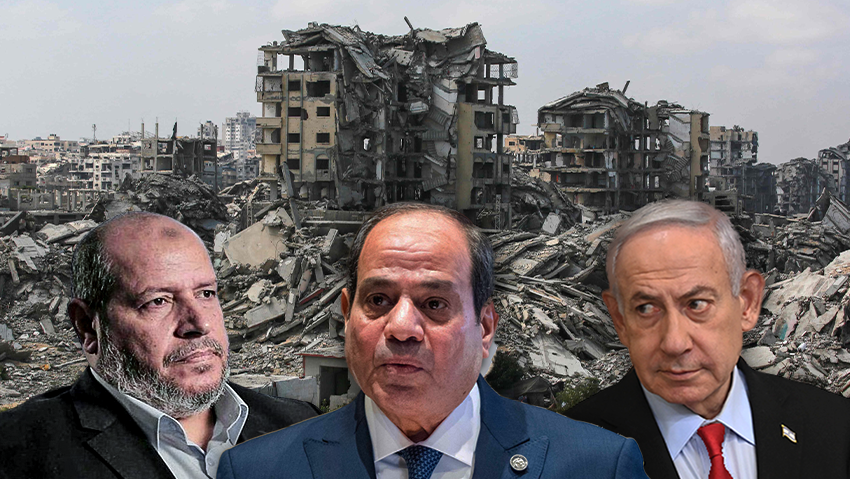
Khalil al-Hayya, Egyptian President el-Sisi, Prime Minister Benjamin Netanyahu
(Photo: Bashar Taleb/ AFP Martin Sylvest / Ritzau Scanpix/ AFP, Khaled Desouki/ AFP, Yuval Chen, Yair Sagi, IDF Reuters/Evelyn Hockstein, Khalil Hamra/AP/Hassan Ammar)
An Arab official familiar with the talks said Cairo intends to invite an Israeli negotiating team to the Egyptian capital in the coming days, once there is progress with Hamas. He predicted an exchange of draft agreements soon, adding that “what brought Hamas to Cairo was Israel’s threat to capture Gaza City.”
At a Cairo press conference, Abdel Aaty stressed: “We are working in full cooperation with the Qataris and Americans, and the main goal is to return to the original proposal — a 60-day ceasefire that would include the release of hostages and Palestinian prisoners, alongside the resumption of humanitarian aid to Gaza without conditions or restrictions.”
The Arab official said responsibility for the failure of the recent Doha talks was equally shared by Israel and Hamas. “You can’t blame just one side,” he said. “We were optimistic it would succeed, and we were surprised when it collapsed. Israel insisted Hamas commit to disarming during the partial deal stage, while Hamas was only willing to discuss disarmament during the 60-day negotiations.”
According to the official, Egypt has now reached an understanding with Hamas for eventual disarmament and symbolic exile. “But Hamas wasn’t willing to include that in the first agreement, because they don’t trust Israel. They fear Israel will trick them and resume fighting, so they won’t give up their weapons or their last hostages at the outset,” he said.
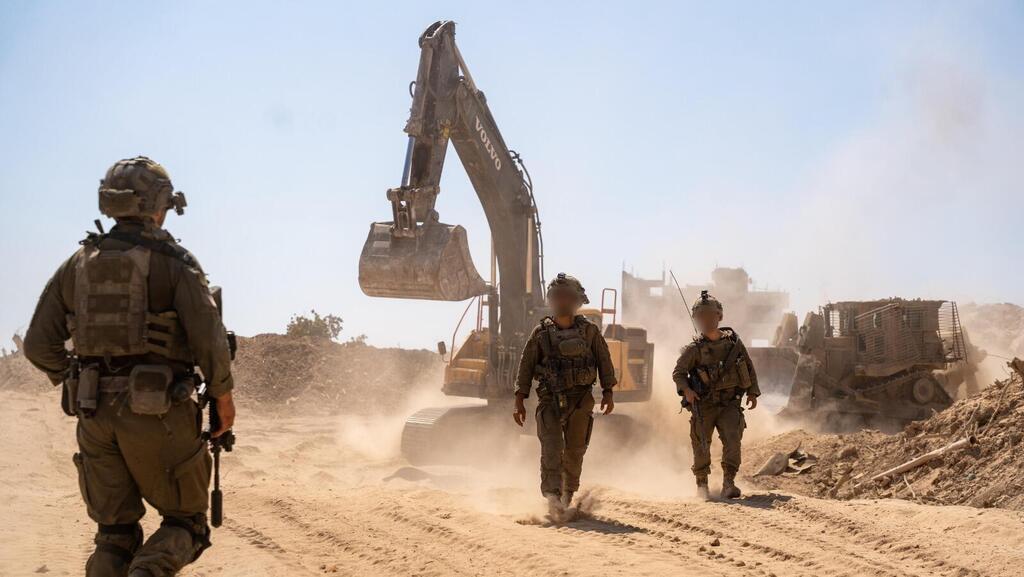
IDF forces in Gaza
(Photo: IDF)
He added that there is now “clear agreement” that the focus should be on a full deal, not another partial one. “Contrary to what some claim, a comprehensive deal is easier — in a partial deal, we just postpone the obstacles. Hamas genuinely wants to end the war but doesn’t believe Israel will stop trying to eliminate it. They are ready to disarm, but they need guarantees.”
The official described “cautious optimism” in Cairo. “In Doha, they covered perhaps 70% of the issues,” he said. “Disputes remained, such as a few hundred meters’ difference on the size of the perimeter in Gaza. They had already discussed formulas and were close to solutions. There was also a dispute over the number of life-sentence prisoners to be released — 120 as Israel agreed, versus 200 demanded by Hamas — but that was solvable. Then both sides blew it up. A shame.”
Palestinian Authority role in ‘the day after’
The Arab official said Hamas had agreed to Egypt’s proposal for “the day after,” which includes Palestinian Authority involvement in governing Gaza. “Israel says it won’t allow the PA to return to Gaza, but it continues to cooperate with PA security forces in the West Bank, and that works well. It would work in Gaza, too,” he argued.
He said the international consensus is that no deal can be reached without a PA presence in Gaza. “There will be Arab actors in the interim administration, but the PA will also be represented. Hamas understands it cannot stay in Gaza. Some of its members want to leave and build new lives elsewhere, hence their interest in exile.”
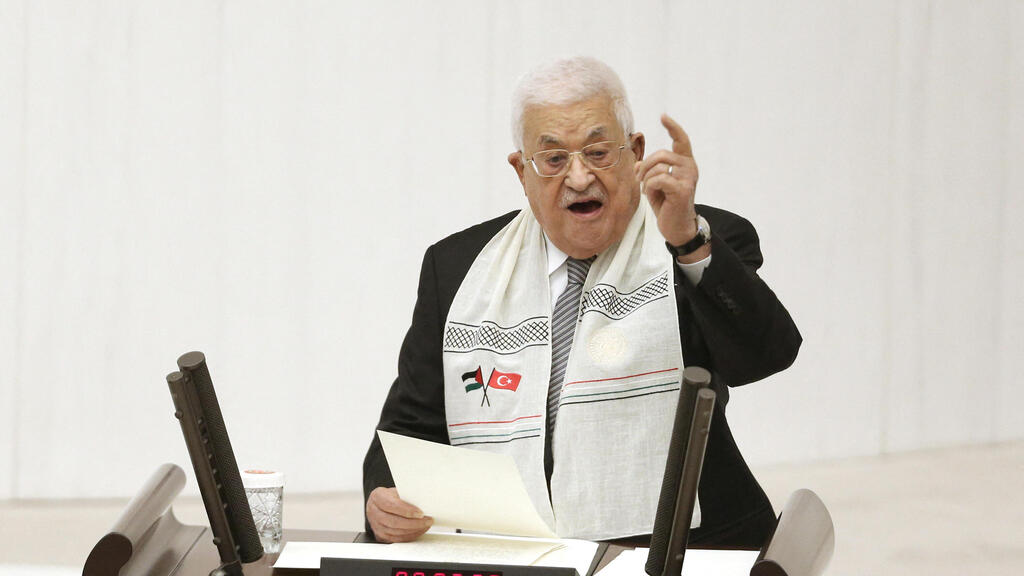
Palestinian President Mahmoud Abbas
(Photo: Reuters/Cagla Gurdogan)
The official claimed Hamas no longer controls all of Gaza. “There’s no organized military structure, no command hierarchy. We saw in Doha that Hamas agreed to things local commanders wouldn’t accept, and responses from the ground took a long time. This is a rare opportunity to rebuild Gaza. We must not waste it.”
He said Israel has quietly preferred Qatar to lead the negotiations, despite knowing Egypt is the main mediator drafting agreements and understanding the realities on the ground. “Yes, Qatar influences Hamas, but there are also unclear interests. We don’t understand why Israel keeps trusting them.”
The official also suggested Prime Minister Benjamin Netanyahu may not truly want to end the war, accusing him of dragging out the process for domestic political reasons. “We have an excellent security dialogue with Israel. Egypt has fully sealed its border with Gaza — no weapons can be smuggled in. Israel knows this. We have a clear interest in stability on our border.”
He warned against Israel’s plan to capture Gaza City: “It won’t be simple and will likely cause heavy casualties on both sides. Hamas is deeply entrenched in tunnels. We don’t know if they are trying to lure you in, or if they would prefer a deal to prevent the city’s capture. Maybe they want to expose that you aren’t really planning to take all of Gaza.”
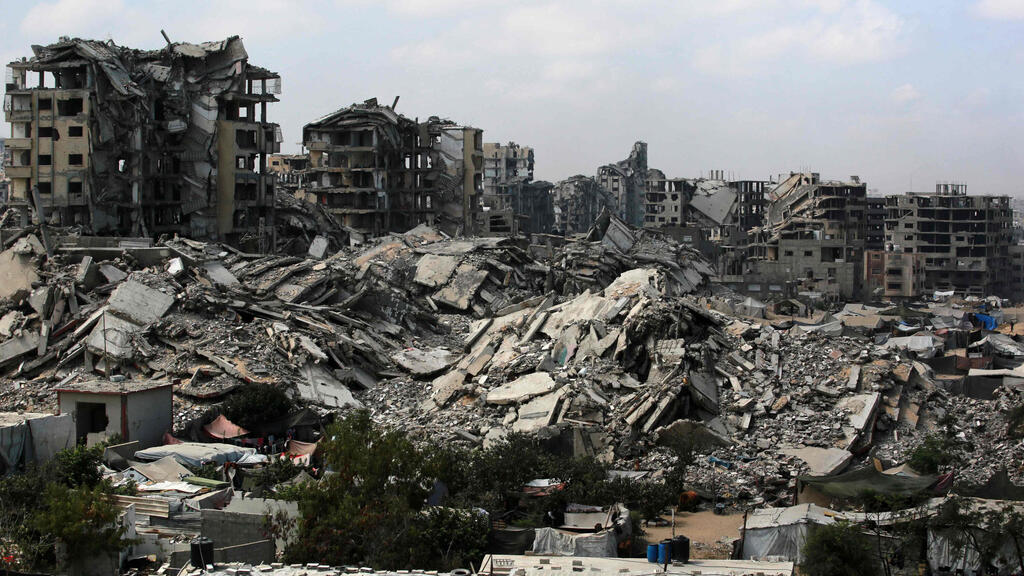
The Gaza Strip
(Photo: Bashar Taleb/ AFP)
Since the war began, Egypt and Qatar have been vying for the lead in mediating between Israel and Hamas, as part of their efforts to boost their standing in the international community and the Arab world. This has resulted in conflicting media reports and sometimes contradictory statements from officials in both countries.
Divisions in Israel, new hints from Netanyahu
According to Sky News Arabia, senior Hamas official Khalil al-Hayya arrived in Cairo to meet with Egyptian officials. The network reported that the mediators plan to present a new initiative aimed at “removing Netanyahu’s excuses” for recapturing Gaza City.
Later, the network said the proposal includes a comprehensive deal to release all Israeli hostages — living and dead — in exchange for Palestinian prisoners. Under the plan, Hamas would agree to a new IDF withdrawal map in Gaza under Arab-American supervision until a permanent agreement on disarmament and governance is reached.
In line with Israel’s demand, which Hamas has so far rejected, the proposal calls for Hamas to freeze its military activities and disarm, with the mediators — and Turkey — serving as guarantors, while negotiations proceed toward a permanent ceasefire.
A senior Israeli security official was skeptical: “The chances Hamas will accept the Egyptian initiative are slim. In the end, Hamas is a terror group unlikely to disarm — but perhaps Turkish influence and guarantees could work.”
Get the Ynetnews app on your smartphone: Google Play: https://bit.ly/4eJ37pE | Apple App Store: https://bit.ly/3ZL7iNv
Within Israel’s negotiating team, there is disagreement over the plan’s chances. Some believe the gaps can be bridged, and the main question is whether Hamas will agree to a comprehensive deal. In any case, they say the significance of the proposal is that the sides are now discussing an overall end to the war.
At a press conference two days ago, Netanyahu signaled there may be no more partial hostage deals, declaring that the decision would come through “sophisticated methods that will surprise Hamas.” He revealed he had ordered the IDF to accelerate plans to capture Gaza City and act “faster and earlier” to end the war.
On the negotiations, some in the Israeli team said the differences with Hamas were small and could be resolved, but Netanyahu argued Hamas had presented “surrender terms” — releasing Nukhba commandos, international guarantees that fighting would not resume, and a withdrawal from the Philadelphi Corridor — demands he said no government could accept. While Netanyahu claimed there was no chance for a deal, some mediators and negotiators maintain an agreement was possible, and that Israel walked away too soon.