


Hours after submitting his recommendation to President Isaac Herzog to pardon Prime Minister Benjamin Netanyahu, the full 17-page document written by Heritage Minister Amichai Eliyahu was published Tuesday evening, arguing that Israel’s national, security and public interests justify ending the criminal proceedings against Netanyahu even before a verdict is reached.
“Mr. President, at this great and fateful hour, our historic duty is to lift up our heads, take responsibility and correct the mistake of Zechariah ben Abkilus,” Eliyahu wrote, referring to a rabbinic figure whom Jewish sages blamed for the destruction of the Second Temple.
Gallery
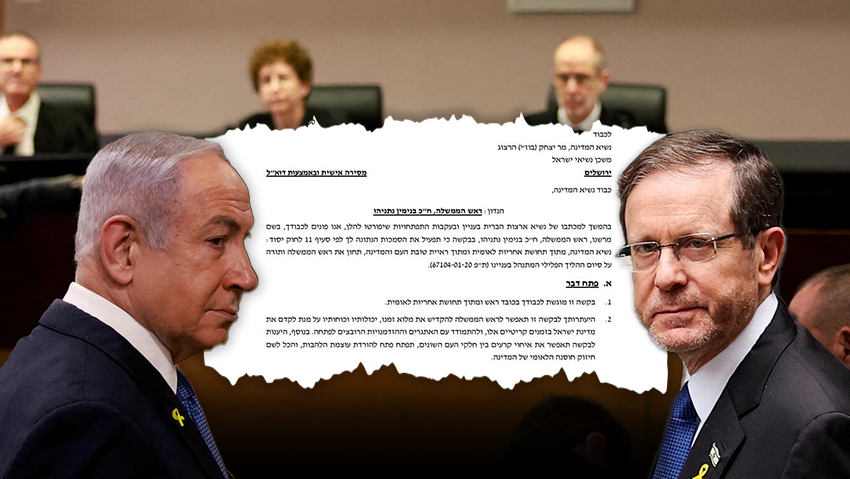
Prime Minister Benjamin Netanyahu, President Isaac Herzog
(Photo: MENAHEM KAHANA/John Sibley/Pool via REUTERS)
“The time has come. In your hands is the power to remove the cloud of division from our state. In your hands is the power to bring peace to Israel.”
Eliyahu was assigned to handle the matter in place of Justice Minister Yariv Levin, who recused himself because of a conflict-of-interest concern. According to the president’s office, Herzog has received the ministerial opinion and said he will decide independently, in accordance with the law, his conscience and the interests of the state.
Eliyahu’s opinion was formulated after what it described as a deep and thorough review of the factual, legal and public framework. The recommendation was based on an opinion by the Justice Ministry’s pardons department, existing case law, a review of Israeli legal institutions and consultations with jurists, rabbis, public intellectuals, reserve soldiers and public figures.
Netanyahu submitted the pardon request in late November, and Levin transferred responsibility for handling it to Eliyahu earlier this month.
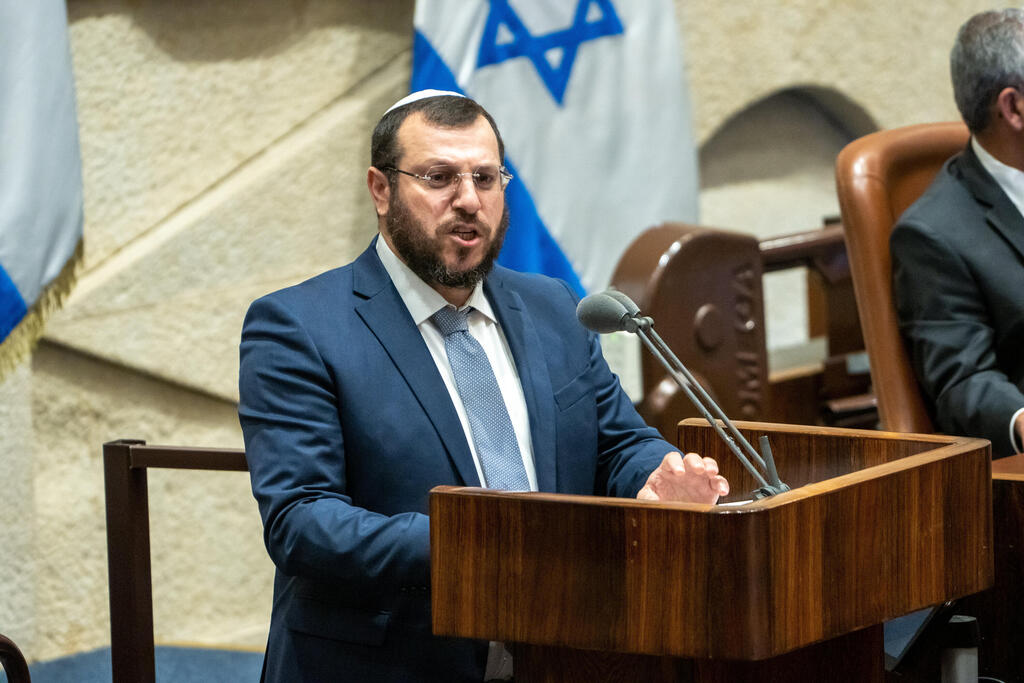
Heritage Minister Amichai Eliyahu
(Photo: Shalev Shalom)
Netanyahu is on trial in three corruption cases in which he is accused of bribery, fraud and breach of trust. Prosecutors allege he accepted expensive gifts from wealthy businessmen, sought to negotiate favorable media coverage in exchange for regulatory benefits and approved decisions that benefited a telecommunications tycoon in return for positive coverage of him and his family. Netanyahu denies all wrongdoing and has said the charges are politically motivated.
Eliyahu wrote that the power of pardon is a unique mechanism in the legal system, one that makes it possible to rise above the letter of the law and routine evidentiary procedures on public, diplomatic and national grounds. In the minister’s view, a pardon does not bypass the question of guilt but rather transcends it, making it possible to take into account considerations vital to the state and society that are not addressed in the ordinary judicial process.
In that context, the minister cited the High Court of Justice precedent known as the Nir Zohar case, as well as the views of retired Supreme Court justices Gad Barzilai and Meir Shamgar, which he said make clear that the pardon power applies both before and after conviction, without any condition of admission or remorse. That authority, he argued, is not limited but is intended to protect a broad public interest, especially in existential or national security matters.
The linked report noted that legal officials view the Netanyahu case as unusual precisely because he has not admitted wrongdoing, expressed remorse or completed his trial — factors that are typically weighed in pardon decisions.
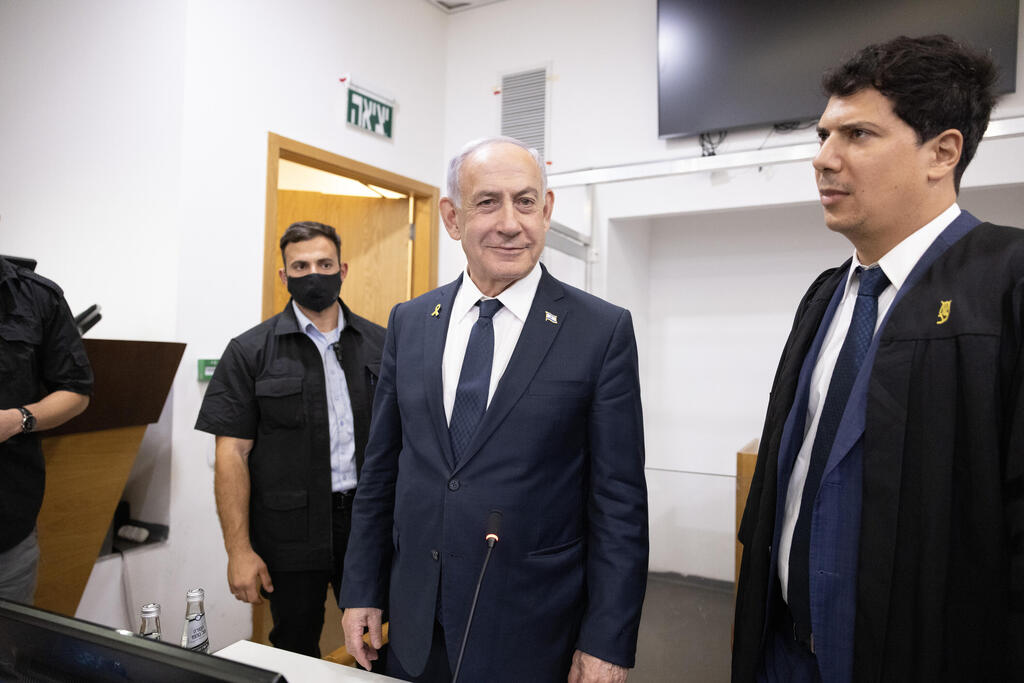
Netanyahu in court
(Photo: Moti Milrod/Haaretz)
The minister’s recommendation constitutes the executive branch’s position before the president. The process for handling a pardon request begins with its submission to the president, followed by its transfer to the pardons department for information gathering and, finally, the formulation of a position by the relevant minister, from which the president draws a recommendation on whether to act.
The minister stressed that his recommendation is independent and not subordinate to the position of the pardons department, and is intended to weigh the full range of national, diplomatic and security considerations. Herzog’s office said the material has also been forwarded to the president’s legal adviser, attorney Michal Tzuk, for review and recommendations.
The president’s power of pardon, as presented in the minister’s recommendation, is an independent normative institution rooted in Israel’s judicial history and connected to the common-law tradition of the king of England. The document said that “this authority allows the president, in his broad discretion, to protect the state and society from legal consequences that could harm public life, the state or the national leadership.”
Herzog’s office denied that any commitment had been made to U.S. President Donald Trump or anyone else regarding the matter, after Trump publicly called for Netanyahu to be pardoned.
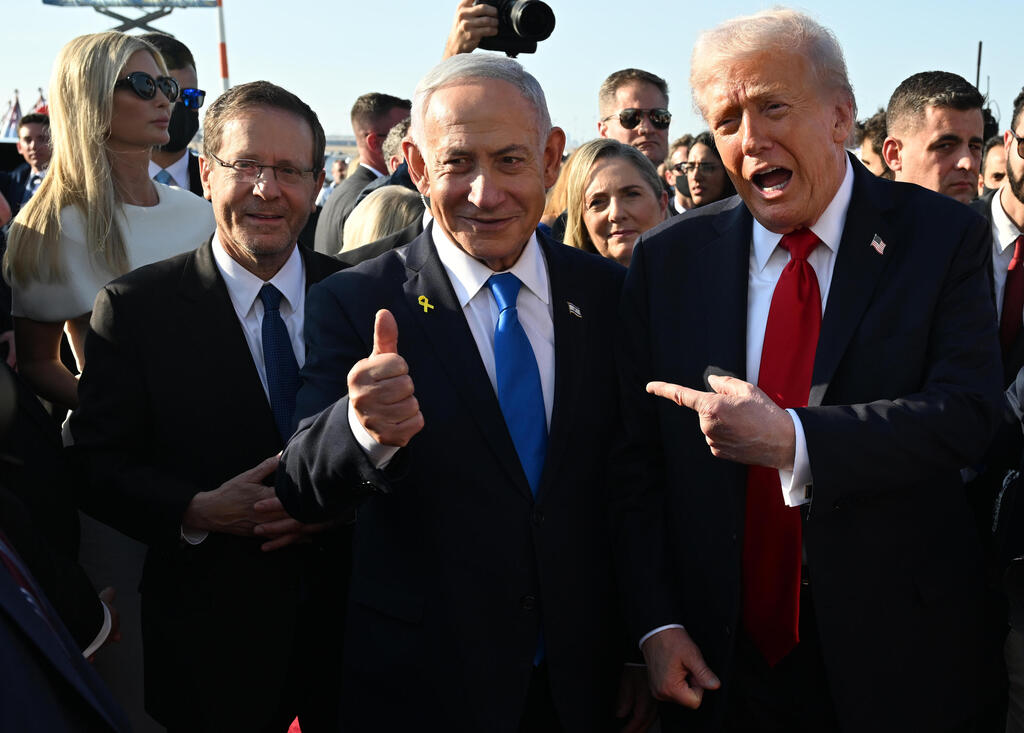
Herzog, Netanyahu and US President Donald Trump
(Photo: JALAA MAREY/Pool via REUTERS, Chip Somodevilla / POOL / AFP)
In examining a pardon request, the document said, all public, diplomatic and security considerations must be taken into account. According to the minister, “despite the practical and theoretical difficulties, including preserving the principle of equality before the law, there are exceptional cases in which preserving the ordinary legal process could harm the broader public interest. In such situations, exercising the power of pardon is not an evasion of the law but a defense of it.”
The opinion of the pardons department pointed to difficulty in recommending the use of the pardon power because of the prime minister’s lack of an admission of guilt and the absence of what it called “professional tools” to assess national and security considerations.
Eliyahu argued that “the position of the pardons department suffers from legal and institutional imprecision, because the authority to grant a pardon is regulated by law and case law even before conviction. There is no legal or normative requirement for an admission as a condition for exercising the pardon power.”
The department’s legal opinion found that the request does not meet the standard threshold conditions for a pardon, and Attorney General Gali Baharav-Miara has not yet issued a formal response and is expected to oppose it.
'We now look with contempt on societies that forced defendants to confess against their free will'
The minister further wrote that “public, security and diplomatic questions cannot be assessed through a narrow legal lens, and therefore fall within the minister’s sphere of recommendation. The legal opinion cannot decide questions involving the state’s vital interests, including the management of a security or existential campaign.”
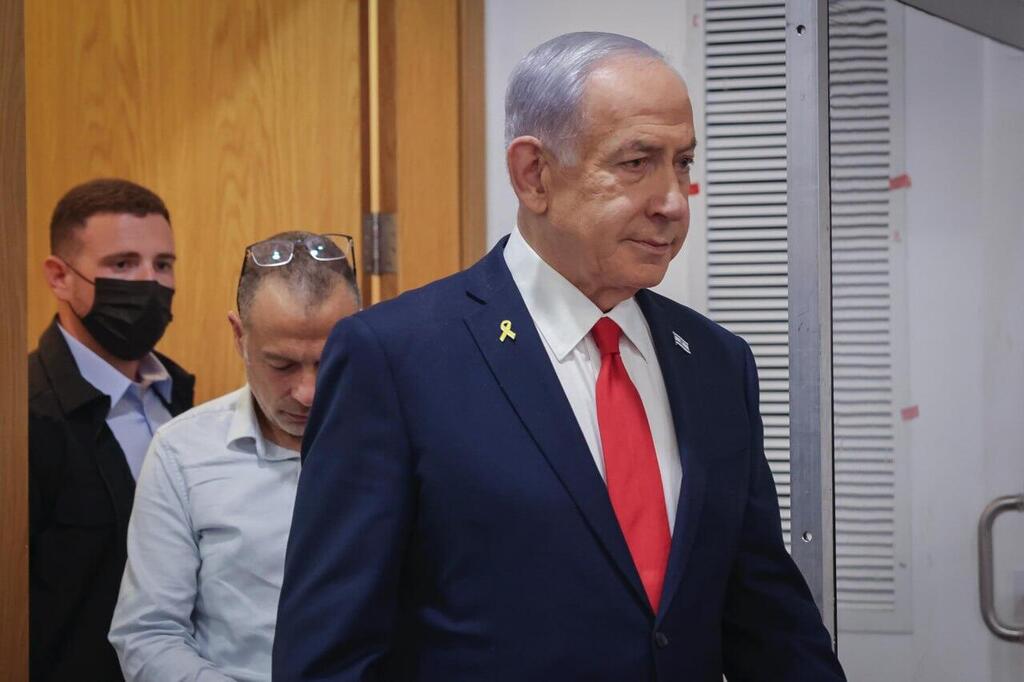
Netanyahu in court
(Photo: Miriam Elster)
Eliyahu further argued that “the demand to condition a national pardon on a personal admission wrongly assumes that the purpose of the pardon here is the ‘rehabilitation of the offender.’ But the purpose of the pardon in this case is not necessarily the rehabilitation of the individual, but the rehabilitation of the nation.”
He added: “Conditioning the end of the national crisis on forcing a defendant, who completely denies the charges against him, to confess is not only morally wrong, it undermines the very purpose of the reconciliation that lies at the heart of a national pardon. Therefore, the power of pardon must not be conditioned on anything, certainly not on a coerced admission.
“From a historical perspective, we now look with contempt on societies that forced defendants to confess against their free will. Does the pardons department believe we should adopt in Israel the model of Galileo’s trial? Clearly, an error was made here, and this point was not fully clarified. In the State of Israel, we do not accept norms of forced confessions.”
In summing up his recommendation, Eliyahu wrote to Herzog that the pardon power should be exercised on the following basis: “The president has full and separate authority — the power of pardon is independent and applies both before and after conviction. Broad discretion — the decision should take into account public, security, diplomatic and national interests, and not only the personal dimension of the defendant. No dependence on an admission — the applicant’s admission is not a necessary condition for exercising the pardon; it is only one possible consideration.
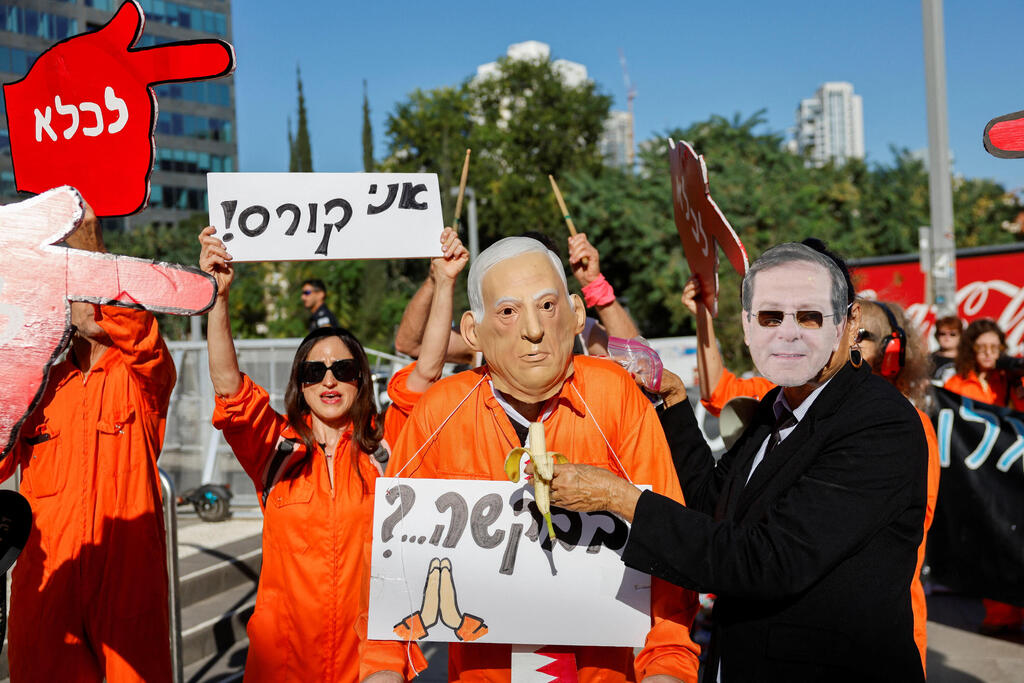
Protesters dressed in orange prison uniforms demonstrate outside the Tel Aviv District Court during Prime Minister Benjamin Netanyahu’s corruption trial
(Photo: REUTERS/Amir Cohen)
“There is a need to protect leadership stability — the continuation of a long and fragmented criminal proceeding could harm national resilience and national security. Institutional and legal considerations — the pardon mechanism acts as a counterweight to the judicial system, preserving public trust and preventing a collapse in institutional legitimacy. The supreme purpose of the pardon — the recommendation is focused on safeguarding civil peace and the nation, while maintaining a balance between the law and essential national needs.”
The minister’s recommendation says that “the prime minister’s pardon request falls within the category of cases in which exercising this power is justified, and is intended to protect the broad public interest, state security and the stability of the national leadership, without harming the principles of law or the authority of the courts. The recommendation emphasizes that the pardon power is a constitutional, unique and necessary tool in extreme situations, when national and diplomatic considerations outweigh purely personal or legal ones.”
Eliyahu also wrote: “The State of Israel is facing an axis of evil that seeks its destruction. The conduct of the war requires the prime minister’s complete release from any other matter. A criminal proceeding, by its nature, drains time and emotional strength. At a moment of national decision, the state cannot allow a situation in which its prime minister is required to divide his attention between making fateful decisions in the security cabinet and meetings to prepare for trial and the defendant’s bench. The use of a pardon is required here as a clear security and national step — to free the prime minister’s resources for the sake of victory in the campaign. The system’s insistence on exhausting the criminal process at this time is akin to a meticulous focus on fire department safety procedures while the whole house is going up in flames.”
Eliyahu devoted a section of his recommendation to Attorney General Baharav-Miara. According to him, “it is important to note here the scandalous conduct of the attorney general. In the case being conducted against the prime minister, the prosecution was urged to withdraw the bribery charge — the very charge without which there is great doubt the indictment would have been filed in the first place. In that decision, the judges also noted the ‘need to bring the trial to an end (for the good of the matter and the state).’ The attorney general ignored the court’s plea to consider the good of the matter and of the state, and refused to withdraw the bribery charge.
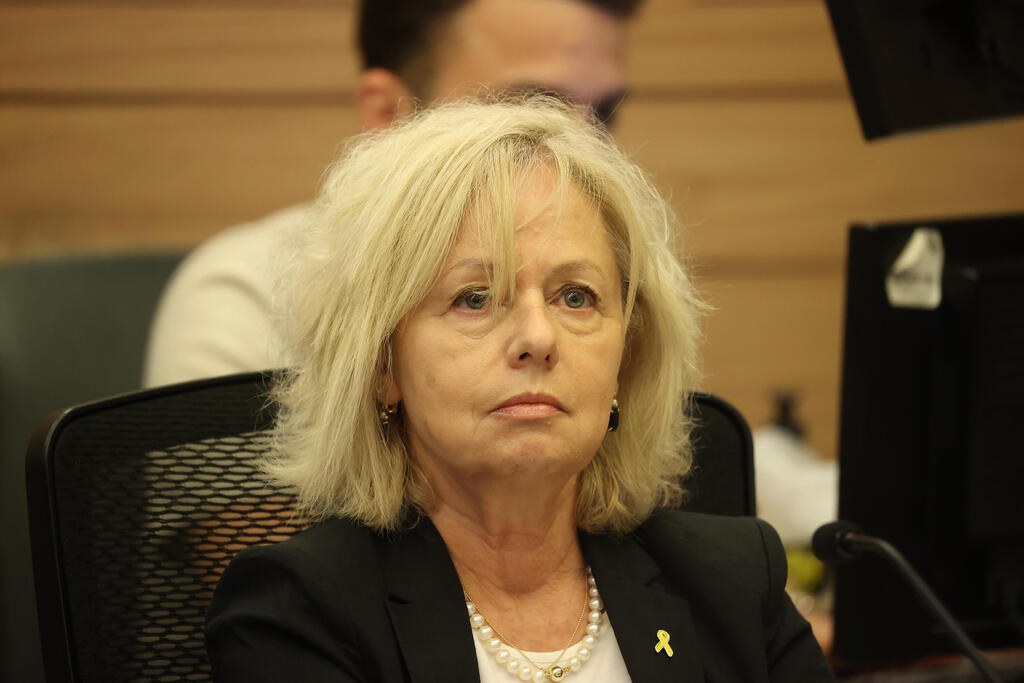
Attorney General Gali Baharav-Miara
(Photo: Amit Shabi)
“That is to say, the trial is still continuing in this respect, after the prosecution has so far failed to prove the prime minister’s guilt in its own case, while disregarding the judges’ comments and attempting to prove the charge beyond a reasonable doubt through the defense phase. This prosecutorial adventurism carries enormous costs in terms of the prime minister’s time, which is a limited and irreplaceable public resource — all the more so in wartime. Second, despite the events of Oct. 7, and despite the wars of ‘Revival,’ ‘Rising Lion’ and ‘Roaring Lion,’ the attorney general refused, and continues to refuse, to suspend the proceeding under her authority.”
At the start of his remarks, the minister had mentioned Rabbi Isaac Halevi Herzog, the late grandfather of the president. In the recommendation, he also invoked the president’s father and his own grandfather: “I ask you, as a minister in the government of Israel, in the name of millions of citizens yearning for reconciliation, in the name of my great grandfather, former Sephardi Chief Rabbi Mordechai Eliyahu, of blessed memory, in whose bones burned love for the people of Israel and concern for the nation, out of the war of Israel’s revival and out of a recognition of the historic responsibility of the State of Israel as one standing at the front line of the free world in the struggle against forces of darkness and evil — to walk in the courageous leadership path of your father, the sixth president of the state, Chaim Herzog, of blessed memory. In his fateful hour, your father knew how to rise above the commotion and above the strict letter of the law, and made the difficult decision to pardon the Shin Bet officials in the Bus 300 affair for the sake of national security. I call on you to continue this leadership legacy, exercise your constitutional and sovereign authority — and pardon the prime minister of Israel.”