


Colombia on Monday recognized Israeli sovereignty over the Golan Heights, becoming one of the few countries to do so as newly inaugurated President Abelardo de la Espriella moves rapidly to reverse the policies of his predecessor, Gustavo Petro, and rebuild Colombia’s once-close relationship with Israel.
The announcement came just three days after De la Espriella, a staunch supporter of Israel who has promised a sweeping change in Colombian foreign policy, was sworn in as president Friday.
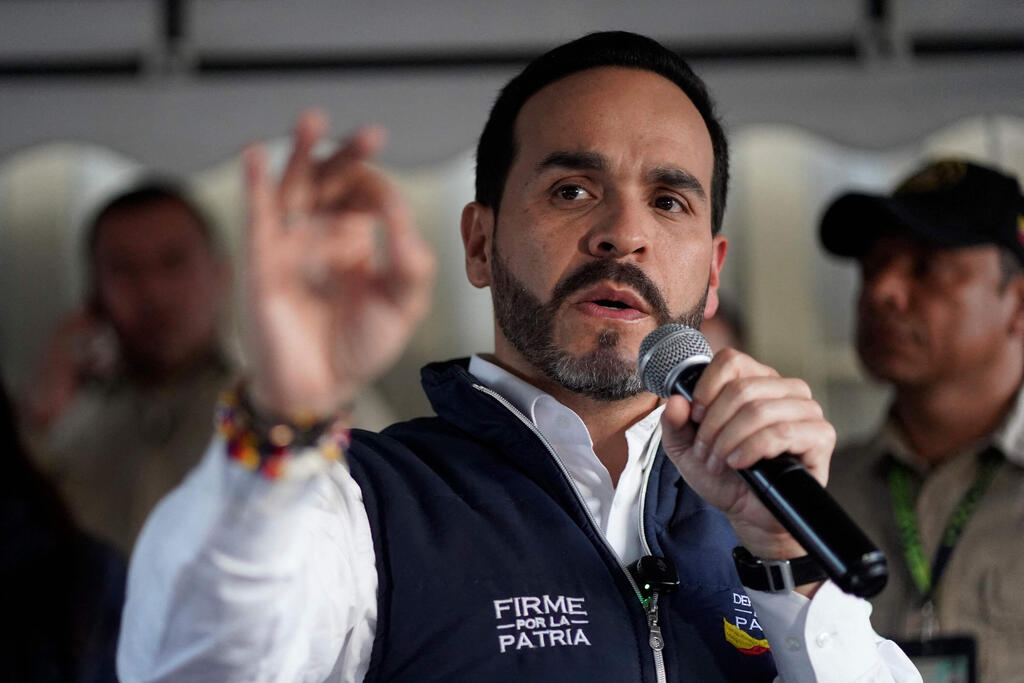
It followed a visit to Colombia by Foreign Minister Gideon Sa’ar, who attended De la Espriella’s inauguration and met with the new president in Barranquilla on Thursday, a day before he formally took office.
“Given the persistent regional instability in the Middle East and considering the strategic importance of the Golan Heights to Israel’s security, the government of Colombia recognizes Israel’s sovereignty over this territory, as well as the state’s right to defend itself against external threats,” the Colombian government said in its announcement Monday.
Colombia said Israel had faced persistent security threats along its borders for decades and said those threats had intensified significantly in recent years, culminating in the Hamas-led Oct. 7, 2023, attack on southern Israel.
“In this regional security context, Colombia recognizes that maintaining Israeli control and sovereignty over the Golan Heights constitutes an essential component of its national security and its ability to defend its citizens and safeguard their security,” the government said.
Israel captured the Golan Heights from Syria during the 1967 Six-Day War and extended Israeli law, jurisdiction and administration to the territory in 1981. Most of the international community does not recognize Israeli sovereignty over the strategic plateau.
The United States broke with that international consensus in 2019, when President Donald Trump formally recognized the Golan Heights as part of Israel. Colombia’s decision puts De la Espriella’s government alongside Washington on an issue of major diplomatic importance to Israel.
Sa’ar thanked De la Espriella for what he called a “historic decision.”
“I thank Colombia and my good friend, the President of Colombia, Abelardo De La Espriella, for his historic decision to recognize Israel's sovereignty over the Golan Heights,” Sa’ar said in an X post, noting that the decision followed their meeting Thursday.
He also thanked Colombian Foreign Minister Omar Bula Escobar for his friendship and cooperation.
“Israel is a small country without strategic depth,” Sa’ar said. “Having defensible borders is essential for Israel in order to guarantee the existence of the Jewish people in its historic homeland.”
Sa’ar said he would continue working to persuade additional countries to join the United States and Colombia in recognizing Israeli sovereignty over the Golan Heights, where Israel extended its law 45 years ago.
A dramatic reversal from Petro
Monday’s announcement is the latest and perhaps most symbolically significant sign of a dramatic transformation in relations between Israel and Colombia since De la Espriella succeeded Petro.
For decades, Colombia was among Israel’s closest partners in Latin America, with extensive security, military, intelligence and commercial ties. Relations deteriorated sharply under Petro, Colombia’s first leftist president, who became one of Israel’s most outspoken international critics following the outbreak of the Gaza war.
Petro announced in May 2024 that Colombia would sever diplomatic relations with Israel over its conduct of the war in Gaza. His government subsequently halted coal exports to Israel, moved to strengthen relations with the Palestinians and supported South Africa’s case against Israel at the International Court of Justice.
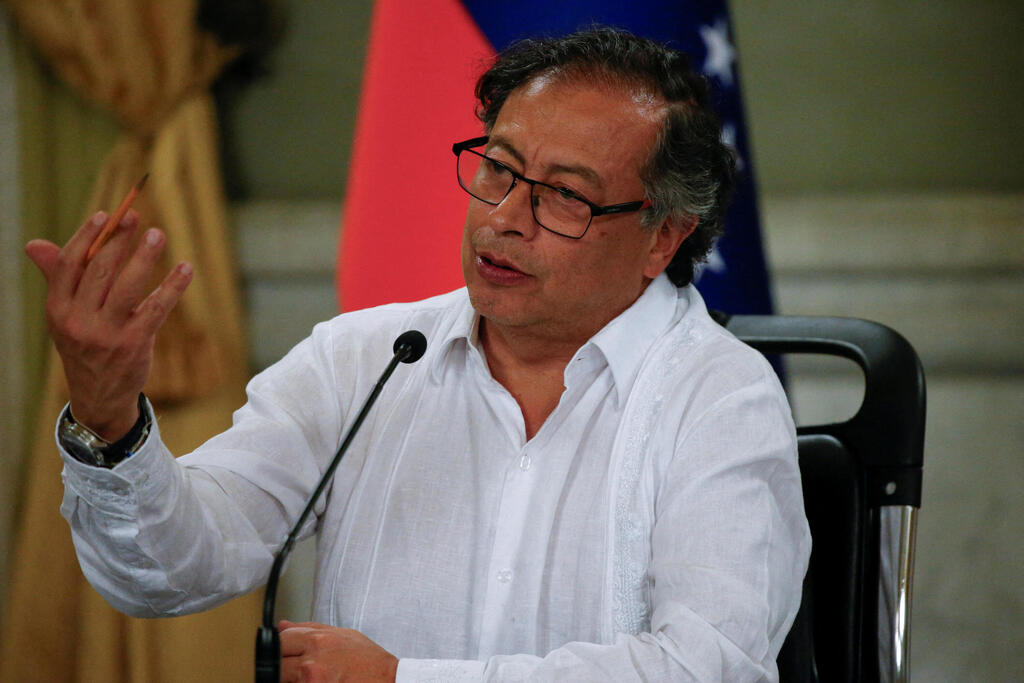
Gustavo Petro
(Photo: REUTERS / Leonardo Fernandez Viloria)
Petro also ordered the establishment of a Colombian diplomatic mission in Ramallah and repeatedly condemned the government of Prime Minister Benjamin Netanyahu. The rupture represented an extraordinary reversal for two countries that had previously maintained particularly close defense and intelligence ties.
The deterioration continued during Petro’s final years in office. In October 2025, he ordered the remaining Israeli diplomatic delegation to leave Colombia and moved to terminate the countries’ free trade agreement.
De la Espriella has taken Colombia in almost precisely the opposite direction.
Even before taking office, he announced plans to restore what he called Colombia’s “historic alliance” with Israel, halt plans for an embassy in Ramallah and move Colombia’s embassy in Israel from Tel Aviv to Jerusalem.
His government and Israel have also agreed to fully and immediately restore diplomatic relations and appoint ambassadors, work toward eliminating visa requirements for travel between the two countries and revive their free trade relationship.
Colombia is also withdrawing its support for South Africa’s case against Israel at the International Court of Justice and leaving the Hague Group, a coalition of countries established to coordinate diplomatic and legal pressure on Israel over the war in Gaza.
The two governments have additionally agreed to deepen political, security and economic cooperation, according to Israeli officials.
The shift effectively dismantles much of Petro’s Israel policy within days of his departure from office.
De la Espriella brings Colombia sharply to the right
De la Espriella, 48, was inaugurated Friday in Cali after a rapid and unconventional rise from celebrity lawyer and businessman to the presidency.
A political newcomer nicknamed “The Tiger” by supporters, De la Espriella built his campaign around a hard-line approach to crime and drug trafficking, economic liberalization, conservative social policies and opposition to Petro’s political legacy.
He founded the Defensores de la Patria, or Defenders of the Homeland, movement less than a year before the election and emerged as the principal standard-bearer of Colombia’s nationalist right.
De la Espriella narrowly defeated leftist Sen. Iván Cepeda, the candidate aligned with Petro’s political movement, in the June presidential runoff. His victory ended four years of national government by Colombia’s left and placed the country within a broader rightward political trend in parts of Latin America.
Before entering electoral politics, De la Espriella was one of Colombia’s best-known criminal lawyers and a wealthy businessman. His legal career included representing prominent and sometimes controversial clients, and he entered politics without having previously held elected office.
During the campaign, he presented himself as an anti-establishment figure who could restore public security, revive private investment and confront Colombia’s armed groups and drug-trafficking organizations more aggressively.
His inaugural address Friday underscored the scale of the change he intends to make. De la Espriella pledged a major crackdown on drug trafficking and illegal armed organizations, a reduction in the size of the Colombian state and measures to revive the country’s oil and gas industries. He has also signaled an end to Petro’s approach of seeking negotiations with multiple armed groups.
Foreign policy, particularly relations with the United States and Israel, has emerged as another area in which the new president intends to make a rapid break with Petro.
De la Espriella has cultivated close ties with Israel and aligned himself politically with the Trump administration in Washington. His decision to recognize Israeli sovereignty over the Golan Heights only days after taking office gives concrete expression to that shift.
The change is especially striking because Petro had spent much of his presidency moving Colombia toward some of the strongest anti-Israel positions adopted by a Latin American government.
While Petro sought closer diplomatic relations with the Palestinians and used international institutions to increase pressure on Israel, De la Espriella has made restoring ties with Jerusalem one of his first foreign policy priorities.
Embassy move and restored ties
Plans to move the Colombian Embassy to Jerusalem would represent another significant diplomatic gesture.
Most countries maintain their embassies in the Tel Aviv area because of the unresolved international status of Jerusalem. Israel considers Jerusalem its capital. The United States moved its embassy there in 2018 during Trump’s first administration, and a small number of other countries have followed.
De la Espriella confirmed before taking office that Colombia would join them.
His government has also suspended Petro-era plans for an embassy in Ramallah, though Colombia is not expected to withdraw its recognition of a Palestinian state. Colombia formally recognized Palestine in 2018, before Petro took office.
Taken together, the restoration of diplomatic ties, planned Jerusalem embassy, renewed trade and security cooperation, withdrawal from international initiatives against Israel and recognition of Israeli sovereignty over the Golan Heights amount to one of the fastest foreign policy reversals undertaken by the new Colombian government.
The rapprochement also forms part of a broader Israeli effort to strengthen relations with Latin America.
Sa’ar has designated 2026 as a year of strategic focus on Latin America for the Foreign Ministry. Before traveling to Colombia, he visited Ecuador, the first official visit there by an Israeli foreign minister in 44 years.
On Monday, Sa’ar also spoke with Bula following the powerful earthquake that struck western Colombia earlier in the day. Sa’ar expressed solidarity with Colombia and its people and offered Israeli assistance.
The earthquake, centered in western Colombia, caused widespread destruction and deaths and was felt across large parts of the country.