


Amid Israel's political deadlock following the elections and the possibility of renewed war with Iran, a senior Israeli official said Saturday evening that "it looks like we're heading toward war rather than an agreement." According to the official, Israel is preparing for the possibility that fighting could resume immediately after the US midterm elections, scheduled for this week.
In recent weeks, Israel's political and security leadership has held numerous discussions and prepared for various scenarios, including the possibility that US President Donald Trump could give the green light for strikes on Iranian infrastructure and energy facilities. Israeli officials believe such attacks could accelerate the collapse of the Iranian regime, which has survived two wars and a historic wave of widespread protests.
Trump on Iran: ‘We have time’
(Video: The White House)


Israel is preparing for the possibility of a prolonged war, rather than a series of targeted strikes over three days, as reported by The Wall Street Journal. The prevailing assessment in Israel is that the chances of reaching an agreement with Iran are low and that another war is more likely. Israeli officials also believe that if Trump suffers a defeat in the midterm elections, the likelihood of military action against Iran could increase, as the president may seek to demonstrate that he still wields considerable power.
Israeli officials further assess that after the midterms, Trump will have less to lose politically and will be unwilling to make concessions beyond those he has already offered. They believe the Iranians will be unable to pressure him into further compromises. Israel is also preparing for scenarios in which Iran attempts to catch Israel off guard by launching a preemptive strike if Tehran concludes that a joint US-Israeli attack is imminent.
Prime Minister Benjamin Netanyahu has said he instructed Mossad and the IDF to work toward bringing down the Iranian regime, describing this as a directive from Israel's political leadership. Renewed fighting is expected to affect negotiations over forming Israel's next government and could provide justification for establishing a national emergency government. Another war could also increase the likelihood of Trump intervening in efforts to establish a unity government without Itamar Ben-Gvir and Bezalel Smotrich, allowing him to advance his plans concerning Iran and the expansion of the Abraham Accords.
Gallery
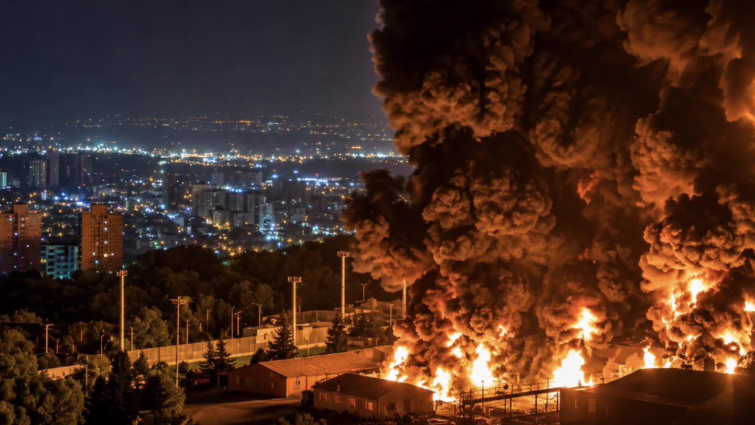
Photo published by Trump, originally from June 2025: Israeli officials believe the likelihood of strikes against Iran could increase if Trump suffers a defeat in the midterm elections
An Israeli official familiar with the details said nobody wants another war, particularly the Gulf states neighboring Iran. "But there is no choice," he explained. "The negotiations are stuck, especially now. Someone will have to compromise, and the Iranians are not moving toward a compromise." The official emphasized that political considerations alone would not determine whether military action takes place, and that operational conditions would also have to be met. "If all the conditions fall into place, there will be a strike, even if only to accelerate the regime's collapse or move negotiations forward," he assessed.
Ynet military analyst Ron Ben-Yishai noted that Qatar has been conducting a mediation effort between Iran and the United States since Friday, potentially one of the last opportunities for a diplomatic breakthrough in the near future. A Qatari delegation held talks with Iranian officials in Tehran on Friday and invited the American delegation to continue discussions in Doha on Saturday. The initiative could produce a breakthrough that prevents a major US-Israeli military offensive in the coming days. The latest Qatari proposal differs from previous mediation efforts by calling for measures to restrict Iran's nuclear program and reopen the Strait of Hormuz to be implemented gradually, in defined stages. Each Iranian step would be matched by a US measure to ease the blockade and sanctions or release Iranian funds frozen in Western countries.
Ynet military analyst Yossi Yehoshua added that the IDF has completed its preparations for a renewed campaign, both defensively and offensively, and that Israel's military readiness is extremely high. According to Yehoshua, Israel is moving closer to another confrontation with Iran, but the decision on whether to launch it rests not in Jerusalem but in Washington. At this stage, however, it remains unclear what exactly Trump hopes to achieve and, more importantly, how he intends to end the campaign if it begins. In other words, neither the mechanism for ending the war nor the operational achievements required to justify the action and define its success have been clearly established.
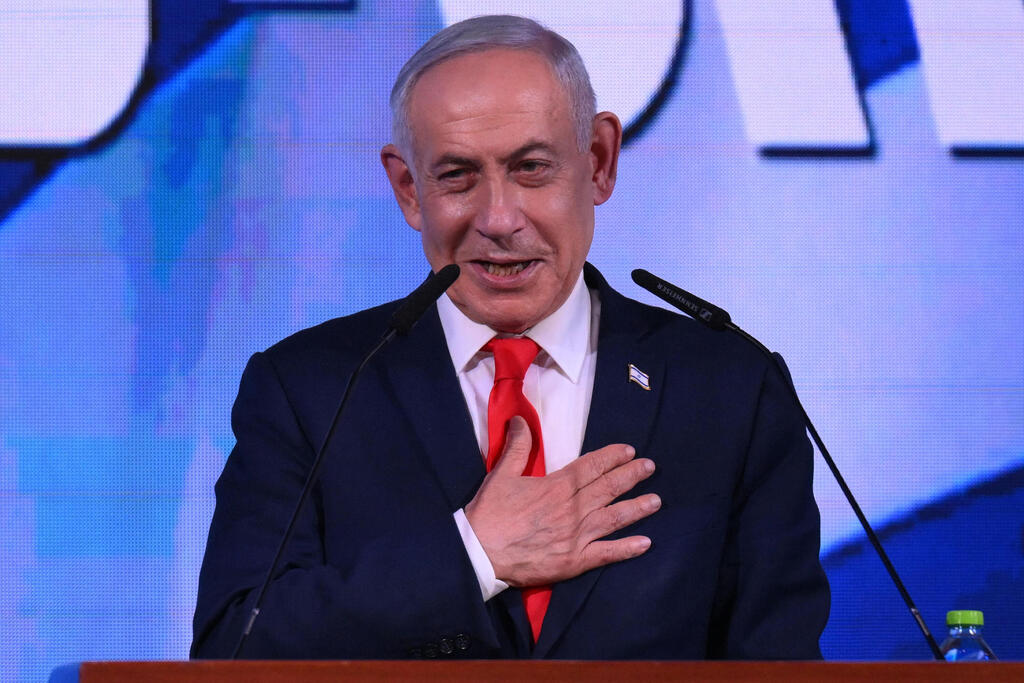
Benjamin Netanyahu
(Photo: Jewel SAMAD / AFP)
According to Reuters, Iranian negotiators held talks Saturday in Doha with Qatari mediators to discuss possible ways to end the war. The discussions in the Qatari capital followed more than 12 hours of negotiations the previous day. A source who spoke to Reuters said the talks were being coordinated with Washington. The report also said Gulf states believe Trump, who has so far refrained from renewing strikes against Iran, could resume military action after the midterm elections.
Iran's supreme leader, Mojtaba Khamenei, issued a threatening message Saturday to Israel and the United States. Following what Iranian authorities described as a meeting with senior military commanders, Tehran once again released only a written statement attributed to Khamenei, without publishing a photograph. He warned that if Israel and the United States launched another offensive, Iran would determine the timing and conditions for ending the fighting. Khamenei also said he had ordered an update of Iran's military target list to "ensure that all tangible and intangible assets of the American-Zionist enemy" would be within reach of Iranian forces, using the language of the Iranian statement.
Khamenei, who has not appeared publicly since assuming the position of supreme leader and was reportedly wounded in Israel's opening strike against Iran on February 28, which targeted the residential compound of his father, the late supreme leader Ali Khamenei, instructed the senior commanders he reportedly met to maintain combat readiness for a major confrontation. He called for a response to any attack that would not be limited by geographic boundaries and praised Iran's regional proxy organizations. Iranian media identified the officials who attended the reported meeting as Ahmad Vahidi, commander of the Islamic Revolutionary Guard Corps; Ali Abdollahi, chief of staff of Iran's armed forces; and Amir Hatami, commander of Iran's regular army.