


The IDF said Tuesday that sustained airstrikes on Iran’s ballistic missile array have left launch crews under pressure, disrupted coordinated fire and, in some cases, effectively trapped missiles underground by sealing off storage tunnels and launch infrastructure.
The military also released footage it said showed an air force strike in western Iran that destroyed a loaded ballistic missile launcher as it was being prepared for launch at Israel.
Israeli strike on loaded ballistic missile launcher in western Iran
(Video: IDF)


Even as Iranian ballistic missiles continued to cause casualties and heavy damage in Israel, the assessment in the defense establishment was that the Islamic Republic’s launch network had been significantly degraded.
In recent days, security officials said, dozens of commanders and soldiers in Iran’s missile fire array have been killed, while the Israeli Air Force has kept up what it described as round-the-clock “metro sorties” targeting missile storage sites and launch fields.
According to military officials, Iran had planned to synchronize launches in order to carry out heavy barrages. But with launch zones and storage facilities under repeated attack throughout the day, Iranian forces have struggled to fire regularly and have been unable to coordinate salvos as originally intended. The officials said Tehran has not been able to conduct the campaign against Israel the way it had planned.
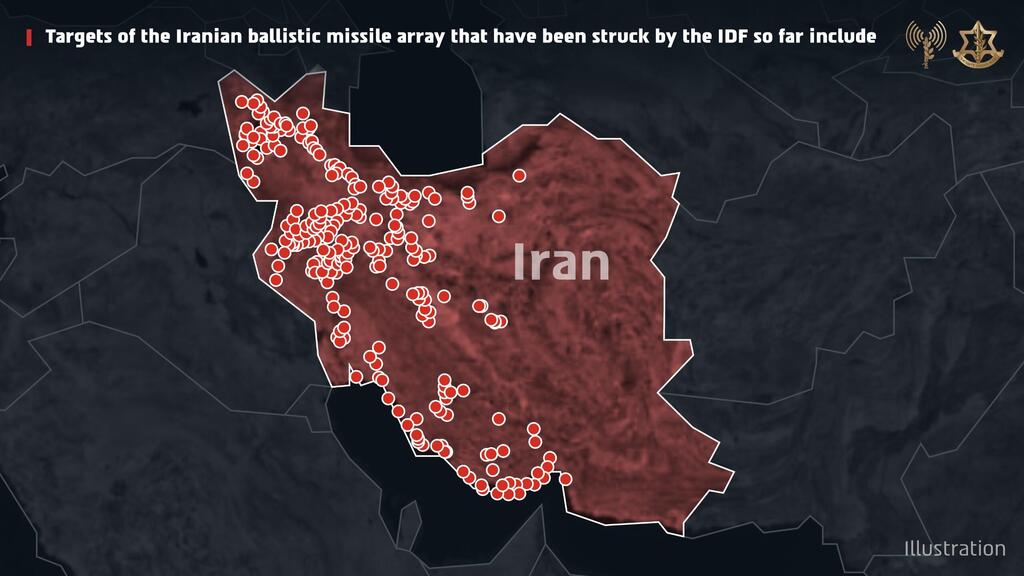
The military said the air force has carried out more than 600 strike sorties against Iran’s ballistic missile array. Military Intelligence, drawing on what officials described as multiple intelligence streams, including sources inside Iran, has in the past week identified declining morale, absenteeism and operational fatigue among Revolutionary Guard missile-unit personnel, the military said. Officials added that some operatives have become afraid to report to launch sites because of what they described as systematic Israeli targeting.
IDF spokesman Brig. Gen. Effie Defrin said Iran fired fewer than 100 missiles on the first day of the war and that the rate has declined since then to an average of about 10 a day. He said Israeli forces on Monday struck the cell responsible for a launch toward the southern city of Arad, which devastated a residential neighborhood and left dozens wounded. “They are being hunted,” Defrin said, adding that Israel was determined to keep operating because “this is a necessary campaign to ensure our existence.”
Officials said the fighting has created longer intervals between barrages aimed at Israel, though they cautioned that could change on any given day because Iran is still trying to increase the pace of fire. Alongside strikes on launch sites, the air force has also created what officials described as a bottleneck in underground storage tunnels by dropping munitions that effectively sealed missiles deep below ground, making them difficult to extract.
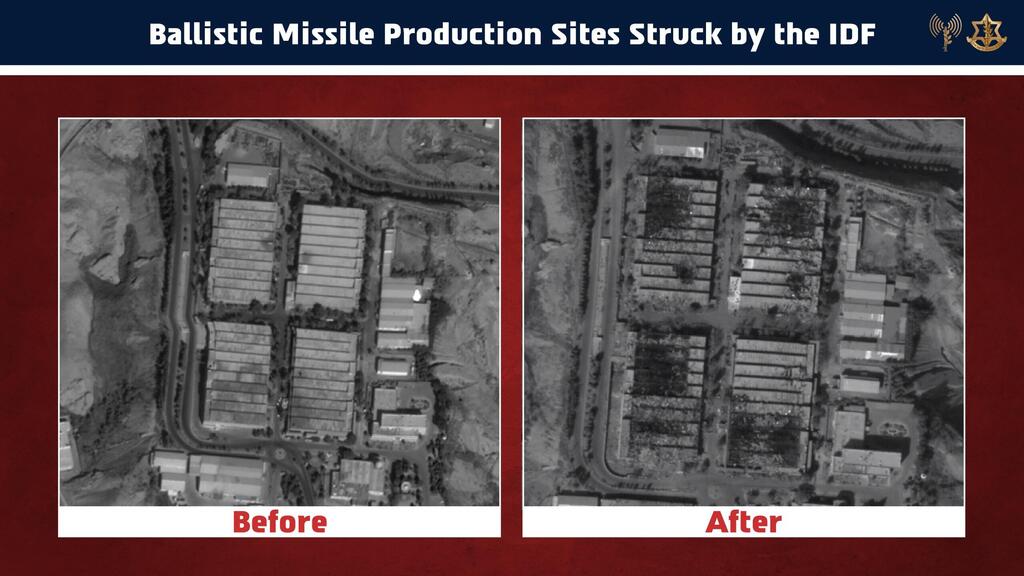
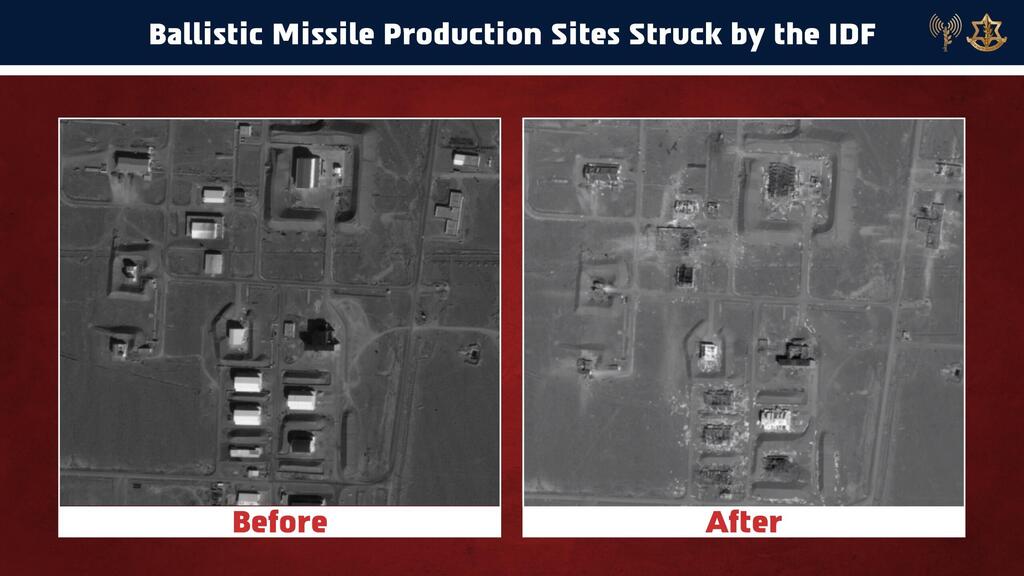
Ballistic missile production sites in Iran struck by the IDF
(Illustration: IDF)
(Illustration: IDF)
In recent days, the officials said, Iranian forces have tried to remove missiles from those blocked underground areas and brought engineering equipment to the relevant sites. But those vehicles also came under Israeli airstrikes, they said. Beyond the damage to the missiles themselves, the air force has continued striking what officials described as critical component production facilities, including for liquid fuel and warheads, in an effort to further weaken Iran’s missile manufacturing capacity during the war.
Despite those attacks, Iranian launches continued to exact a toll inside Israel on Tuesday. A doctor at Soroka Medical Center in Be'er Sheva was seriously wounded in a strike in the Bedouin village of al-Sirra in the Negev, while his infant son was lightly hurt. In central Tel Aviv, a direct hit by an Iranian missile carrying a 100-kilogram warhead struck a road on a small street, causing extensive damage. At least three buildings were damaged and cars caught fire. Damage was also reported to two homes in Rosh Haayin.