

The IDF and Shin Bet said Tuesday that they had eliminated Talal Jaber Mohammad Abd al-Aal, an Islamic Jihad terrorist who commanded a cell that infiltrated Israel during the October 7 massacre and later took part in holding hostages in the southern Gaza Strip. According to the military and Shin Bet, Abd al-Aal was struck Sunday in southern Gaza after holding several positions in Islamic Jihad.
Before the strike, the IDF said steps were taken to reduce harm to civilians, including the use of precise munitions and aerial surveillance. IDF troops under Southern Command remain deployed in the area in accordance with the ceasefire agreement and will continue to operate to remove any immediate threat, the statement said.
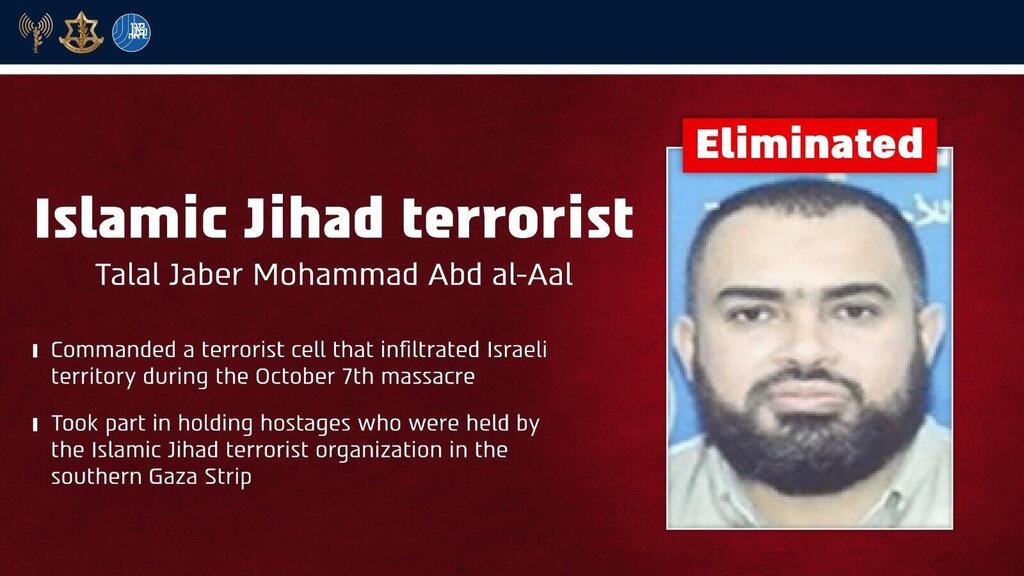
For freed hostage Rom Braslavski, the announcement was deeply personal. He said Abd al-Aal had been one of the terrorists who held him captive. “This is the most emotional day of my life,” Braslavski wrote after learning of the strike. “I received a real phone call that shook my life and changed it from one end to the other. I am in tears and in a level of emotion that is hard for me to describe.” Braslavski published Abd al-Aal’s photo and said the terrorist had been known during his captivity as “the martyr commander.” He added: “Go to hell.”
In a longer post, Braslavski identified Abd al-Aal by the name he knew him by in captivity, Abu Youssef. “This is Talal Abd al-Aal, or as I know him, Abu Youssef,” he wrote. “This is the man who weighed 100 kilograms and jumped on my neck while I was malnourished. This is his face. This is his hand. This is him. This is the man who forced me, while I was tied hand and foot, with bruises on my body and very close to death, to open my mouth and then spat into it.”
Braslavski said Abd al-Aal commanded the terrorist cell that held him for a year. “This is the commander who gave the order: ‘Tie Abu Salem up and abuse him,’” he wrote, using the name he said the terrorists used for him. “This is the man who, by his orders and with his own hands, abused me and almost killed me several times.” He added that Abd al-Aal had once told him to pass a message to the Shin Bet, making an obscene gesture and saying he was not afraid. “The message was delivered,” Braslavski wrote. “Enjoy hell.”
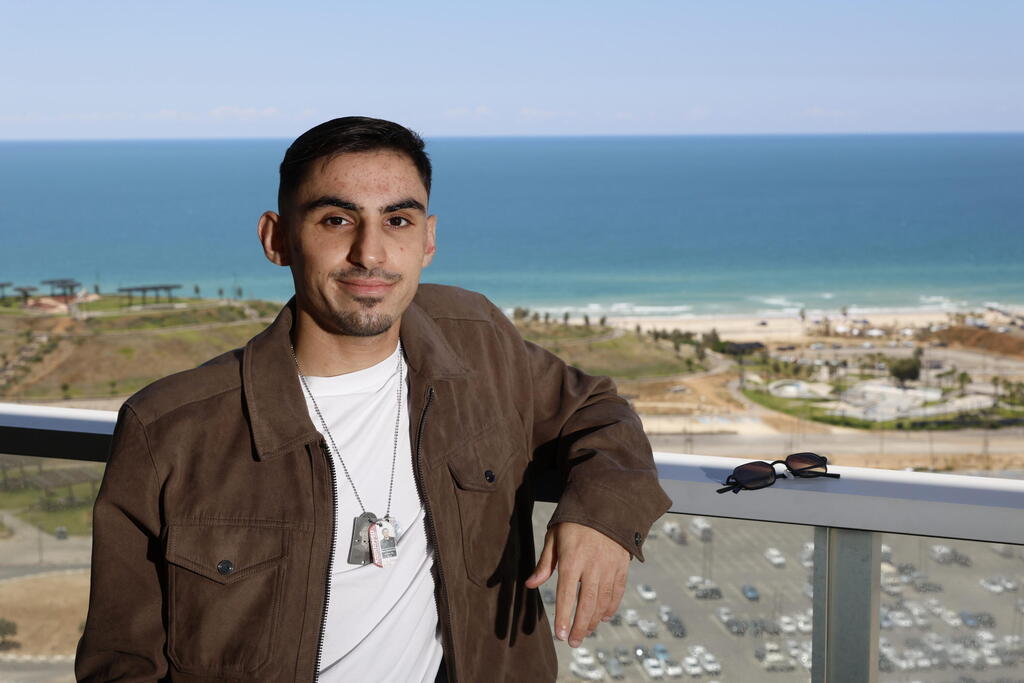
Rom Braslavski
(Photo: Ziv Koren)
About a month ago, Braslavski spoke to ynet about the anxiety, torture and humiliation from captivity that still return to him in nightmares months after his release. During nearly two years in Gaza, he endured a long campaign of abuse, spending most of his captivity in Deir al-Balah, first in hideout apartments and later inside a large camp of displaced Gazans’ tents. For long periods, he said, he was held with his hands and feet tied, often completely naked. He was forced for hours to stand facing a wall, blindfolded, with stones placed in his ears so he could not hear. “Every so often they would come in and whip the soles of my feet with a donkey whip,” he recalled. “My legs were purple. I could barely stand.”
But the cruel and inventive forms of humiliation the terrorists used, he said, were etched into him even more deeply. “You get used to the beatings,” he said. “But that humiliation, that was the lowest moment of my captivity.” On one occasion, after 28 days without a shower, he begged to be allowed to wash. His whole body, he said, was black with dirt. A terrorist told him to prepare for a shower, then returned with a bucket full of sand and garbage and forced him to pour it over himself. “They wanted to make me feel like I was an animal,” Braslavski said. “Not a human being.”