

A central figure in the IDF Manpower Directorate’s annual summary undermines one of the main arguments raised against the military and the general, non-ultra-Orthodox public during Knesset debates on the draft exemption law: this year, the IDF canceled reserve-duty exemptions for no fewer than 54,000 Israelis, who returned to reserve service after having already completed full compulsory service and a previous period of reserve duty.
In recent weeks, as the Knesset Foreign Affairs and Defense Committee works to advance legislation granting draft exemptions to the ultra-Orthodox, critics have repeatedly argued against the IDF that the army “dares” to demand equality of burden and an expansion of service to the Haredi sector, while many secular and religious Israelis enjoy exemptions from reserve duty after serving two years and eight months or three years of compulsory service and later receiving a reserve exemption. On its face, the claim suggests an injustice meant to legitimize another, far greater one in scope, given that the bulk of Israel’s security burden has rested for nearly eight decades on the general public.
Gallery

IDF canceled reserve-duty exemptions for no fewer than 54,000 Israelis
(Photo: IDF Spokesperson's Unit)
However, according to the IDF’s year-end data published Wednesday morning, even this argument is, at best, populist and, at worst, simply wrong, despite being repeatedly raised by committee chairman Knesset lawmaker Boaz Bismuth. According to the latest figures, around 54,000 Israelis had their reserve exemptions revoked this year. Most, the IDF says, complied after being summoned back to service, while only a minority sought to oppose or appeal the decision and were rejected after review. Officials in the Manpower Directorate said that thousands of those whose exemptions were canceled volunteered on their own to return to service, including in combat roles.
“This is how we are staffing the new Eastern Division the IDF is establishing, Division 96, with Israelis aged 35 to 60, as well as younger people whose exemptions were revoked,” officials said. “We wish we could get even 10% of this number from the ultra-Orthodox sector.”
The army stressed that the trend will continue next year, despite the end of the war, not only to make up for a shortfall of about 12,000 soldiers who have been wounded or killed since October 7. The coming year has been defined as one of “heightened routine security,” with two to three times more troops deployed along borders and in various sectors compared with the prewar situation.
In addition, the Finance and Defense ministries cut roughly 20,000 reserve soldiers whom the IDF had planned to call up next year, meaning the burden will increase on those who do report for duty: about 40,000 reservists at any given time, serving longer with fewer breaks and refreshers than during the war.
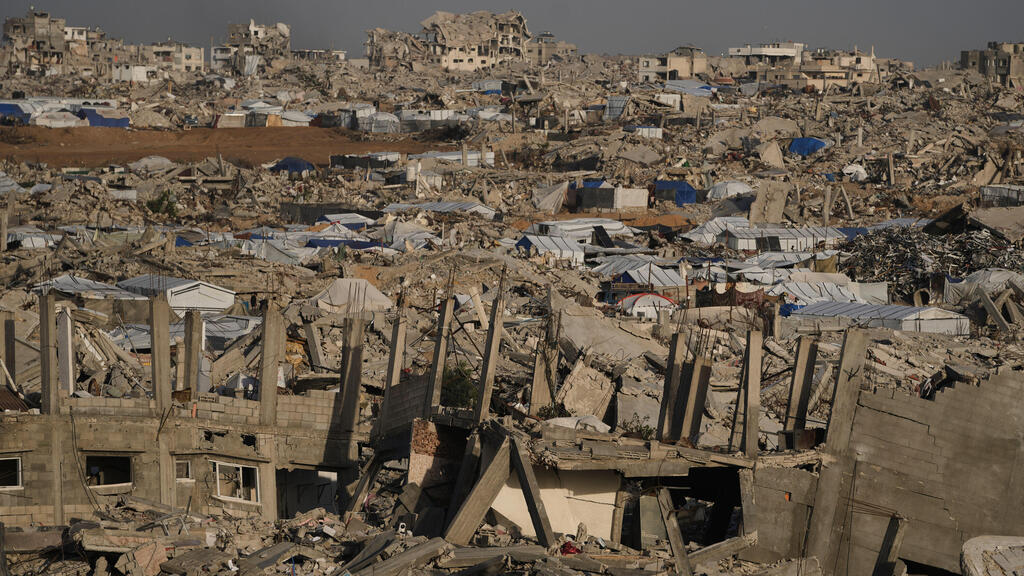
Destruction after two years of war in Gaza
(Photo: Jehad Alshrafi/AP)
The data also show that the IDF expanded additional recruitment pools this year, absorbing about 3,300 lone soldiers who immigrated to Israel and enlisted. The military also published its casualty figures for the past year: 151 fallen soldiers, 91 of them in terror attacks or operational activity, along with 821 soldiers wounded.
Iran: lessons learned
The second and final calendar year of the October 7 war was marked by multi-front fighting, with the centerpiece being the first direct war in history between Israel and the Islamic Republic of Iran. According to the IDF, about 21,000 targets were struck across all arenas this year, alongside 430 multi-front operations, 50 naval strikes, and sustained pressure that required the mobilization of 306,830 reservists, many of whom were in uniform for most of the war.
The Navy accumulated about 130,000 operational sea hours, including the first overt missile boat strikes on Houthi ports in Yemen. The IDF cited lessons learned from Operation Rising Lion, noting that Iranian fire could resume in another round, after both sides drew conclusions from the 12 days of fighting last summer.
Gaza: tunnels yet to be destroyed
The Gaza arena, which has seesawed between the end of the first phase and a prolonged stalemate ahead of the long-term second phase of the Israel-Hamas agreement, included the killing this year of four Hamas brigade commanders, 14 battalion-level commanders, and 53 company commanders.
This was in addition to four senior figures in the organization’s leadership, chief among them Mohammed Sinwar, who replaced his brother Yahya as the group’s No. 2, and Raad Saad, who was killed about two months after the ceasefire. Over the past year, which mainly included Operation Gideon’s Chariots I, the IDF destroyed about 14,000 terrorist infrastructures and struck 19,500 targets in the Strip, including 270 weapons depots. Alongside these achievements, Hamas’ senior leadership still includes commanders, some of them veterans, a recovering civilian leadership, and more than 10,000 armed operatives, according to the IDF, who are rebuilding the organization and still possess kilometers of tunnels the army has yet to locate or destroy.
Lebanon: containment policy shifts sides
Ahead of a likely operation in Lebanon against Hezbollah, which reportedly also received backing from Trump, IDF data from the northern front reveal Hezbollah’s containment policy, which for years had been Israel’s approach until October 7. The IDF killed four senior Hezbollah figures this year, including the group’s current chief of staff, Haitham Ali Tabatabai.
Although headlines earlier this week focused on a possible new Israeli initiative against Iran following the Netanyahu-Trump meeting, the likelihood appears greater for a move already approved at all levels of the IDF against Hezbollah. The terror organization was not defeated last year, despite suffering heavy losses, the elimination of much of its leadership, and the destruction of its Radwan Force’s ability to invade the Galilee.
Hezbollah still possesses tens of thousands of precision missiles, heavy rockets, explosive UAVs and attack drones, as well as tens of thousands of operatives commanded by less experienced figures than in the past. It remains the strongest security force in Lebanon.
West Bank: amid diverted attention
Central Command has become the most volatile arena in recent months, despite continued strengthening of coordination between Israel and the Palestinian Authority. Alongside a surge in Jewish terror attacks against Palestinians and an increase in stone-throwing and Molotov cocktail attacks on Israeli vehicles, dozens of Israeli settlements established in the West Bank have drawn opposition, including from Washington.
In a first step reminiscent of the second intifada, the Israeli Air Force struck 20 targets in the West Bank this year, and forces carried out about 80 brigade-level operations. This was in addition to the continued presence of two IDF battalions inside the Jenin and Tulkarm refugee camps, which the army has been holding.