

The Pentagon is developing military options for a possible “final blow” against Iran that could include a massive bombing campaign and, in some scenarios, the use of U.S. ground forces, Axios reported on Wednesday, citing two U.S. officials and two other sources familiar with the discussions.
The report said the options are being examined as the chances of a sharp military escalation increase if U.S.-Iran diplomacy fails to produce progress, especially if the Strait of Hormuz remains closed. Some U.S. officials believe an overwhelming show of force could strengthen Washington’s hand in any peace talks or give President Donald Trump a basis to declare victory.
Gallery
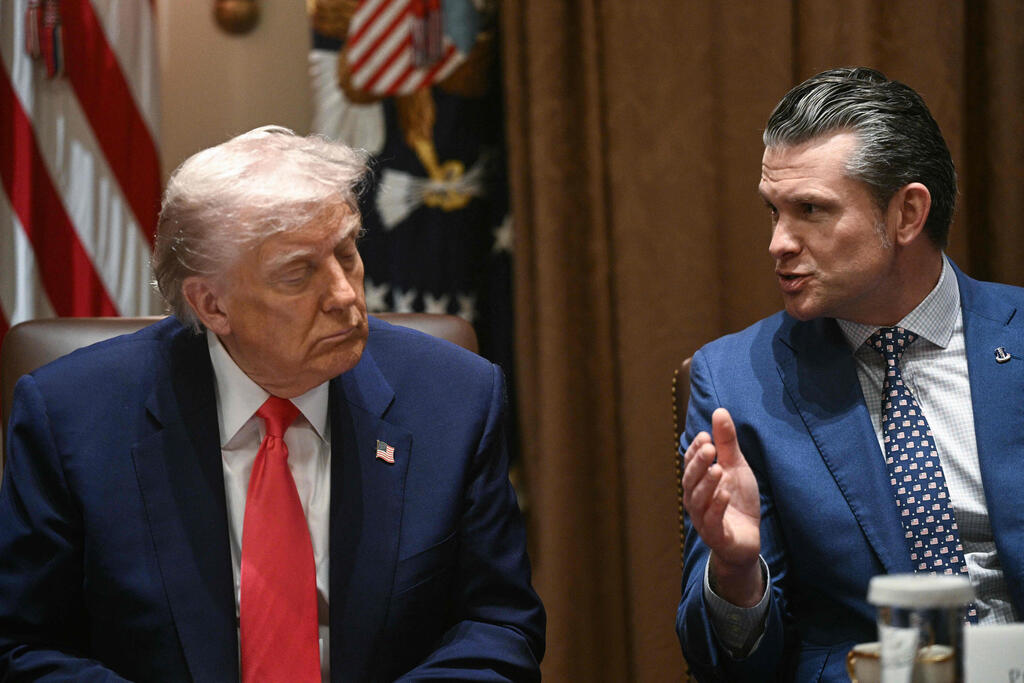
US President Donald Trump and Secretary of War Pete Hegseth
(Photo: Brendan SMIALOWSKI / AFP)
At the same time, officials and sources told Axios that Iran will also shape how the war ends, and that many of the scenarios under discussion could prolong and intensify the fighting rather than bring it to a swift conclusion.
According to the report, four main options are being discussed. They include invading or blockading Kharg Island, Iran’s main oil export hub, and invading Larak Island, a strategic outpost that helps Iran assert control over the Strait of Hormuz. Axios said Larak hosts Iranian bunkers, attack craft capable of striking cargo ships and radar systems that monitor traffic through the waterway.
Other options include seizing Abu Musa and two smaller nearby islands near the western entrance to the strait. The islands are controlled by Iran and also claimed by the United Arab Emirates. Another scenario would involve blocking or seizing ships carrying Iranian oil on the eastern side of the Strait of Hormuz.
Axios also reported that the U.S. military has prepared plans for ground operations deep inside Iran to secure highly enriched uranium stored at nuclear facilities. As an alternative to such a complex and risky mission, Washington could launch large-scale airstrikes on those facilities in an attempt to deny Iran access to the material, the report said.
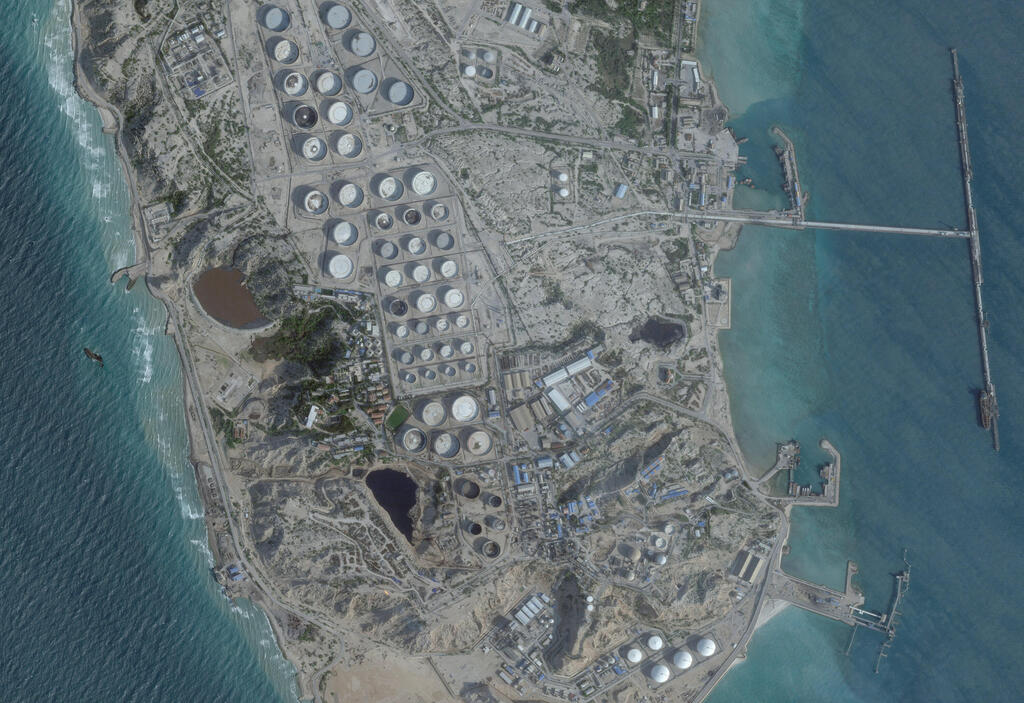
An oil terminal on Kharg Island
(Photo: 2026 Planet Labs PBC/Handout via REUTERS)
Trump has not yet decided whether to pursue any of the options, and White House officials described any potential ground operation as hypothetical, according to Axios. Still, the report said sources indicated he is prepared to escalate if talks with Iran fail to produce concrete results soon.
Before taking any of the more far-reaching steps, Trump could move first on a threat to bomb Iranian power plants and energy facilities, Axios reported. Tehran has warned that such an attack would trigger major retaliation across the Gulf.
White House press secretary Karoline Leavitt said Wednesday that Trump is prepared to strike “harder than ever before” if no agreement is reached with Iran.
“The president doesn’t bluff and he is ready to unleash hell,” Leavitt said. “Iran shouldn’t miscalculate again. Any violence beyond this point will be because the Iranian regime refuses to come to a deal.”
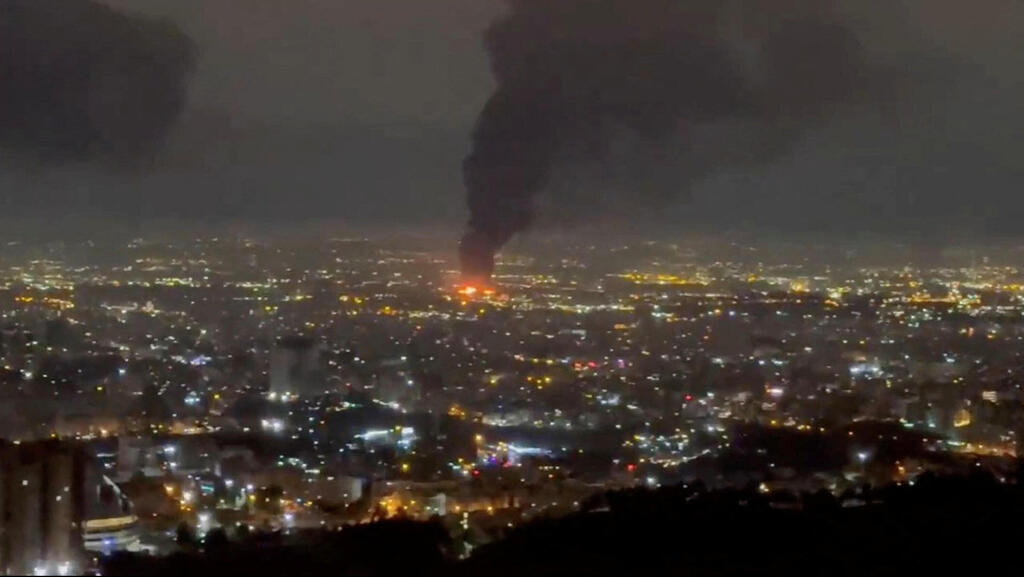
Smoke rising over Tehran following a US-Israeli airstrike
(Photo: Social Media/Reuters)
The report said additional U.S. military reinforcements, including several fighter jet squadrons and thousands of troops, are expected to arrive in the Middle East in the coming days and weeks. One Marine expeditionary unit is due this week and another is deploying, while the command element of the 82nd Airborne Division has been ordered to the region with an infantry brigade numbering several thousand troops.
Iranian officials, for their part, have said they do not trust Trump’s diplomatic push and see it as a cover for possible surprise attacks.
Iranian parliament speaker Mohammad Bagher Ghalibaf wrote on X on Wednesday that Iranian intelligence believes “Iran’s enemies, with the support of a country in the region, are preparing an operation to occupy one of Iran’s islands,” appearing to be referring to the UAE and its claim to Abu Musa.
Ghalibaf warned that all enemy movements were being monitored by Iran’s armed forces and said that if such an operation were launched, the vital infrastructure of that regional country would be targeted “without limitation by relentless attacks.”

Iranian parliament speaker Mohammad Bagher Ghalibaf
(Photo: AP)
Despite the tensions, diplomatic efforts are continuing. Axios reported that Pakistan, Egypt and Turkey are still trying to arrange a meeting between U.S. and Iranian officials. A source involved in those efforts said Iran rejected an initial U.S. list of demands but did not rule out negotiations altogether.
“But mistrust is the problem. The commanders of the IRGC,” or Iran’s Revolutionary Guard, “are very skeptical,” the source said, according to Axios. “But the mediators haven’t given up.”