


Whether we like it or not, we must acknowledge a basic fact: US President Donald Trump not only dominates Israel’s national security agenda, he is now dictating to the government in Jerusalem the steps it is expected to take on critical security and diplomatic issues. This is done with full awareness that many of these moves place Prime Minister Benjamin Netanyahu in severe domestic political difficulty within his Cabinet and coalition, and even threaten the government’s survival.
This is also the reason the full Cabinet has been sidelined and excluded from any substantive discussion on key issues such as Iran and the transition to Phase B of the Trump plan for Gaza.
Gallery
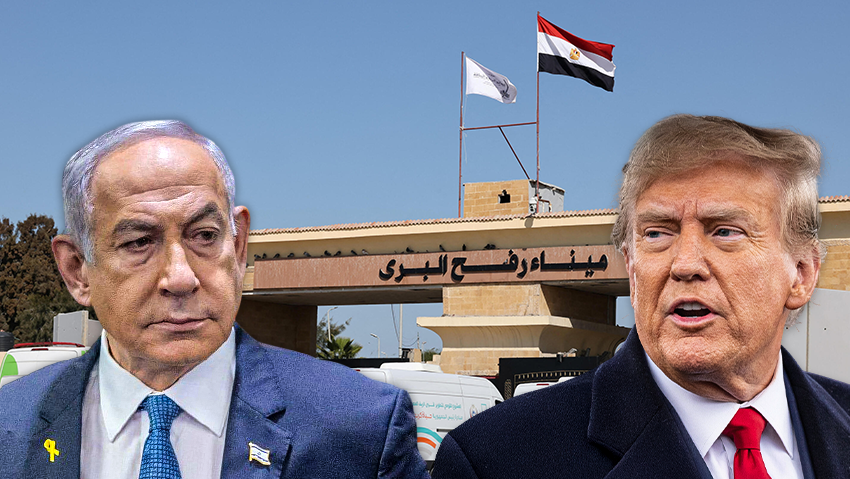
Trump and Netanyahu
(Photo: lev radin/ Shutterstock, AP, Chaim Goldberg/Flash 90, Mohamed Abd El Ghany/ Reuters)
The most pressing question from the Israeli public’s perspective is when and what will happen in Israel if the United States attacks Iran, or if Iran strikes first to exact a price from the Americans and from us before a wave of fire descends on the regime in Tehran. Put bluntly: will we, and when, once again hear air raid sirens in the middle of the night and run to safe rooms and shelters several times a day?
A last-minute decision
According to all indications, no one can answer that question. Not even Donald Trump himself, whose record shows he decides at the last minute and even then not definitively. This can be seen, for example, in the speech delivered on Saturday by US Vice President JD Vance, which made clear that we are not the only ones groping in dense uncertainty.
Neither the Pentagon nor US Central Command has received instructions beyond preparing a large naval and air force capable of delivering precise strikes on Iran if ordered, while simultaneously preparing to defend American troops and bases and US interests and allies in the Middle East, including Israel.
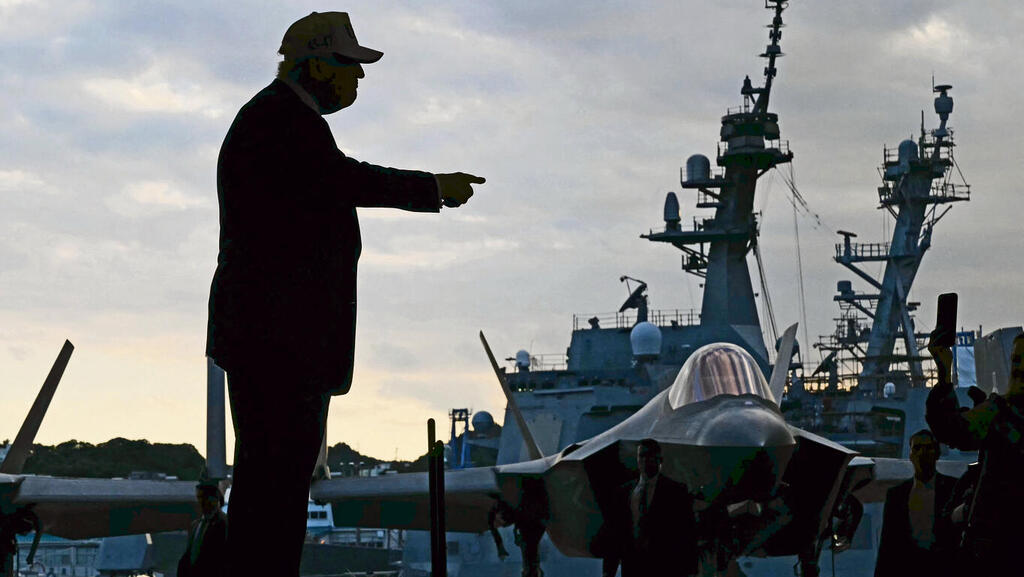
Only one man decides: President Trump
(Photo: Andrew Caballero-Reynolds, AFP)
These preparations, especially regarding joint defense against Iranian missile and drone retaliation, were the main focus of discussions between CENTCOM commander Gen. Brad Cooper and IDF Chief of Staff Lt. Gen. Eyal Zamir. It can be cautiously assessed that the two also coordinated how the IDF would assist with intelligence and other support for a possible American strike, and how the Israeli Air Force would join an offensive campaign alongside US naval and air forces if Israel were attacked.
In the absence of a presidential decision, the two generals appear to have conducted what the IDF calls a strategic ‘contingency discussion,’ with details to be finalized later. What is known at this stage is what was already reported by The Wall Street Journal: Trump has demanded that the Pentagon and CENTCOM present him with a plan that would achieve a ‘clear victory.’ It is unclear what Trump means by ‘victory’ and what outcome he wants in Iran as a result of an attack or the threat of one.
The answer to the US president’s dilemma lies in five questions.
The first is whether a limited but highly precise and powerful strike can bring about the collapse of the regime, or at least significantly weaken it and the security apparatus that protects it.
The second is whether there is, or soon will be, anyone in Iran or among the Iranian people who could exploit such weakness to topple the regime completely, or at least force a fundamental change in its domestic policies toward its citizens and its external behavior on the nuclear issue, ballistic missiles and regional subversion. A reminder: in Venezuela, this worked for Trump. The regime did not collapse after Nicolás Maduro was abducted, but the person now leading it is his deputy, who apparently pledged in advance to the Americans to do what they demanded.
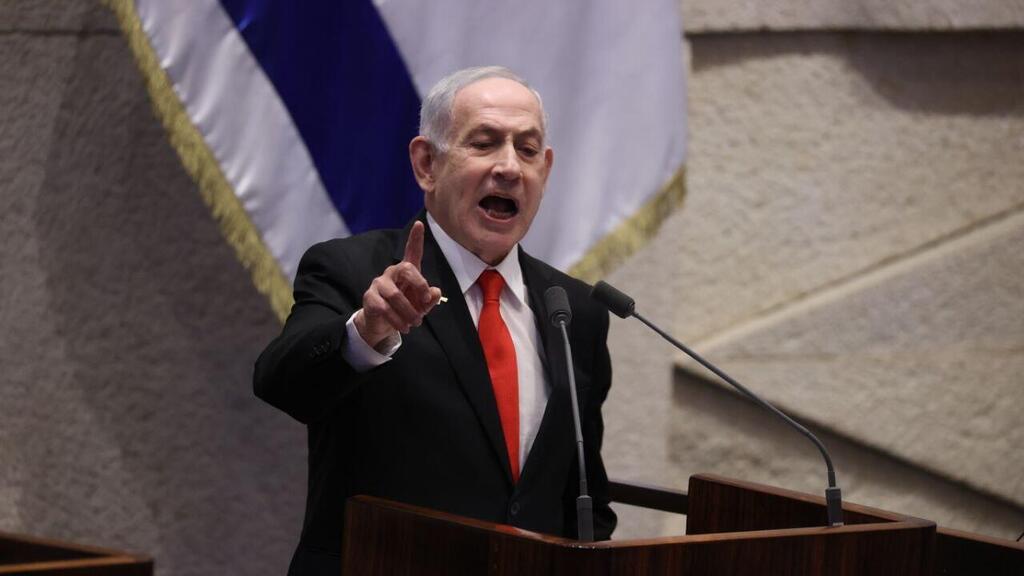
Netanyahu under pressure as Trump’s moves fuel political strain
(Photo: Alex Kolomoisky)
The third question is whether the military threat should be stabilized and reinforced for several more weeks to allow the ayatollahs’ regime and its leader to accept the US demands set as conditions for entering negotiations on lifting sanctions and removing the military threat. It is quite possible that the Iranians, even Supreme Leader Ali Khamenei, will again conclude that their situation is so dire that it is time for a ‘heroic compromise,’ agree to American terms and then try to buy time, as they have done in the past.
The fourth question is this: if it becomes clear that the Iranian regime cannot be toppled through air strikes alone, should the massive American force now being assembled in the Middle East be used to deliver another blow to Iran? This would mean destroying what remains of the ayatollahs’ military nuclear program, the threatening ballistic missile infrastructure and its production capabilities, the drones and the underground stockpiles, in short, finishing what we and the Americans did not complete in the ‘12-day war.’
The fifth, and most critical, question is whether the Americans have sufficiently precise intelligence and whether they even have the capability to achieve any of these objectives, either regime collapse or a blow severe enough to disable Iran’s military infrastructure for many years, and above all, at what cost. What would be the price in casualties, destruction and disruption to energy supplies that the United States and its allies would pay if Trump decides to strike Iran?
It is important to remember that when Trump refrained from attacking two weeks ago, he lost the element of surprise and with it the ability to effect deep change in Iran, for example eliminating Khamenei, who is now safely sheltered in a network of fortified bunkers and tunnels far deeper and more robust than those once available to Hassan Nasrallah.
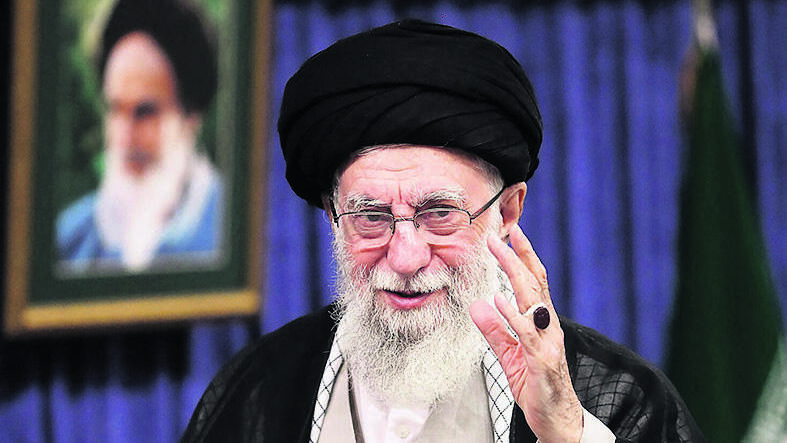
Khamenei is likely already in a bunker
(Photo: Khamenei.ir/AFP)
Trump appears to be aware of all these questions. In the past, he has shown that he thinks twice and consults before acting on fateful matters. No less important, he has no problem backing away from a decision when convinced that the cost of carrying it out would far exceed its benefit. That was the case last Wednesday, when American aircraft were already close to taking off. Trump does not want to pay the price in American lives or the high cost of a prolonged operation. He is therefore fully capable of halting the military pressure he is applying on Iran and sending Steve Witkoff to the negotiating table with Iranian Foreign Minister Abbas Araghchi. In any case, the decision is in his hands alone, and as we have learned, even when he decides, he may change his mind at the last moment.
For now, the Israeli public should know that contrary to reports in the global and American media, from a professional military standpoint the forces deployed by the Pentagon under CENTCOM command are still not ready. They will need between one and three weeks to reach readiness, due to additional logistical requirements and advance intelligence collection. This too is a factor in the decision-making process. Another important question concerns the Iranians themselves: will the regime seek revenge and exact a price for an American strike, and will it attack Israel or only American bases and interests in the Middle East?
At present, Iran appears to have no interest in attacking Israel, knowing that the Israeli Air Force has significant capabilities to strike inside Iran, and that Israel also has reinforced defensive capabilities coordinated with CENTCOM and regional states. It is therefore likely that Iran will refrain from attacking Israel as long as it believes it can survive, so as not to give us a pretext to carry out an upgraded round of strikes in Iran.
Phase B approaches
The second arena in which the Trump administration and its envoys are dictating Israel’s moves is the transition to Phase B of the 20-point plan for Gaza. The main obstacle is disarmament and demilitarization of the Strip.
In a speech in Davos, Jared Kushner laid out principles for the disarmament operation, but there is no entity that will actually dismantle Hamas, Islamic Jihad and the terrorist infrastructure. The Palestinian technocrats council is supposed to do so, but it has no operational force. The international stabilization force has yet to be formed, and countries are unwilling to send troops before Hamas is disarmed.
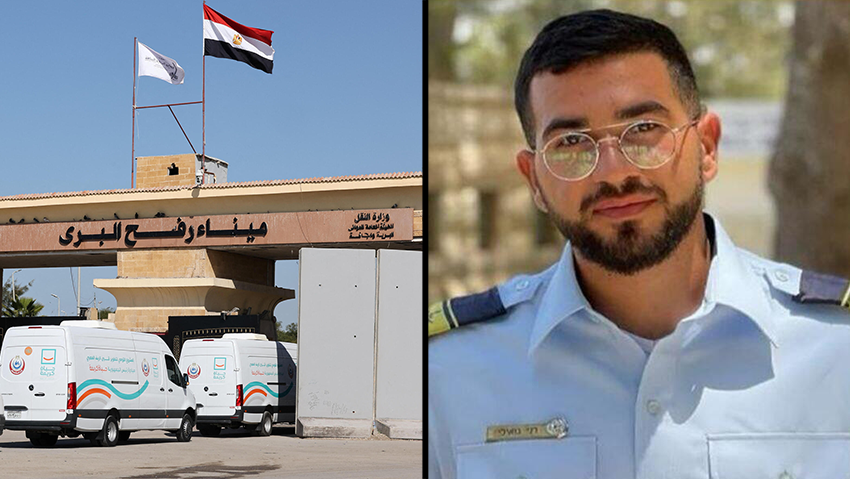
Ran Gvili and Rafah Crossing
(Photo: Mohamed Abd El Ghany/ Reuters)
The most sensitive issue is opening the Rafah crossing in both directions, with Israel using the crossing as leverage for the return of the body of slain hostage Ran Gvili. The Prime Minister’s Office said last night after a meeting of the security Cabinet that ‘upon completion of the operation and in accordance with understandings with the United States, Israel will open the Rafah crossing.’
Opening Rafah is essential for the Palestinian technocrats council to show Gaza’s residents that the broader ‘New Gaza’ plan is advancing and to present achievements that would enable the council to establish control and continue implementing the plan. It is also clear that behind the technocrats council’s outline for opening Rafah stand Witkoff and Kushner, together with Qatar, Turkey and Egypt, operating behind the scenes. It is also reasonable to assume that Netanyahu gave his consent independently and excluded the Cabinet from the decision.
First published: 06:47, 01.26.26