


According to senior U.S. sources, the message conveyed last week from Israel’s top leadership to the American administration was clear: Israel’s opposition to a military strike at this stage is not rooted in concerns over interceptor shortages or fears of its air defense systems collapsing.
Even in an extreme scenario involving the launch of 700 missiles from Iran—compared to approximately 500 launched during Operation Rising Lion—the strategic cost-benefit assessment in Jerusalem remains fundamentally unchanged. In the view of Israeli decision-makers, if a military operation could lead to the collapse of the Iranian regime, the price would not only be acceptable but worthwhile, particularly given the capabilities pushed to their limits in the recent conflict.
Gallery
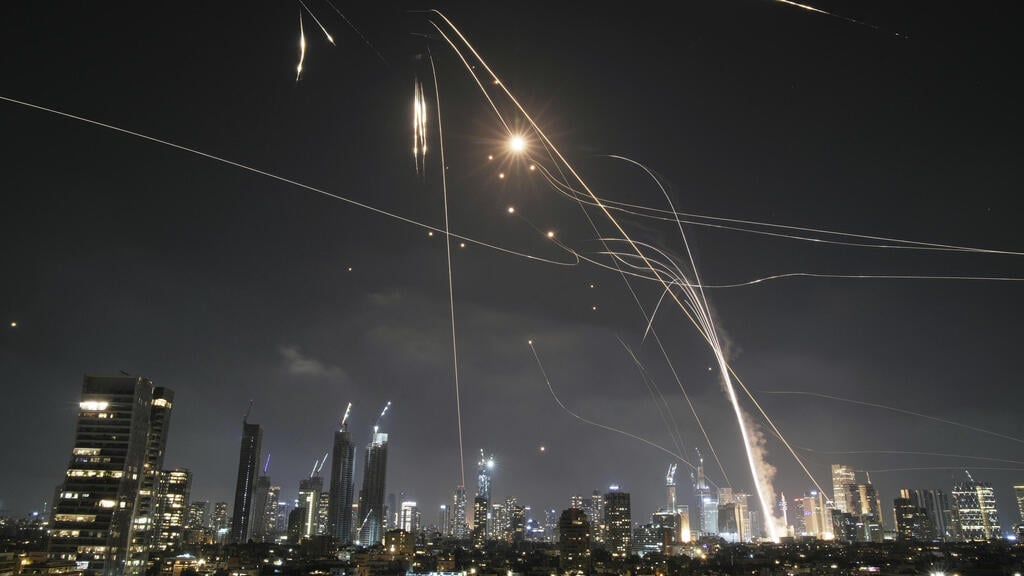
Interceptions in the skies over Tel Aviv at the beginning of the 12-day war with Iran
(Photo: Leo Correa/AP)
During the fighting, Israel’s multi-layered air defense systems were engaged under unprecedented strain, integrating different defensive layers and platforms from both Israeli and international sources. A comprehensive performance review conducted after the fighting enabled the IDF and the Defense Ministry to distill key operational lessons. Chief among them was the ability to manage future rounds of conflict using fewer, more precise and more efficient interceptors, alongside significantly improved offensive capabilities. Since the war with Iran, major efforts have been made to expand the target bank, improve penetration and precision capabilities, and shorten the time between intelligence gathering, decision-making and execution.
However, the core argument presented by Israel to the Americans was fundamentally different. Israeli officials argued that the strike plan sitting on the table last week would not have achieved the overarching mission of toppling the regime in Tehran. While it could inflict heavy damage, disrupt military infrastructure and temporarily destabilize the regime, it would not lead to regime change. Against this backdrop, Trump’s decision not to proceed with military action at that time was viewed in Jerusalem as the right choice—one that avoided launching a broad campaign without a clear strategic horizon or a likely political outcome.
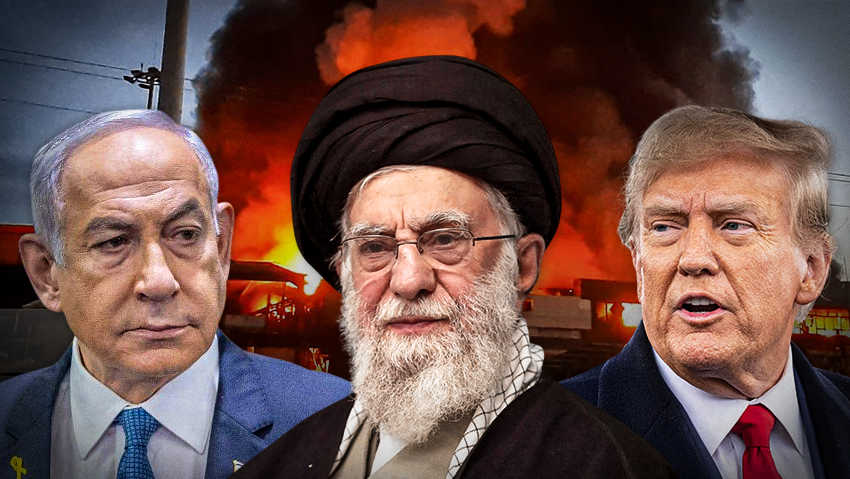
Netanyahu, Khamenei, Trump
( Photos: lev radin/Shutterstock, AP, Nathan Howard/Reuters)
Now, according to assessments in Israel, the U.S. is shifting gears. Washington is building up its regional forces, sending two aircraft carriers—the Lincoln and the Ford—toward the Persian Gulf, deploying cargo aircraft to Diego Garcia, reinforcing allied air defense systems, and increasing multi-domain intelligence collection. The emphasis is not solely on military capabilities, but also on identifying internal vulnerabilities within the Iranian system—economic, social, ethnic and political—that could, when combined with military action, meaningfully destabilize the regime. Simultaneously, serious consideration is being given to the formation of a credible political alternative, based on the understanding that even a successful military operation will not achieve strategic goals without a viable political horizon.
In Israel, the IDF continues to maintain a high level of operational readiness. Each day is used to refine preparations—defensively, through improved protocols, redeployment and incorporation of lessons learned, and offensively, by bolstering the readiness of air, intelligence and cyber forces for complex, large-scale, multi-theater scenarios.
Amid rising tensions with Iran, three new F-35 Adir fighter jets landed Sunday at Nevatim Airbase in the Negev, bringing the Israeli Air Force’s fleet to 48. The IDF is working intensively to bring the new jets to full operational status as quickly as possible, including system integration, team training and incorporating them into existing operational plans.
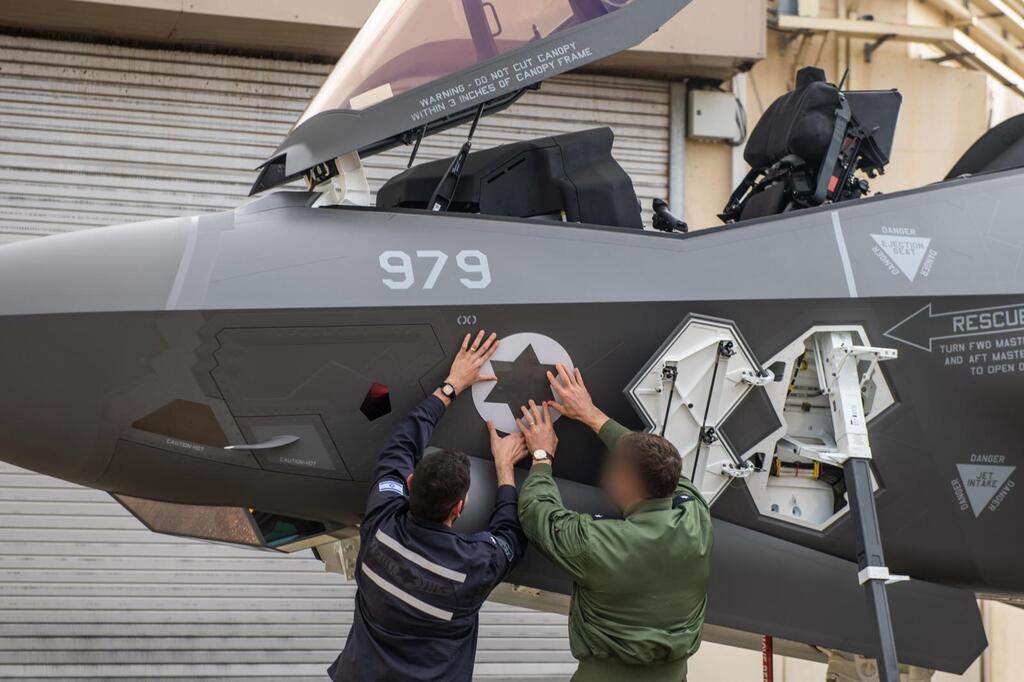
hree new F-35 Adir fighter jets landed Sunday at Nevatim Airbase in the Negev
(Photo: IDF Spokesperson's Unit)
Regarding the Arrow interceptor system, contrary to claims made by retired Major General Giora Eiland, there was no delay in missile production due to a dispute between Defense Minister Israel Katz and Minister Dudi Amsalem. At no point was production halted or scaled back. The Defense Ministry’s budget request—reported shortly after Operation Rising Lion—was for a significant, long-term expansion of production capacity, not an emergency stopgap measure. While the Finance Ministry initially dragged its feet, the budget was eventually approved. Even if that process had been quicker, it would not have changed much in the short term, as expanding missile production is a complex industrial process that does not immediately translate into additional operational inventory.
In any case, Eiland’s claims are baseless—no operational capability was halted, and no production line was frozen due to political infighting. Moreover, the defense establishment has not stood still. Lessons from the recent conflict with Iran have already been translated into major improvements across the board—in defense, offense, intelligence, and command and control—as part of an accelerated learning process. As a result, the IDF grows more prepared with each passing day, gaining cumulative advantages that could prove decisive in the next conflict, if and when it occurs.
Does Israel need more Arrow missiles? Always—and in large numbers. But there are other defense systems, there are offensive capabilities and there is a rare strategic opportunity to bring down the Iranian regime.