

Against the backdrop of an unprecedented wave of protests sweeping the Islamic Republic and amid fears that the United States could follow through on its threats to strike Iran, the opposition-linked outlet Iran International reported Saturday that Supreme Leader Ayatollah Ali Khamenei has moved to a ‘special underground shelter in Tehran.’ According to the report, the move followed assessments by senior military and security officials in the ayatollahs’ regime warning of a ‘heightened risk of a possible American strike.’
Gallery
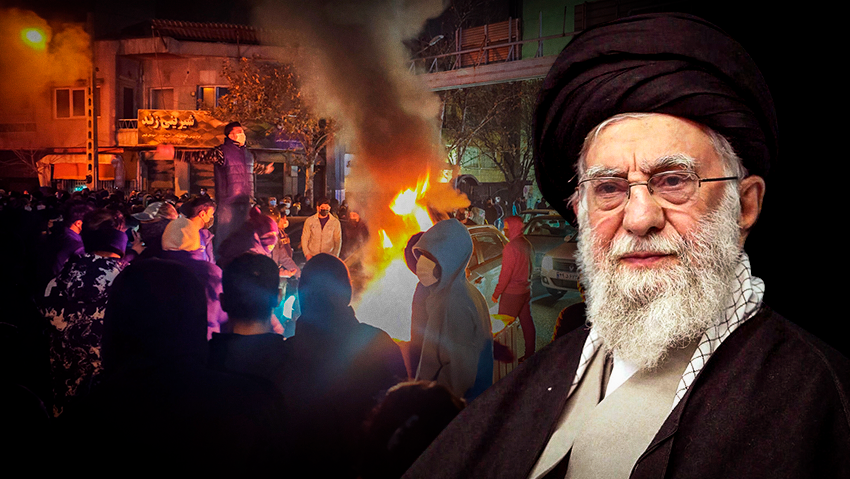
The supreme leader amid protests in Tehran, 'Located at a fortified site'
(Photo: Anonymous/Getty Images, AP)
The London-based Persian-language broadcaster said the fortified facility where Khamenei is being housed is a ‘secure site connected by tunnels.’ It also reported that Masoud Khamenei, the supreme leader’s third son, has assumed day-to-day management of the Office of the Supreme Leader and is serving as the main channel of communication with the government’s executive bodies.
On Friday, the opposition channel Tosi TV reported that Friday prayers Khamenei was expected to lead had been canceled. ‘In recent weeks, the Revolutionary Guards managed to extract Khamenei from his bunker for a few minutes at a time for public appearances during prayers,’ the report said.
Since US President Donald Trump threatened the Iranian regime earlier this month, tensions across the Middle East have steadily risen over the possibility that the American president could order an attack on regime targets. Trump has told Iranian protesters, who he said were being massacred by the regime, that ‘help is on the way’ and urged them to continue demonstrating.
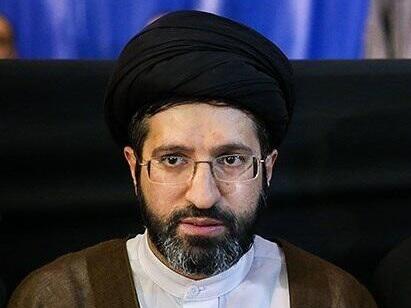
The third son, Masoud Khamenei 'Serves as the primary communication channel with the government’s executive bodies'
Trump’s combative statements were met with threats from Tehran, which vowed to retaliate against American assets and interests in the Middle East, as well as against Israel.
Last weekend, Trump referred to Khamenei as ‘a sick man who needs to lead his country properly and stop killing people,’ adding that ‘it is time for a change of leadership in Iran.’ In response, Iranian President Masoud Pezeshkian warned that any attack on the supreme leader would be considered a ‘declaration of total war on the Iranian nation’ and said the Islamic Republic’s response to any military aggression would be ‘severe and regret-inducing.’
Decisions made differently
As Israel and the region brace for a possible American strike, ynet military analyst Ron Ben-Yishai said this week that one reason for heightened readiness is the shift in decision-making processes in Tehran, which since Operation ‘With a Lion’s Courage’ in June last year have become far less rational and far more chaotic and inflammatory than at any time since the 1979 Islamic Revolution.
He said one reason is that during the ‘Bloody Wedding’ strike in June, one of the opening moves of the operation, Israel eliminated the entire senior security decision-making echelon that Khamenei routinely consulted. The supreme leader trusted those officials, who played a key role in shaping his decisions.
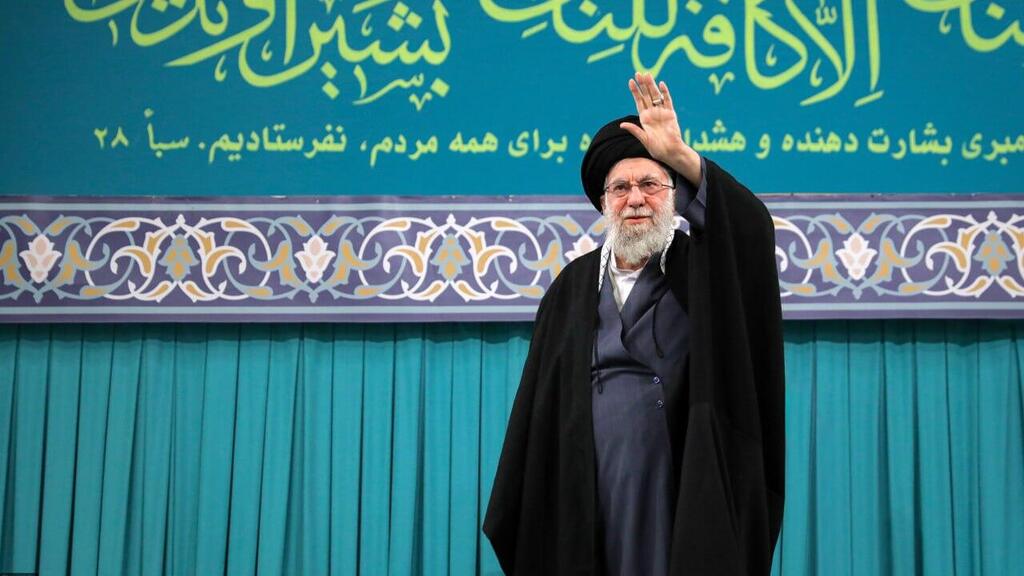
No longer receiving advice from those he once relied on. Khamenei, last week
Earlier, Hezbollah leader Hassan Nasrallah was also killed. He had been regarded as one of the more calculated and pragmatic figures within the Shiite ‘axis of resistance.’ As a result, most of the figures whose judgment Khamenei valued have been eliminated, and those who remain lack the experience and professionalism of the officials who filled key posts before June 13.
Ben-Yishai added that Trump’s remark about the 86-year-old Khamenei being ‘sick’ was not coincidental, hinting at questions over his medical fitness to lead. In any case, Khamenei can no longer rely on advisers he respects and trusts, increasing the risk that the Iranian establishment could miscalculate or act מתוך a mindset of ‘let me die with the Philistines.’
US builds up forces in case Iran ‘acts foolishly’
Around the world, attention remains fixed on the Middle East as observers await Trump’s next move. The Wall Street Journal reported late Tuesday that the president continues to press aides to present him with ‘decisive’ military options against Iran. According to American officials cited in the report, discussions on Iran are ongoing even though Trump has, for now, delayed a decision on whether to strike. The officials said Trump repeatedly emphasized the word ‘decisive’ in describing how he wants any U.S. action to affect Iran.
Behind the demand is concern that a strike could weaken the regime without necessarily leading to its collapse, in part because no clear successor figure has emerged to take control, similar to developments in Venezuela, where Vice President Delcy Rodriguez became the replacement for strongman Nicolas Maduro after he was captured in a special operation.
Vance: “If the Iranians do something foolish, we will be able to respond.”
(Footage: Newsmax)


Meanwhile, the aircraft carrier USS Abraham Lincoln is heading toward the Middle East as part of a broader American force buildup. Trump said Thursday that a ‘massive armada’ is on its way to the region and that he hopes it will not be used.
In an interview with Newsmax, Vice President JD Vance said the buildup is intended ‘to make sure that if the Iranians, God forbid, do something very foolish, we have the resources to respond.’ Vance added, ‘We have a lot of forces in the region and people who could be at risk. The president has many cards, but I am not going to reveal how he plans to play them.’
Overnight, a senior Iranian official commented on the troop movements, warning that Tehran would ‘treat any attack as total war against us.’ Speaking to Reuters, the official said, ‘We hope the military buildup is not meant for confrontation, but our armed forces are ready for the worst-case scenario. All systems in Iran are therefore on high alert.’ He added, ‘This time we will treat any attack, limited, unlimited, surgical, kinetic, whatever you call it, as total war and respond in the harshest possible way.’
First published: 19:16, 01.24.26