

Israel officially announced Friday that the Rafah crossing, linking the Gaza Strip with Egypt, will reopen on Sunday in both directions for the first time in nearly a year. The move follows the return of the last slain Israeli hostage held by Hamas, Sgt. First Class Ran Gvili, of blessed memory.
At the same time, and against the backdrop of rising tensions between Jerusalem and Ankara, Turkish Foreign Minister Hakan Fidan made a surprising statement, saying Turkey would resume trade relations with Israel once the war in Gaza fully ends and humanitarian aid is allowed into the enclave.
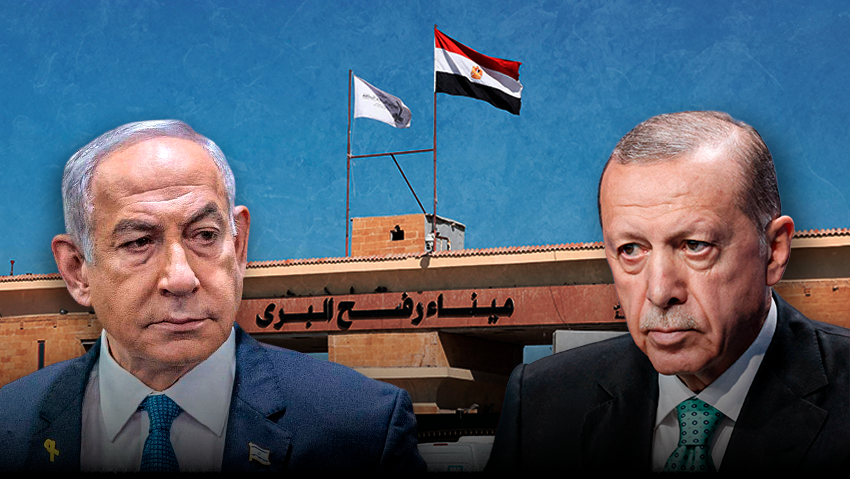
The announcement was delivered at midday by COGAT, the Israeli Defense Ministry body responsible for civil affairs in the territories. According to the statement, the crossing will open in both directions for limited pedestrian traffic only, in line with the ceasefire agreement and under directives from the political leadership. Exit and entry of residents through the crossing will take place in coordination with Egypt, following prior Israeli security clearance and under the supervision of a European Union mission. The mechanism mirrors the one used in January 2025 during the ceasefire that was part of the second hostage deal.
In addition to initial identification and screening at the Rafah crossing by the EU mission, further security checks will be carried out at a nearby checkpoint operated by Israel’s security establishment in an area under IDF control. IDF oversight will be conducted remotely through surveillance systems rather than through the physical presence of soldiers. The rehabilitated terminal will be managed by Palestinian employees and representatives of an international European Union body.
Egypt will provide Israel each day with a list of several hundred people scheduled to cross the following day in both directions. In the initial phase, several hundred people will pass through daily due to capacity limitations, with throughput expected to increase after further upgrades.
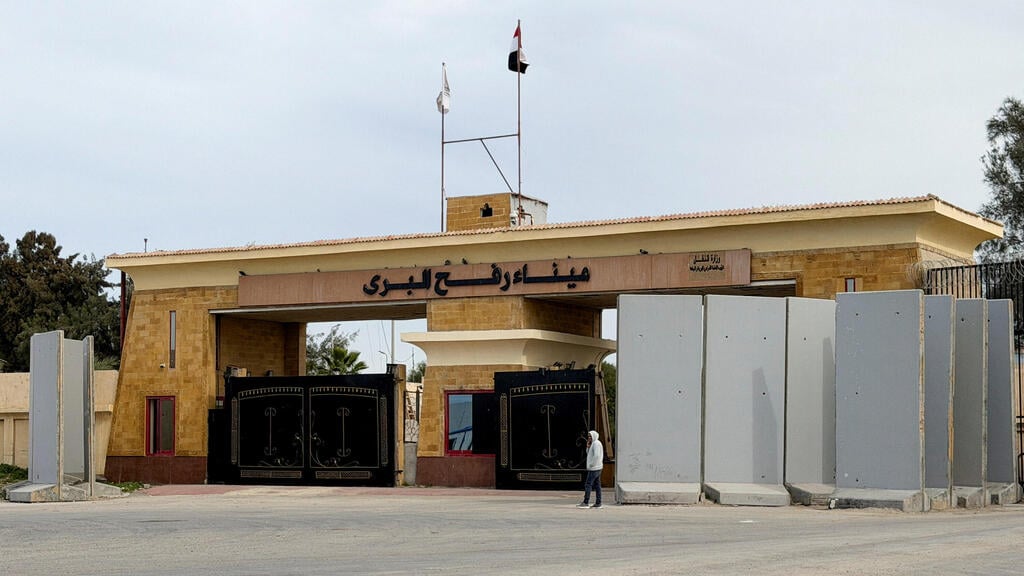
Rafah crossing; for now, only pedestrians will be allowed to pass through
(Photo: Reuters/Stringer)
Israel will also allow low-level terrorists wounded during the war to exit through the crossing if they choose. In principle, all those who leave will retain the right to return. For now, only pedestrians will be permitted to cross, to and from Sinai.
Tens of thousands of Gazans are expected to return to the Strip through the crossing, particularly those who left at the start of the war or for humanitarian medical reasons. Hamas is demanding that goods also be allowed to enter Gaza via Rafah, but the IDF is firmly opposed.
Meanwhile, Turkish Foreign Minister Fidan, speaking with Qatar-based Al Jazeera, was asked whether it was realistic for Ankara to re-normalize relations with Jerusalem. He replied that “the rupture in relations is not structural but conditional.” He said that when Turkey entered the current phase of relations with Israel and cut off trade, it made clear that as long as the war continues and humanitarian aid is not allowed in, trade would not resume. “This shows that our problem is not with Israel itself, but with its policies, especially toward the Palestinians and the current approach of genocide in Gaza,” Fidan said. “The boycott is not structural but conditional.”
Fidan is a senior figure in the government of Turkish President Recep Tayyip Erdogan and has been mentioned by some as a possible successor. Under U.S. President Donald Trump’s plan for Gaza, Turkey and Qatar were invited to join the governing committee of the Board of Peace for the enclave.
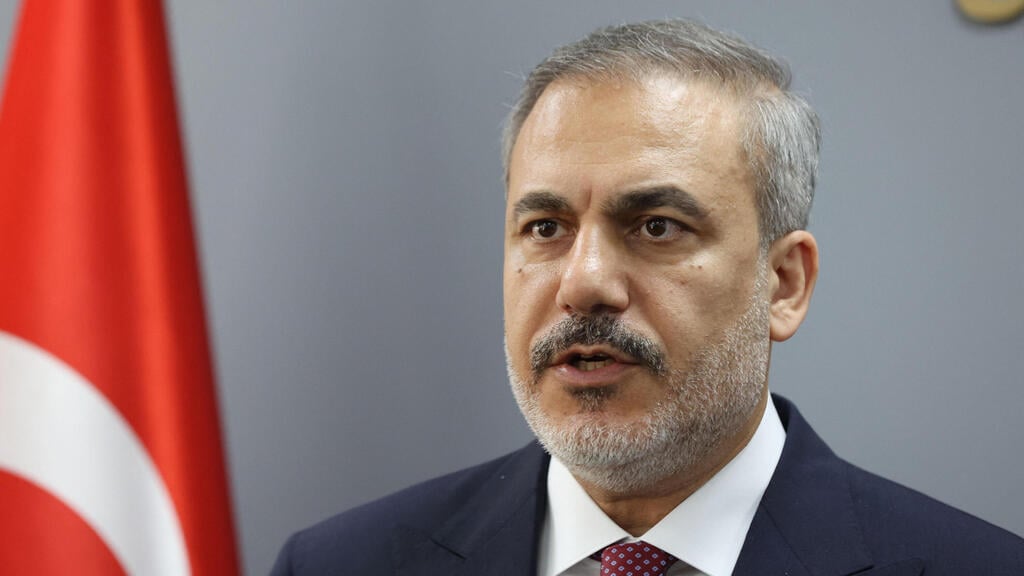
Turkish foreign minister, 'The boycott is not structural but conditional'
(Photo: Anwar Amro / AFP)
The move sparked sharp opposition from Israel, which fears Turkish and Qatari proximity to Hamas, and even led to an unusual statement by Prime Minister Benjamin Netanyahu’s Office criticizing the U.S. administration. Fidan serves as Turkey’s representative on the governing committee.
Ynet military analyst Ron Ben-Yishai noted this week that the growing influence of Turkey and Qatar over the White House, which is troubling Israeli security and political leaders, stems from close dialogue and shared business interests between their leaders and Trump and his associates. That influence has forced the Israeli government and the IDF to swallow a number of difficult concessions imposed by Trump on security issues related to Syria and Gaza.
Within Israel’s intelligence community, officials say that instead of the weakening Shiite axis, a new force is taking shape opposite Israel: a Sunni axis led by Qatar and Turkey, with quiet participation from Pakistan and possibly other regional states. All are aligned with the ideology of the Muslim Brotherhood. In the IDF, it is referred to as the Muslim Brotherhood axis. At this stage, the axis does not pose a direct or immediate military threat to Israel, but the rhetoric of Erdogan and Qatar’s ruler, Tamim bin Hamad Al Thani, is viewed as a clear indicator of its potential danger. Turkey possesses the second-largest army in NATO and continues to strengthen it. There is currently no indication it is on the verge of becoming a military adversary, but Israel is working to push back against Turkish efforts to establish a foothold in Syria and Gaza.
As for Qatar, it is expected to continue its campaign of influence and political warfare, which Israeli officials say is severely damaging Israel’s image and international standing, particularly in the United States.