

Diplomatic preparations for the international conference led by France and Saudi Arabia on “reviving the two-state solution,” set to open on June 17 at the UN headquarters in New York, have been underway for weeks. Expectations among supporters are high, and speculation is swirling over the potential outcomes, chiefly, whether the conference will result in formal recognition of a Palestinian state.
Sources familiar with the matter estimate there is roughly a 40% chance that the conference will produce unilateral recognition. More likely, they say, is that the focus will remain on defining the necessary conditions to lay the groundwork for future recognition.
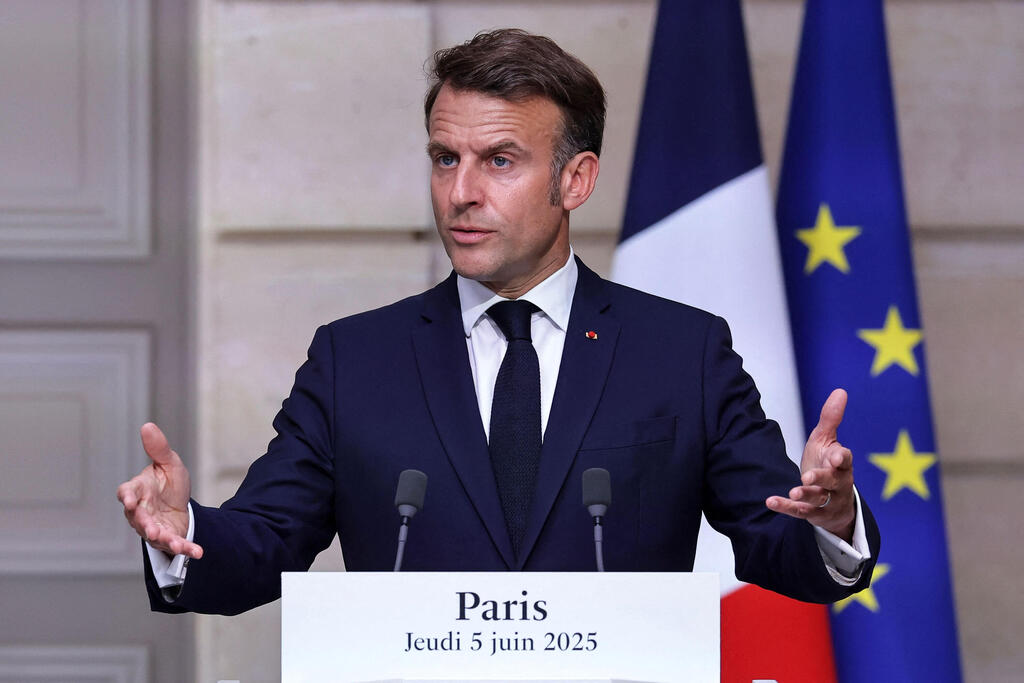
French President Emmanuel Macron now finds himself at a political crossroads. On one side, pressure is mounting—from the UK, Portugal, Luxembourg, Malta and possibly Belgium—to issue a joint recognition of Palestinian statehood. On the other hand, the U.S., Israel and Germany are warning against such a move. Israel, in particular, has made clear that unilateral recognition by France would be seen as a hostile step, potentially leading to responses such as the annexation of West Bank lands or closing the French consulate in Jerusalem. The Israeli position is blunt: recognition would cost France its leverage and centrality in the peace process.
Adding to the complexity, critics argue that if recognition is granted “for free,” the Palestinian leadership will have little incentive to implement reforms. France also faces reputational risks, particularly while dozens of Israeli hostages remain in Hamas captivity. Any move toward recognition could be framed as rewarding terrorism, as Netanyahu himself has previously alleged, despite France’s insistence that Hamas would have no role in the post-war governance of Gaza.
Yet, amid the international back-and-forth, Paris has pushed back on claims that it is wavering. “We clearly see that some have an interest in indicating that we are not moving towards the recognition of Palestine," the French Foreign Ministry clarified in an official diplomatic statement this week. "That is false… We are determined to recognize the state of Palestine to create the conditions for the existence of this state.”
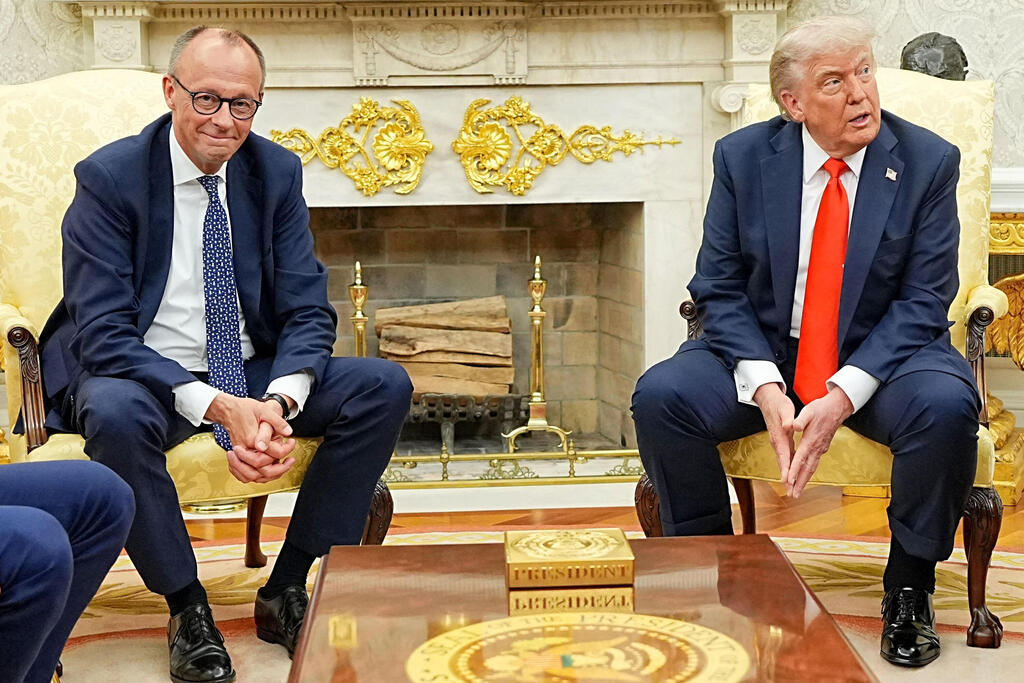
German Chancellor Friedrich Merz and US President Donald Trump in the Oval Office
(Photo: Michael Kappeler / POOL / AFP)
Foreign Minister Jean-Noël Barrot echoed that message before the French Senate, underscoring that recognition is not just symbolic, but strategic, intended to support a larger framework for durable peace.
“Our goal for this conference goes beyond the question of recognition,” he said. “It is about recreating an international consensus around the two-state solution.”
Get the Ynetnews app on your smartphone: Google Play: https://bit.ly/4eJ37pE | Apple App Store: https://bit.ly/3ZL7iNv
According to insiders, the working draft of the conference includes key preconditions for eventual recognition: a permanent ceasefire in Gaza, release of Israeli hostages, political reform and elections within the Palestinian Authority, Gaza’s economic recovery, the dismantling of Hamas rule and the formation of a new Palestinian government. Eight working groups are expected to convene around these themes.
Meanwhile, officials in Jerusalem report that the UK, having drastically shifted its stance toward Israel in recent weeks, is now pushing France to include a recognition clause in the conference’s final communiqué. France has so far resisted, signaling it may prefer to keep the issue off the formal agenda while allowing select countries to issue their own statements on the sidelines.
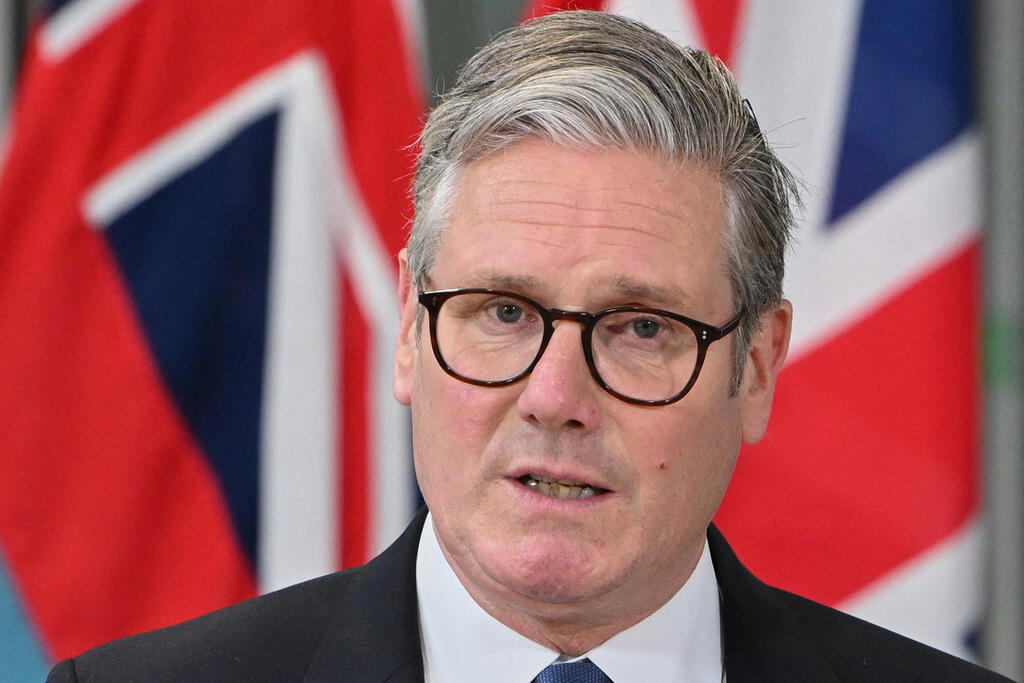
British Prime Minister Keir Starmer
(Photo: Thomas Krych / POOL / AFP)
In the lead-up to the New York summit, a civil society conference will also be held in Paris, aiming to show that Israeli support for the two-state solution still exists in some quarters. France and Saudi Arabia have also reportedly briefed Palestinian leadership on a set of preconditions, including full disarmament of Gaza and the transformation of Hamas into a civilian political entity if it wishes to participate in future elections.
According to the Guardian, the original vision for the June conference—joint recognition of a Palestinian state by a bloc of Western powers—has softened. Instead, the event is now being positioned as a diplomatic turning point meant to rebuild momentum around the two-state idea. Macron, one of the conference’s key architects, has framed recognition not as a standalone gesture but as part of a broader “moral imperative” and international roadmap.
With political stakes high, Macron appears caught between diverging forces: Arab states and pro-recognition European governments on one side; Israel, the U.S. and Germany on the other. Whether the conference yields direct recognition or merely a path toward it, one thing is clear—France intends to remain a central actor in shaping the diplomatic future of the Israeli-Palestinian conflict.