

Police and the Shin Bet are continuing to investigate the weekend violence in Qusra, during which dozens of Jewish rioters entered the village, barricaded themselves inside a Palestinian home and also attacked foreign journalists, though none of them were arrested. The names of several suspects are known to security agencies, and attempts have already been made to arrest them.
Law enforcement officials assess that people involved in the riots will be arrested in the near future. During the incident itself, forces seized three vehicles suspected of having been used by the rioters.
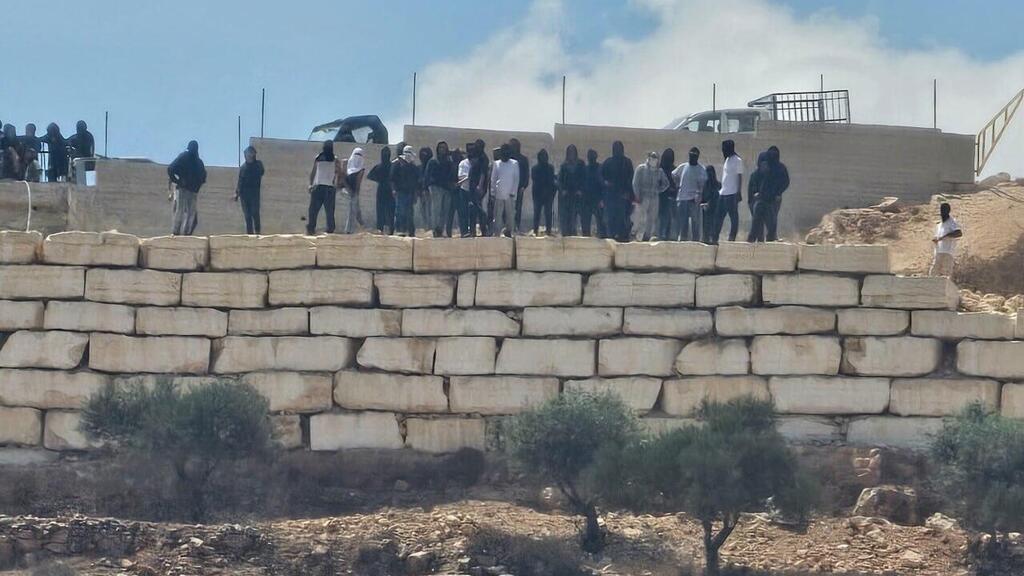
But in the background of the investigation, a dispute is also developing between police and the IDF over why the incident ended without any Israeli arrests. Police are pointing the finger at the IDF, arguing that military forces arrived at the scene while the rioters were still in the area but did not make arrests. A police official even claimed that when police forces reached the area, a military official directed them to a different scene rather than to the location of the main incident.
The IDF rejects the allegations and says its forces arrived quickly, but the first unit to reach the scene was small and unable to arrest dozens of rioters while simultaneously dealing with the friction that had developed there. According to the military, the urgent mission at that stage was to separate the sides and protect the occupants of the house. The IDF has already said that its forces removed the rioters from the home, then seized vehicles and collected evidence that was transferred to police.
The IDF stresses that, from its perspective, the latest incidents once again show that dealing with the phenomenon cannot fall on the IDF alone.
“The IDF cannot handle this incident by itself. A broad national plan and cooperation among the various bodies are needed — welfare, education and enforcement,” military officials said. “We are operating with a limited toolbox and trying to do what we can. You cannot look only at the military and come with complaints. This is an issue everyone has to get involved in, and it is causing us significant damage by every measure.”
More evacuations, and more confiscations
At Central Command and the Judea and Samaria Division, officials meanwhile intend to continue the wave of evacuations of illegal outposts — a move security officials also link to the current round of escalation with hilltop rioters. Recently, incitement against senior Central Command officers has intensified following the evacuations, chiefly against Central Command chief Maj. Gen. Avi Bluth and Judea and Samaria Division commander Brig. Gen. Kobi Heller.
The attack in Qusra on Saturday


Alongside the evacuations, security officials intend to step up the use of economic tools to “hit the pockets” of those establishing the outposts. The goal is not merely to demolish structures at illegal outposts, but to confiscate equipment found there — from heavy machinery to furniture and other items. “It has proven to be a very significant tool,” a security official said. The assumption is that the financial cost imposed on those who establish the outposts and those who assist them can make it harder to rebuild sites that have been evacuated.
One of the IDF’s main concerns is what the security establishment describes as the “blurring of the lines” between Areas A, B and C. According to security officials, the hard-core extremist group of rioters is no longer content with a presence at outposts or in open areas, but is increasingly entering Area B and approaching Palestinian homes, claiming this is “pioneering” and a struggle for control of the land.
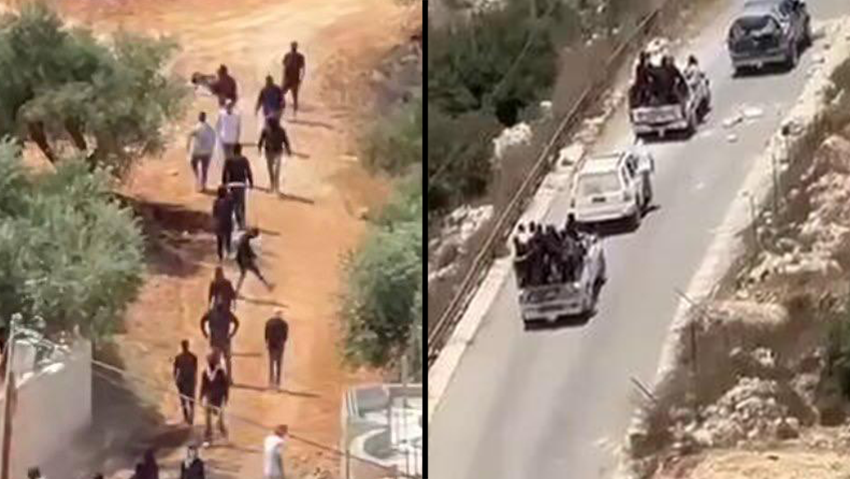
Jewish extremist arrive in Qusra on Saturday
Security officials assess that the incidents are being led by a core group of about 70 to 100 activists classified as “individual targets,” who direct hundreds of additional young people. According to security officials, these activists summon the “reinforcements” to incidents, circulate the locations of flashpoints and move from one scene to another as needed.
“The security agencies will concentrate their efforts against those rioters and try to close the circle on them,” a security official said. “They are harming the entire settlement enterprise, harming the IDF, and they do not care about anything. We need to establish governance over them and enforce the law with a firm hand, and anyone who can be treated and brought into other frameworks — that should be done. We have brought quite a few young people from the hilltops into structured programs and it works, and then more come and ruin it for everyone.”
Concern that friction will ignite the Palestinian arena
Security officials are particularly concerned that the friction is now reaching Palestinian homes in Area B. The fear is that continued incursions by rioters into villages, harm to residents and homes and attempts to push families out will lead to a local uprising — and later to a broader escalation across the West Bank.
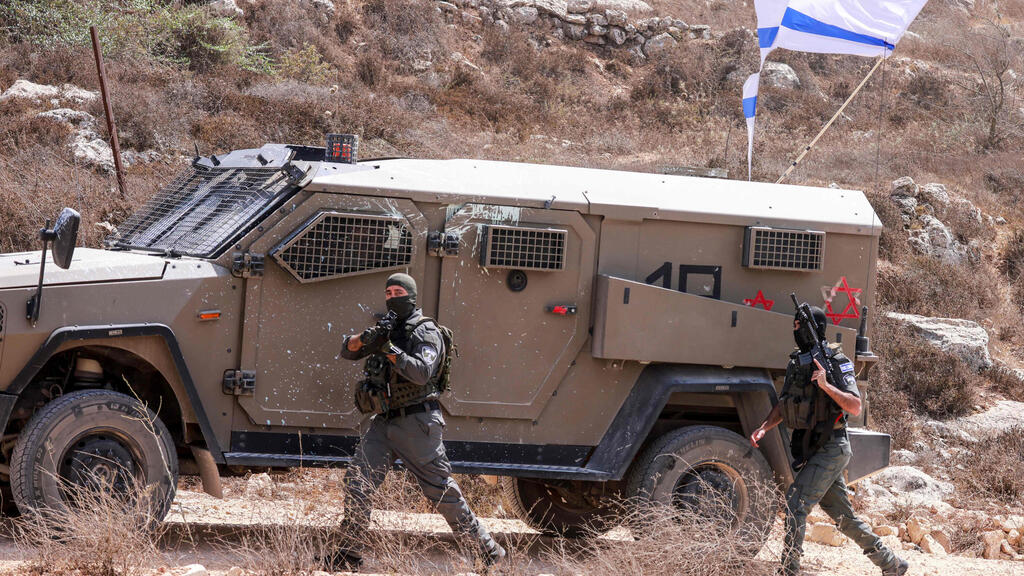
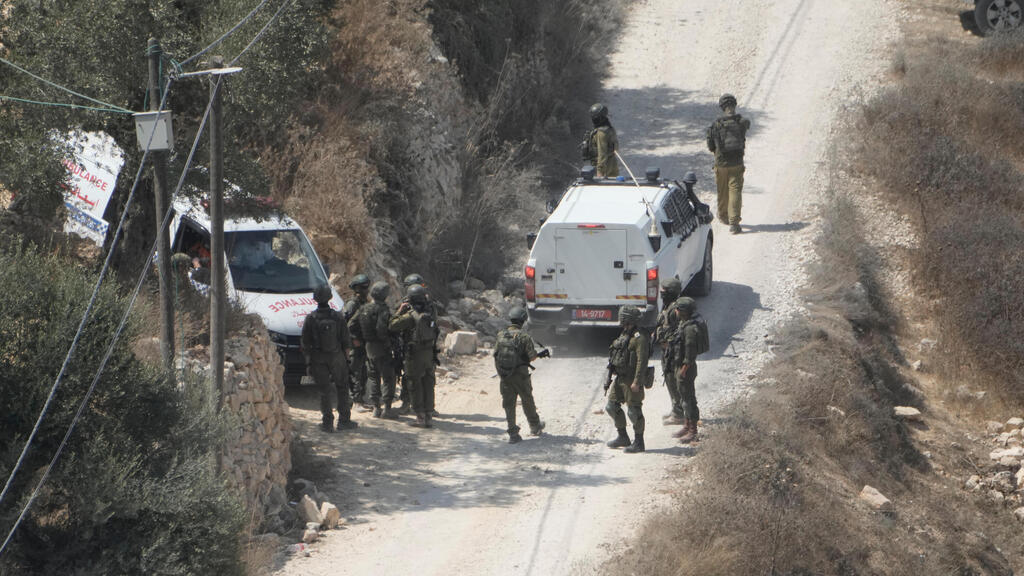
IDF forces in Qusra
(Photo: Jaafar Ashtiyeh/AFP)
(Photo: Majdi Mohammed/AP)
The concern is heightened ahead of the holiday period, which is already considered sensitive from a security standpoint, and against the backdrop of the election campaign. Over the weekend ynet revealed that IDF Chief of Staff Eyal Zamir personally warned Prime Minister Benjamin Netanyahu that the West Bank could spiral out of control because of the rise in nationalist crime. Central Command chief Bluth described it during the discussion as “a match that could ignite everything in an instant.”
Hilltop activists, for their part, argue that the activity around Qusra was intended, among other things, to thwart what they describe as a Palestinian plan to take control of the mountain ridges in the area. Security officials reject that explanation, pointing out that many of the incidents do not take place around agricultural land or settlement points, but inside villages and near Palestinian homes.
“You have to understand: New agricultural farms are not going up because of those rioters,” a security official said. “It is being delayed and is not happening at the pace it was supposed to. Look at the enormous damage they are causing us. Look at what Israel’s great friend Mike Huckabee said.”
Masked men on white vans on the road between Qusra and Jaloud
Huckabee, considered one of the most prominent supporters of the settlement movement in the Trump administration, has already called those involved in the previous siege of Qusra “Israeli terrorists” and said their actions were criminal and harmful to Israel. According to security officials, the damage caused by the rioters is not limited to security escalation or diplomatic pressure.
Similar criticism is also being voiced within the settlement movement itself. Officials there told ynet that the violence is causing serious diplomatic damage, harming the ability to advance new farms and settlement points and bringing U.S. pressure on Israel. “We created a revolution here and they are destroying it,” a senior settlement official said following the incidents.
Hilltop youth program has begun operating, but results are still far off
Alongside enforcement measures, a mechanism designed to offer another response to young people drawn into the cycle of violence has already begun operating on the ground. It is headed by Col. (res.) Avichai Tanami, who was appointed by Defense Minister Israel Katz as the special coordinator for dealing with hilltop youth.
This year, the government approved the national “Otzmat Halev” program formulated by Tanami, at a cost of about 120 million shekels over three years. The program includes, among other things, measures in education, welfare, employment, preparation for military service and treatment of school dropout. The Defense Ministry said the idea is to provide a framework for young people currently on the hilltops without a responsible adult and prevent them from deteriorating into crime and violence.
Security officials stress that some of the young people who take part in the incidents do not belong to the hard-core ideological group and sometimes find themselves in an environment without any framework or authority capable of stopping the slide. The hope, therefore, is that educational and therapeutic support will make it possible to separate at least some of them from the core group leading the riots.
But security officials also make clear that this is not an immediate solution. Over the coming months, the program is expected to gain momentum and expand, but officials familiar with the issue estimate that its real impact on the scale of incidents on the ground can be assessed only after several months. Until then, security officials say, responsibility for containing the hard-core group will remain primarily with the police, Shin Bet and IDF.