

Israel has ordered billions of dollars in American military equipment beyond what Washington has committed to finance, leaving an estimated $10 billion funding gap after 2028 and underscoring the difficulty of President Donald Trump's pledge to end U.S. military aid to Israel, The Wall Street Journal reported Thursday.
The United States has already committed to providing Israel with nearly $7 billion in military assistance over the next two years. But after the current aid agreement expires in 2028, Israel will need approximately $10 billion more to pay for outstanding weapons orders as of April 1, according to a State Department document sent to Congress.

The disclosure comes after Trump said this week that he intends to end U.S. aid to Israel, a politically contentious issue that featured prominently in the elections that delivered a sweeping defeat to Republicans.
Vice President JD Vance subsequently cited the war with Iran and Washington's relationship with Israel as major factors behind voters' rejection of Republican candidates.
American and Israeli officials have been discussing a gradual phaseout of military assistance for months. Prime Minister Benjamin Netanyahu has said Israel should eventually wean itself off American aid and proposed eliminating direct assistance over the next decade.
Nevertheless, Trump's remarks Tuesday caught Israeli officials by surprise, including senior members of the country's defense establishment.
Billions in weapons orders remain unpaid
Israel receives one of the largest U.S. military assistance packages of any country, including $3.3 billion annually through the Foreign Military Financing program, known as FMF.
The funding allows Israel to purchase American-made military equipment, including bombs, vehicles, fighter jets and other weapons systems.
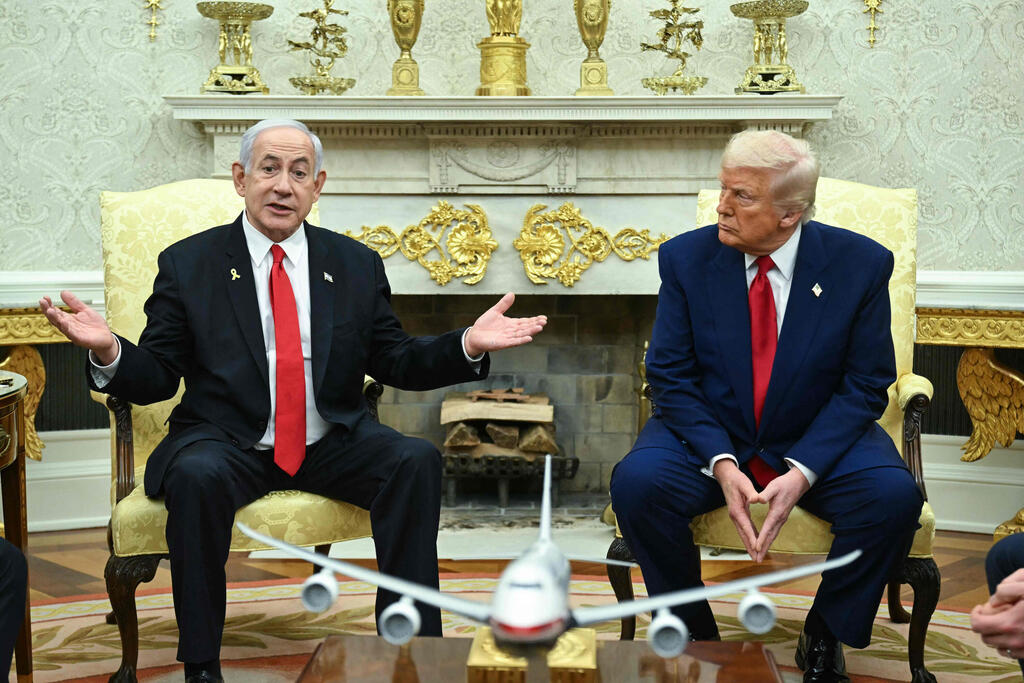
Prime Minister Benjamin Netanyahu and US President Donald Trump
(Photo: SAUL LOEB / AFP)
The arrangement also allows Israel to use future funding commitments to place weapons orders before the money is disbursed, giving American and Israeli officials greater flexibility in arranging military purchases and deliveries.
For decades, Washington has provided assistance to Israel through successive 10-year agreements.
The latest memorandum of understanding, negotiated under President Barack Obama, runs through 2028 and provides $3.3 billion annually in FMF assistance.
Congress also approved approximately $26 billion in additional assistance for Israel in 2024, during the war in Gaza that followed the Hamas-led October 7, 2023, attack.
Even after those funds are exhausted, Israel will still need another $10 billion to cover existing orders, according to a State Department letter sent to the office of Rep. Joaquin Castro, a Texas Democrat who requested information about the commitments earlier this year.
The letter said the outstanding obligations "could be covered either by FMF, national funds, or both," meaning either Washington or Israel could ultimately bear the costs.
"Even if the MOU ran its full course to 2028, there’s still $10 billion above and beyond that, and there’s an issue of who’s going to pay for that," Castro said in an interview.
The State Department did not respond to a request for comment.
According to the Congressional Research Service, Israel received approximately $174 billion in U.S. military assistance and financing between its establishment in 1948 and May 2025.
The outstanding orders illustrate how difficult it would be to dismantle the existing funding arrangement, even if both governments agree to end direct assistance.
Congress considers shift from aid to joint production
American lawmakers have drafted legislation that would redirect U.S. support for Israel away from traditional foreign military financing and toward defense investment and joint development and production of military technologies.
The proposal would establish military cooperation between the United States and Israel in federal law as part of the annual National Defense Authorization Act, or NDAA, which is expected to be finalized by the end of the year.
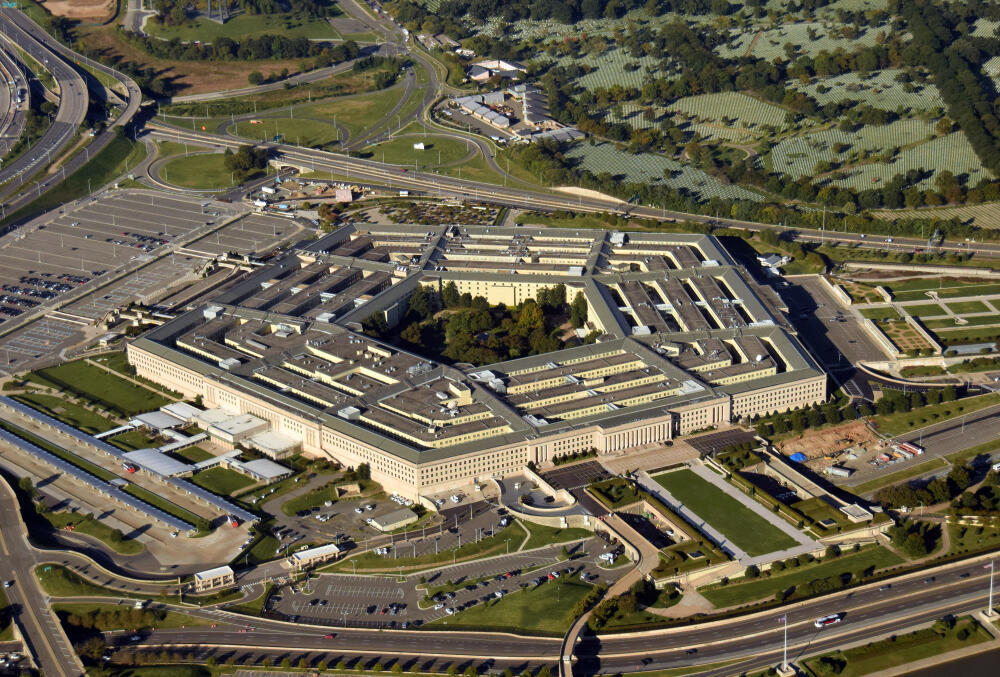
The Pentagon
(Photo: Shutterstock/Ivan Cholakov)
Supporters argue that the legislation would make it easier for the Pentagon to cooperate with Israel in acquiring and developing military technologies.
They hope to build on previous joint projects, including the Iron Dome missile defense system, whose development and production have involved American companies.
Critics, however, warn that the proposed arrangement would integrate Israel more deeply into Pentagon programs and defense supply chains, making it harder for a future Congress to dismantle the relationship.
The proposal reflects a broader effort to redefine U.S.-Israeli defense cooperation at a time when traditional military assistance faces growing political opposition.
But shifting from direct aid to joint production would not necessarily resolve the question of how Israel will finance weapons already ordered under the existing system.
Support for Israel erodes in both parties
Trump's announcement comes amid declining support for Israel among both Democrats and Republicans following years of fighting in Gaza and Lebanon and this year's joint U.S.-Israeli attack on Iran.
Democrats have been particularly critical of Israel's conduct during the Gaza war, which devastated much of the Palestinian territory.
More than 74,000 Palestinians have been killed in the conflict, according to Palestinian health authorities, whose figures do not distinguish between civilians and combatants.
Trump explicitly suggested that ending direct assistance to Israel would deprive Democratic critics of a political argument.
He referred to the campaign of Abdul El-Sayed, who was elected Tuesday as Michigan's first Muslim U.S. senator amid the Democrats' sweeping electoral victories.
El-Sayed campaigned on ending unconditional American military assistance to Israel, reflecting growing opposition within the Democratic Party to Washington's longstanding support for the Israeli military.
The elections also exposed tensions within the Republican Party over the U.S. relationship with Israel.
On Wednesday, Vance cited a poll on X identifying policy changes that could help Republicans regain voters' support, including ending the war in Iran and changing Washington's relationship with Israel.
Who will pay for Israel's F-35 fighter jets?
The $10 billion in outstanding weapons orders presents a challenge both for critics seeking to reduce U.S. assistance and for supporters advocating a transition to joint defense production.
Unwinding the existing system is expected to take years.
Any new arrangement would also have to address who will finance weapons scheduled for delivery in the future, including Israel's planned acquisition of an additional squadron of 25 advanced F-35 fighter jets.
The proposed joint-production model would not immediately meet Israel's military requirements.
Israel remains dependent on a steady supply of American-made munitions, including thousands of bombs delivered by Washington during the wars of recent years.
If Israel assumes a greater share of the cost of its military purchases, its defense spending could rise further after already reaching historically high levels during the conflicts.
Even with American assistance, Israel currently spends approximately 7% of its gross domestic product on defense, a larger share than any NATO member.
Financing more weapons purchases independently would place additional pressure on the Israeli government's budget at a time when the country is already dealing with the economic consequences of prolonged warfare.
The financial implications extend beyond individual weapons systems.
Under the existing FMF arrangement, Israel can plan purchases around predictable U.S. funding commitments. Ending that arrangement would require the government to identify alternative sources of financing while continuing to modernize its military.
US law complicates a complete break
Ending direct military assistance could also conflict with a longstanding American policy requiring Washington to preserve Israel's military superiority over potential regional adversaries.
U.S. law obligates the government to ensure that American arms exports maintain Israel's "qualitative military edge" over its rivals.
A complete withdrawal of military assistance could complicate efforts to fulfill that requirement, particularly if Israel struggles to finance major weapons acquisitions on its own.
The legal and strategic obligations add another layer of complexity to Trump's proposal, even as political pressure mounts to change the relationship.
Current and former American officials say an abrupt termination of military assistance remains unlikely because Congress has already committed substantial funds.
Josh Paul, a former senior State Department official who resigned during the Biden administration in protest over U.S. support for Israel's war in Gaza, said the existing commitments make a rapid cutoff improbable.
"It’s not plausible we stop by the end of this year," Paul said, citing funds Congress has already approved.
"We’ve not seen anything yet to substantiate this," he added.
Paul said he would support ending the assistance.