

Tuesday morning, school doors will open across the country, but in Kiryat Shmona and the communities of the Galilee Panhandle, the new school year is beginning with an entirely different feeling. After three years of war, months of prolonged evacuation, closed educational institutions and communities torn apart, the past summer in the north was, for the first time, relatively quiet and stable.
The streets of the city were filled with a sense of joy, festivals were held and there was a genuine desire to rebuild. But beneath the surface, the scars remain clearly visible. The local education system is beginning the school year with fewer students than in October 2023, with small, substandard classes that require huge budgets simply to maintain teaching positions and with a determined campaign to bring back families who chose to remain in central Israel.
Kiryat Shmona was evacuated of most of its residents at the start of the Iron Swords war. Three city residents were killed, dozens were wounded and the city sustained extensive damage to homes and other buildings. Since the cease-fire, only about two-thirds of the residents have returned to Kiryat Shmona. Some have protested several times, demanding government attention and recognition of the city as a disaster-stricken area requiring comprehensive, targeted assistance.
In 2026, 456 million shekels was invested in the education system in the Tnufa development area, a government initiative for rehabilitating and developing northern Israel, an increase of about 70% in one year. The Tnufa Directorate for the North says education is the central engine for its goal of bringing about 100,000 new residents to the north over the next decade. But the educational challenge is among the most complex, following decades of discrimination and underinvestment — and it may be a challenge facing Israel's education system as a whole.
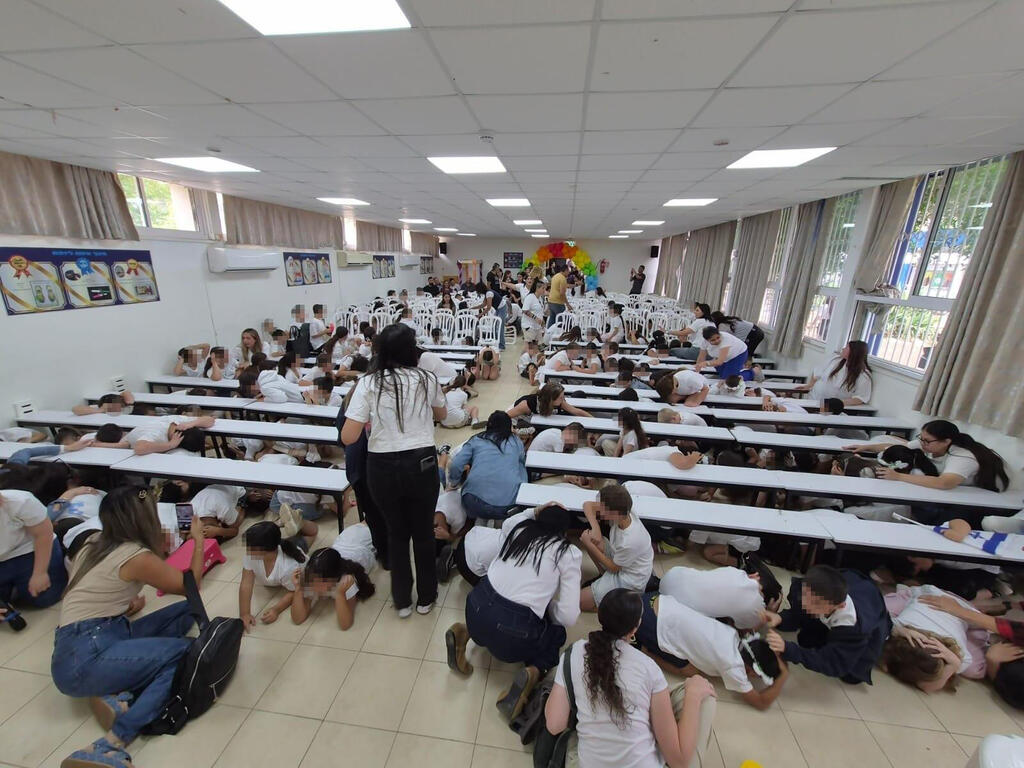
Students take cover in a classroom in Kiryat Shmona
(Photo: Used in accordance with Section 27A of the Copyright Law)
Dr. Aliza Bloch, the former mayor of Beit Shemesh, presented a framework aimed at addressing the challenge of restoring residents' motivation to return. The plan includes strengthening the status of teachers and principals, transferring authority to the field, establishing a civilian-educational emergency cabinet, a national preparatory year for 12th grade, differential funding and institutionalizing state Haredi education.
According to Bloch, who recently joined Gilad Erdan's Unity Party, "It all starts and ends with teachers and principals, and education is the key to strengthening resilience and reducing the divide in Israel."