


Despite receiving a tailwind from the High Court of Justice, which granted Justice Minister Yariv Levin authority to appoint a special investigator to oversee the case involving former military advocate general Yifat Tomer-Yerushalmi, the Justice Ministry is struggling to find a suitable candidate.
The main reason: the stringent conditions set by the court. The investigator must be a state employee, a seasoned legal professional with significant criminal law experience and free of any political affiliations.
Gallery
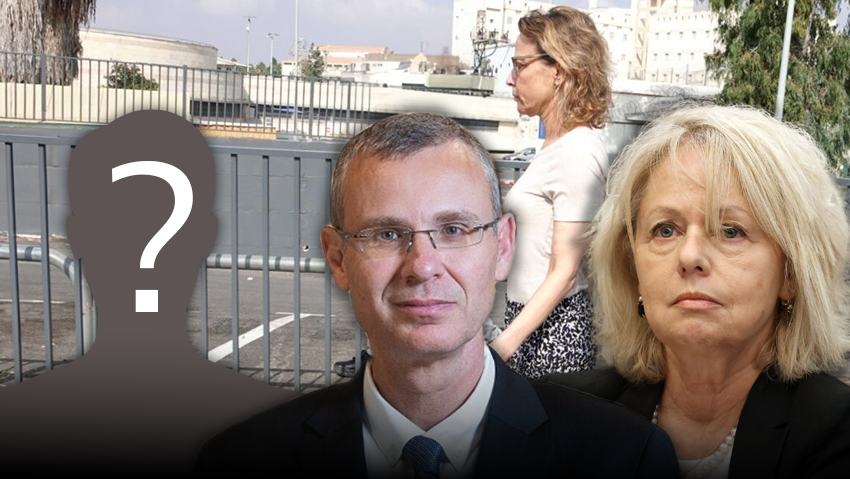
Justice Minister Yariv Levin, Attorney General Gali Baharav-Miara, former military advocate general Yifat Tomer-Yerushalmi (back)
(Photo: Alex Kolomoisky, Shaul Golan, Amit Shabi)
Officials in the ministry note that even candidates who meet those requirements may be reluctant to accept the role, fearing public and media scrutiny and the perception that they are a “politically motivated investigator” appointed to go after Attorney General Gali Baharav-Miara in what appears to be an attempt to remove her from office.
“This is a close-knit legal guild that won’t automatically grant legitimacy to whoever is appointed,” warned a senior legal official. They added that any nominee would likely face invasive media investigations and petitions to the High Court, making it doubtful anyone would volunteer for the position.
One of the driving forces behind the initiative, Likud MK Moshe Saada, himself a former senior investigator, has openly acknowledged the intention to oust Baharav-Miara. Speaking on Channel 14 on Sunday, he described a conversation with Levin in which they discussed potential nominees: “We need to go on the offensive, not play defense. There are people with broad shoulders who know what to do—I have a few names. I have no doubt that once they take the job, they’ll investigate the attorney general, and the consequence will be that she must be dismissed.”
Saada further revealed: “I told Yariv Levin—it’s not about getting it approved. What matters is having someone investigate the investigators, someone who will interrogate the attorney general under warning.”
In a statement released after the High Court’s ruling, Saada sharply criticized the law enforcement system, claiming the Military Advocate General’s Office operated “like a criminal organization,” allegedly leaking recordings, obstructing investigations, coordinating testimonies and maintaining a secret WhatsApp group.
According to Saada, Baharav-Miara “covered for” Tomer-Yerushalmi and failed to oversee the investigation despite a High Court directive, allowing those involved to evade effective questioning.
Saada reiterated his claim that evidence had been gathered against Tomer-Yerushalmi and that Baharav-Miara acted with a clear conflict of interest. “The High Court accepted my position and ruled that both Gali Baharav-Miara and State Attorney Amit Aisman are in a conflict of interest and therefore barred from handling the case,” he wrote, stressing that appointing an external investigator is the only way “to uncover the truth.”
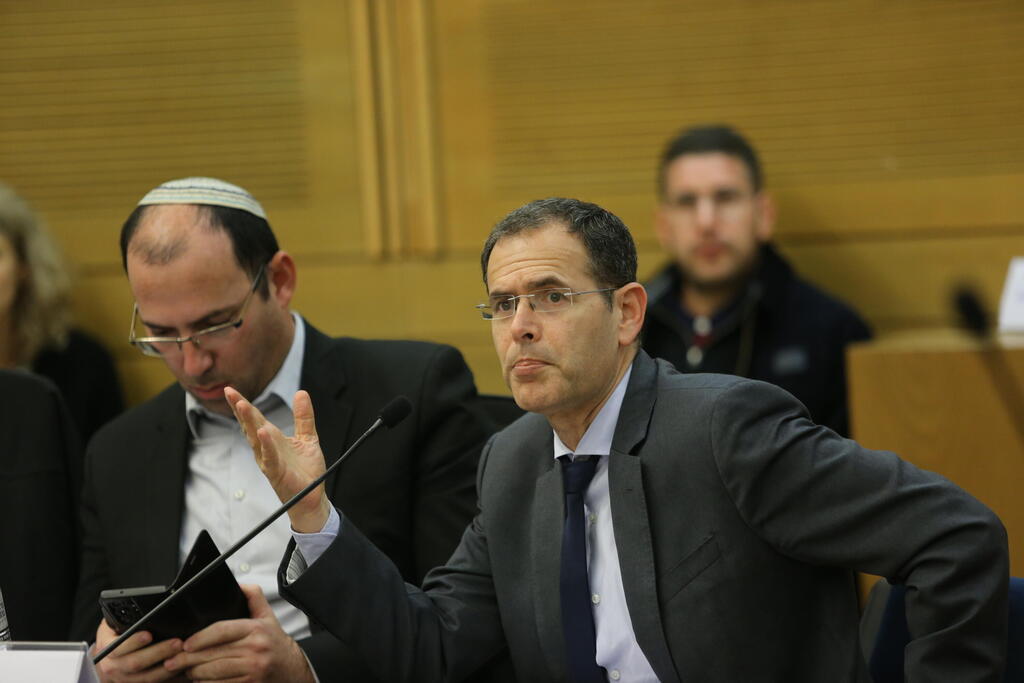
Knesset Constitution Committee Chair MK Simcha Rothman, left, and Likud MK Moshe Saada
(Photo: Alex Kolomoisky)
Meanwhile, Knesset Constitution Committee Chair MK Simcha Rothman is seeking to leverage the High Court ruling to advance legislation that would split the role of attorney general and establish a separate “special prosecutor” position. The committee is scheduled to hold another session Tuesday to promote the bills, which have already passed a preliminary reading.
Rothman criticized Baharav-Miara, claiming her stance was rightly rejected: “A position submitted under both personal and institutional conflicts of interest that ignored the plain language of the law.” He alleged that the attorney general “acted in a conflict of interest, refused to recuse herself, attempted to influence the choice of her replacement and continues to intimidate police investigators.”
Rothman concluded that her conduct “perfectly demonstrates the necessity of this legislation.”
High Court disqualifies retired Judge Asher Kula from overseeing military prosecutor probe
The High Court of Justice on Sunday published its ruling on petitions concerning the investigation into Tomer-Yerushalmi, barring retired judge Asher Kula from serving as the official overseeing the probe. However, the court affirmed that Levin may still appoint another candidate.
According to the ruling, Levin cannot appoint just anyone to oversee the investigation. The justices outlined specific conditions: the appointee must be a senior civil servant, a clearly qualified legal professional actively involved in criminal investigations and prosecutions. The individual must also have no political affiliations.
In its summary, the court stated: “Two petitions were submitted regarding who may oversee the police investigation into the leak of a video and the alleged obstruction of justice in what is publicly known as the ‘Sde Teiman affair.’ The suspects include senior officials in the Military Advocate General’s Office, including the former chief military prosecutor.”
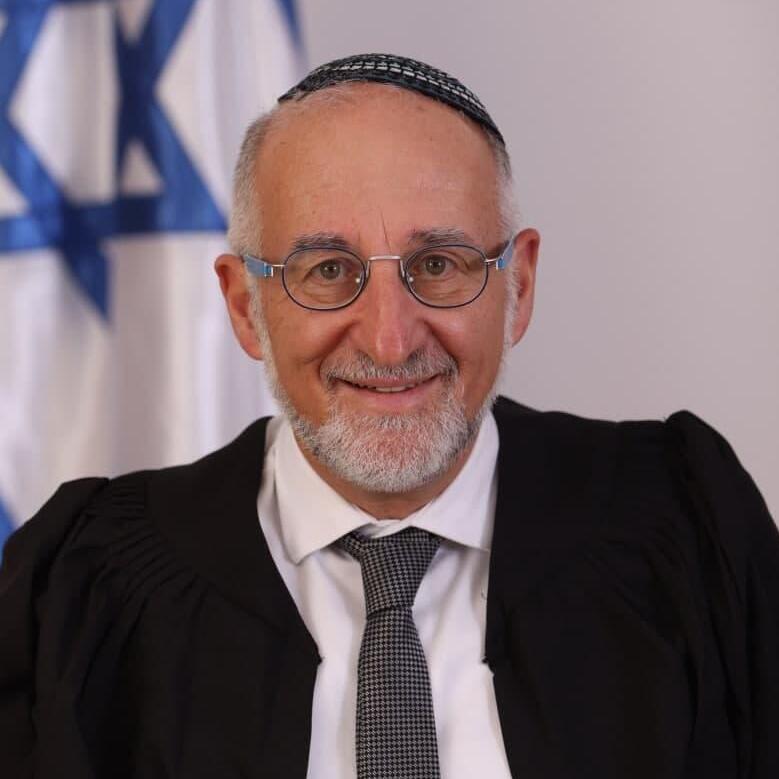
State Ombudsman for Judges Asher Kula
(Photo: Judicial Authority)
The main opinion was written by Justice Yael Willner, who ruled that under the extraordinary and extreme circumstances of the case, Levin acted within his authority when he decided that oversight of the investigation would be handled by someone outside the Attorney General’s Office or the State Prosecutor’s Office.
However, the court determined that the role could not be assigned to Judge Kula, who also serves as state ombudsman for judges, due to statutory limitations governing his position.
Justices Alex Stein and Gila Canfy-Steinitz concurred with the opinion, and the court unanimously ruled to cancel Levin’s decision to appoint Kula to oversee the investigation.