


Exactly three years after the Oct. 7 massacre, Heritage Minister Amichai Eliyahu on Wednesday declared the roadside shelters across the Gaza border area that became scenes of both mass killing and extraordinary acts of heroism to be national heritage sites.
Under the precedent-setting decision, the shelters may not be demolished, removed, repainted or otherwise physically altered without professional approval, in an effort to preserve them as what the ministry called “living testimony” to the events of Oct. 7, 2023.
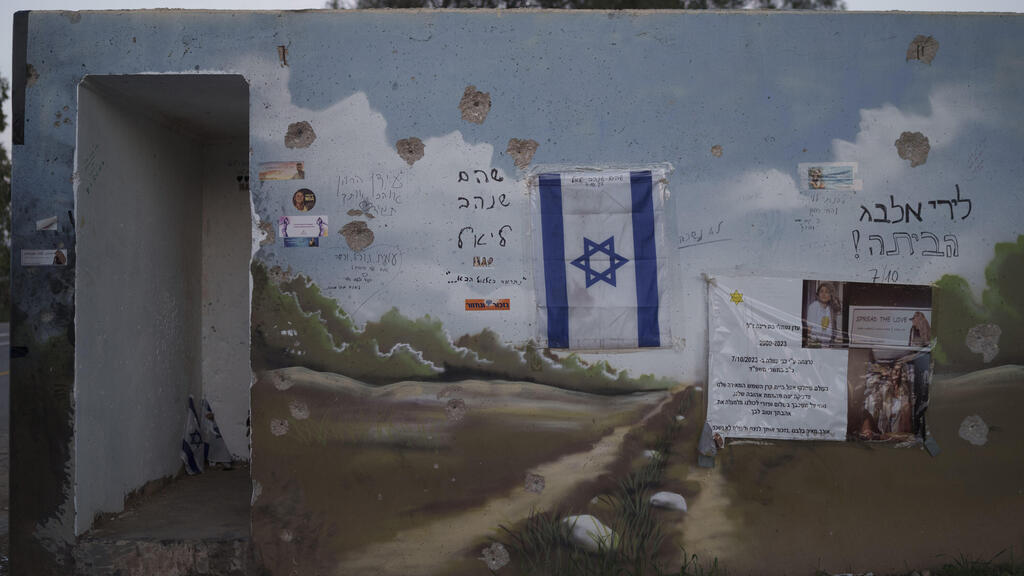
The shelters along Route 232 became known in Israel as the “death shelters.” During the Hamas attack, Nova festivalgoers and people fleeing Zikim Beach sought refuge inside them. Hamas terrorists fired into the shelters, threw grenades inside and abducted several people sheltering there.
Ninety people were murdered in the shelters and five were abducted. Nearly 40 Nova festivalgoers fled into the shelter at Be’eri Junction, where 16 were murdered.
Another shelter near Re’im Junction became closely associated with the heroism of Aner Shapira, who repeatedly threw back grenades hurled inside by Hamas terrorists before he was killed. Other civilians and security personnel also risked their lives in and around the shelters to save others.
Rare use of antiquities law
Eliyahu informed heads of regional councils in the Gaza border area and a senior Israel Antiquities Authority official that the shelters would be formally designated as “antiquities” and national heritage sites.
The decision followed extensive work by the Heritage Ministry and was intended to stop local and bureaucratic initiatives aimed at “clearing the area,” including removing, repainting or covering structures that still bear physical traces of the attack.
Although Israel’s 1978 Antiquities Law was originally designed to protect objects and sites dating from before 1700, Section 1 gives the responsible minister exceptional authority to declare a later object an “antiquity” if it possesses clear national historical value.
Eliyahu used that provision to give the shelters immediate legal protection.

Heritage Minister Amichai Eliyahu
(Photo: Alex Kolomoisky)
“The events of Oct. 7 seared a deep wound into our flesh, but they also revealed extraordinary strength, heroism and mutual responsibility that will be remembered for generations,” Eliyahu said.
“Amid the inferno, the shelters scattered throughout the Gaza border area became arenas of a struggle for survival, bloodshed and unparalleled heroism,” he added. “Our duty to future generations is to ensure that the stories of heroism and loss are told from the places themselves and are not erased by bureaucratic considerations or by a rush to ‘clear the area.’”
The Heritage Ministry stressed that the declaration does not transfer ownership of the shelters to the state or expropriate them from their current owners.
It does, however, place them under a strict preservation regime. From now on, any physical change will require explicit approval and advance professional coordination with preservation experts from the Israel Antiquities Authority and Heritage Ministry.
The ministry said the directive had been passed to all relevant field and operational authorities to ensure that the structures remain “living testimony” and places of mourning and remembrance for bereaved families and the Israeli public.
‘This is the last place our loved ones were’
Hila, whose brother Avir Lotan was murdered in the shelter at Be’eri Junction, welcomed the decision.
“I’m emotional,” she told ynet. “A long struggle to preserve the commemoration, the narrative, the memory of the massacre, the friendship, mutual responsibility and stories of heroism that took place in these shelters along the route of bloodshed on Oct. 7 is receiving the recognition it deserves.”
“Especially on this day, preserving the shelters manages to calm our hearts a little,” she said.
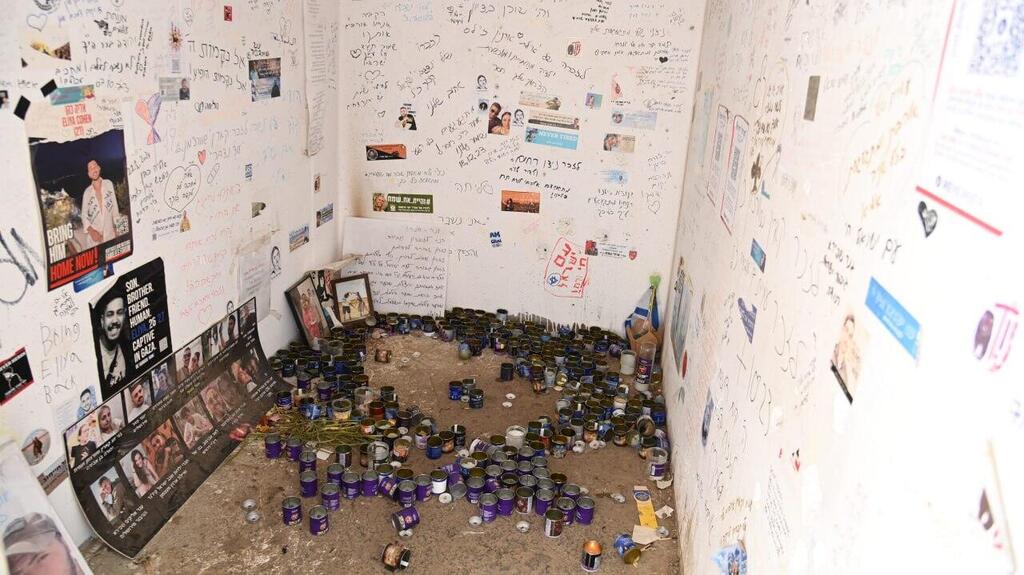
One of the roadside shelters along Route 232
(Photo: Herzl Yosef)
Ynet reported in June that the Eshkol Regional Council was planning to relocate some of the shelters to the Nova memorial site, a move Hila opposed.
“The shelters are a living reminder of what happened on the morning of Oct. 7, of the disasters and the heroism,” she said at the time. “When every trace of what happened in a place is removed, what is left?”
“The shelters are among the only pieces of evidence that are not inside a kibbutz or city. We have to preserve them where they are. This is the last place where our brothers, our children and the people we loved were. It is important that they not be moved, also for the national memory of the State of Israel.”
She compared moving them to relocating a historic site because nearby residents found it difficult to live beside it.
“This is an attempt to erase the massacre,” she said. “We said from the first day: Leave these shelters as a memorial and put new shelters beside them. The road can also be redesigned to make it safe and provide parking.”