


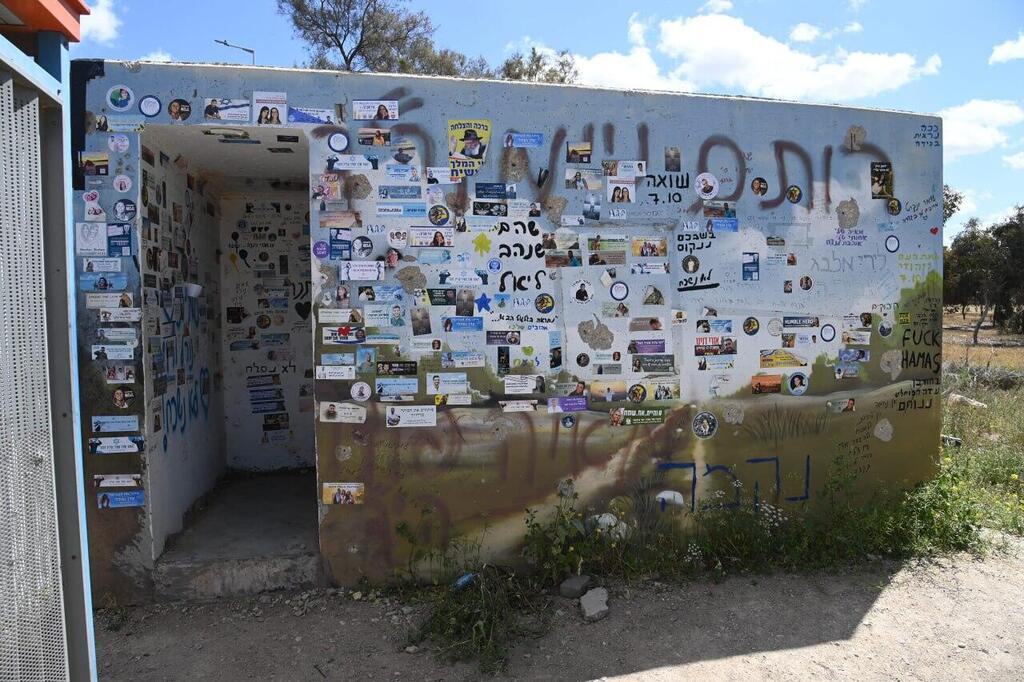
The small concrete roadside shelters scattered along Route 232 in southern Israel were built to protect civilians from rocket fire from the nearby Gaza Strip. On the morning of October 7, 2023, they became shelters of death. As Hamas terrorists stormed across the border into Israeli communities and the nearby Nova music festival, dozens of people fleeing the attack tried to hide inside the shelters. Many were young festivalgoers escaping the outdoor rave near Kibbutz Re’im, just a few miles from Gaza. Terrorists reached several of the shelters and massacred those trapped inside.
Yedioth Ahronoth and ynet have learned that the Eshkol Regional Council, which governs much of the rural area along the Gaza border where most of the shelters are located, is considering moving the shelters of death to a formal memorial site, most likely the Nova memorial site at Re’im, where the festival took place. The proposal has opened a painful dispute over how Israel should preserve the physical evidence of the October 7 massacre: at the exact places where people were murdered, or in a centralized memorial site designed for long-term preservation and public access.

Because they remain among the most visible traces of the attack, the shelters of death have become pilgrimage sites for families, survivors, soldiers, school groups and visitors. The bus-stop pullouts where many of them stand are often packed with cars. When there is no room, vehicles stop on the shoulder of the road, disrupt traffic and force pedestrians to cross Route 232 in unsafe places. The National Road Safety Authority described the situation as conduct that “increases the danger and the potential for traffic accidents.” Among the solutions it proposed was “moving the motivating factor that creates the unsafe activity,” meaning relocating the shelters. The authority also suggested stepped-up enforcement to prevent unsafe stopping, or arranging safer access and parking nearby.
The Eshkol council, however, prefers moving the shelters and replacing them with new ones. Some officials involved in the issue say the new shelters would also provide better protection from rocket attacks. About 90 people were murdered in the shelters of death on October 7, and five were abducted to Gaza. At the shelter of death near Be’eri Junction, almost 40 festivalgoers fled inside. Sixteen of them were murdered there.
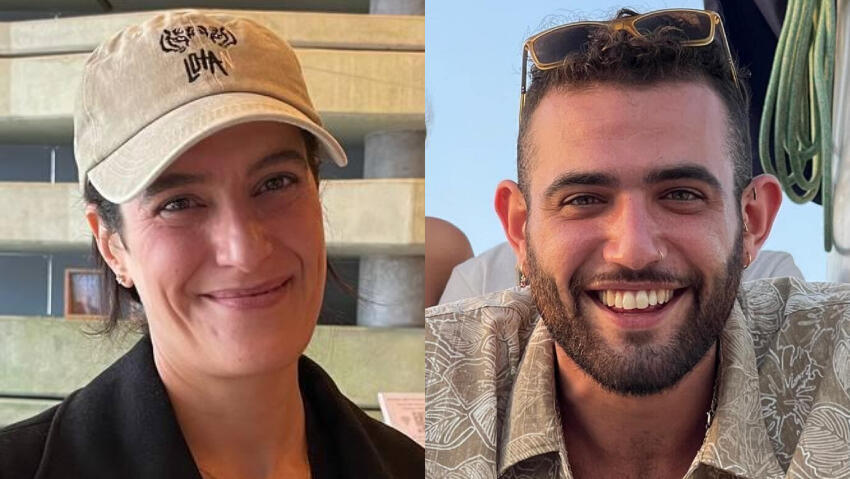
Hila and Lotan Abir
(Photo: Roy Rubenstein)
One of them was Lotan Abir. His sister, Hila, is fiercely opposed to moving the shelters. “The shelters are a living reminder of what happened on the morning of October 7, of the disasters and the heroism,” she said. “When every trace of what happened in this place is removed, what is left? The shelters are among the only pieces of evidence that are not inside a kibbutz or a city. We have to preserve them where they are. This is the last place where our brothers and children, the people we loved, were. It is important that they not be moved, also for the national memory of the State of Israel.”
Hila added: “Imagine what would happen if residents living near Auschwitz said, ‘This extermination camp in front of our eyes doesn’t suit us, so let’s move it somewhere else.’ What an outcry there would be. This is an attempt to erase the massacre. I don’t accept excuses about ‘non-standard shelters’ or parking issues. We said from the first day: leave these shelters as a memorial and place new shelters alongside them. The road route can also be planned so it will be safe, and parking can be arranged.”
Hila said Eshkol Regional Council head Michal Uziyahu told her about the plan to move the shelters and about the desire to create a centralized national memorial site for the events of October 7. “She cannot decide this alone, especially when there are now discussions about a bill on the issue,” Hila said. A bill to establish a national framework for commemorating the October 7 massacre is currently being advanced in the Knesset, Israel’s parliament, and is being prepared for its second and third readings before becoming law.
(Photo: Herzel Yosef)
“The law says that under the Prime Minister’s Office, a council or corporation will be established and will be responsible for commemoration,” said Hila, who is involved in the legislative process. “The shelters and the road must be under that same corporation, not under one regional council head or another. Woe to anyone who touches them.”
The IDF says the authority to decide whether to remove the shelters rests with the local authorities. If they decide to move them, the military said it would assist and replace them with new shelters. The military also said that although some of the shelters were damaged and have become memorial sites containing objects, photographs and candles, they are still functional and can serve as protection in an emergency. But the Eshkol council said the information it received from the army was different.
“This is a position that contradicts the messages and assessments presented to the council, which emphasized the security and safety risks involved in leaving the shelters in their current locations,” the council said. “These constitute a central part of the decision-making process on the issue.”
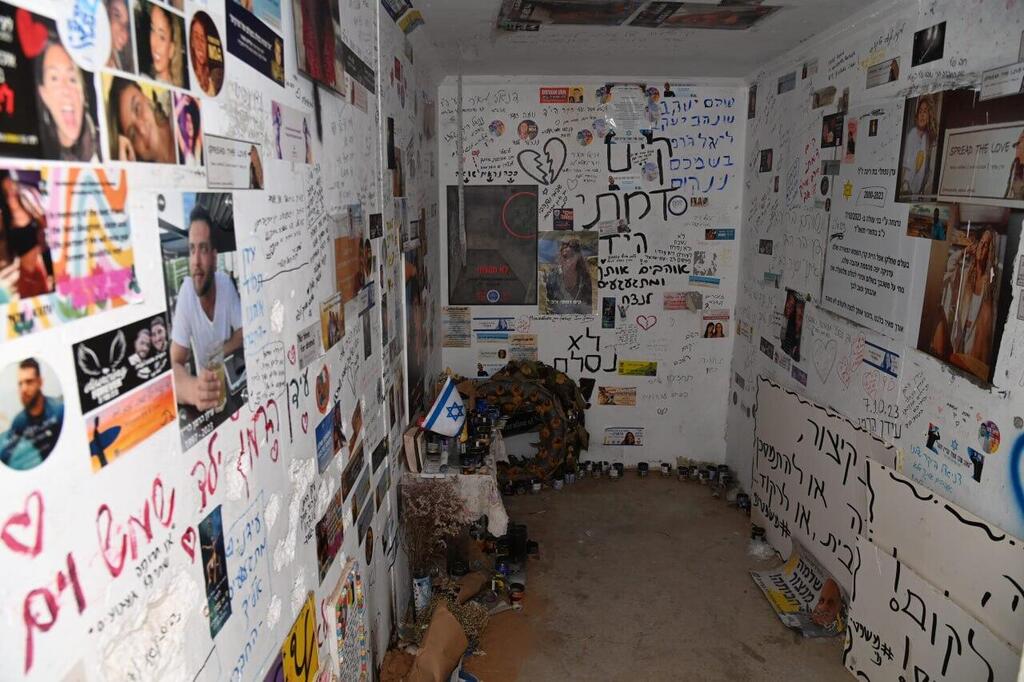
(Photo: Herzel Yosef)
The council said no final decision had been made. “The commemoration processes for the events of October 7 are complex and long-term processes, carried out with great sensitivity and in cooperation with the families, communities and all relevant parties,” the council said. “We emphasize that at this stage no official or final decision has been made regarding the commemoration plan.” The council said its guiding principle is to create “a central and respectful memorial site” that would provide “proper, equal and meaningful commemoration for all the murdered and fallen.”
“There is enormous importance in preserving the shelters, and precisely out of this understanding, we believe the proper place for them is in an organized, enclosed and protected memorial site, where professional preservation work can be carried out for years and their commemoration can be ensured for future generations,” it said. The council added that Route 232 remains an active traffic artery used by residents, emergency vehicles and visitors moving through the Gaza border area.
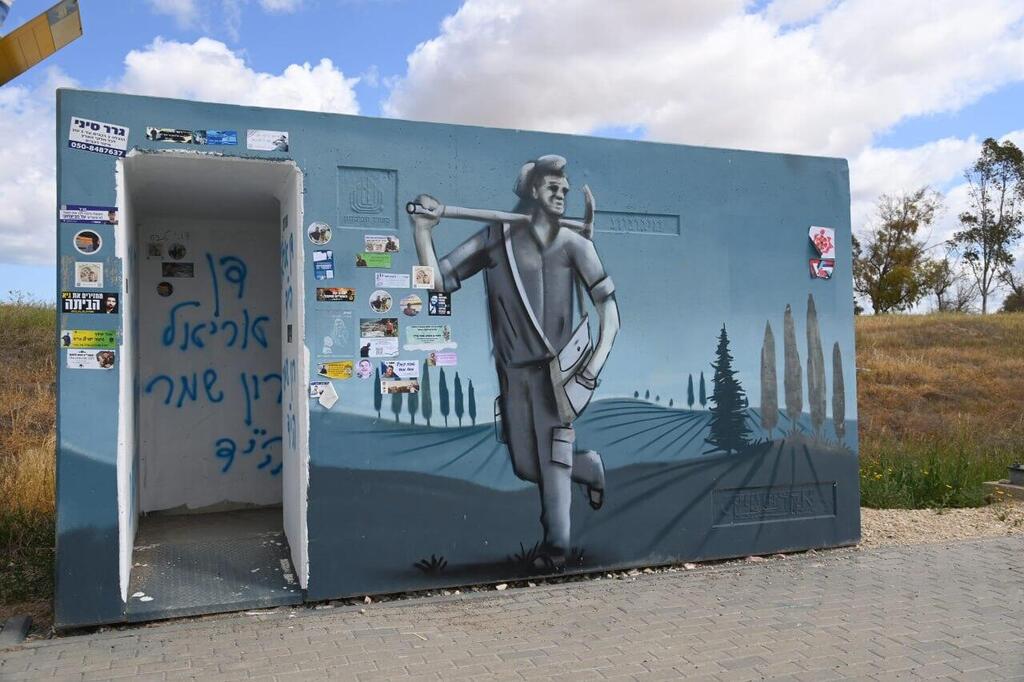
(Photo: Herzel Yosef)
“The central purpose of shelters is to save lives and provide protection in emergencies,” the council said. “In the current situation, when gatherings take place on the side of the road and the ability of passersby to use the shelters for their original purpose is impaired, a real danger to human life is created.” The council stressed that it had made clear to family representatives that “no step will be taken by surprise” and that any move would be carried out “with full transparency and ongoing updates.”
Not all local councils in the area are considering relocation. The Sdot Negev Regional Council, where the Alumim shelter is located, said a memorial for those murdered there is planned near the entrance to Kibbutz Alumim, a community near the Gaza border. “The shelter is not planned for relocation and will remain in its current place,” the council said.
The Sha’ar HaNegev Regional Council, where the Mefalsim shelter is located, did not address the specific question of what will happen to it, saying only: “We are committed to ensuring that the commemoration process is conducted with the sensitivity and respect it deserves.”
First published: 07:56, 06.16.26