

Hossein Taeb, the Iranian security official ousted four years ago after building a reputation for ruthlessness inside the Islamic Republic’s security establishment, is returning to the top ranks of power in Tehran.
After a long period largely out of public view, the 63-year-old has been restored to his former role as commander of the Basij, the sprawling paramilitary organization used by the regime to monitor society, mobilize loyalists and suppress dissent.
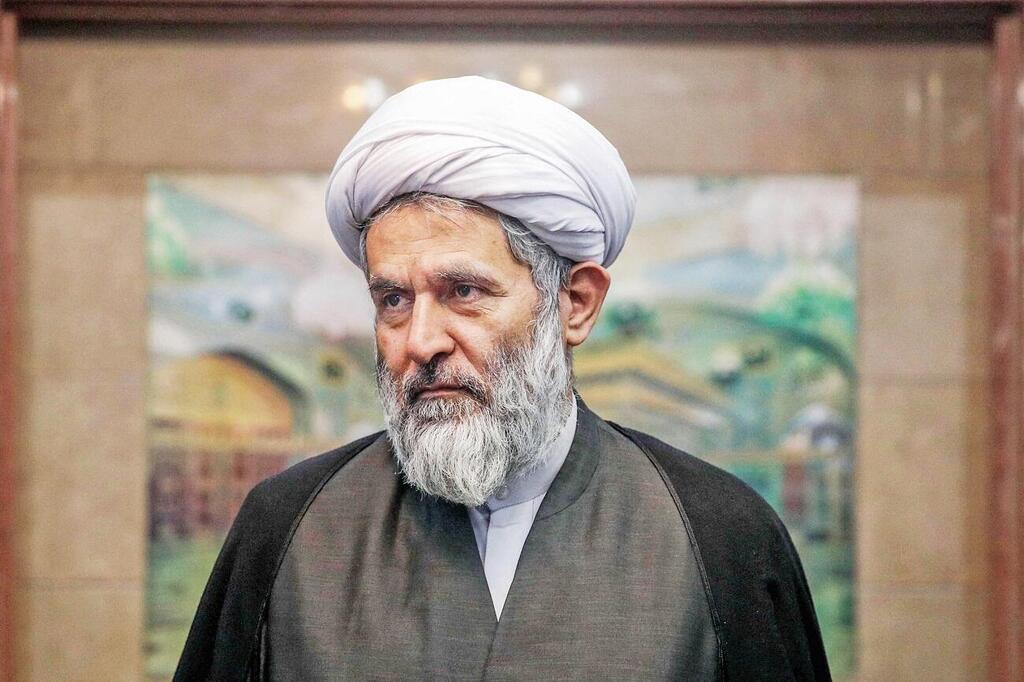
His new mandate comes as Iran faces tightening economic sanctions, collapsing currency values and growing fuel constraints, vulnerabilities that have helped trigger major waves of unrest in the past. His appointment order calls on him to “strengthen the popular information network” and make use of “new technologies for popular resistance” in a drive to turn “every Iranian into a Basij member.”
Diplomats and analysts cited by Bloomberg see that language as effectively giving Taeb a mandate to turn the Basij into the eyes and ears of new Supreme Leader Mojtaba Khamenei on the streets. The two men share a long history.
The appointment places Taeb inside a narrow circle of loyalists around Khamenei and among the key figures shaping a country shaken by an unprecedented protest movement and an ongoing war.
“Taeb is now sitting at the top of the system he himself played a major role in creating,” Mohammad Hossein Torkaman, a former member of the Islamic Revolutionary Guard Corps who left Iran in 2010 and now lives in exile in Europe, told Bloomberg. “His most important task is to prevent and stop internal resistance, and to suppress it when it happens.”
That mission has become especially important for Tehran as U.S. President Donald Trump shifts from threats of military strikes toward intense economic pressure aimed at ending the six-month-old war. Even before Washington announced tougher sanctions, Iran’s currency was already in prolonged decline and its access to fuel was becoming increasingly constrained, two pressure points that have previously contributed to mass protests.
A force designed to be everywhere
Bloomberg noted that Taeb’s return suggests an expansion of the Basij’s role. The organization is a vast network of militias and regime loyalists with economic interests stretching from banking to the steel industry. Iranian authorities claim it can mobilize as many as 20 million people at short notice, roughly one-fifth of the country’s population.
Basij members, including ideologically committed young men and women, operate in mosques, workplaces and universities across Iran. They have repeatedly been deployed to disperse public gatherings and suppress demonstrations with violence.
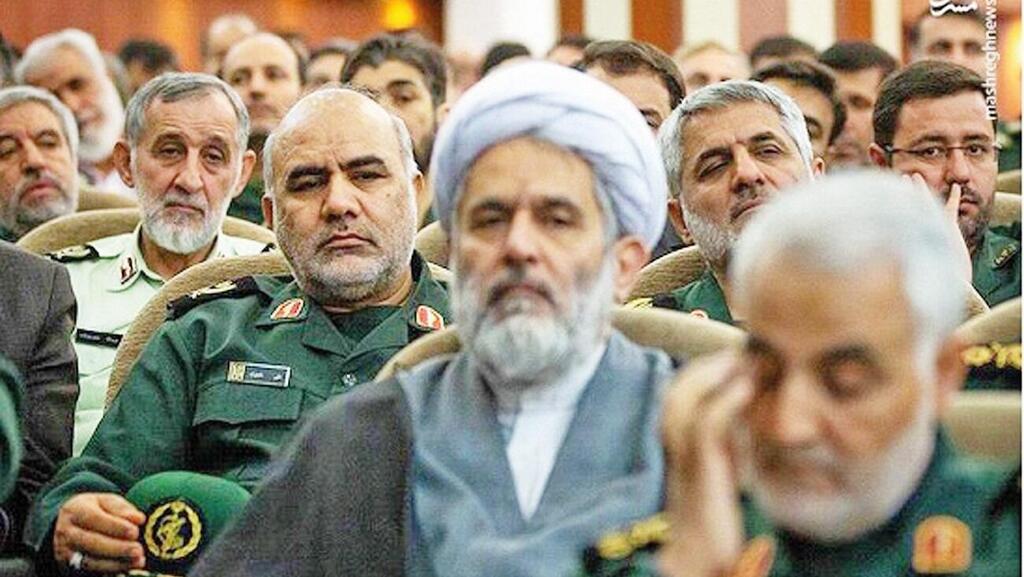
Taeb in 2022
During the wave of protests in January, Basij members were sent alongside other security forces to crush the unrest. Thousands were killed, according to accounts cited in the source.
The Basij also gives Mojtaba Khamenei, who has yet to appear publicly since succeeding his father after the elder Khamenei was killed, a loyal social base that can be used to consolidate his authority.
“The new Basij under Taeb will serve as a social base for Mojtaba, not only to control society but also to control the political elite,” Saeid Golkar, a political science professor at the University of Tennessee and author of a book on the organization, told Bloomberg. “They are much more ideologically committed than other security institutions, and they are everywhere.”
A career built on surveillance and repression
Taeb was born in Tehran in 1963, trained as a cleric and joined the Revolutionary Guards in the early 1980s. During the eight-year Iran-Iraq War, he fought alongside the younger Khamenei.
After the war, he worked in counterintelligence at the Intelligence Ministry, and by the late 1990s was coordinating directly with Mojtaba Khamenei on internal security issues.
That experience prepared him to take command of the Basij in 2009, when the organization played a central role in suppressing the Green Movement protests that erupted after a disputed presidential election. Dozens were killed in the crackdown, and the United States later imposed sanctions on Taeb over human rights abuses.
His methods were considered extreme even by some within Iran’s own establishment. He became known for brutality and paranoia, monitoring his own employees and ordering torture when he suspected them of betrayal.
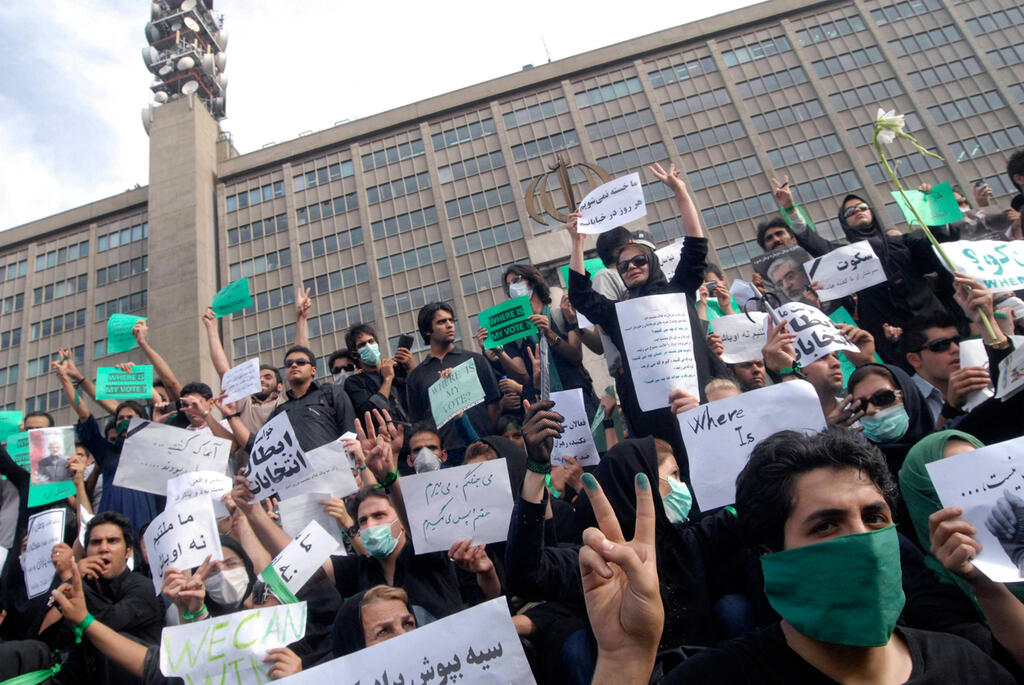
Iran, 2009: Green Movement rally for Mir-Hossein Mousavi
(Photo: Reuters)
“When we hand management of the latest crisis to people like Taeb, who know batons better than they know thought, logic and judgment, this is the result,” lawmaker Ali Motahari wrote during the 2009 Green Movement protests.
Following that unrest, then-Supreme Leader Ali Khamenei established the IRGC Intelligence Organization, a parallel intelligence service reporting directly to the supreme leader rather than the government, and appointed Taeb to head it.
Iranian state television later listed among the “achievements” of his 13-year tenure the arrests of dual nationals, anti-corruption activity and efforts to identify regime opponents abroad.
Ousted after failures blamed on Israel
Taeb’s long tenure ended in 2022 after a series of security breaches attributed to Israel.
In June of that year, shortly before then-foreign minister Yair Lapid traveled to Turkey, Turkish intelligence announced that it had thwarted an Iranian plot in Istanbul targeting Israeli diplomats and tourists. Reports said Iranian operatives had been tracking Israelis in the city for an extended period, with one alleged target being a former Israeli ambassador and his wife staying at a hotel in the Beyoglu district.
Minutes after Turkey announced the foiled plot and the arrest of eight suspects, including Iranian nationals, Tehran formally announced Taeb’s removal as head of the IRGC Intelligence Organization.
Israeli intelligence officials had identified Taeb a week earlier as the official “trying to promote an attack against innocent Israelis in Turkey, as part of a crazed and sick campaign to preserve his standing within Iran’s security establishment.”
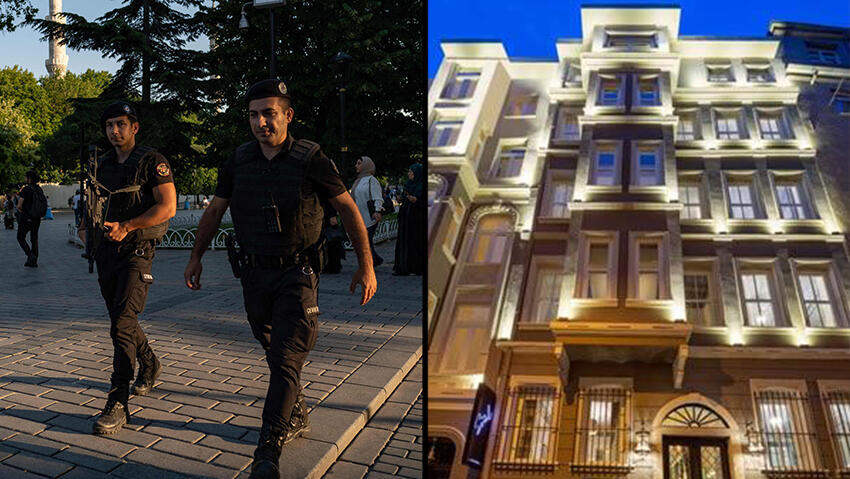
The hotel where Iranian assassins stayed in Turkey, and Turkish security forces in Istanbul
(Photo: AFP)
At the time, there were also reports that figures inside Iran’s establishment were demanding his dismissal over his failure to stop operations attributed to Israel inside Iran and his inability to mount an effective response abroad.
Israeli intelligence officials described him then as someone “known for his extremist personality,” likening him in the period before his dismissal to “a wounded and frantic animal” desperately trying to carry out an attack against Israelis in Turkey or elsewhere because he feared losing his position with the leadership.
Publicly, Taeb was moved into a largely symbolic advisory role under the IRGC commander. Diplomats cited in the report, however, said he continued coordinating security matters with Mojtaba Khamenei through the office of his father.
One expert who spoke to Bloomberg said Taeb’s return despite his previous dismissal was “a clear indication of the closeness between him and Mojtaba.”
“When you suppress people, when you kill people, you need that loyalty,” the expert said. “And I don’t think there is any other organization in Iran that can provide it.”
From reported death to political resurrection
In June 2025, several official Iranian media outlets, including the IRNA and ISNA news agencies, briefly reported that Taeb had been killed.
The reports were removed within minutes, despite the fact that he had appeared in a television interview with Iranian state media only hours earlier.
ISNA later apologized, blaming the erroneous report on “human error” caused by a heavy news workload.
“Unfortunately, this error occurred at a time when the system was dealing with a large volume of news within a limited period,” the agency said. “The report was removed immediately.”
Now, after years spent largely away from public view, Taeb is not merely back in circulation. He is once again at the head of one of the Islamic Republic’s most powerful instruments of domestic control, this time under a supreme leader with whom he has shared decades of political and security ties.