

It was around 2 a.m. on the night of March 17, and Gholamreza Soleimani was in the middle of a large meeting in a makeshift tent on the outskirts of Tehran. The tent was not his permanent headquarters — that had been bombed two weeks earlier.
Soleimani, commander of the Basij force — the militia that keeps 88 million Iranians under a regime of fear — was there with the organization’s senior officials. The timing: ahead of Nowruz celebrations, the spring festival that marks the start of the traditional Persian year, before the Islamic conquest of the country.
Gallery
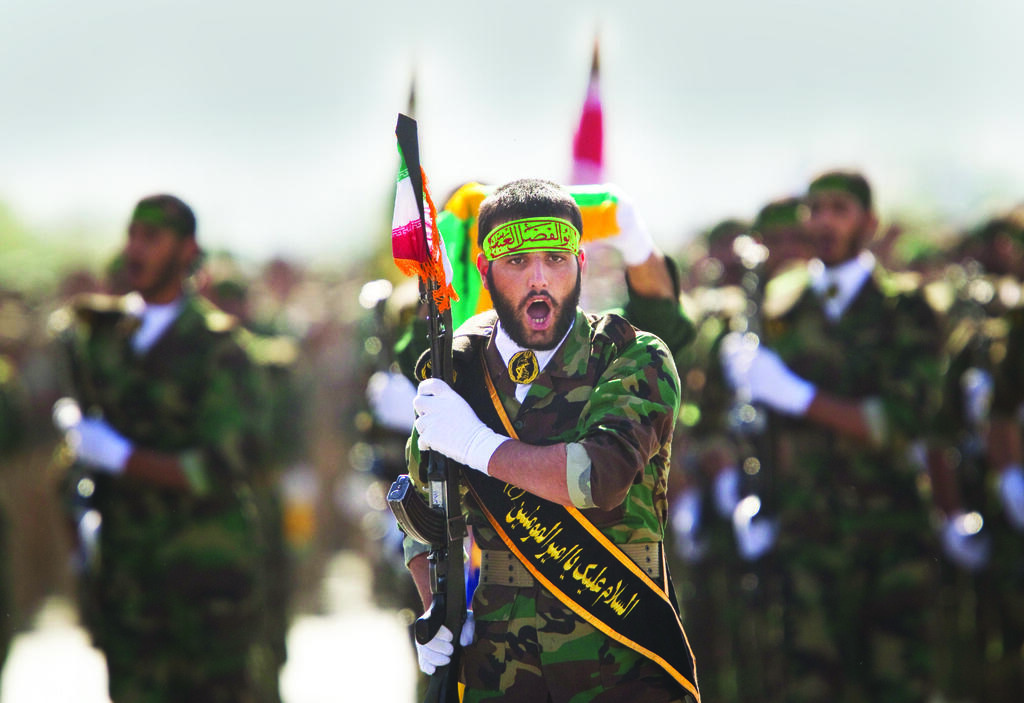
A Basij member at an annual parade marking the Iran-Iraq War
(Photo: Morteza Nikoubazl/Reuters)
Every year, the regime feared an uprising around the spring equinox, when the days begin to grow longer and light overcomes darkness. This year, the fear was especially great. But Soleimani did not finish the meeting.
A precise Israeli airstrike killed him, his deputy, Qassem Qureshi, and dozens of other commanders who were taking part in the discussion. His killing, an intelligence official says, “constitutes one of the most significant blows in recent years to the core of the Iranian regime’s repression apparatus. Soleimani was not only a field commander, but a key figure in shaping the Basij’s operational doctrine — a body that operates through a combination of extreme Shiite ideology and direct violence against civilians.”
In the first days of the latest attack on Iran — at least for now — Israeli and U.S. air forces focused on eliminating the military and governing elite and striking nuclear infrastructure and Revolutionary Guards headquarters. But then, after about two weeks of targeted fighting, the air force also turned to a target that was not self-evident: the Basij. Not nuclear facilities, not ballistic missiles — but street checkpoints, neighborhood headquarters and midlevel commanders of an organization whose main role is to beat protesters and arrest women whose hair shows too much beneath the chador.
“The question ‘Why the Basij?’ is a legitimate one,” says T., an air force pilot who took part in those strikes. “After all, they do not threaten us directly. They do not launch missiles. But they are part of the governing system — part of the bad people who ultimately harm us, our families. When you are fighting a group that controls and attacks you around the clock, you need to strike every one of its capabilities.”
T. is, of course, right — the Basij is undoubtedly one of the Iranian regime’s centers of power — but the reason was deeper. According to reports in recent weeks, mainly in The New York Times, Israel persuaded the United States that the attack would lead to regime change in Iran through an uprising. For such an uprising to happen, at least on paper, the main force that suppresses exactly such uprisings must be hit. That force is the Basij.
“The campaign was launched with a clear goal — to replace the regime,” says Col.(ret.) Asaf Cohen, also known as Fizer, a former deputy commander of the elite Unit 8200 and former head of the Iran arena in Military Intelligence. “Later, they changed the definition to ‘creating the conditions for the Iranian people to take their fate into their own hands.’ It was clear that replacing the regime could not be done through airstrikes, but through the masses eventually going out into the streets and seizing power. For the Iranian people to truly be able to go out into the streets with some degree of confidence that they would not be massacred again, it was clear that some of the security mechanisms preventing that had to be neutralized.”
Basij members crack down on mass protests in Tehran, January 2026
But at least for now, and despite the blows delivered to the Basij, the hoped-for uprising has still not materialized. That does not mean, of course, that it will not happen.
“We cannot topple the regime by attacking the checkpoints,” says Dr. Meir Javedanfar, an Iran scholar at Reichman University, “but it humiliates the Basij. And the fact that someone is willing to strike their enemy is supposed to give the Iranian people the daring they need.”
Maybe. But for now, a ceasefire and negotiations have been agreed upon, the Basij remains on its feet, and as long as this militia grips the throats of millions of Iranian citizens, the equation for most of them is clear and cruel: any attempt at revolution equals death.
× × ×
In Persian, the word “Basij” means “mobilization,” a shortening of the full name “Sazman-e Basij-e Mostazafin” — the “Organization for Mobilization of the Oppressed.” The organization was founded by Ayatollah Ruhollah Khomeini in 1979, days after the Islamic Revolution, as a volunteer militia. Khomeini’s vision — he did not trust the deposed shah’s army or SAVAK, his secret police — was a new popular force of 20 million Iranians that would defend the revolution against any enemy, external or internal.
A few months later, with the outbreak of the Iran-Iraq War, his vision faced its test. Basij members, many of them children aged 12 to 14 from poor families on the periphery, were sent to fight and, in many cases, to clear the way for regular army forces through minefields. Their commanders hung plastic “keys to paradise” around their necks and sent them forward, convinced that if they were killed, they would go straight to the world of the martyrs.
“The brainwashing was so effective that those who were not recruited cried over why they had not been chosen for the mission,” Dr. Javedanfar says. “When Saddam Hussein attacked, he did not only attack a country, he attacked the revolution.”
Basij logo
(Photo: SpinnerLaserz/Wikipedia)
The war, which ended in 1989, turned the Basij into a significant force, but its purpose changed.
“After the war, the regime began using the Basij for internal security purposes,” Javedanfar says. “Every time there were protests, they used Basij members to suppress the demonstrators, beat them and track them.”
The regime decided to direct the organization’s resources mainly inward, to ensure the stability of its rule, and the Basij became entrenched as an arm of domestic repression. In the 1990s, the Basij also began serving as a kind of morality police, enforcing the Islamic Republic’s dress and behavior codes. At the same time, the notorious battalions for suppressing and dispersing protests were established. Basij members soon received arrest powers, effectively turning them into a secret police force.
Alongside the clubs and firearms placed in the hands of Basij members, there were also welfare programs and community networks in the form of enrichment classes on Islam and the values of the revolution in mosques. Members of the organization also received economic preferences. The sense of partnership in the revolution, the economic benefits and religious fulfillment became an especially attractive triangle.
“If you want to be a Basiji, you have to be religious, pray, and they check you on it,” Javedanfar says. “But there are Basijis who do it because they get a guaranteed place at university. And yes, there are also those who receive the subsidies and employment assistance, then go home and drink whiskey.”
Alongside this, the Basij stopped being a particularly violent youth movement, was formally integrated into the Revolutionary Guards and became the corps’ fifth arm, alongside the ground, air and naval forces and the Quds Force, which carries out missions beyond Iran’s borders.
In 2005, Mahmoud Ahmadinejad, a former Basij member, was elected president of the republic, and the organization reached new heights of power and wealth. The Basij became politically involved and gained ownership of many privatized state companies. In 2009, immediately after Ahmadinejad’s reelection, massive waves of protest broke out in what became known as the Green Movement. Then the organization revealed its power, becoming the main force used to suppress the demonstrations.
One of the foundations of the Basij’s power is its reach. “In Iran, there are places that have a Basij station but no police station,” Javedanfar says. “They reach the most remote corners of the country.”
Organizationally, the Basij is built like a nervous system covering all of Iran: 32 provincial command units — two of them in Tehran, because of its importance — and beneath them control zones at the city and neighborhood levels, as well as 40,000 to 54,000 “resistance bases” located inside mosques, schools, universities, factories and almost anywhere else. There are two reasons for this: first, so that no Iranian citizen fails to feel, in practice and in daily life, the Basij breathing down his neck; second, because of what intelligence agencies call the “mosaic doctrine” — a method meant to ensure independent continued activity even if the central government falls.
How many members does the organization have? The regime, seeking to magnify its power and sow fear, claims 20 million. More realistic estimates speak of about 90,000 salaried permanent personnel, another 300,000 active reservists and millions registered on paper, mainly for the benefits.
“Today they are here, tomorrow they are there. The regime does not trust them,” Fizer says. “If the balance changes, then those people, who are registered because of the benefits, will not answer when they are called to go out into the streets.”
But the Basijis who are active have made sure, for example, to keep setting up checkpoints even when the IDF bombed them. It is one of the tools of policing: It is enough for a resident to be required to show a Basiji police officer an identity card every time he moves from one point to another in his neighborhood to make him feel he is under total control, and that the regime’s eye is always open.
“No matter how much we managed to hit and weaken the Basij,” Fizer says, “as long as the Iranian people look out the window and see its police officers in the streets, they will not go out to protest. Especially after the suppression of the previous wave of protests.”
× × ×
When the U.S. military occupied Iraq in 2003 and toppled Saddam Hussein’s regime within weeks, policymakers in Tehran were horrified. They realized that the strategy of “decapitation” — bypassing the population and directly attacking command centers — was the main existential threat to them.
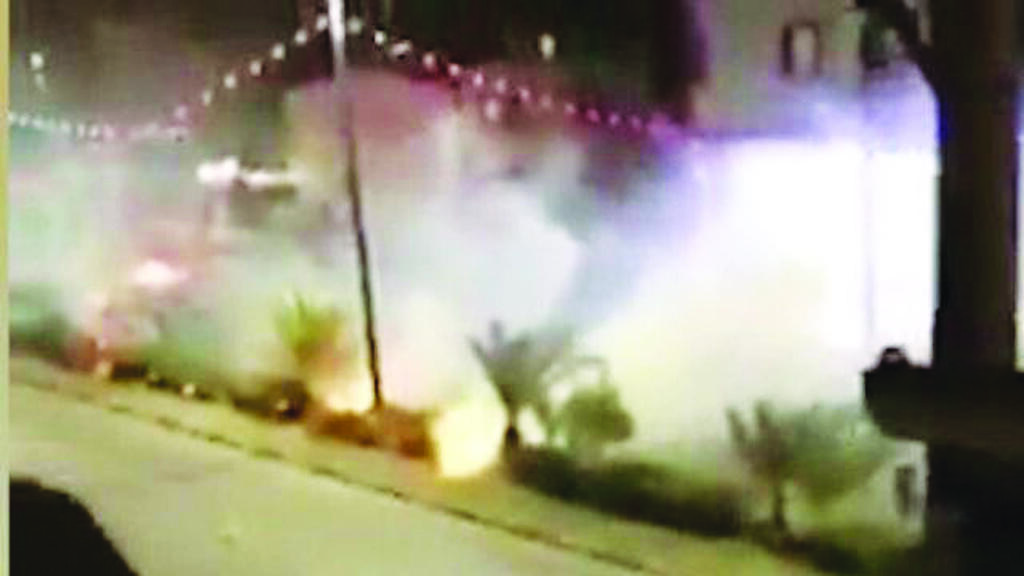
Their response was that same “mosaic defense,” under which each of Iran’s 32 provinces is an autonomous “tile.” If the central command in Tehran is paralyzed, each province will continue to operate independently. In such an emergency, the Basij has a critical role: suppressing uprisings and preserving regime stability. Every neighborhood is an independent cell, capable of functioning even without instructions from above.
In the first days of the war, Iranian Foreign Minister Abbas Araghchi explained it himself: “We spent 20 years studying America’s wars in order to build a system that keeps fighting even when the capital is bombed.”
But the Basij serves the regime not only in emergencies, but mainly in routine times. It operates two internal intelligence networks that create a panopticon-like situation — the feeling that someone is always watching you.
The first network is “Ashraf,” an intelligence oversight network whose purpose is to collect detailed information on the population in every geographic area and define the level of risk it poses to the regime. Network members map residents of the neighborhood, city and province by religious affiliation, behavioral patterns, newspaper and media consumption, age, education level, social organizing and minority groups. This data allows the network to assess the extent of the social and cultural “threat” posed by citizens — where and who is speaking against the regime, which groups are influenced by “Western values” and more.
The second network, “Ayoun” — “eyes” — serves as a built-in informant mechanism for identifying and reporting any sign of crime, but not only criminal activity. Offenses related to morality and religious norms are also dealt with harshly. The network locates “contaminated centers” and marks people whose behavior is problematic for the regime. Together, the two networks remove the barriers between public and private life, turning Iran into a giant prison even without walls or barbed wire.
In case the checkpoints, Ashraf and Ayoun are not enough, the Basij also maintains units, some of them armed and made up of cadets recruited to spread fear — and to bring clubs and rifle butts down on the heads of protesters and rioters. These units are activated only in extreme situations, such as the recent wave of mass demonstrations in December and January. In most cases, the Basij’s deep control and broad deployment in every neighborhood do the work, creating maximum deterrence.
“What scares the Iranian regime is the Iranian people,” Javedanfar says. “Residents who go out into the streets without weapons frighten the rulers more than the Israeli Air Force with all its bombs.”
× × ×
During the war, there were moments of optimism in Israel that the Basij had been weakened and that perhaps the masses would rise up. “Some of the operatives are afraid to go out into the streets in uniform,” Military Intelligence assessed, referring to Basij members. “Among them are some who are even absent from their missions out of fear of being eliminated.”
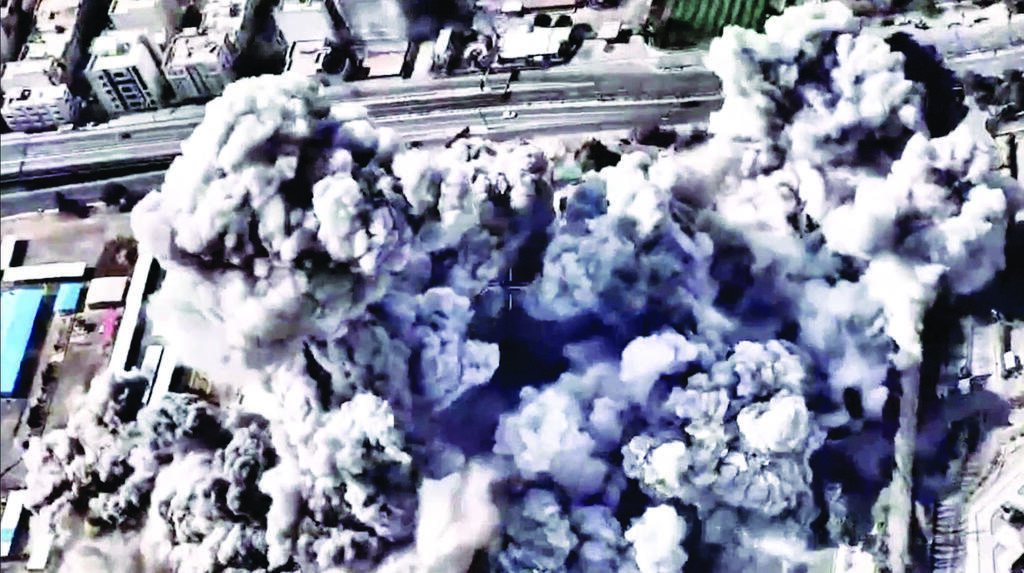
An Israeli airstrike on a Basij headquarters in Tehran
(Photo: Israeli Military/Handout/Reuters)
Fizer, based on the information you have seen, have you already seen desertions?
“Yes. According to open sources, there were desertions, but it appears to be very, very marginal. We have not reached the critical mass needed for the public to feel safe enough to go outside, especially with bombing overhead. We need to see what happens now, with the ceasefire.”
We also put the question of the effectiveness of the Basij strikes to the air force. A senior official we spoke with answered candidly: “I don’t know whether, in the end, this is what will bring down the regime, but I can say what happened on the ground. We struck most of their main headquarters in Tehran. Hundreds were killed there in the strikes, and the rest moved to work in all kinds of makeshift sites, in the heart of civilian populations, without military infrastructure. We saw them in soccer fields, educational institutions and tents in the street. They began to take on the characteristics of a terrorist organization, and that already makes it very difficult for them to manage things and carry out operations. So I can’t say whether this will collapse the regime, but all Basij forces — from the senior commanders to the last soldiers at the checkpoints in the field — all had a sense of being hunted.”
T., the veteran pilot, destroyed quite a few Basij targets before the ceasefire. “I have been flying and attacking in the air force for 30 years, and this is a mission I am very proud of,” he says. “When I go out to strike targets like these, I feel a double value: I am hitting bad people who are dangerous to us, but who also abuse their own people.”
It is an especially elusive target. A Basij force that had positioned itself, for example, inside a school could move within minutes to a community center.
“They are a very challenging and smart enemy. They move from place to place and spread out in the field,” T. says. “But in the end, our intelligence managed, within relatively short time frames, to locate moving targets as well. The fact that in one sortie you strike a headquarters, and in the next sortie you manage to strike the people in their new deployments in the field, is very impressive. In the end, that was our goal — to try to do everything possible to bring down the regime.”
At least some of that intelligence, according to foreign reports, was obtained thanks to Iranian citizens’ burning hatred of the repressive organization. According to those reports, several months ago, the Israeli Mossad opened a channel for communication with Iranian citizens on Telegram, X, formerly Twitter, and apparently through other, less public means as well. Iranian citizens began sending the locations of Basij posts and neighborhood headquarters — hundreds of messages a day. The Mossad verified every location received, and the results were fed into the strike array. A senior Air Force official confirmed the reports to us.
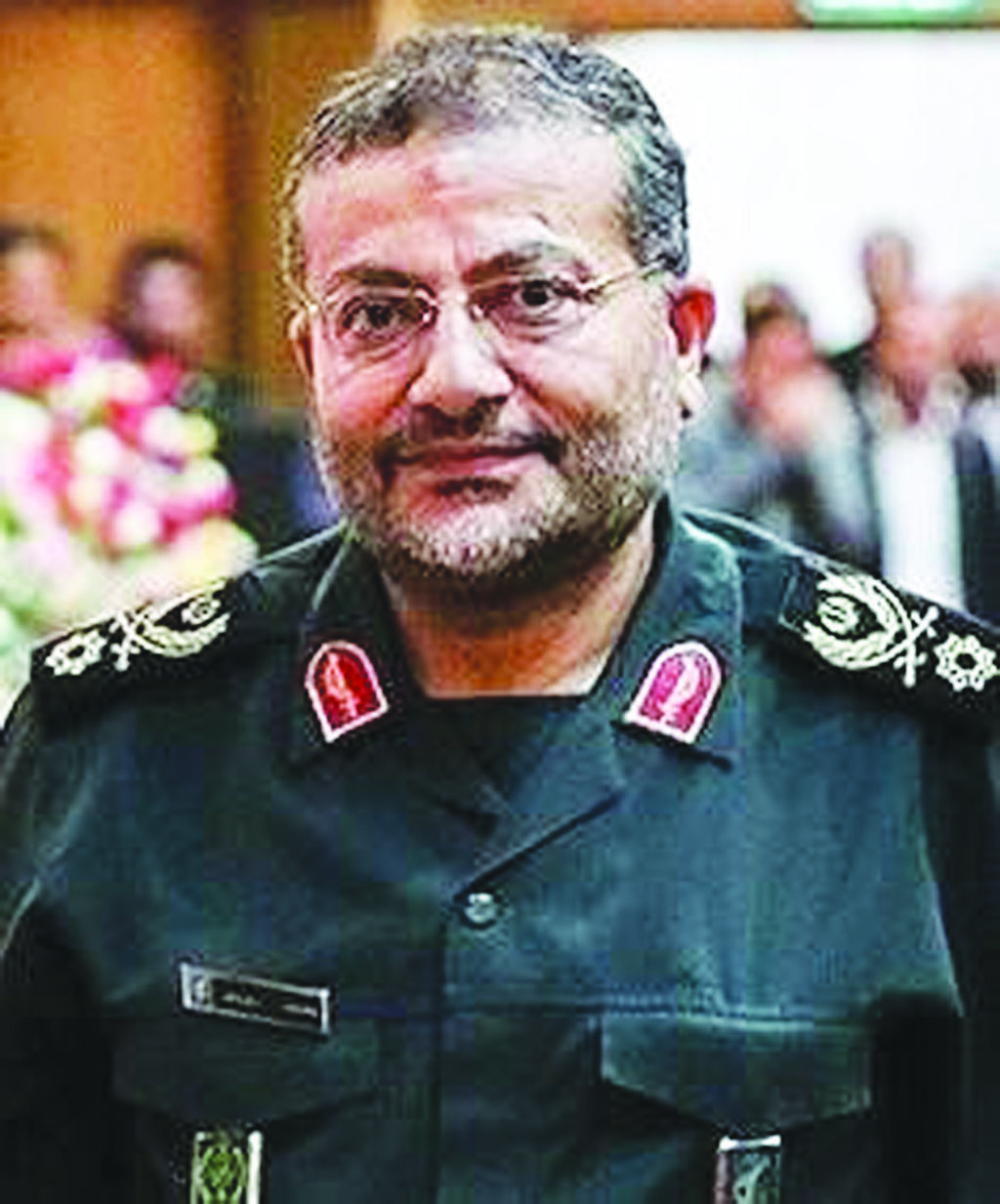
Slain Basij commander Gholamreza Soleimani
More about that hatred can be learned from the following case: On one of the days of the war, Israeli Hermes drones struck more than 10 Basij concentrations in Tehran within hours. One of them was in a soccer club that had become a field headquarters. Then something surprising happened: In the streets of Iran, the buzzing sound of approaching Hermes engines was heard, and Basij forces began fleeing the checkpoints. But the aircraft were not seen in the sky, or anywhere else. It turned out that the source of the noise was loudspeakers operated by daring Tehran residents.
Does the cooperation of Iranian citizens with official Israeli bodies show a change in direction?
Javedanfar: “I think that is a reasonable assumption. Iranians look at the Basij like the Gestapo. They hate them. They look at all the support Basij members receive from the regime, how they enjoy benefits, and that creates a lot of anger toward them, especially after the massacre of tens of thousands of innocent people in the latest protests.”
Now all eyes are on what the Basij will do during the ceasefire and negotiations with the United States. According to information coming from Iran, the Basij is still setting up checkpoints across the country and is now focused mainly on searching for Starlink devices, which are used to receive satellite internet. The internet remains the dictator’s sworn enemy. Security forces are sending messages that anyone who dares to protest during wartime will be met with live fire, and incidents of violent repression have been seen across the country. After the ceasefire, opposition channels also reported continued executions of protesters arrested in demonstrations at the beginning of the year.
Last week, Iranian media reported that two improvised explosive devices were detonated near Basij checkpoints on Imam Khamenei Street in Tehran. The explosives caused light damage, but also wounded one Basij police officer and two civilians at the scene. Opposition media affiliated with exiled Crown Prince Reza Pahlavi have reported far more extensive attacks by protesters, but their reliability is in doubt.
Meanwhile, new images and videos reveal the extent of the damage to Basij facilities across the country. Anti-regime channels report severe shortages of basic supplies at Basij facilities, including food, hygiene products and beds. Iran’s security forces have launched a broad recruitment campaign, calling on children from age 12 to come to Basij stations and volunteer as “fighters in defense of the homeland.” Human rights groups have presented video footage of children in Basij uniforms carrying AK-47 rifles and taking part in the organization’s shows of force.
“Iran’s security forces are still working,” Fizer says. “Even if they took a hit, it was not fatal. They learned the lesson from the previous wave of protests, and now they are making sure no one raises their head.”
Isn’t there a danger that now, during the ceasefire, the Basij will decide to take revenge on the population?
Javedanfar: “Yes, absolutely. The mosques in Tehran neighborhoods serve as Basij stations, and there have already been cases in which the Basij used them as bases for organizing and attacking locals.”
× × ×
Many years before he was killed in that tent, Gholamreza Soleimani was one of the teenagers who answered Khomeini’s call and joined the ranks of the revolution during the Iran-Iraq War. He was just 17 at the time. Over decades, he climbed the ranks until he reached the rank of sartip, equivalent to brigadier general, and was appointed commander of the Basij at the end of 2019.
That year, riots broke out in Iran over a rise in gasoline prices, and estimates are that about 1,500 people were killed and thousands more were arrested by the Basij. Khamenei appointed him to inject “new blood” into the system and strengthen the defense of the values of the revolution, against the backdrop of political unrest and the economic situation.
Soleimani met expectations. Under his command, the Basij employed the methods that became its trademarks: wide deployment of forces across cities, use of crowd-control measures, mass arrests and sometimes live fire. As a result, the United States, Britain, the European Union and Canada imposed sanctions on him over the “violent suppression of civilian protesters.”
Soleimani, 62, was killed days before the Nowruz celebrations — symbolic timing that was also meant to send a message: light will overcome darkness. The IDF is convinced that his killing also created a deep psychological blow. He was a man seen by the Iranian public as one of the most prominent symbols of the regime’s violent repression apparatus. His image represented the regime’s heavy hand and its willingness to use force to preserve its rule, even at the cost of direct confrontation with its citizens. Since his killing, no successor has been publicly named.
In addition to Soleimani, Israel also killed the Basij’s intelligence chief, Esmail Ahmadi, and thousands of field operatives. Headquarters, equipment depots and training bases were also destroyed. The IDF reported tens of thousands of munitions dropped on targets linked to the Basij and the Revolutionary Guards since the start of the war.
Will that be enough to bring the masses into the streets? As of this writing, at the start of the week, it still is not happening. Why?
“Because people are afraid,” Javedanfar says. “There is a war, people are thinking about survival.”
And in your assessment, will it happen?
“I don’t want to say there will be an uprising tomorrow, but it is a matter of time, because the regime is no longer running the country.”