

The ongoing Israeli strikes against Iran and Iran-backed Hezbollah in Lebanon are steadily eroding the power of the regime in Tehran, IDF spokesman Brig. Gen. Effie Defrin said on Wednesday.
Defrin, speaking in a televised statement, said the cumulative impact of Israeli assassinations and strikes across “all branches and parts of the regime” was already shaking Iran’s leadership, as Israel targeted senior Iranian officials, Hezbollah commanders, economic networks and weapons routes in an effort to erode the military and political architecture Tehran uses to project power across the region.
Gallery
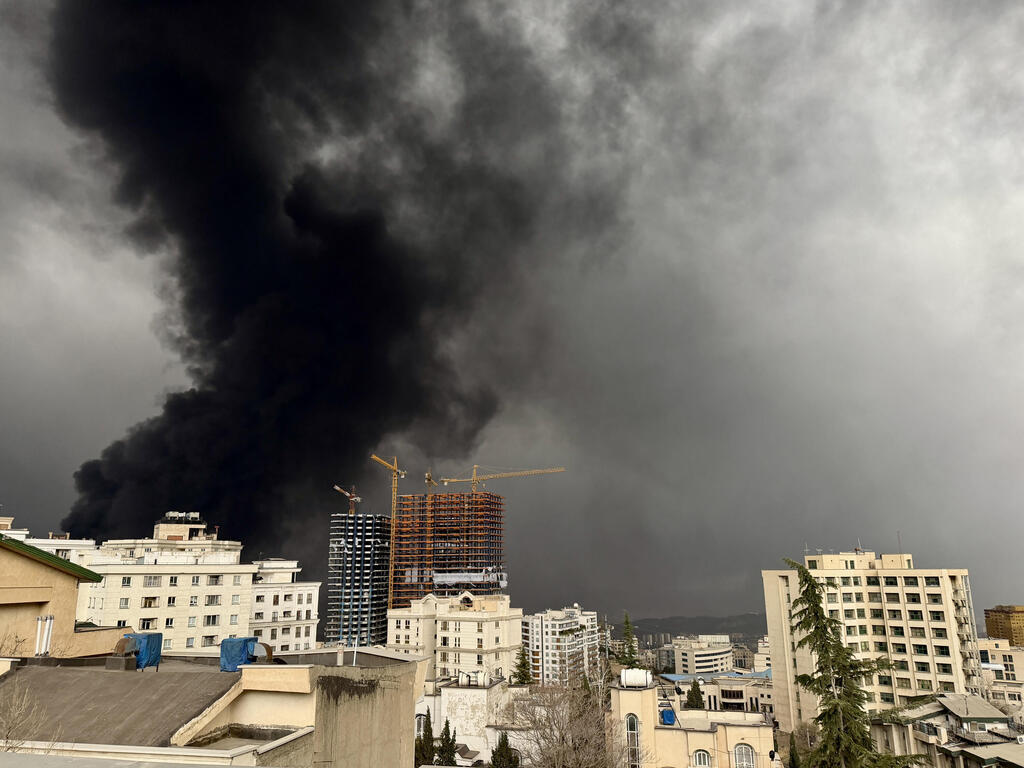
Smoke rises over Tehran after an Israeli attack on oil depots, March 8, 2026
(Photo: Majid Saeedi/Getty Images)
“The regime is already unstable, and we are continuing to weaken it,” Defrin said. He said that was “exactly our purpose” and that Israel was achieving it “step by step according to an orderly plan.”
Defrin began his remarks by expressing condolences to the family of an elderly couple killed when an Iranian missile struck their home in the Tel Aviv suburb of Ramat Gan the night before. He accused the “terror regime” in Iran of deliberately targeting population centers in Israel in order to kill civilians.
He also urged Israelis to continue following military instructions on seeking shelter, saying civilian discipline on the home front remained the best protection against missile and drone attacks.
He said that over the past day, Israel had continued its campaign to hunt down and kill senior Iranian officials. Defrin said the IDF had killed Iranian Intelligence Minister Esmail Khatib, whom he called "one of the chief architects of the regime’s terror apparatus." He said Khatib had advanced plots against Israel and targets abroad and had also been directly involved in the violent repression of anti-government protests inside Iran.
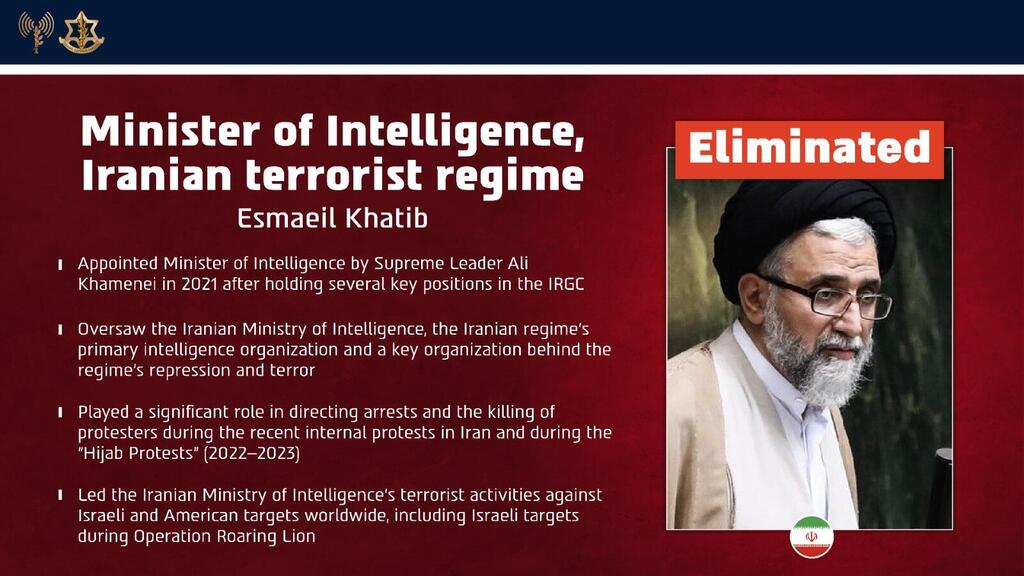
(Illustration: IDF)
Defrin also said Israeli forces killed Hassan Ali Marwan in Lebanon, identifying him as the commander of Hezbollah’s Imam Hussein Division. He said Marwan had held the role for only three days and was the third commander of that division killed since the 2024 fighting between Israel and Hezbollah.
According to Defrin, Marwan was responsible for coordination between Hezbollah and Iran’s Quds Force, the elite arm of Iran’s Revolutionary Guard that oversees foreign operations, and had directed fire against Israel on Tehran’s behalf.
He said those killings, together with other operations carried out since the start of the campaign, reflected what he described as advanced intelligence capabilities and precise Israeli Air Force strikes. “The chain of eliminations will not stop,” he said, adding that Israel would continue pursuing senior Iranian figures.
In Lebanon, Defrin said Israeli forces had struck gas stations belonging to a company controlled by Hezbollah, which he said served as an economic funnel worth millions of dollars for the group’s terrorist activity.
Israeli strike in southern Lebanon


He also said Israel targeted crossings over the Litani River in southern Lebanon, saying Hezbollah had used them to move fighters and thousands of weapons from northern Lebanon to the south for attacks on Israeli troops and civilians.
Defrin said Israel would strike any infrastructure Hezbollah uses in Lebanon and said Israeli forces were attacking dozens of targets each day, including rocket launch cells, commanders and operational headquarters. He said the damage to Hezbollah was deepening and that Israeli ground forces were continuing what he called "focused operations aimed at reinforcing the forward defense of Israeli communities" near the northern border.
He ended by saying that all IDF soldiers, including tens of thousands of reservists mobilized for the campaign, would continue fighting until the military’s objectives were met and the threats facing Israel were removed.