


The signing of a memorandum of understanding between the United States and Iran has thrust southern Lebanon into a new and complex reality — a kind of twilight zone in which the various parties are attempting to define what is and is not permissible under live-fire conditions. Those who had grown accustomed to the intense sounds of war in recent months can now detect a clear shift. The IDF's rate of fire has fallen dramatically. Strikes deep inside Lebanon, including in cities such as Tyre, Sidon and, of course, Beirut, have for the time being ceased entirely.
Against the backdrop of language in the full text of the U.S.-Iran memorandum referring to the end of fighting on all fronts, including Lebanon, the IDF has delivered three warnings to Israel's political leadership. The first: Israel must preserve freedom of military action throughout Lebanon. The second: a buffer zone must be maintained, including territory beyond the border currently held by the IDF. The third: southern Lebanon must be demilitarized, given that the ground operations and clearing efforts of recent months were largely devoted to that objective.
Documentation of the launcher attack in Lebanon
(Video: IDF Spokesperson)


Amid the uncertainty, a certain division of responsibilities has emerged on the ground. Beyond what is known as the "Yellow Line," IDF forces continue to hold dominant strategic positions and conduct underground operations in the Beaufort Ridge area. For the most part, however, they are focused on removing immediate threats and operating defensively rather than advancing.
In the area between the border and the Yellow Line, troops continue the painstaking work of dismantling and destroying the terrorist infrastructure Hezbollah spent years building. Beyond those localized operations, however, the IDF now finds itself in a nerve-racking holding pattern. The military is awaiting clear guidance from the political echelon regarding the new rules of engagement — what will and will not be permitted.
In recent days, senior military leaders have held sensitive marathon discussions aimed at charting the next course of action. Within the IDF, uncertainty and unanswered questions remain, and commanders are seeking to provide some degree of clarity to troops who have yet to receive clear instructions. The options under consideration span the full spectrum, from advancing to capture additional objectives such as Nabatieh to a gradual withdrawal back to the border. Between those two extremes, dozens of critical issues remain unresolved, foremost among them how the IDF will shape its long-term presence along the northern frontier.
In the coming days, the military is expected to present the political leadership with a series of detailed recommendations based on developments in ongoing negotiations, both between Washington and Tehran and in the more direct talks between Israel and Lebanon. Senior officers have warned in closed-door discussions that the IDF must not withdraw entirely from the security zone in southern Lebanon.
According to those officers, the lessons of October 7 demonstrate that there is no alternative to maintaining a prolonged presence deep inside the territory across the border if Israel is to protect its civilians. The military is now analyzing the terrain and preparing to present ministers with recommendations on precisely where a continued presence is essential, whether through permanent outposts and fortified positions or through a model based on fire control and remote surveillance combined with targeted commando raids to neutralize emerging threats.
As previously reported, IDF Chief of Staff Lt. Gen. Eyal Zamir has already established three core principles for the next phase, which the military views as non-negotiable conditions.
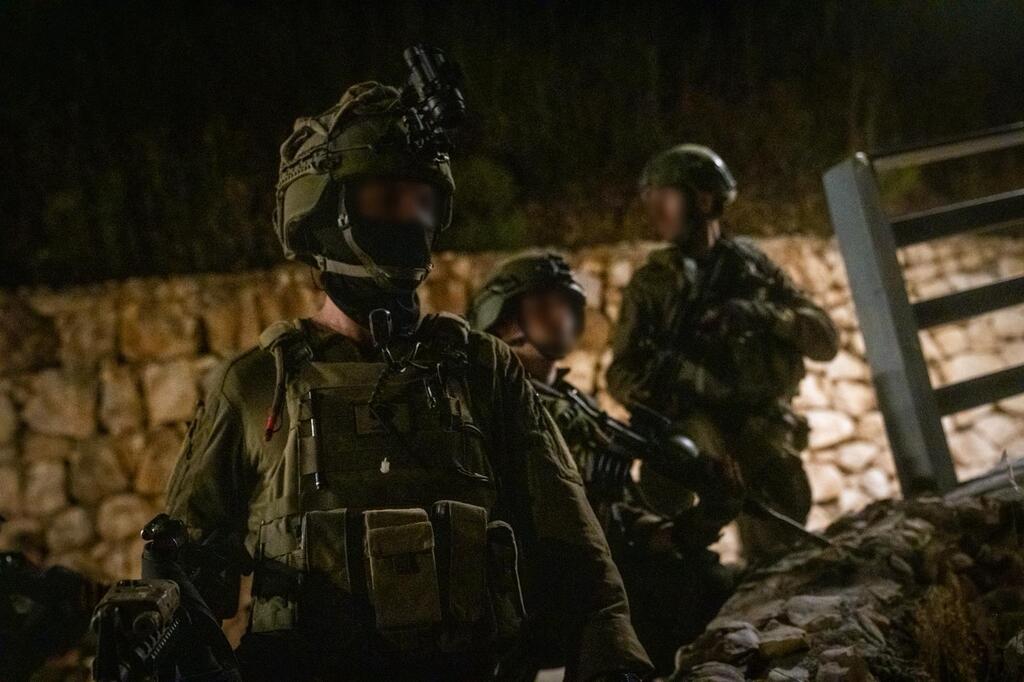
IDF forces in southern Lebanon
(Photo: IDF Spokesperson)
The first is complete demilitarization of the area south of the Litani River, including the removal of all Hezbollah weapons and personnel. The second is preserving the IDF's full freedom of action and unquestioned right to operate and strike anywhere in Lebanon to thwart threats. The third is the development of new defensive plans that build on the achievements of previous operations, including the construction of fortified defensive lines at strategic locations to be determined following guidance from the political leadership.
While the military works on detailed plans, the political leadership appears unable to provide concrete instructions to forces in the field. The lack of decisions is filtering down to operational units, forcing the IDF to make significant efforts to preserve on its own the tactical gains achieved during the deep ground maneuver that began as part of Operation Rising Lion.
Tensions reach a peak
This reality — marked by the absence of a political decision and a reduced rate of fire — is creating a dangerous dynamic of predictable escalation, much like previous ceasefires that eventually collapsed. It began with relative quiet, as each side tested the other's limits, and continued with increasingly frequent attempts by Hezbollah operatives to move back toward IDF positions.
That tension reached a peak today, illustrating the escalation dynamic on the ground. At around 6 a.m., a Hezbollah explosive drone infiltrated the area of the village of Tebnit in southern Lebanon and detonated near a tank belonging to the Givati Brigade combat team. Four soldiers were wounded by the blast and shrapnel.
A few minutes later, while forces were evacuating the casualties, a second explosive drone appeared and detonated directly on the evacuation vehicle, wounding a fifth soldier.
Of the five casualties, one soldier was listed in serious condition, two in moderate condition and the others sustained minor injuries. All were airlifted to a hospital for further treatment, and their families were notified.
The IDF responded immediately with heavy artillery fire targeting terrorist infrastructure in the area. At the same time, the Israeli Air Force intercepted several rockets launched toward IDF forces operating in southern Lebanon. Additional rockets landed near the troops, but no further casualties were reported.
The incidents underscore the military's grim assessment: If the political deadlock is not resolved and the provocations on the ground continue, the level of violence could quickly rise again, potentially including renewed rocket fire at Israeli communities along the northern border.