

Six weeks after U.S. President Donald Trump announced a ceasefire between Israel and Hezbollah in Lebanon, the reality on the ground looks entirely different.
Despite the agreement and promises of calm, exchanges of fire continue almost daily: Hezbollah launches rockets, unmanned aerial vehicles (UAVs) and explosive-laden first-person-view (FPV) drones at Israel and at IDF forces in southern Lebanon, the IDF strikes in Lebanon — but not in Beirut — and 11 soldiers have been killed during this period.
Gallery
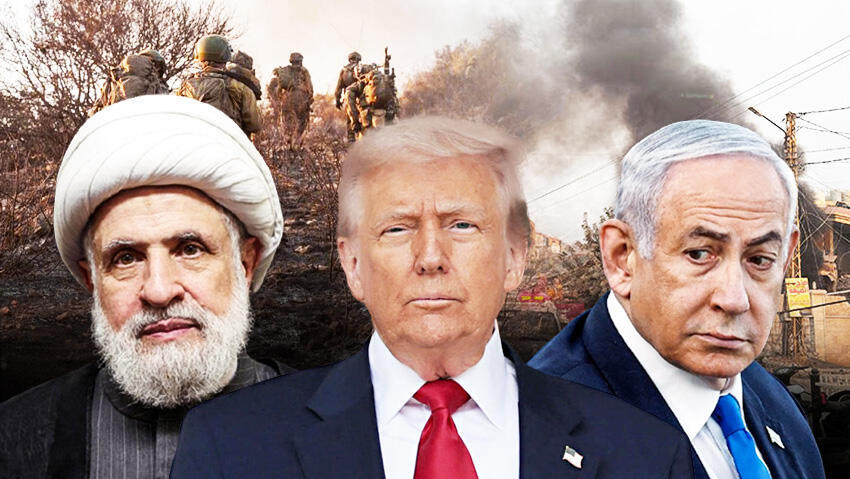
Hezbollah Secretary-General Naim Qassem, US President Donald Trump, Prime Minister Benjamin Netanyahu
(Photos: IDF, Amir Cohen/Reuters, Jessica Koscielniak/Reuters)
This “routine” has continued over the past day. Overnight, an early warning alert was sounded in the north for the first time following fire from Lebanon, and by midday, the IDF began striking Hezbollah sites in southern Lebanon and in the Bekaa Valley in the country’s east, relatively far from the border.
Over the past day, the IDF struck more than 150 Hezbollah terror infrastructure sites and operatives in Lebanon, including in Tyre, Nabatieh and the Bekaa. Meanwhile, drone attacks and rocket sirens continued. Several FPV drones fell in a military zone near Shlomi, and air defenses were activated after sirens warned of a UAV infiltration near Rosh Hanikra.
Over the past month, what began as a U.S.-brokered ceasefire has gradually turned into a continuing campaign over the so-called “yellow line”: the demarcation of the strip of territory in southern Lebanon where IDF forces remain, and from which Hezbollah is trying to wear them down through the use of FPV drones, rocket launches and surveillance.
The situation has further escalated in recent days as air raid sirens have sounded repeatedly in northern communities, prompting the IDF Home Front Command to tighten restrictions on gatherings and cancel classes in a series of border-adjacent communities. This is how the ceasefire collapsed, step by step:
April 16: Trump announces the ceasefire
On April 16, Trump announced that a ceasefire had been reached between Israel and Lebanon. In a statement published that evening, he said the ceasefire would take effect at midnight. Meanwhile, Prime Minister Benjamin Netanyahu held a rare phone call with members of the decision-making Security Cabinet to update them on the details of the understandings.
But from the very beginning, it was clear that the agreement did not end the IDF’s presence in southern Lebanon. Israel maintained freedom of action against immediate threats, and on the ground, the term that has since become central to the escalation began to take hold: the “yellow line.”
April 18: The yellow line becomes the new security zone
Two days after the announcement, and after Trump said, “Israel will not be bombing Lebanon any longer. Enough is enough,” the line where IDF forces remain in southern Lebanon was effectively set, similar to the situation in the Gaza Strip. During the ceasefire, the IDF continued to entrench its hold on various points in the sector, and the military explained that the defense lines are divided into three: the red line, the yellow line and the Litani line.
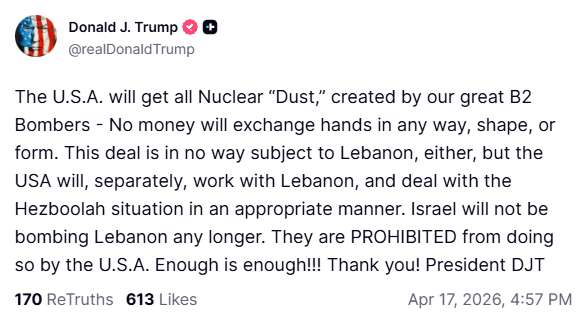
Trump: 'Israel will not be bombing Lebanon any longer. Enough is enough'
(Photo: Screengrab)
In practice, the IDF set a new line of control in southern Lebanon: the anti-tank line, meaning the point from which Hezbollah’s anti-tank missiles can no longer reach northern Israeli communities. The area captured up to that line includes 55 Lebanese villages whose residents are not allowed to return. The IDF has continued clearing Hezbollah infrastructure inside the zone, which has effectively become a security belt, while the air force maintains flights over southern Lebanon to strike threats if needed.
That day, the IDF officially referred for the first time to the “yellow line.” In a statement on a strike against terrorists in southern Lebanon, the military said IDF forces operating south of the line had identified terrorists who violated the understandings, approached the forces from the north and posed an immediate threat. As a result, the air force and troops on the ground struck the terrorists in several areas of southern Lebanon.
April 24: Trump extends the ceasefire — Hezbollah is already violating it
On April 24, Trump announced on Truth Social that the ceasefire between Israel and Hezbollah would be extended by three weeks. The announcement came shortly after talks began between Israel and Lebanon — and after Hezbollah had already violated the ceasefire understandings by launching four rockets toward Shtula in the western Galilee.
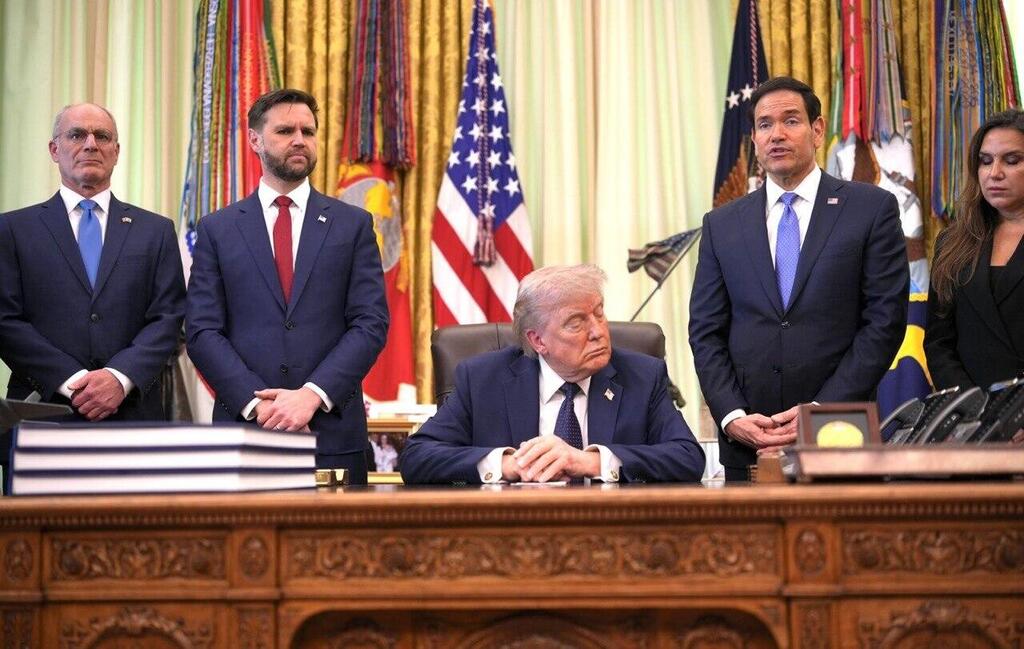
Trump announces an extension to the ceasefire in Lebanon
(Photo: John Humbucker/Israeli Embassy in Washington)
The gap between the diplomatic declaration and reality on the ground then began to sharpen: While Washington tried to present a process of containment and regulation, armed clashes, rocket fire and airstrikes continued in northern Israel and southern Lebanon.
April 25: Netanyahu orders the IDF to 'strike forcefully'
A day after Trump’s announcement extending the ceasefire, the fire continued. One rocket exploded in an open area, another was intercepted, a UAV was downed and contact was “lost” with two additional aircraft. Earlier, a “suspicious aerial target” was intercepted in the area of IDF forces in southern Lebanon.
During the day, Lebanon reported IDF strikes in several areas. IDF Arabic-language spokesman Col. Avichay Adraee published a renewed evacuation notice for villages in southern Lebanon, calling on their residents not to return. “During the ceasefire agreement, the IDF continues to be deployed in its positions in southern Lebanon in response to Hezbollah’s ongoing terror activity,” the military said.
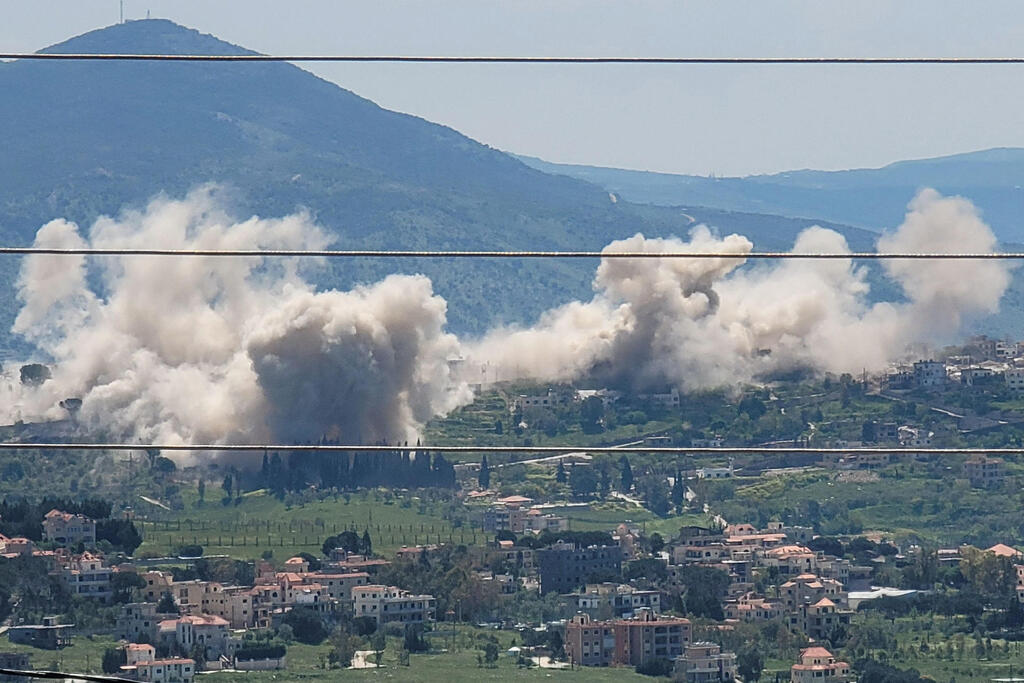
Israeli airstrike in Lebanon
(Photo: AFP)
Netanyahu later said he had instructed the IDF “to strike forcefully” at Hezbollah targets in Lebanon, following a series of violations that included rocket and drone launches toward the Galilee. About two hours later, the IDF began a wave of strikes in southern Lebanon. At the same time, according to the IDF, terrorists were killed in separate strikes on a car anda motorcycle, and rocket launchers were struck beyond the yellow line.
April 26: FPV drones become the central threat
As the IDF operated along the yellow line, Hezbollah stepped up FPV drone attacks on Israeli forces. Sgt. Idan Fooks, 19, became the first Israeli soldier killed by one; 10 more were killed within roughly a month of the “ceasefire.”
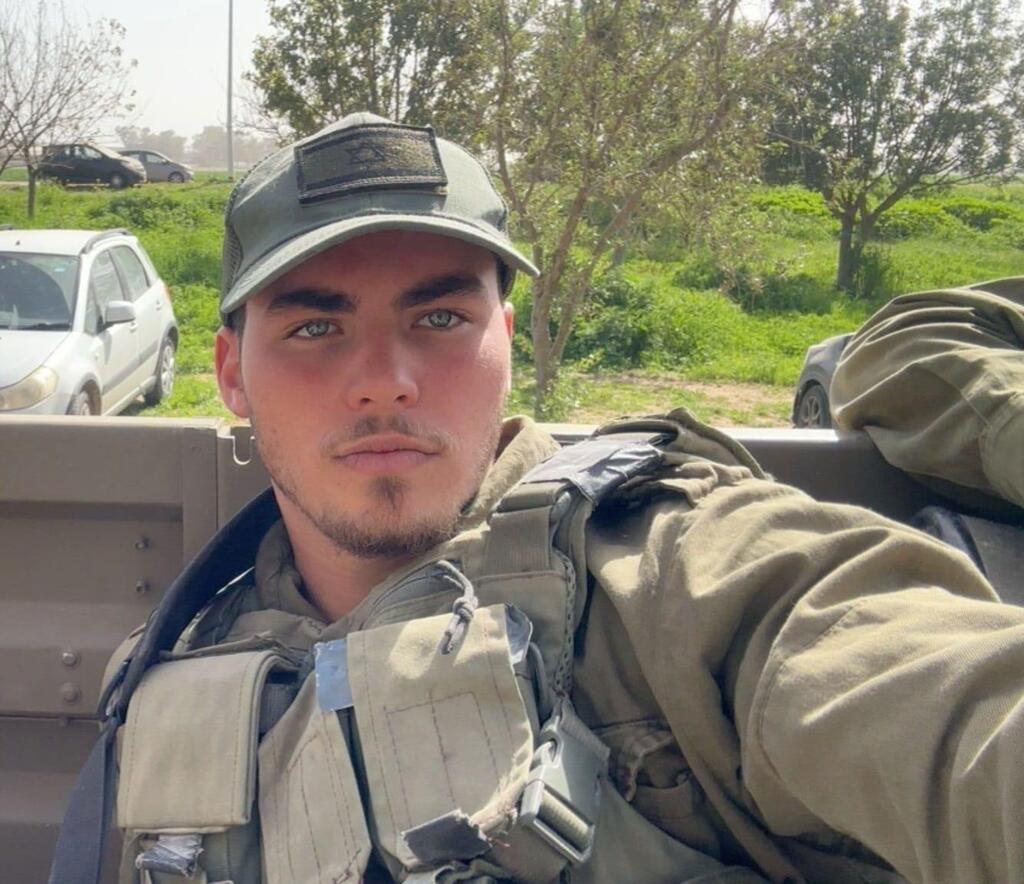
Sgt. Idan Fooks
(Photo: IDF)
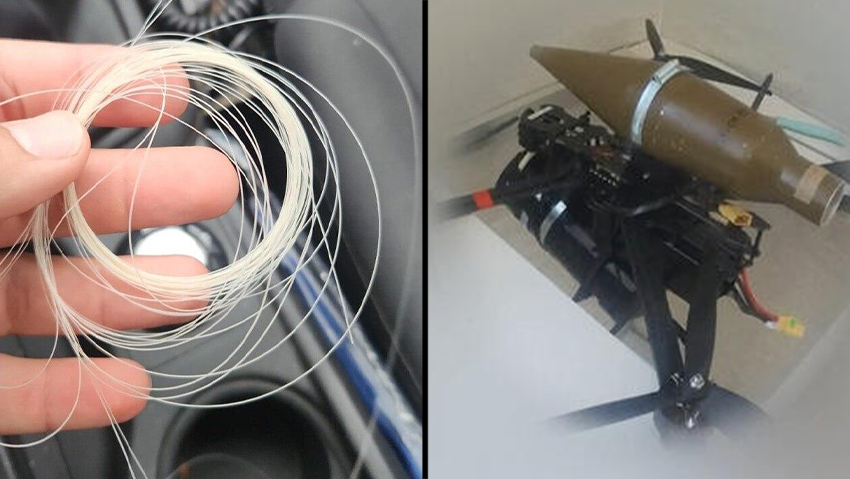
A fiber-optic FPV drone
(Photo: from social media)
From there, drones became one of the clearest signs of the escalation. The fiber-optic FPV drones transmit data and commands through a trailing cable, making them resistant to electronic jamming. Hezbollah kept launching FPV drones and UAVs at IDF forces and northern Israel, while the IDF continued hitting its infrastructure in southern Lebanon with artillery and airstrikes.
April 27: IDF strikes expand to the Bekaa
A day later, the ceasefire continued to crumble. The IDF announced that it had begun striking Hezbollah targets beyond southern Lebanon as well — in the Bekaa Valley. The targets included weapons storage and production sites, as well as rocket launchers.
Lebanese media reported a strike in the A-Shaara area of the Bekaa, alongside additional strikes in southern Lebanon. It was the first time in about a month that the IDF had struck deep inside Lebanon — and it marked another step in the escalation after days of repeated Hezbollah violations and the continued unraveling of the understandings reached under Trump’s pressure.
May 6: The strike in Dahieh
Meanwhile, Israeli and Lebanese officials kept discussing the ceasefire, even as fighting escalated on the ground. On May 6, the Israeli air force struck Beirut’s Dahieh district, Hezbollah’s stronghold, for the first time in weeks during the ceasefire. The strike killed Ahmad Ali Ballout, the commander of Hezbollah’s elite Radwan Force, along with several other terrorists.
Israel assassinates commander of Hezbollah's elite Radwan Force
(Video: IDF)


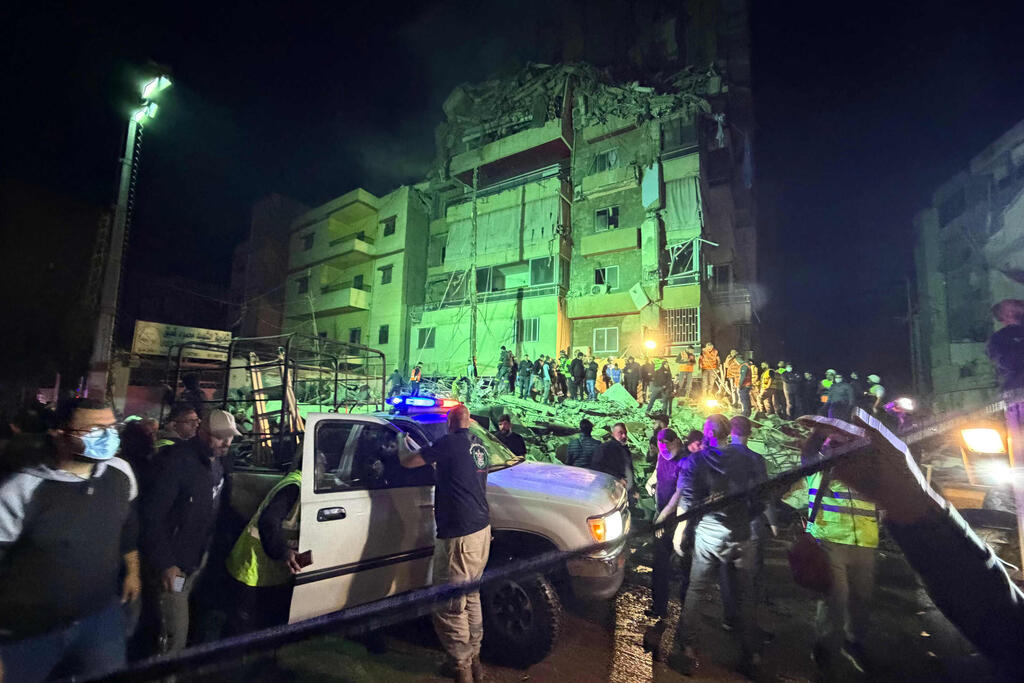
Israel assassinates commander of Hezbollah's elite Radwan Force in Beirut
(Photo: Ibrahim AMRO / AFP)
This marked another significant milestone as Israel no longer limited itself to strikes in southern Lebanon or the Bekaa, but resumed operating in the heart of Hezbollah’s political and military stronghold in Beirut.
May 23: Nonstop sirens in the north
On May 23, sirens sounded repeatedly throughout the day in northern communities — from Metula in the Galilee Panhandle to Rosh Hanikra near the sea. The ceasefire with Hezbollah was still officially in effect, but on the ground, it had become almost empty of substance.
The sense of emergency returned to border-adjacent communities: alerts, interceptions, fear of drones and a civilian routine that kept shrinking. What had been presented as a gradual return to quiet again became a reality of restricted areas, rapidly shifting instructions and continued fear of fire.
May 25: Children trapped in preschools in Shomera
On Tuesday afternoon, sirens sounded again and again in Moshav Shomera in the western Galilee. For about an hour, children remained trapped in preschools following a Hezbollah drone attack on the community.
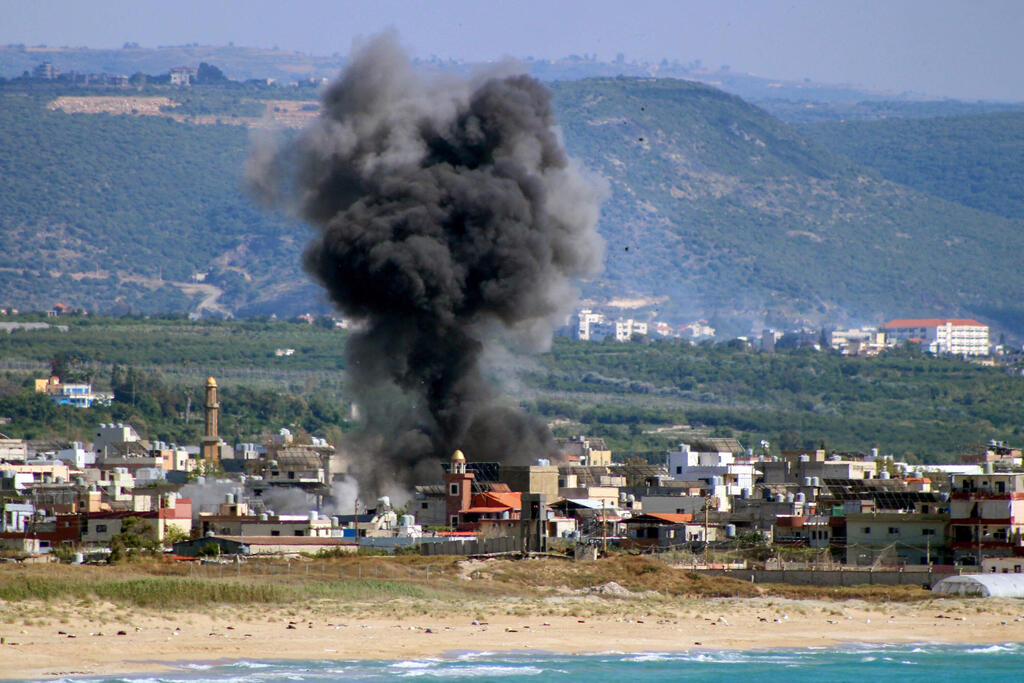
IDF strike in southern Lebanon
(Photo: KAWANT HAJU / AFP)
The incident showed how the drone threat no longer affects only forces operating inside Lebanon, but is bringing communities along the confrontation line back to a wartime routine. For many residents, this was no longer a “ceasefire with exceptions,” but a dangerous and ongoing security reality.
May 26: Restrictions, school closures and the IDF beyond the yellow line
Wednesday morning, following continued drone launches and amid threats to expand strikes in Lebanon, Home Front Command gathering restrictions took effect at 6 a.m. in the confrontation line areas, as well as in the communities of Meron, Bar Yochai, Or HaGanuz and Safsufa. Organized school transportation was canceled in dozens of communities, leading to the cancellation of classes in Kiryat Shmona and other communities.
Meanwhile, the IDF is already operating in some areas beyond the yellow line, in an effort to push Hezbollah terrorists northward and make it harder for them to launch FPV drones at communities and IDF forces. The activity has been ongoing for several days, includes intelligence-guided raids beyond the Litani River and at points beyond the yellow line, and the IDF assesses that the farther Hezbollah is pushed north, the more the threat to residents of the confrontation line will decrease, even though the terrorist group has drones capable of reaching a range of about 30 kilometers (18.5 miles).
The IDF said that overnight, more than 190 Hezbollah weapons depots across southern Lebanon were hit, and that commanders in the organization were also killed in the strikes. At the same time, the defense establishment is trying to find a response to the drone threat — both through “passive” means such as nets, rifles and other tools, and through an offensive effort against Hezbollah production sites.
On Tuesday evening, Netanyahu said at the start of the Security Cabinet meeting that Israel is deepening its operation in Lebanon. “At my direction and that of the defense minister, together with the chief of staff, we are deepening our activity in Lebanon,” he said. “The IDF is operating with large forces on the ground and seizing commanding terrain. We are fortifying the security zone to protect the communities of the north.”
The prime minister also addressed the threat of FPV drones, saying that “at the same time, we are carrying out a huge national effort to advance creative and innovative solutions against FPV drones.”
He added: “We back and praise our heroic commanders and soldiers. They are deep in the field. We trust you.”