

A U.S. official told the news website Axios overnight Wednesday into Thursday Israel time that the United States had launched a new wave of strikes in Iran.
After carrying out its latest wave of strikes on Iran six days ago, overnight between last Thursday and Friday, the United States and the region have experienced a period of relative calm. That changed overnight Tuesday into Wednesday, when Iran's Islamic Revolutionary Guard Corps fired a barrage of missiles at U.S. forces in Jordan. Two hours later, the United States and Saudi Arabia launched airstrikes on targets belonging to Iran-backed militias in Iraq, with reports saying about 20 Iranian advisers were killed.
Trump: We’re going to be hitting them very hard


At 5 a.m. Thursday Israel time, U.S. Central Command (CENTCOM) announced that its forces had carried out a major wave of strikes on Iranian targets. According to the report, the strikes hit military command centers, missile and drone facilities, coastal defense sites and maritime capabilities, aiming to reduce threats to American troops, commercial shipping and Gulf allies.
Earlier Tuesday, President Donald Trump threatened a severe response against Iran.
"We're going to beat the fuc*ing sh*t out of them," he told Fox News correspondent Trey Yingst.
Speaking later at the White House, Trump declined to say when such a response would come.
"We’re going to be hitting them very hard because it’s our turn to hit them. They know it’s coming. They’re asking us not to do it. So we had five rockets shot going 8,500 miles an hour, and all five rockets were knocked down to the ground, but they nevertheless took a shot. So, it's our turn, and we'll see if we get there with an agreement at some point. But we're going to hit them very hard."
A senior U.S. administration official told The Wall Street Journal earlier that Trump is still weighing military response options against Iran and has not yet decided where to strike or how extensive the attack would be. According to the official, Trump was not surprised by Iran’s decision to resume hostilities and is now in a "mood for escalation."
The Wall Street Journal also reported that Trump is considering approving a broad air campaign against Iran, involving 10 to 14 days of intensive strikes aimed at severely damaging its missile capabilities. The plan was developed by U.S. Central Command chief Adm. Brad Cooper. According to the report, Trump is also considering a more limited strike option that would leave room for continued diplomatic efforts.
Trump was also asked about an explosion at a port in Egypt that reportedly appeared on Iran's "revenge target list" following Ukraine's unusual attack on an Iranian vessel, and whether Iran was behind the blast.
"I've been briefed. It's a little more of the same. But it's going to be straightening out," he replied.
Gallery
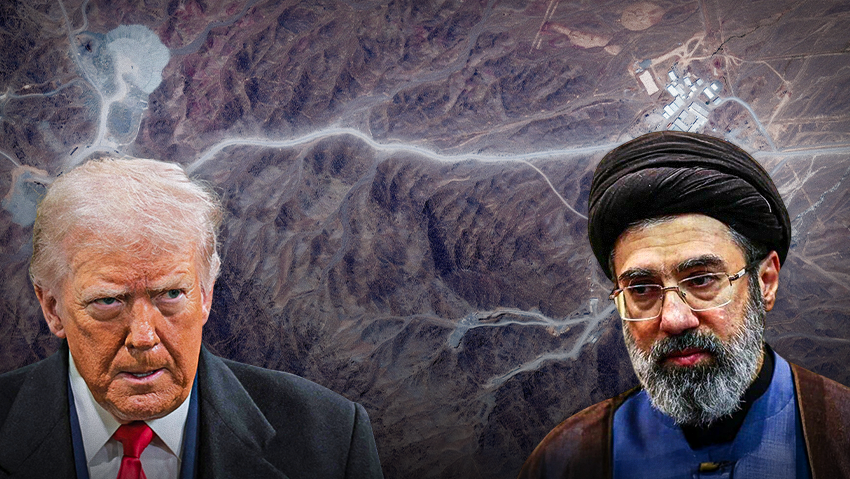
'Mojtaba is alive': Khamenei and Trump
(Photo: Anna Moneymaker / AFP, CENTCOM, Vantor/Handout via REUTERS )
Asked about reports that China would provide Iran with 400 missile launchers via Pakistan, despite Chinese President Xi Jinping reportedly assuring Trump that Beijing would not send weapons to Tehran, Trump said:
"He (Xi) told me very strongly he wouldn't partake, but he knows I'd be quite disappointed."
Israel preparing for possible escalation
Prime Minister Benjamin Netanyahu met Tuesday night with U.S. Defense Secretary Pete Hegseth, a day after his meeting with Trump.
"He told me something interesting," Netanyahu said afterward. "He said, 'We look around the world and see countries that have the will to fight alongside the United States but lack the capability. Then there are countries with the capability but not the will. Only in Israel do we see both the will and the capability.' That reflects tremendous appreciation for both the people of Israel and the IDF."
Another meeting in Washington brought together Saudi Defense Minister Prince Khalid bin Salman and Vice President JD Vance. According to CNN, they discussed a range of issues, including the joint strikes and the Saudi response to attacks on the kingdom's infrastructure. One source said Prince Khalid also carried a personal message from Crown Prince Mohammed bin Salman that he wanted to deliver in person. Another source said he sought to present Saudi Arabia's position on the ongoing war.
According to the sources, Saudi officials believe Iran will try to gain leverage through escalation by continuing to use its allied militias in Iraq and the Houthis in Yemen. Riyadh's response toward those groups is intended to make clear that attacks on civilian infrastructure are a red line while also signaling that the conflict is not theirs to fight, even as the kingdom continues to seek de-escalation.
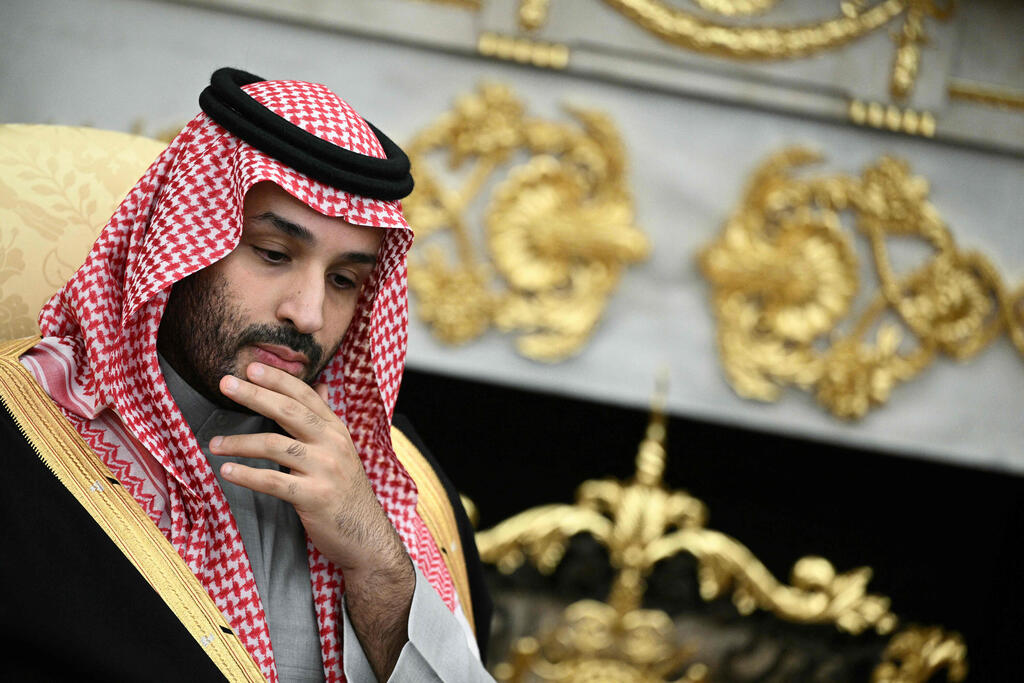
Another meeting in Washington brought together Saudi Defense Minister Prince Khalid bin Salman and Vice President JD Vance
(Photo: Brendan SMIALOWSKI / AFP)
Israel weighs response in Lebanon
Tensions are also rising in Lebanon.
An IDF engineering vehicle was struck Tuesday night by a Hezbollah FPV drone near the Ali Taher ridge in southern Lebanon during a patrol, in what Israel views as a violation of the ceasefire. No one was injured.
The IDF is now seeking to respond to the attack, with tunnels in the Ali Taher ridge area emerging as a possible target, pending a decision by the political leadership and Prime Minister Netanyahu. Dozens of Hezbollah operatives have reportedly been trapped in the tunnel network for an extended period, and destroying the tunnels could trigger a renewed round of fighting in Lebanon.
Against that backdrop, IDF Chief of Staff Lt. Gen. Eyal Zamir visited southern Lebanon on Tuesday.
"We are prepared for any change in the situation and ready for a wide range of scenarios," he said.
Referring to Israel's military achievements in Iran, he added:
"If required, we know how to deepen those achievements."
Although Zamir did not explicitly mention the drone attack, the possibility of a military response is the reason he spoke about the potential for a rapid return to combat, with developments in Lebanon and Iran potentially becoming linked.
"The campaign across all fronts is not over, and you must be prepared for it to continue," Zamir told troops. "You must remain alert, adapt quickly and act rapidly and offensively to inflict greater damage on the enemy."
Senior official: Iran still has up to 1,600 missiles
A senior Israeli official said Tuesday night that Iran still possesses between 1,500 and 1,600 missiles and that Mojtaba Khamenei, the son of Iran's supreme leader, is "definitely alive."
The official said the meeting between Trump and Netanyahu focused primarily on Iran and outlined what he described as Trump's three options: a diplomatic agreement, continued pressure, or renewed and intensified military strikes.
According to the official, Netanyahu told Trump he believed the chances of reaching an agreement were low.
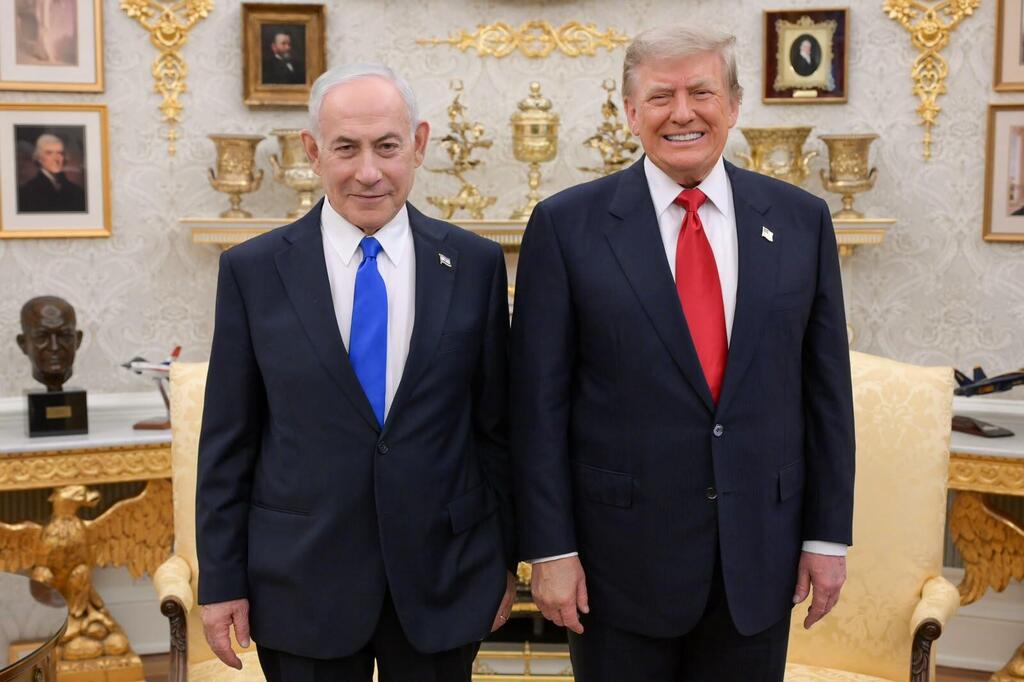
The official said the meeting between Trump and Netanyahu focused primarily on Iran and outlined what he described as Trump's three options
(Photo: Photo: Maayan Toaf/GPO)
The official also said Iran's heavily fortified Pickaxe Mountain site contains centrifuges but is not currently being used to enrich uranium.
U.S., Saudi strikes kill about 20 Iranian advisers
Regarding Tuesday morning's joint U.S.-Saudi strike in Iraq, The New York Times reported that about 20 Iranian advisers were killed, including members of the Islamic Revolutionary Guard Corps and technical advisers.
A U.S. official told the newspaper the targets were deliberately selected both to eliminate personnel and to degrade the ability of Iran-backed militias to launch missiles and drones.
The operation followed Iran's overnight missile attack on Jordan. Jordanian officials said all five Iranian missiles were successfully intercepted.
According to Fox News, Trump described the attack as a "surprise attack," saying U.S. forces had only "a few minutes" to intercept the ballistic missiles. Fox correspondent Trey Yingst reported that Trump said he watched footage of the interceptions and emphasized that U.S. forces carried out the operation to defend the region.
Iranian state television later said the strike on Jordan's Muwaffaq Salti Air Base was based on intelligence received by Khatam al-Anbiya Headquarters after the United States redeployed A-10 and F-15 aircraft to the base.
"The U.S. forces in the region are under surveillance," Iranian television said. "If necessary, the Revolutionary Guards and the army will strike the targets as quickly as possible."
Trump weighs next steps
Despite Trump's repeated threats to "beat the f**ing sht out of" Iran, including his recent comment that striking the fortified Pickaxe Mountain facility would be "not a big problem," it remains unclear whether the United States will escalate its military campaign or alter its target list.
Trump told Fox News that Tuesday night's strikes had been coordinated with the Iraqi government and described the Iran-backed militias as "a cancer." He added that additional warnings to Iranian proxies were under consideration.
Trump also described his Oval Office meeting with Netanyahu two days earlier as "excellent."
"He understands the situation now," Trump said.
Asked about possible talks with the Iranian government, he added:
"We'll let them keep talking."
Fox News reported that Iran's strategy may have backfired by attacking Gulf states, helping create an informal coalition now aligned against Iranian proxies and Iran itself.
CENTCOM chief recommends halting campaign
Separately, U.S. Central Command chief Adm. Brad Cooper reportedly recommended ending the bombing campaign around the Strait of Hormuz, arguing that it had reached the limits of its effectiveness.
According to Axios, Cooper's recommendation directly influenced Trump's decision last weekend to suspend U.S. strikes against Iran. Cooper reportedly concluded that there was little value in continuing the current operation unless the United States launched a broader military campaign to achieve its objectives in Iran.
CENTCOM said Tuesday that as part of its operations in the Strait of Hormuz, U.S. forces have turned back 20 commercial vessels, disabled two others and seized two more.
First published: 01:25, 07.30.26