

Turkey is interested in participating in a new security initiative for Lebanon when the 7,500-member U.N. peacekeeping mission in the south of the country expires at the end of the year, Turkish President Recep Tayyip Erdogan said during a joint press statement with his Lebanese counterpart on Thursday.
Last year, the U.N. Security Council voted unanimously to terminate the peacekeeping mission known as UNIFIL, bowing to demands from the United States and its close ally, Israel. The U.N. is now considering options to help end the decades-old conflict between Lebanon’s Iran-backed Hezbollah militants and Israel.
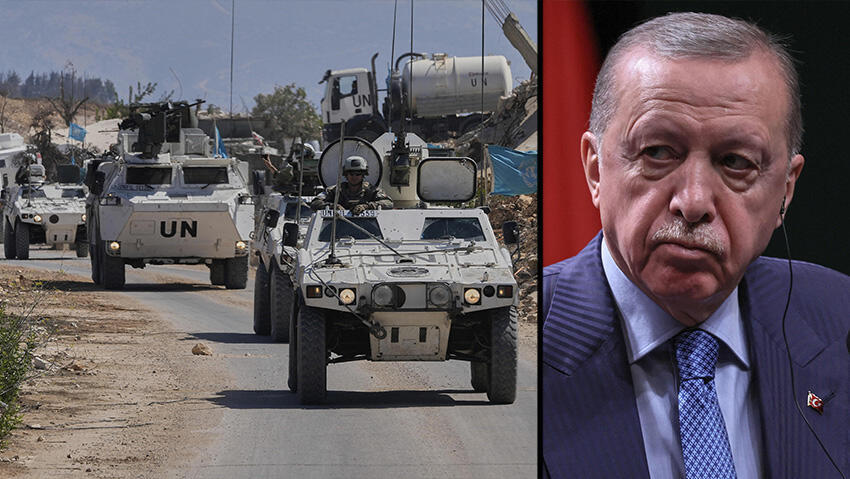
Turkish President Recep Tayyip Erdogan. Turkey is interested in participating in a new security initiative for Lebanon when the 7,500-member U.N. peacekeeping mission
(Photo: Adem ALTAN / AFP, AP Photo/Hussein Malla)
“After the withdrawal of the current international force, Turkey wants to take part in all initiatives that will be launched to support security in the region and ensure Lebanon’s sovereignty,” Erdogan said, speaking alongside Lebanese President Joseph Aoun.
“The end of the mandate of the United Nations Interim Force in Lebanon, UNIFIL, deployed in southern Lebanon, will constitute an important development,” Erdogan stated.
Other countries have voiced an interest in contributing to a UNIFIL successor force, including France and Italy, but it remains unclear what form that force might take and whether it would be under a U.N. mandate or some other arrangement.
Aoun’s visit to Ankara comes as Lebanon remains in a precarious situation despite a shaky truce that has largely halted the fighting between Israel and Hezbollah.
The latest Israel-Hezbollah war began on March 2 when Hezbollah launched rockets across the border, days after the U.S. and Israel attacked Iran, triggering an ongoing regional war. While the fighting has largely cooled in recent weeks, the IDF continues its presense in southern Lebanon.
On June 26, Israel and Lebanon reached a U.S.-mediated “framework agreement” under which IDF are to withdraw from areas of southern Lebanon in exchange for the disarmament of the Hezbollah militant group.
Aoun said he wants to see the relations between the two countries become “more present and more ambitious” at a “crucial moment in which we are restoring our region and reshaping its future.”
“I am sure that this visit will mark the beginning of a new phase in Lebanese-Turkish relations, with the themes of partnership, trust and joint action,” he said.
Erdogan pledged support to Lebanon’s post-war economic recovery and to support the cash-strapped Lebanese army.
“Of course, our support for the Lebanese Armed Forces will continue in the security context,” Erdogan said.
The Turkish leader, whose country has strong influence over Damascus, urged increased dialogue between Lebanon and Syria, saying it would be “beneficial for both countries.”
U.S. President Donald Trump has repeatedly proposed that Syrian forces should enter Lebanon to fight against Hezbollah, a prospect that has caused alarm in Lebanon although Syrian President Ahmad al-Sharaa has said on several occasions that he has no desire to intervene militarily in the neighboring country.