

When Israel launched its new war against Hezbollah last March, the first targets the IDF warned would be attacked were not missile depots or underground command centers. They were banks. Israeli fighter jets destroyed more than a dozen branches of Al-Qard Al-Hassan, the financial institution associated with Hezbollah that has for years been described as the terrorist organization’s de facto “bank.” Money changers that Israel said were used by Iran to transfer funds to Hezbollah were later attacked, as were gas stations that generated revenue for the organization.
Gallery
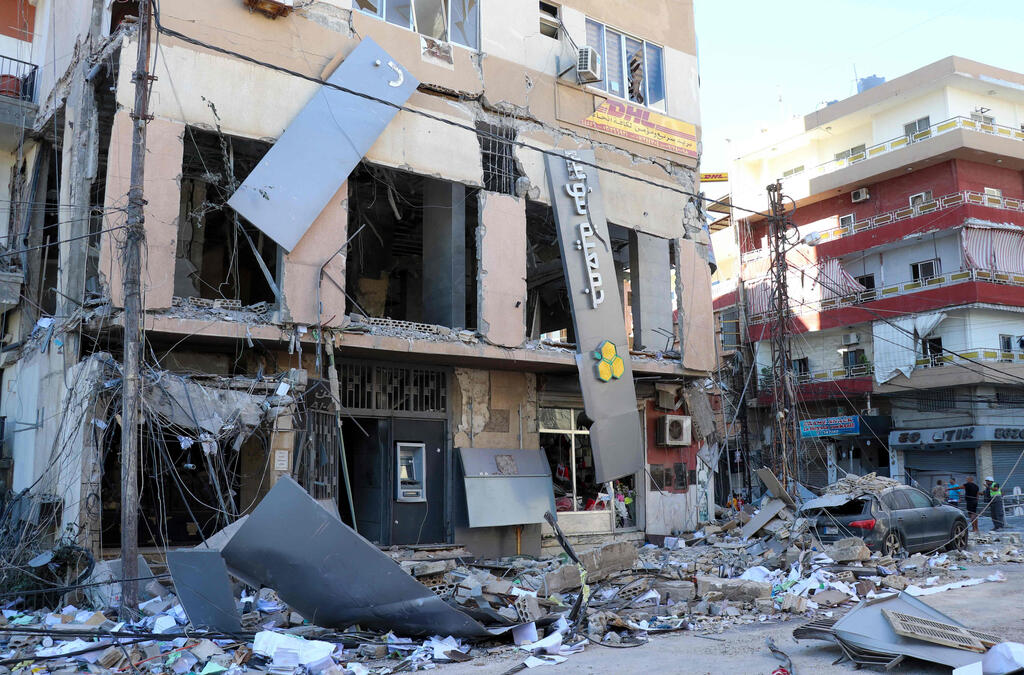
A branch of Al-Qard Al-Hassan financial institution that was attacked in Al-Baqa'a in 2024
(Photo: Bilal Kashmar/ AFP)
The message, according to an extensive New York Times report published Sunday, was clear: Israel is no longer satisfied with striking Hezbollah’s military arsenal. It also seeks to hit the money that enables the group to pay fighters, rebuild infrastructure, transfer compensation and operate the extensive welfare network on which its support among Lebanon’s Shiite public has relied for decades.
The strikes are only part of a broader campaign being waged by Israel and the United States, with growing cooperation from the Lebanese government, aimed at blocking Hezbollah’s funding channels, especially those leading from Iran. According to documents reviewed by the newspaper and interviews with Lebanese, American and Israeli officials, as well as people inside Hezbollah, the organization is now facing the most severe financial pressure it has experienced in years.
At the same time, The Times emphasized that Hezbollah’s financial system is highly secretive, so it remains unclear how deeply the campaign has damaged its overall operations. Hezbollah and Iran have previously shown an ability to adapt to pressure, recover militarily and find new ways to keep money flowing, meaning the campaign is far from decided.
Money for fighters continues, compensation has stopped
The distress is already being felt on the ground. Hezbollah officials and recipients of the organization’s assistance said that while salaries for tens of thousands of its fighters are still mostly being paid, some social services have already been reduced as the organization is forced to prioritize its spending.
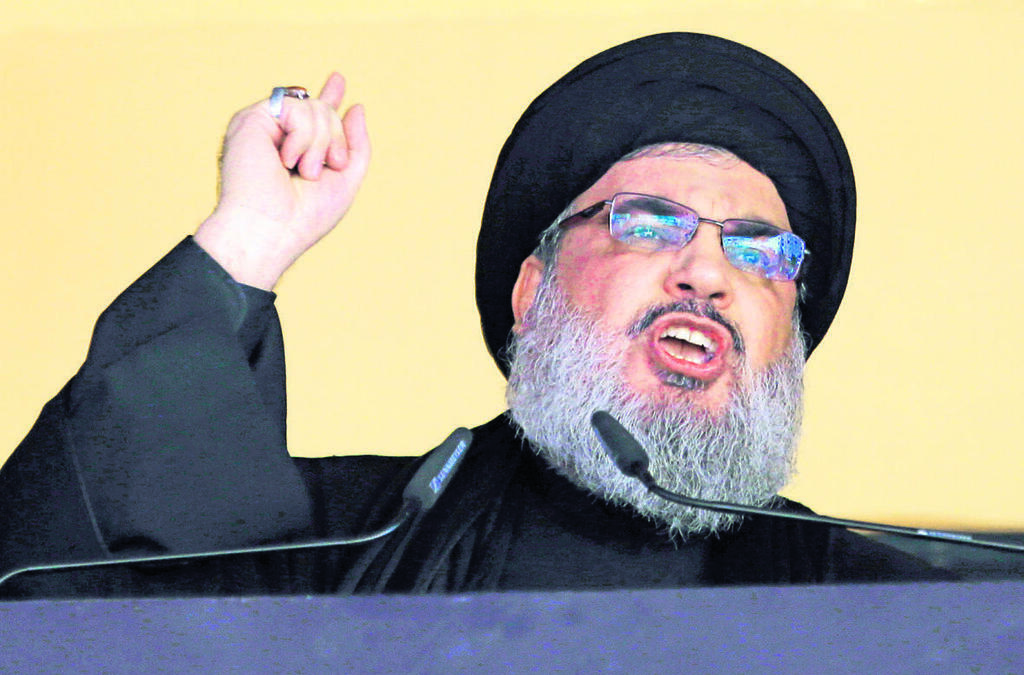
Hassan Nasrallah. Israel and the US saw an opportunity after his assassination - and began to attack Hezbollah's financial network
(Photo: Hassan Ammar/AP)
Hezbollah’s problem is especially acute because, for decades, it built a kind of “state within a state” in Lebanon: a system that fed, housed and paid its supporters, operated schools, hospitals and a communications network, generated revenue from gas stations and pharmaceutical companies and, with Iranian funding, amassed an arsenal stronger than that of the Lebanese army. That social system has been a central element of Hezbollah’s power since its founding in 1982, and over the years turned it into the “crown jewel” of Iran’s proxy network in the Middle East.
Now, however, Hezbollah is being forced to direct more and more resources toward restoring its military capabilities after Israeli attacks exacted a heavy price. The organization’s spokesman, Youssef al-Zein, acknowledged in May that Hezbollah had stopped compensation payments it had promised to supporters whose homes were damaged or destroyed, while it tried to deal with the needs of hundreds of thousands of people displaced by the war. After the 2024 campaign, Hezbollah announced that Al-Qard Al-Hassan would distribute $12,000 to $14,000 to each family whose home had been destroyed. But the payments were repeatedly delayed — and eventually stopped entirely.
“The scale of the battle's demands and the displacement have placed significant burdens on Hezbollah,” al-Zein said. According to him, resources are now being managed “according to priority.” He insisted that the organization is capable of withstanding the pressure, but acknowledged: “There is undoubtably pressure.”
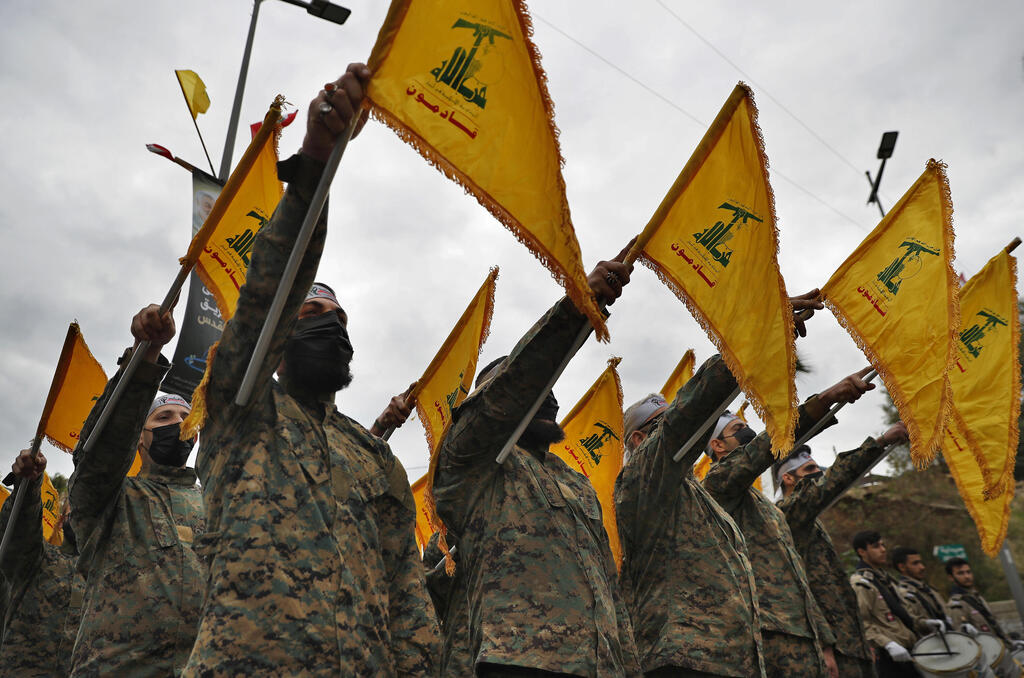
Hezbollah fighters. The organization no longer funds certain procedures for the families of martyrs
(Photo: AP)
Hassan, a taxi driver from southern Lebanon whose daughter was married to a Hezbollah fighter killed in the recent wars, told The Times that she still receives the stipend intended for the families of fallen fighters, but that the organization no longer funds certain medical procedures. He himself, like thousands of Hezbollah supporters whose homes were destroyed, is still waiting for the compensation he was promised. “They are totally silent,” he said.
According to a U.S. State Department estimate from before the war, Iran transferred about $700 million to Hezbollah each year, most of an annual budget estimated at about $1 billion. According to Lebanese, American and Israeli officials, Tehran even increased its financial assistance to the organization over the past year. But the costs of the war, reconstruction and care for hundreds of thousands of displaced people have swollen to such an extent that even those sums are no longer enough to cover Hezbollah’s needs.
The war that began in March is the second in less than three years between Israel and Hezbollah, which is considered one of the most heavily armed militias in the world. In the previous confrontation, which began in late 2023 after the October 7 massacre, Israel killed the organization’s longtime leader Hassan Nasrallah alongside many other senior officials. Washington and Jerusalem later identified an opportunity: According to the report, the two countries assessed that Hezbollah was at a point of weakness and coordinated their efforts to strike the financial networks on which its power depends, while also increasing pressure on the Lebanese government to disarm the organization.
Assad’s fall cut off the route from Tehran
The campaign against Hezbollah’s sources of funding accelerated in late 2024. Shortly after a U.S.-mediated ceasefire halted the previous war with Israel, the regime of Bashar Assad in Syria fell — a development that left Hezbollah more isolated from Tehran than ever. For years, Syria served as the main land route for transferring weapons and money from Iran to Lebanon, and with that route severed, Tehran was forced to quickly look for alternative ways to fund the organization.
According to a US official and a senior Lebanese official, one of the main channels was Beirut’s international airport, which they said had for years effectively operated under Hezbollah’s control and was used to transfer funding and weapons from Iran. Early last year, U.S. officials passed to the Lebanese government an Israeli warning that Iran was sending suitcases loaded with dollars in cash to Hezbollah on civilian flights to Beirut, and in some cases even through Iranian diplomats. Following the warning, Lebanon suspended all flights from Iran, and that measure remains in force. Airport employees identified with Hezbollah were also removed from their posts, and the authorities stationed security personnel there who operate in coordination with U.S. officials.
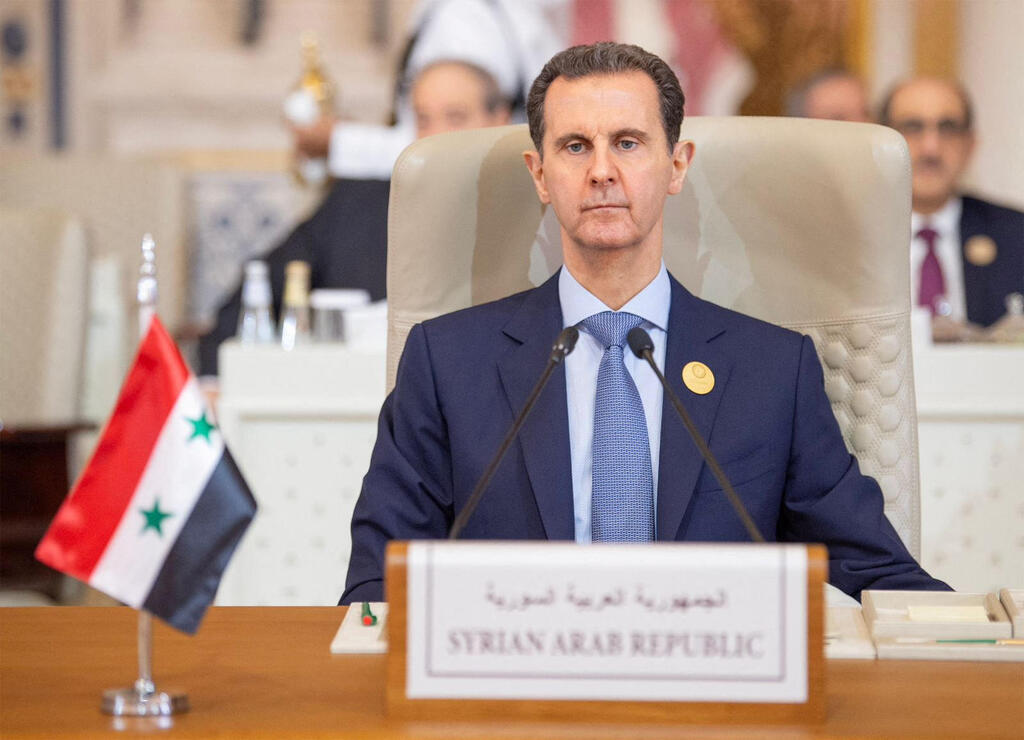
Assad. His fall left Hezbollah more isolated from Iran than ever before
(Photo: Saudi Press Agency/Handout/Reuters)
The shift in Lebanon’s internal balance of power was also reflected in the visit to the country last August by Ali Larijani, head of Iran’s Supreme National Security Council. Lebanese Prime Minister Nawaf Salam said he delivered a sharp message to him: “Our message to the Iranians was very clear. We cannot allow the Iranians to interfere in our internal affairs.” According to Salam, “It was not exactly music to their ears.” Larijani was assassinated several months later during Operation Roaring Lion.
Washington then turned its attention to Lebanon’s central bank, an institution that operated for years under limited oversight. Lebanon’s economy is largely cash-based, and according to the U.S. Treasury Department, Hezbollah exploited the system to launder illicit funds and transfer money from Iran. According to The New York Times, the Trump administration also worked to influence the appointment of a new central bank governor. The governor who was chosen, Karim Souaid, quickly proved that he was willing to act against Hezbollah: He removed or fired senior officials suspected of ties to the organization, ordered his office searched for listening devices and even refused to use computers provided by the bank out of concern he was being monitored.
The central bank later opened an investigation into the country’s large financial services companies on suspicion that Hezbollah had used them to transfer funds. Since then, Lebanese authorities have tightened oversight of money transfers. Brian Nelson, a former senior U.S. Treasury official who was responsible for sanctions against Hezbollah during the Biden administration, said the organization “was able to generate significant amounts of money on a continuous basis through the abuse of these networks.” Hezbollah rejects the allegations, and the organization’s media office called the claim that it exploited Lebanon’s cash economy “false and completely baseless.”
The new route: UAE, Turkey and Iraq
As the large money-transfer companies came under tighter scrutiny, Hezbollah relied more heavily on a less-regulated network of money changers. According to a senior Israeli security official and another person familiar with the organization’s financial system, that network quickly became the main channel through which Iran currently funds Hezbollah. The money passes from Iran through the United Arab Emirates, Turkey and Iraq through hawala — an informal mechanism of transfers between intermediaries, in which the cash itself does not have to cross borders.
the destruction at the branches of the Al-Qard Al-Hassan Bank in 2014


Last November, the U.S. Treasury Department announced, as part of sanctions imposed on Lebanese money changers, that Iran had already managed that year to funnel about $1 billion to Hezbollah, most of it through the hawala system. One of the sanctioned money changers, Hassan Moukalled, whom the U.S. Treasury described as a “key financial adviser to Hezbollah,” acknowledged that international pressure makes it harder to transfer funds, but said the organization is adapting. “In a country like Lebanon, where there's a large amount of cash, there are always possibilities,” he said.
Hezbollah has meanwhile been forced to search for additional sources of money. In February, the U.S. Treasury Department said senior officials at Al-Qard Al-Hassan had established a network of gold-trading companies in an effort to raise cash. Account books reviewed by The New York Times and assessments by analysts who track Hezbollah’s cash economy indicated that gold sales increased over the past year. According to Israeli and American officials, one reason was that Israeli strikes destroyed a significant portion of Hezbollah’s foreign currency and gold reserves.
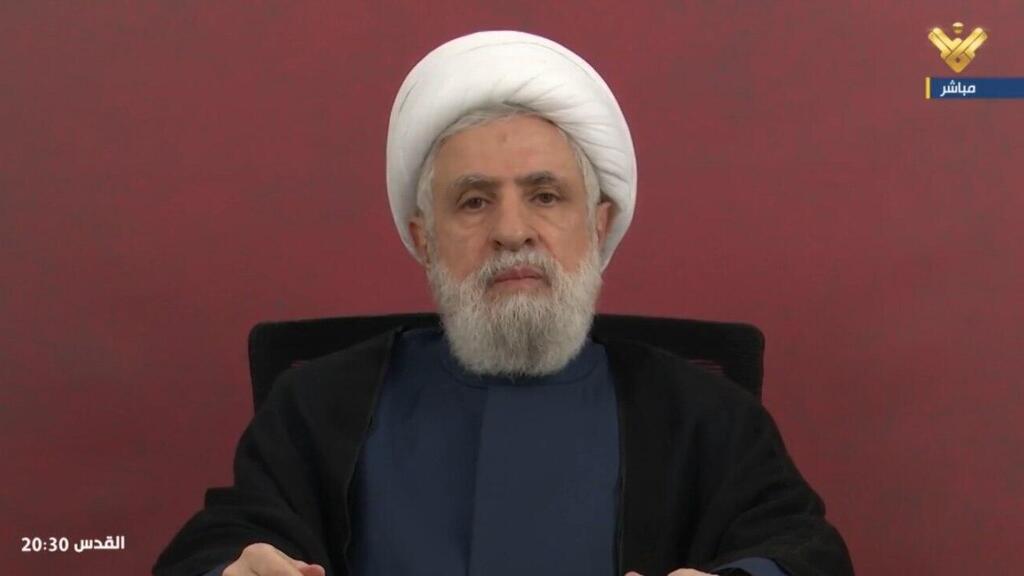
Hezbollah leader Naim Qassem. Rebuilding the arsenal or paying the bills
At the same time, Lebanon barred banks and brokerage firms in the country from doing business with Al-Qard Al-Hassan, pushing it even further away from the formal financial system. The Trump administration is now pressing the Lebanese government to shut the institution down entirely. Hundreds of thousands of Lebanese, many of them Hezbollah supporters, have relied for years on Al-Qard Al-Hassan for interest-free loans, war compensation and other financial services. The institution presents itself as a charitable loan association rather than a bank, and its director has previously claimed that Hezbollah’s own funds are managed separately.
Despite the pressure, no one in Washington or Jerusalem can yet say that the campaign has succeeded in breaking Hezbollah’s economic system. Iran and the organization have already proved that they know how to bypass sanctions, replace routes and create new channels for transferring money. But the battle over money has now become a battlefield in its own right. While the wars in Gaza and Iran draw most of the attention, Israel and the U.S. are trying quietly to strike one of the pillars on which Iranian power in the region was built: the ability to finance its proxy organizations.
At the center of that campaign is Hezbollah — the organization that for decades was the “crown jewel” of Tehran’s proxy network, and is now being forced again and again to choose what matters more: rebuilding its arsenal or paying the bills.