



The United Kingdom’s new Labour-led government, which came to power in July after 14 years of Conservative rule, initially signaled continuity in its relationship with Israel, despite the ongoing war in Gaza. Prime Minister Keir Starmer’s administration stated that security and intelligence cooperation with Israel would continue, even amid global criticism over the war.
But something has shifted since. The UK, one of Israel’s key trade partners with bilateral commerce worth £9 billion, its fourth-largest, has pivoted sharply. Alongside France and Canada, both long-standing allies of Israel, Britain threatened sanctions earlier this month if the war in Gaza continues. Within 24 hours, London suspended free trade agreement talks with Israel, summoned Israeli Ambassador Tzipi Hotovely for a formal rebuke and announced sanctions on several West Bank settlers.
Gallery
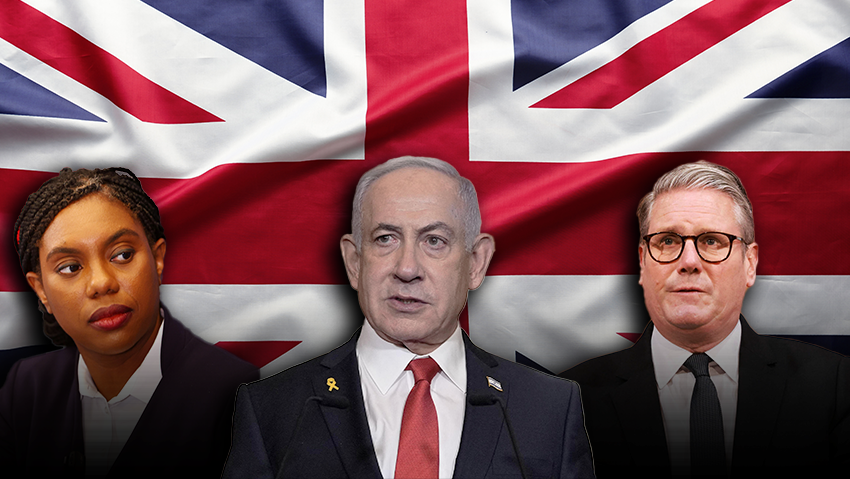
(Photo: Peter Nicholls/Getty Images, Ian Vogler / POOL / AFP, Ian Forsyth/Getty Images, Tomer Applebaum)
This turn follows a partial arms embargo announced by the UK in September. Yet according to a report published this month in The Guardian, British firms continued supplying military-related goods, including ammunition, to Israel between September 2024 and March 2025. The data, compiled by pro-Palestinian groups, relied on Israeli customs records.
While the arms embargo garnered attention, the recent threat of broader sanctions is seen as far more consequential. Domestic politics are also playing a significant role. During last year’s election, approximately 30 constituencies had majority Muslim populations, giving the Muslim vote considerable weight. By the next election, slated for 2029, that number is projected to rise to between 50 and 70 constituencies, further influencing the UK’s stance on Israel—regardless of developments in Gaza.
Labour’s declining approval ratings also add pressure. Less than a year after taking office, the government is facing mounting public frustration over immigration, the ailing British economy and a strained healthcare system.
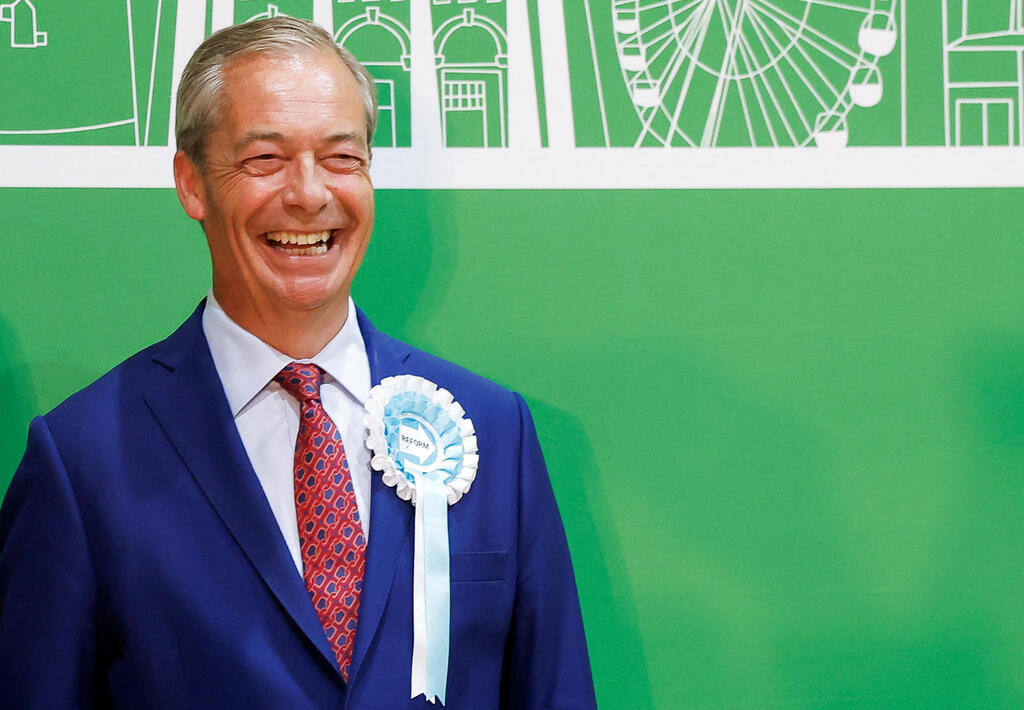
Nigel Farage
(Photo: REUTERS/Clodagh Kilcoyne)
As Labour struggles, the right-wing Reform UK party, led by Brexit figurehead Nigel Farage, is gaining ground in the polls. Farage, who recently reentered Parliament, has declared his next political mission is to defeat Labour—a move that could further reshape Britain’s foreign and domestic policy landscape.
Courting the Muslim vote
Criticizing Israel has become political low-hanging fruit in Britain. When it comes to government scrutiny, Labour politicians often find it easiest to target Israel—an approach some say is aimed at appealing to key voter blocs. Since Labour returned to power, Gaza has been mentioned in 9,278 parliamentary queries, far outpacing references to major domestic issues such as immigration (5,742 mentions) or healthcare (5,321).
The disproportionate focus is widely attributed to Labour’s courtship of the Muslim vote in various constituencies. Images from Gaza resonate strongly across the UK, and as the war drags on with no clear end in sight, global patience is wearing thin. But in Britain, political calculus is accelerating the shift in tone.
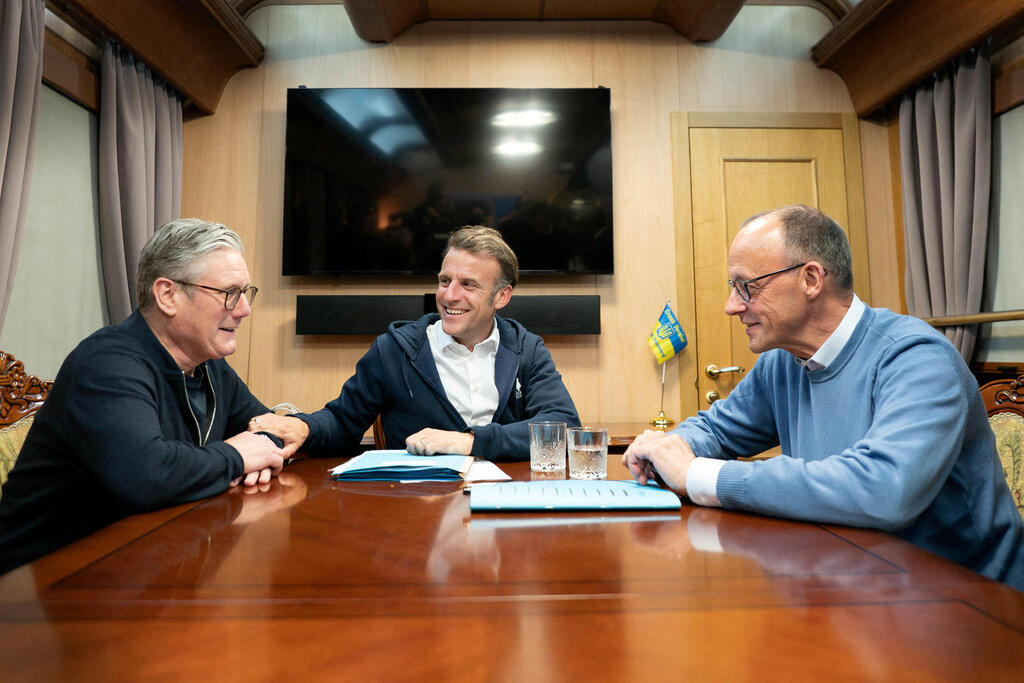
Prime Minister Keir Starmer, French President Emmanuel Macron and German Chancellor Friedrich Merz
(Photo: Stefan Rousseau/Pool via REUTERS)
By contrast, criticism of Israel in Germany, while present, follows a different trajectory. Chancellor Friedrich Merz and Foreign Minister Johann Wadephul have expressed deep concern over the humanitarian toll, and some voices within the coalition have even called for an arms embargo—though none has materialized. Notably, sanctions are not on the table.
Observers familiar with UK-Israel relations say the British government’s approach is driven primarily by domestic politics. Lord Ian Austin, a former Labour member who left the party during Jeremy Corbyn’s leadership, voiced concerns as early as last year for what he termed as an “obsession” with Israel, urging politicians to focus on local problems instead. He questioned why, in constituencies grappling with inflation and job insecurity, so many lawmakers remain fixated on a conflict “3,000 miles away.”
Who will lead?
A turning point in UK-Israel relations came with the unprecedented joint statement issued by France, Britain and Canada criticizing Israel. According to diplomatic observers, the shift is rooted primarily in political motivations, but also reflects Britain’s desire to maintain its leadership role. London, wary of falling behind France—which has taken a leading role in Europe’s anti-Israel stance and efforts to advance recognition of a Palestinian state—is aligning more closely with Paris to reinforce its European credentials.
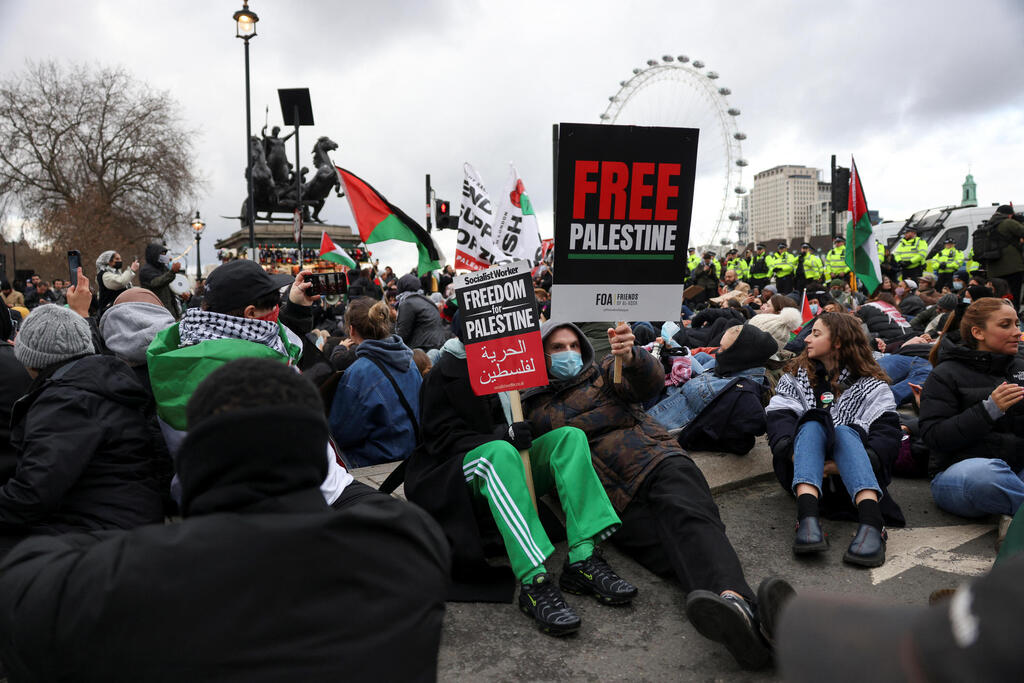
Pro-Palestinian demonstration in London
(Photo: HENRY NICHOLLS / AFP)
Israeli officials viewed Hamas’ swift praise for the joint statement as the most telling response. To them, it underscores the view that Britain has chosen to align with Hamas and “the wrong side of history.”
Following the threat of sanctions, the UK formally announced it was halting negotiations for a future free trade agreement with Israel. British Foreign Secretary David Lammy used the occasion to deliver a sharp condemnation of Israel and Finance Minister Bezalel Smotrich. “The UN and WHO have issued stark warnings of the threat of starvation hanging over hundreds of thousands of civilians,” Lammy said in a statement to the House of Commons, calling the situation “abominable.”
He then criticized Smotrich directly, referencing recent remarks in which the Israeli minister spoke of Israeli forces “cleansing” Gaza, “destroying what’s left” and of resident Palestinians “being relocated to third countries.”
British Foreign Secretary David Lammy scolds Israel in a statement to the House of Commons
(Video: Reuters)


“We must call this what it is. It is extremism. It is dangerous. It is repellent. It is monstrous. And I condemn it in the strongest possible terms,” Lammy said. “Whatever Israeli ministers claim, this is not the way to bring the hostages safely home.” His comments drew cries of “Shame!” and “Genocide!” from members of the British Parliament.
Sources familiar with UK-Israel relations said Lammy’s speech was primarily directed at his domestic political base, and expressed shock at its tone and content.
A hostage deal and ceasefire in Gaza would undoubtedly ease tensions and reduce the scope of the crisis. Despite recent diplomatic strains, Britain is still regarded in Israel as a friendly nation and continues to cooperate on security and intelligence matters.
However, internal British politics are increasingly dictating its foreign policy. London, Israeli officials say, has clearly taken sides—and gone so far that there are growing concerns in Jerusalem that the UK may move toward recognizing a Palestinian state. While much depends on developments in Gaza, Israel has already warned the UK it would respond strongly, including potentially annexing Area C of the West Bank—territory under full Israeli security and civil control. The intended message: recognition of a Palestinian state would be seen as a reward for Hamas.

The West Bank settlement of Efrat
(Photo: AP Photo/Ohad Zwigenberg)
Israeli officials believe that the French-led push for sanctions and Palestinian state recognition is not yet final and may still be reconsidered. Nevertheless, in Jerusalem, there is a sense that Britain has “crossed the line” and effectively “left the room.” “They won’t be part of the process or play a role moving forward, given their conduct,” a senior Israeli official said.
The only friend left?
Amid the current diplomatic crisis between Israel and the United Kingdom, one rare bright spot, perhaps the only one, has emerged: Kemi Badenoch, the new leader of the British opposition. Elected last November to head the Conservative Party, Badenoch is the fourth woman to lead the Tories, following in the footsteps of Margaret Thatcher, Theresa May and Liz Truss—all of whom served as prime minister.
Badenoch, like many in her party, is a staunch supporter of Israel. Throughout the war in Gaza, she has fiercely defended Israel’s right to fight Hamas and free its hostages. Known for her candid style and unfiltered communication, the 45-year-old has been described as a different kind of politician—one who speaks directly to the public.
Conservative leader Kemi Badenoch backs Israel's right to self-defense
(Video: Sky News)
In an interview this week with Sky News, Badenoch echoed Israeli criticism of the joint statement by the UK, France, and Canada, calling it a de facto endorsement of Hamas. “If Hamas is praising your actions, you’ve probably done something wrong,” she said. “Hamas is a terrorist group that is making the lives of the people in Gaza horrible. Israel is fighting a war where they want to get 58 hostages who have not been returned. That is what all of this is about, and they said that there won't be a ceasefire until they get their people back. What we need to make sure is that we're on the side that is going to eradicate Hamas.”
“Hamas is a terrorist group. They are not our friends,” Badenoch added, responding to a question about why she didn’t criticize Israel’s actions, as the three governments did. “It’s all related. Who funds Hamas? Iran, an enemy of this country. Israel is fighting a proxy war on behalf of the UK, just as Ukraine is on behalf of Western Europe against Russia. We have to get serious. There was a terrorist plot in London against the Israeli embassy. We saw two Jewish members of the Israeli embassy in D.C. killed. Whose side are we on?”
Get the Ynetnews app on your smartphone: Google Play: https://bit.ly/4eJ37pE | Apple App Store: https://bit.ly/3ZL7iNv
She acknowledged the suffering of Palestinian civilians and said that Prime Minister Benjamin Netanyahu was right to voice concern over what he sees as a misguided move by Western leaders. “He has every right to say that. What I want to see is Keir Starmer making sure that he is on the right side of British national interest. That cannot be on the side of Hamas.”
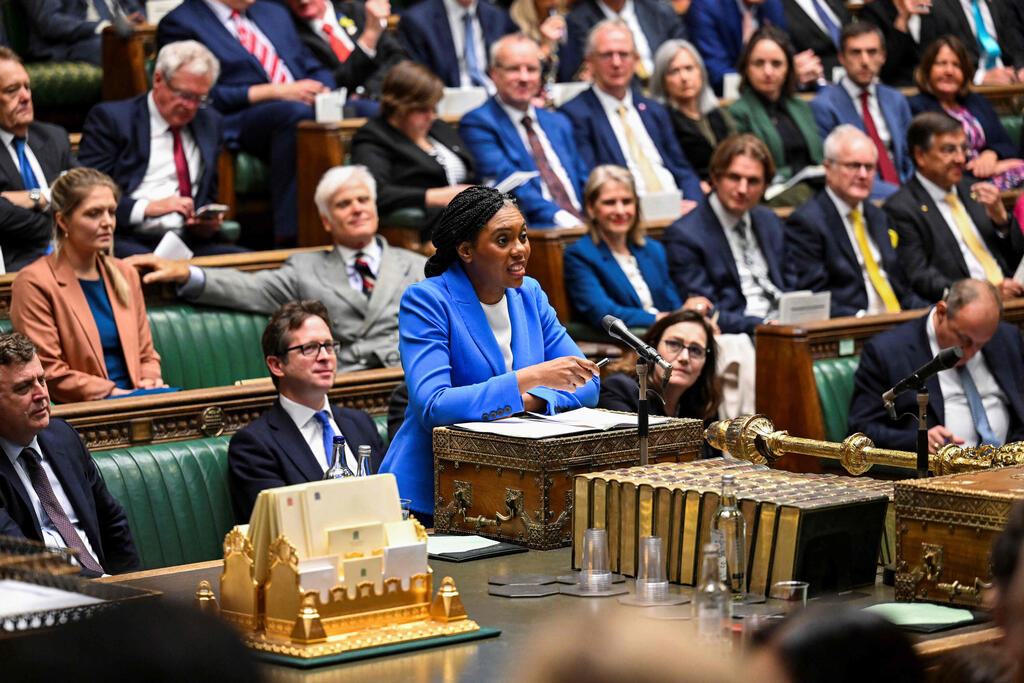
Conservative leader Kemi Badenoch
(Photo: AFP PHOTO / HO / House of Commons)
Badenoch also rejected accusations that Israel is committing genocide in Gaza. “It is not a genocide, as people are saying,” she said. “There are a lot of things which we can criticize Israel on, which I have done, in terms of how they may carry out some of these actions. But the bottom line is they are fighting a terrorist group that is trying to destroy that country.”
She concluded the interview by saying, “I do not want to be in a position where a terrorist group is praising my actions. And that is where Keir Starmer has found himself... an Iran-backed terrorist organization is not one that we should be getting praise from.”
Badenoch sees Israel as a beacon of freedom and democracy and admires its entrepreneurial spirit. While Foreign Secretary Lammy recently announced the suspension of trade agreement talks with Israel, it was Badenoch, during her tenure as international trade secretary in the previous government, who pushed to initiate those negotiations. She also maintains a close relationship with Israeli Ambassador to the UK Tzipi Hotovely, whom she once joined for a Shabbat dinner—an experience that moved her deeply as they lit Sabbath candles together.