


The second phase of the Gaza ceasefire plan is still being shaped by the Americans, though nothing has been finalized. Israel and the U.S. jointly drafted the original 20‑point plan, which included a clear agreement that Hamas must be disarmed. But now Jerusalem warns that Qatar and Turkey — nations that helped negotiate the recent hostage‑release deal — are pushing to shield Hamas from disarmament.
According to Israeli officials, Qatar and Turkey are now working to extract Hamas from the requirement to disarm. They are reportedly offering alternatives: either Hamas gives up its weapons to the Palestinian Authority (PA), or the weapons are transferred to some kind of secure storage under oversight. Behind both proposals lies the aim of preserving Hamas’ influence in Gaza. Israel insists, however, that Hamas must remain weapon‑free.
Netanyahu alongside Merz: 'Ready to move to Phase Two, the Arab world needs to pressure Hamas'
(Video: GPO)


Officials in Jerusalem believe the issue will only be resolved in person, and is likely to be the main issue discussed at the upcoming meeting between Prime Minister Benjamin Netanyahu and U.S. President Donald Trump, which is set to take place at the end of the month. Netanyahu is expected to visit Mar‑a‑Lago from December 28 through January 1 and is slated for several meetings with Trump, including additional sessions with Vice President J. D. Vance, Secretary of State Marco Rubio and Defense Secretary Pete Hegseth.
“We have nearly completed Phase One; we only have one last hostage left to bring home,” Netanyahu said Sunday at a joint press conference with German Chancellor Friedrich Merz. At a separate event, he noted that: "We know there are certain tasks this force can do, but not everything — perhaps not even the main tasks,” meaning the main one: disarmament and demilitarization of Hamas.
That statement reflects Israel’s concern that an international stabilization force (ISF) by itself cannot guarantee dismantling Hamas’ military capabilities — a point emphasized repeatedly by Israeli officials.
Gallery
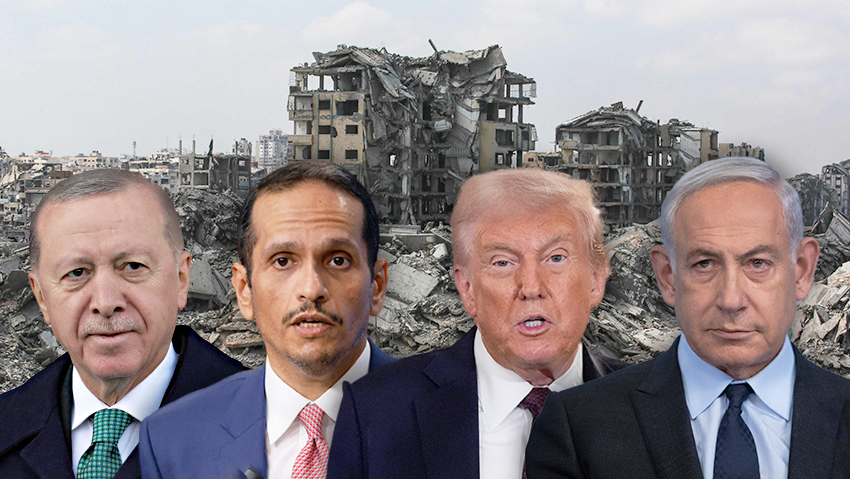
Benjamin Netanyahu, Donald Trump, Mohammed Al Thani, Recep Tayyip Erdogan
(Photos: Bashar Taleb / AFP, Ludovic Marin / AFP, Alex Kolomoisky, Alex Brandon/AP, AFP Turkish Presidential Press Service / Handout /AFP)
But until the last hostage — Yamam officer Ran Gvili, 24 — is brought home, pressure from Qatar and Turkey is intensifying ahead of the second phase of the Gaza ceasefire plan. According to Israeli officials, both countries are working to prevent a scenario in which Israel can declare a decisive victory over Hamas.
In talks with the Americans, Qatar and Turkey have floated proposals aimed at avoiding Hamas’ complete disarmament — such as transferring the group’s weapons to the Palestinian Authority or storing them in a monitored facility. The bottom line, from Israel’s perspective, is that these ideas are designed to preserve Hamas’ role as a power broker in Gaza.
Dispute over timeline: months vs. years
Even among the Americans, there is no consensus. Qatar and Turkey reportedly favor a two‑year grace period during which Hamas could legally keep its weapons. Israel rejects that notion outright and insists on a much shorter timeframe — just a few months. The Israeli message to Washington is clear: if Hamas isn’t disarmed promptly, Israel will act unilaterally to make it so.
The distinction used in negotiations matters: Israel demands disarmament- a complete removal of arms, while some U.S. proposals speak of decommissioning — putting weapons into storage under supervision, akin to how the IRA weapons were handled in Northern Ireland decades ago. But Jerusalem fears that “decommissioning” could simply leave a back door open for future re‑armament.
Israel also strongly opposes the deployment of Turkish forces to Gaza. While some in the U.S. administration — including Trump envoy Tom Barrack — argue that Turkey must be part of any solution, Jerusalem rejects that view. Officials say Barrack fails to appreciate Israel’s security needs and accuse him of pushing a policy that undermines them.
At present, without agreement on disarmament or a clear timeline, no Arab or Muslim country has committed to sending troops for the ISF — leaving a major gap in the plan’s feasibility.
Meanwhile, Israel has softened its previous blanket opposition to involvement by the Palestinian Authority in Gaza’s reconstruction — but only if the actors are unaffiliated with terror, such as former official Salem Fayyad, and do not operate under PA orders. That position, however, faces political obstacles at home, particularly from ministers such as Itamar Ben-Gvir and Bezalel Smotrich, who oppose any PA role in Gaza altogether.
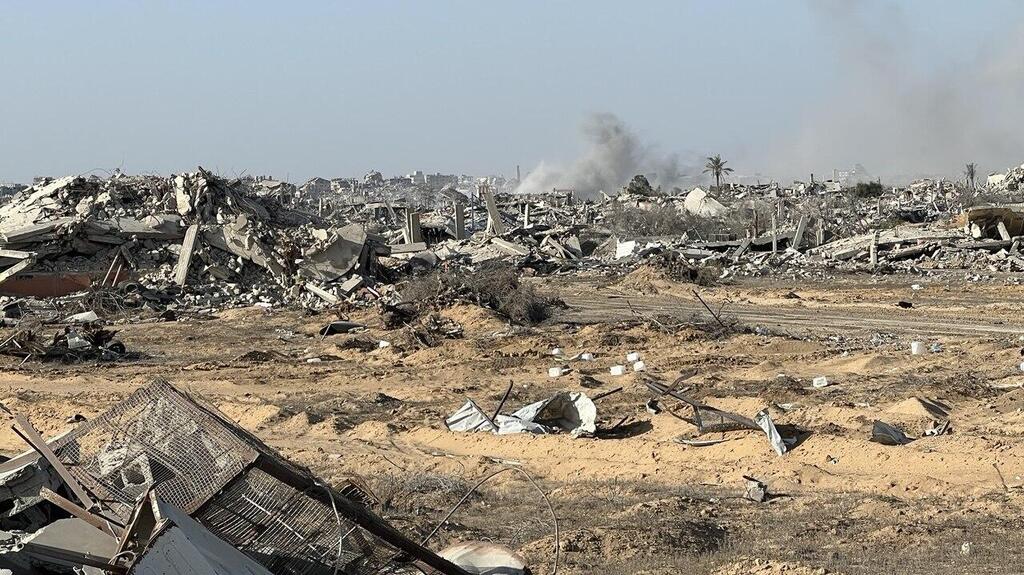
Rafah in the Gaza Strip
(Photo: Ron Crissy)
From Israel’s perspective, reconstruction could begin in Gaza’s south — starting with a pilot project in Rafah. The plan involves clearing rubble and rebuilding a Hamas‑free urban model. Israel states this can be done so long as disarmament happens simultaneously, not as a substitute for dealing with it. Their proposed model mirrors Lebanon’s: civilian governance might be assigned to local authorities, but paramilitary groups like Hezbollah — or Hamas — would not be tolerated with weapons.
Demographics and the logic for a new civic model
According to Israeli intelligence assessments, about 75% of Gaza’s residents no longer support Hamas; while roughly 25% remain loyal. Officials believe that once conditions are right, these 75% may embrace an alternative. As part of the plan, Israel supports establishing a safe zone inside the “yellow line” zone near Rafah, presented as a civic alternative to Hamas control. This is seen as part of a broader strategy to weaken Hamas, but only if complete disarmament is enforced first.
But the second phase of the Gaza deal won’t be the only issue on the table during the upcoming meetings between Prime Minister Benjamin Netanyahu and former President Donald Trump. A range of complex matters is expected to be discussed. For example, in the months leading up to Operation Rising Lion, there were numerous reports suggesting the U.S. would block an Israeli strike on Iran. In reality, however, the IDF and U.S. military were deeply engaged in joint planning — leading to what Israeli sources describe as unprecedented operational cooperation between the two countries.
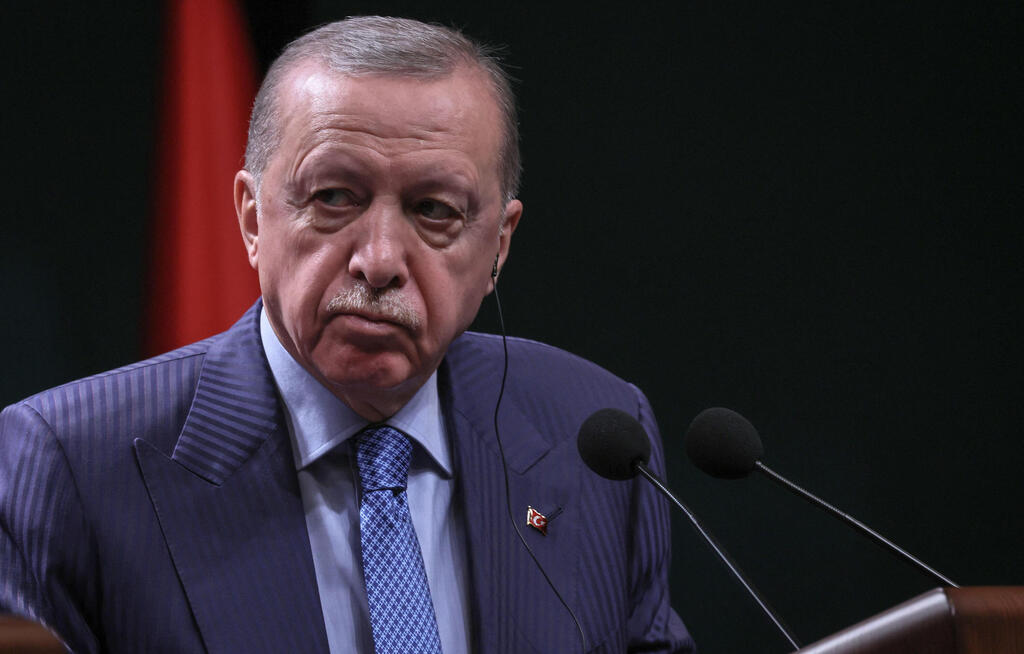
Turkish President Recep Tayyip Erdogan
(Photo: Adem Altan / AFP)
Within the U.S. administration, divergent approaches exist, and Washington is often caught in a balancing act — dancing a “double tango” between Israel on one side and Turkey and Qatar on the other. Yet, as Vice President J.D. Vance recently emphasized, Israel remains the United States’ premier ally: “America’s most senior partner.” Notably, he does not use such language to describe Turkey or Qatar.
The understanding in Jerusalem is that, despite disagreements, the U.S. will not jeopardize Israel’s security. If Israel decides that jihadist groups must not be allowed near its borders — whether in Gaza or on the Golan Heights — the Americans are expected to respect that determination.
Israel is also expected to raise concerns about the sale of F‑35 jets to Turkey, a move Jerusalem vehemently opposes. Israeli officials argue that Turkish President Recep Tayyip Erdoğan seeks to replace Iran as Israel’s main regional adversary. They point to recent extremist religious conferences in Istanbul, where clerics called for Israel’s destruction, and emphasize that funds flowing to Hamas and Hezbollah via Istanbul undermine U.S. counter‑terrorism efforts. Israel believes it is inconsistent for the U.S. to outlaw the Muslim Brotherhood while supplying advanced military hardware to a NATO member widely perceived to support violent Islamist groups.
In addition, Iran and its renewed nuclear ambitions will be high on the agenda. Israel plans to present intelligence indicating that Tehran is ramping up efforts to restart its nuclear program and accelerate ballistic‑missile development. Jerusalem is expected to lobby Washington for much tougher sanctions than currently in place.