

In the past 24 hours, U.S. President Donald Trump has repeatedly used the phrase “we’ll see what happens” when asked what might occur if no deal is reached with Iran. His remarks come against the backdrop of a surprising announcement Saturday by senior Iranian official Ali Larijani, who said there had been progress toward a “framework for negotiations” between Tehran and Washington.
Trump himself did not express much confidence that talks would lead to an agreement. He continues to keep the threat of military action on the table, bolstered by a major deployment of U.S. forces to the Middle East—or, as he put it, “a big armada sailing toward Iran.”
Gallery
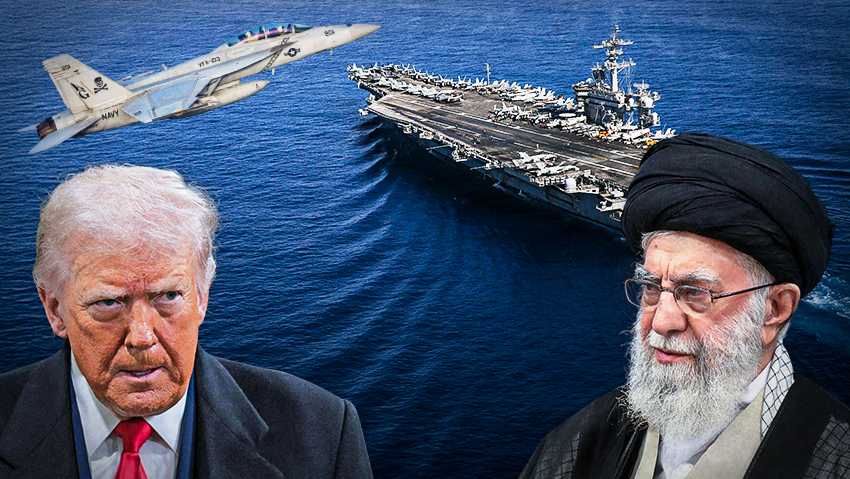
Still at a standoff: Trump, Khamenei and the aircraft carrier USS Lincoln sent to the Middle East(
(Photos: U.S. Navy, Reuters, Anna Moneymaker/AFP, KHAMENEI.IR/AFP))
In his public statements, Trump has outlined only two objectives for any negotiations with Iran: an end to the killing of anti-regime protesters—which has reportedly already ceased following the brutal and unprecedented crackdown—and a nuclear deal that would deny Iran the ability to acquire nuclear weapons. He has not publicly addressed the specific details of such a deal or additional reported U.S. demands, such as limits on Iran’s missile program or halting support for its regional proxies.
A senior Trump administration official told The Wall Street Journal on Saturday that the president is intentionally keeping his goals vague to preserve his strategic flexibility and “military thinking” in secrecy.
Trump at the White House: 'We'll see what happens'


In an interview with Fox News, Trump confirmed a report that even U.S. allies in the Gulf had not been briefed on the details of a potential American strike plan. “Well, I can’t tell them the plan,” he told correspondent Jacqui Heinrich. “If I tell them the plan, it’s almost as bad as telling you the plan. It could actually be worse, frankly.”
The interview aired shortly after Larijani, a top adviser to Iran’s Supreme Leader Ayatollah Ali Khamenei, declared that despite the “war-like atmosphere” in the media, progress had been made toward establishing a framework for talks with the U.S.
Larijani’s statement came as a surprise, contradicting Iran’s repeated threats in recent days to respond forcefully to any American military strike—no matter how limited—and its public refusal to negotiate under a “climate of threats.” Qatar later announced that Larijani’s remarks followed his meeting in Tehran with Qatari Prime Minister Mohammed bin Abdulrahman Al Thani. According to Doha’s Foreign Ministry, the two discussed ways to de-escalate regional tensions.
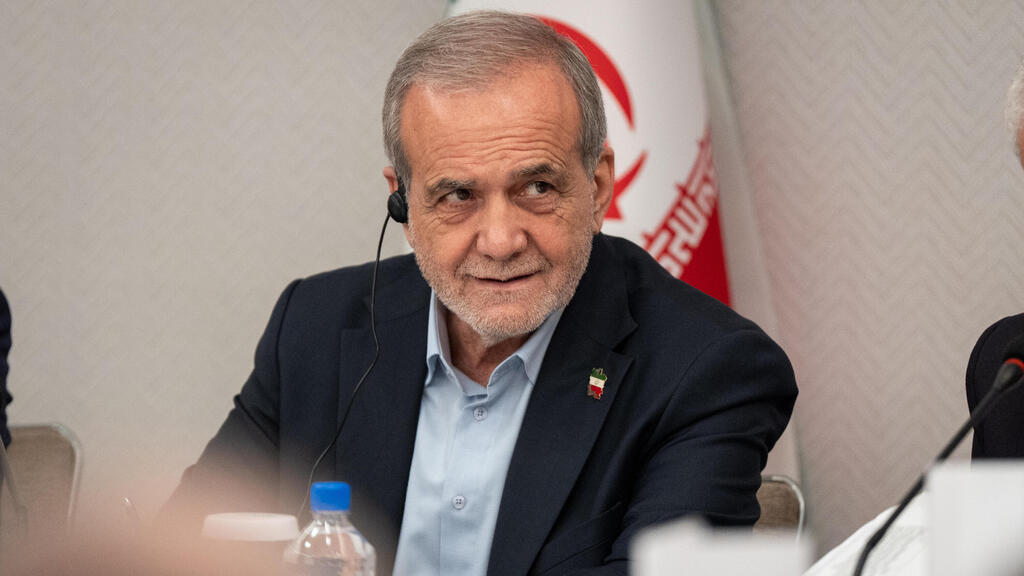
Iranian President Masoud Pezeshkian says war is not in the best interest of his country
(Photo: Angelina Katsanis/AP)
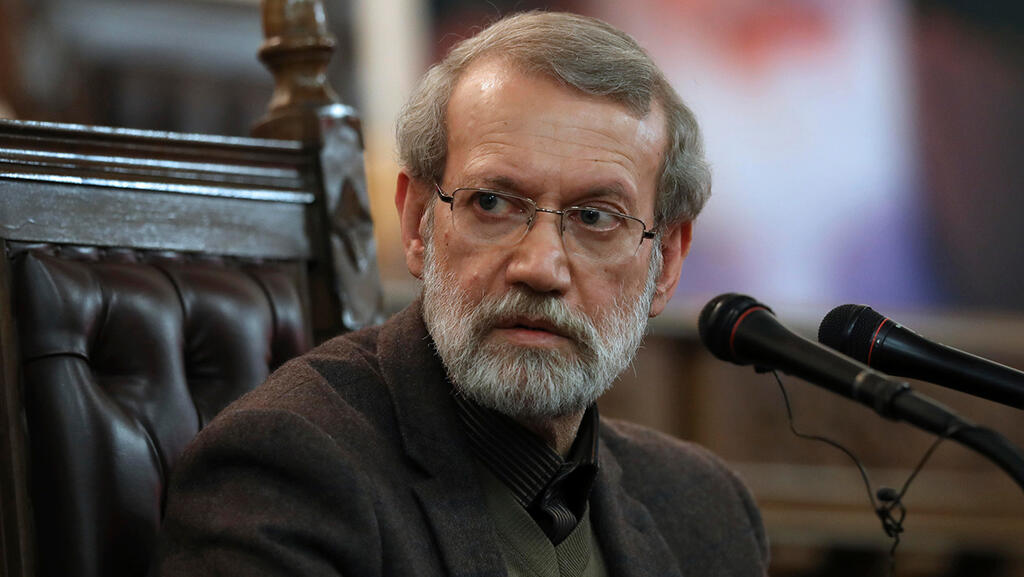
Iranian speaker of Parliament Ali Larijani
(Photo: AP)
At the same time, Iranian President Masoud Pezeshkian held a phone call with Egyptian President Abdel Fattah el-Sissi. In a statement afterward, Pezeshkian also struck a somewhat conciliatory tone, stating that war is not in the interest of either country.
“The U.S. and Israel continue down a path of escalating hostility and imposing war. We have not sought, and will not seek, war. We believe it is not in the interest of Iran, the United States, or the region," Pezeshkian said. "We stress the need to establish diplomatic channels and promote diplomacy on equal footing, away from threats. Talks must take place in a calm and constructive atmosphere. We hope the other side understands that Iran cannot be forced into negotiations through threats and coercion. Any aggression or attack on Iranian soil will be met with a strong and decisive response.”
According to The Wall Street Journal, the White House is concerned about being drawn into negotiations that ultimately fail to produce a deal. In his Fox News interview, Trump also voiced skepticism about the prospects for success, repeating his now-familiar phrase.
“They’re negotiating—we’ll see what happens. But you know, last time they negotiated, we had to get rid of their nuclear program. That didn’t work. So we got rid of it another way—and we’ll see what happens,” Trump said.
As early as Thursday, Trump had issued a similar warning, stating at a White House event: “If there’s no deal—we’ll see what happens.”
When asked whether Iran had been given a deadline for a deal, he responded: “Only they know for sure. I’ve sent them the message.”
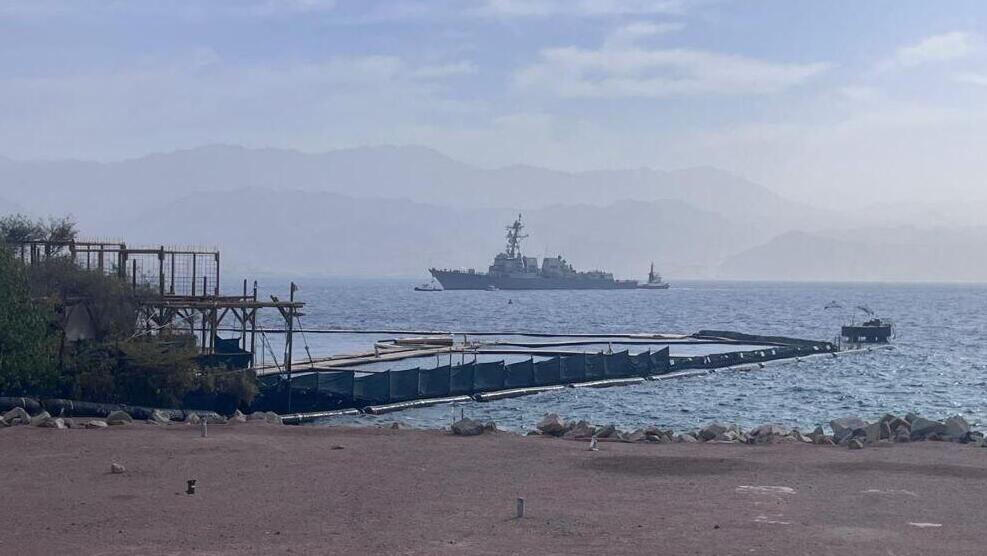
American destroyer Delbert Black arrived in the Gulf of Eilat in the shadow of the reinforcement of US forces in the area
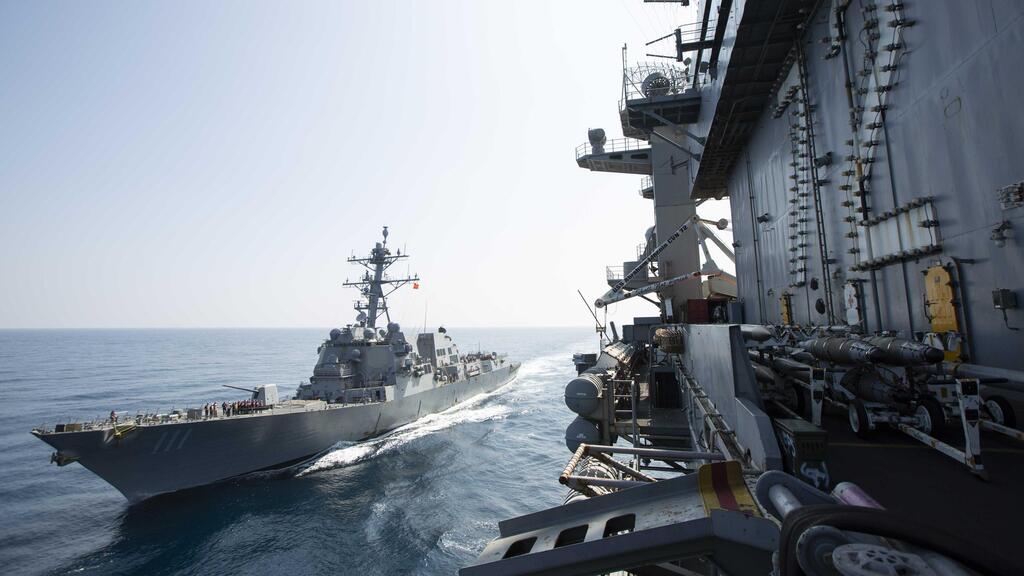
The US military destroyer USS Spruance, which was sent to the Middle East amid tensions with Iran, along with aircraft carrier Lincoln
(Photo: U.S. Navy photo)
Sources cited by The Wall Street Journal said Trump had asked his advisers to prepare options for a “swift and decisive” military strike—one that avoids a prolonged or wide-scale conflict.
“The ideal scenario,” said one of the sources, “would involve strikes tough enough to force the regime to comply with U.S. demands—on both its nuclear program and its treatment of protesters.”
They also said that Washington has discussed the possibility of a “painful bombing campaign” aimed at toppling the Islamic Republic, but emphasized that Trump sees the military threat primarily as leverage to push Tehran to compromise.
Trump was reportedly presented with a range of options developed jointly by the White House and Pentagon. Among them is what the Journal described as the “grand plan”: a large-scale bombing campaign targeting regime and Islamic Revolutionary Guard Corps (IRGC) facilities. More limited options would strike symbolic regime targets while keeping open the possibility of escalation if Iran resists U.S. demands.
In light of a recent New York Times report that commando raids in Iran are also under consideration, the Journal noted that a focused operation against Supreme Leader Khamenei himself—akin to the U.S.-backed mission to capture Venezuela’s Nicolás Maduro—would be far more complex. Tehran is significantly farther from U.S. naval forces and takes greater precautions to shield its top officials.
One possible scenario includes an assassination attempt against Khamenei. Last week, Iran International—a London-based opposition outlet broadcasting in Persian—claimed the ayatollah had taken refuge in a bunker. However, in what appeared to be a deliberate message to Washington, Khamenei made a rare public appearance on Saturday, seen praying at the grave of Ayatollah Ruhollah Khomeini, the founder of the Islamic Republic.
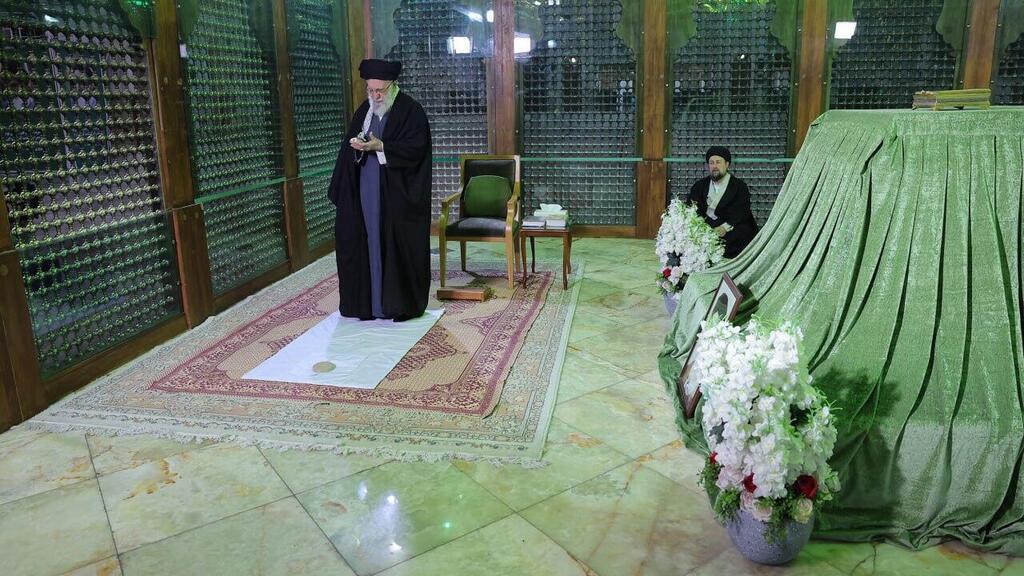
Iran's Supreme Leader Ali Khamenei prays at the tomb ofAyatollah Ruhollah Khomeini, the leader of the revolution
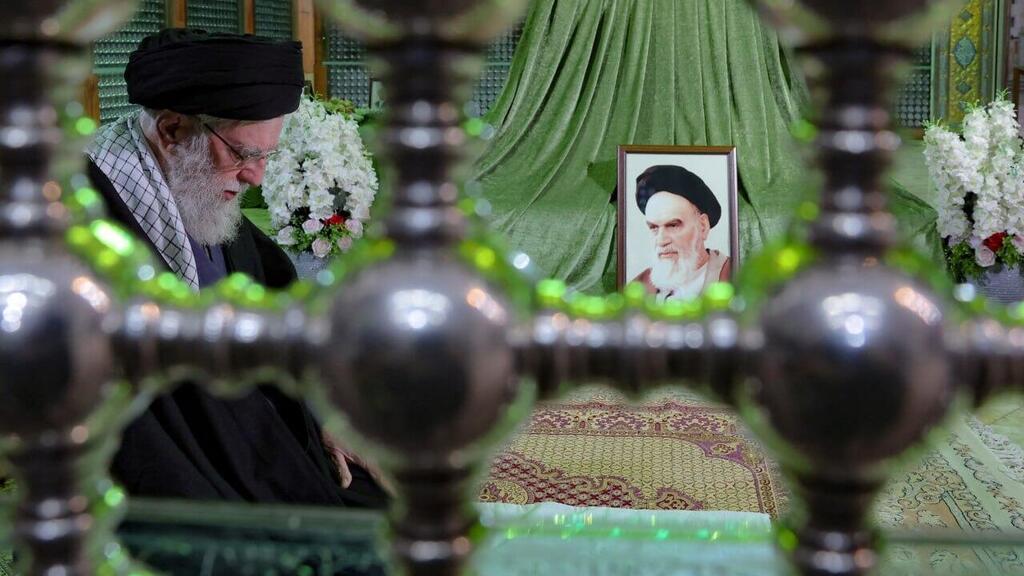
Iranian state media framed the visit as the opening of events marking the 47th anniversary of the revolution. The English-language Tehran Times, a regime mouthpiece, wrote: “The leader’s public appearance comes despite hostile media campaigns—particularly those based in London—falsely claiming that Ayatollah Khamenei is ‘hiding in an underground shelter.’”
The newspaper added that “Iranian officials say these reports are part of a broader psychological warfare campaign aimed at projecting a sense of instability that simply does not exist.”
Ultimately, The Wall Street Journal reported, only once Trump decides on his objective for Iran will it be possible to determine the appropriate military response.
“The actions you want to take—and the force packages needed—vary widely,” said Robert Murrett, a former U.S. Navy intelligence officer.
Trump, emboldened by the success of the Maduro operation earlier this month, has repeatedly emphasized the scale of the U.S. deployment, saying he sent “a big armada” toward Iran—including the aircraft carrier USS Abraham Lincoln and six guided-missile destroyers. He noted that the force is even larger than the one dispatched to Venezuela ahead of the Maduro capture mission.
Yet military analysts express deep skepticism over whether the Venezuela model could be replicated in Iran. According to the Journal, Trump’s stated goals for any strike on the Islamic Republic are unlikely to be achieved with a quick series of airstrikes or missile launches.
“He likes military force when it’s fast, cheap, and decisive,” said Justin Logan, director of defense and foreign policy studies at the Cato Institute in Washington. “The problem is, you can’t be fast and cheap and still achieve decisive results.”