


Israel and Turkey have been escalating both their activity and rhetoric against one another over their involvement in Syria, but the recent history of this relationship includes moments that are hard to imagine today: Israeli fighter pilots trained in Turkish skies; military and intelligence officers exchanged information; Israel’s defense industry upgraded Turkish fighter jets and tanks; Ankara served as a channel for messages between Jerusalem and Damascus; and leaders from both countries maintained close personal ties.
Today, and even more so after the strike on the base in Syria, Prime Minister Benjamin Netanyahu’s “Don’t” warning to the Turks and the arrest warrant issued against him by Turkey, the situation is completely different. An Israeli security official, referring to the crisis with Turkey, said: “We’re not exactly rushing to end the crisis with Turkey. We’ve had enough. We tried the nice approach with them, but it didn’t work. Erdogan never stops inciting against us.”
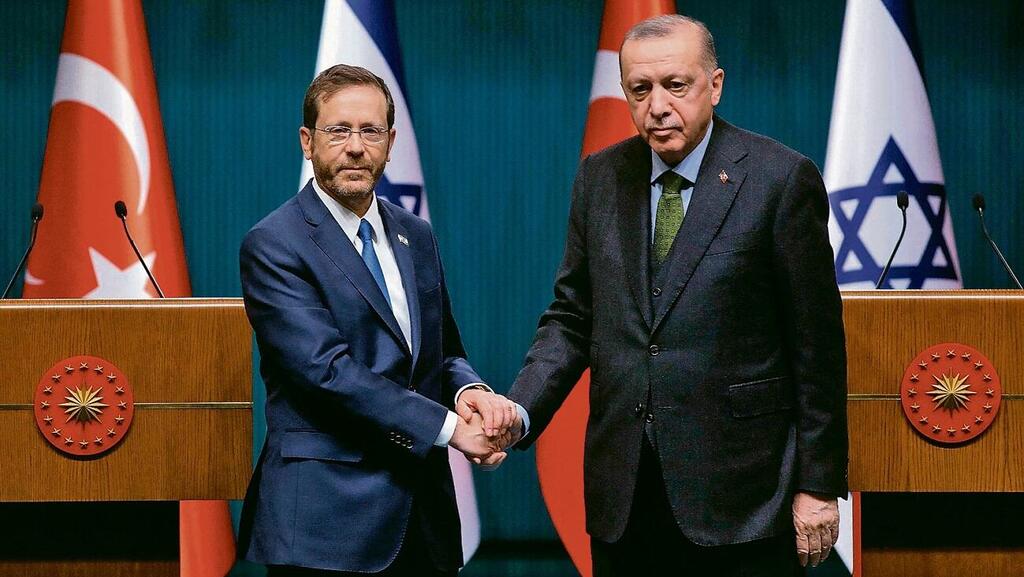
He noted that U.S. President Donald Trump is not intervening for now: “He is keeping his distance, but that could change. He is letting the sides blow off steam. Everyone is concerned there could be a loss of control or a miscalculation. I think Erdogan is even more worried than we are.”
The official added that “the entire Middle East knows that Israel is the strongest country in the region. Erdogan continues with the insults and the comparisons to Hitler, but he understands he cannot stretch this any further.”
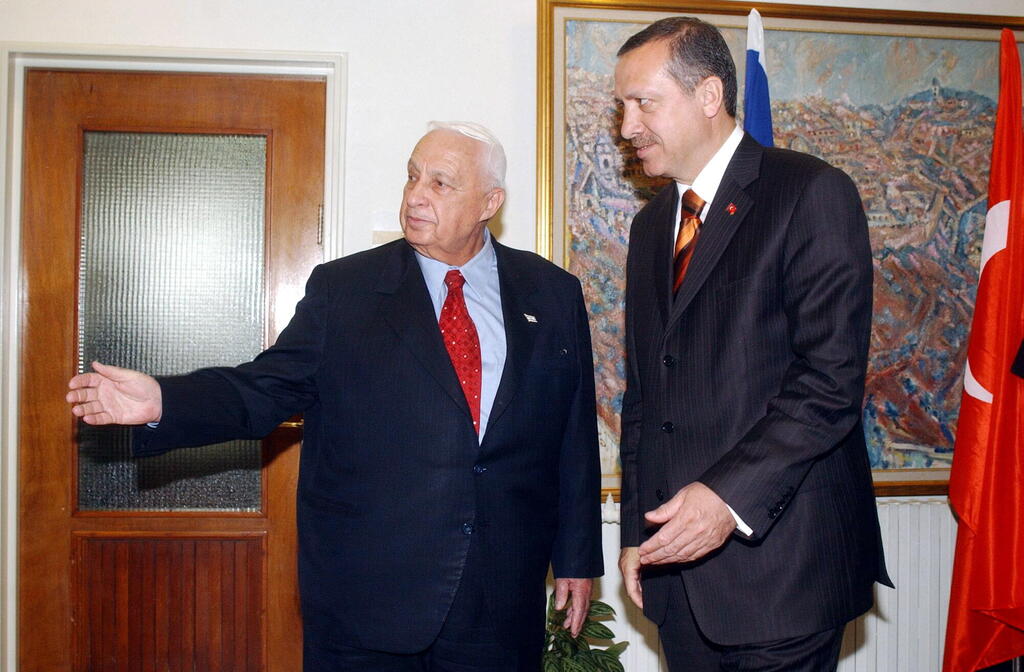
Erdogan on a visit to Israel in 2005, alongside then-Prime Minister Ariel Sharon
(Photo: Alex Kolomoisky)
In the past, by contrast, there also were more human moments. In the summer of 1999, when one of the deadliest earthquakes in Turkey’s history devastated large areas in the northwest of the country, Israel was among the first to arrive with aid. Hundreds of rescue and medical personnel set up field hospitals and worked in the disaster zone. In that event, 9-year-old Shiran Franco was rescued alive after about 100 hours under the rubble in intense heat, without food or water. Her father, twin brother, grandfather and grandmother did not survive.
The 1990s were the honeymoon period in Israel-Turkey relations. The Middle East peace process, the collapse of the Soviet Union and shared concerns over Syria, Iran and terrorist organizations created a strategic foundation for cooperation. In February 1996, the two countries signed a military cooperation agreement that included exchanges of information and experience, joint training and reciprocal access to ports. Just months later, Israeli F-16s were already training in Turkish airspace. Turkey had vast aerial training zones, while Israel had operational experience and technological know-how. Both sides benefited.
The defense alliance also took on an industrial dimension, including a deal worth about $650 million to upgrade 54 Turkish F-4 Phantom aircraft. Israel also participated in upgrading F-5s, while agreements were signed in parallel in the fields of missiles and armaments. There also were programs and deals involving Turkish M-60 tanks, unmanned aerial vehicles, warning systems and other technologies. Israel was not only Turkey’s ally, but a partner in modernizing its military.
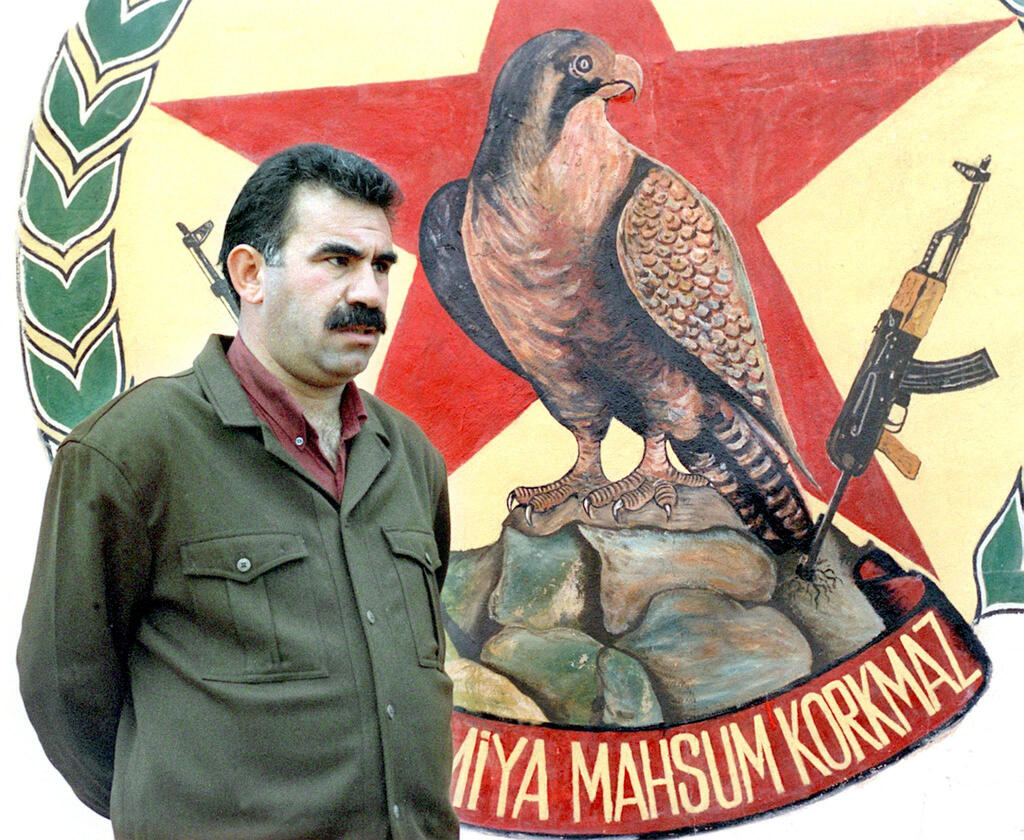
Was the Mossad followinghim? Abdullah Ocalan, leader of the Kurdish rebel organization PKK, was captured in Kenya and handed over to Turkey.
(Photo: Ramzi Haidar / AFP)
In February 1999, Abdullah Ocalan, leader of the Kurdish rebel organization PKK, was captured in Kenya and handed over to Turkey. Western reports attributed a role to the Mossad in tracking him and even assisting in his capture. Israel officially denied the reports, but their very existence illustrated just how strategic and deep the relationship between the two countries was perceived to be.
Even Recep Tayyip Erdogan — an Islamist politician whose office displayed a picture of Al-Aqsa Mosque back in his days as mayor of Istanbul — did not rush to sever Turkey’s ties with Israel after his election in 2003. Two years later, he came on an official visit to Israel, and Israeli Foreign Ministry officials say diplomatic and economic cooperation between the countries strengthened afterward. It was a period in which personal and business ties were formed: Erdogan was considered a personal friend of brothers Yuli and Sami Ofer, and his son did business in Israel.
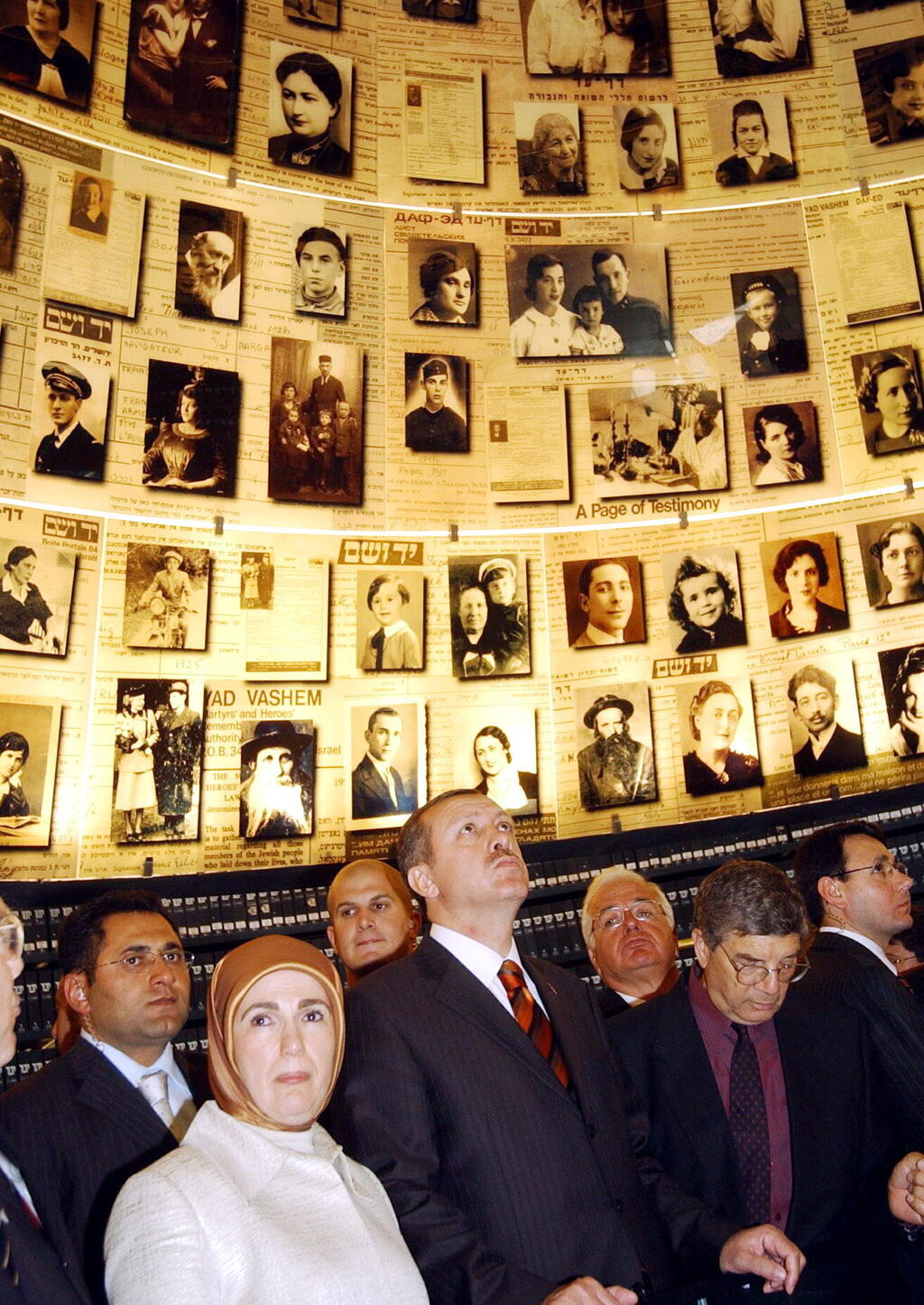
During an official visit to Israel in 2005, Erdogan visits Yad Vashem
(Photo: Alex Kolomoisky)
At the same time, cooperation in energy and infrastructure was being examined, including especially ambitious ideas for transporting Israeli gas to Turkey, which could have turned Turkey into an energy gateway to Europe. In March 2004, before Israel became the desalination powerhouse it is today, it signed an agreement to ship water by giant tankers from Antalya. The deal never materialized, but the broader picture and vision were clear: Israel would provide Turkey with technology, security and energy, while Turkey would provide strategic depth, expanded markets and a bridge to the region.
Trust between the countries was so well established that, during the Olmert government, after the strike on the nuclear reactor at Deir ez-Zor, Turkey tried to mediate between Israel and Syria. In 2008, four rounds of indirect talks between Israel and Syria were held with Turkish mediation, and Erdogan also tried to assist in returning the remains of Israeli spy Eli Cohen, as well as in contacts over the return of Gilad Shalit, who was being held by Hamas. Much water has flowed through the Bosphorus since then, and today Israel and Turkey are wary of each other’s military presence in Syria.
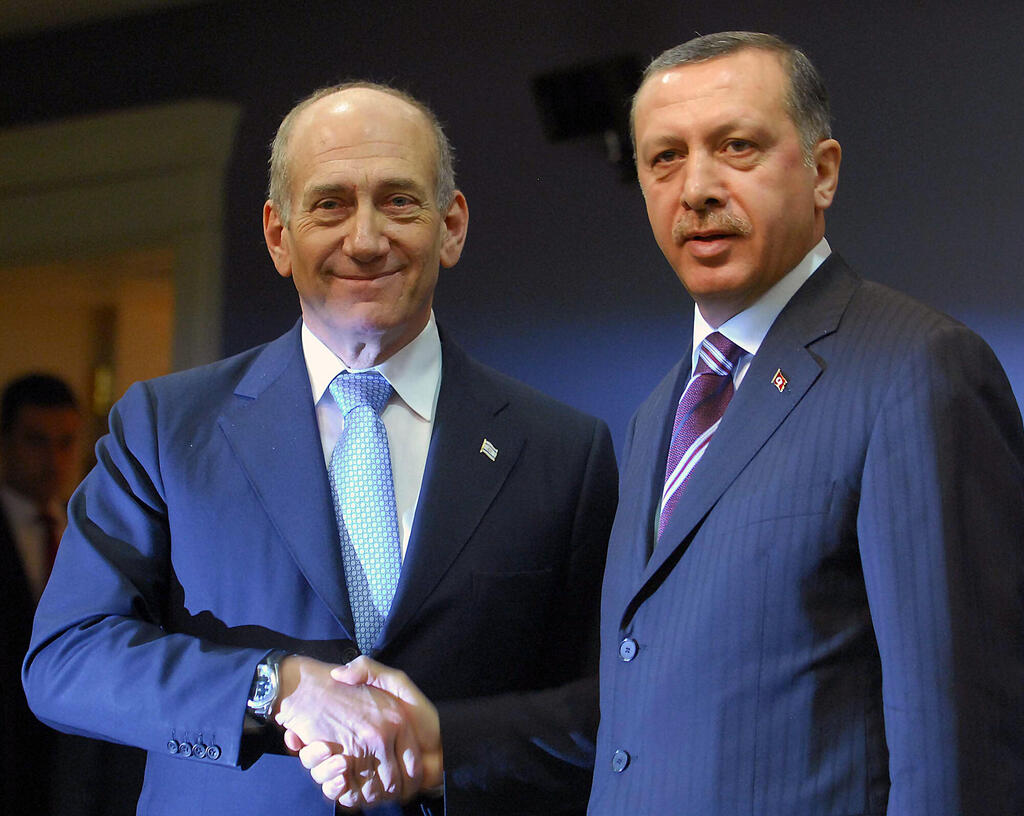
Erdogan and then-prime minister Ehud Olmert in 2007
(Photo: AP/STR)
Four years ago, ynet reported that Erdogan had received medical advice from an Israeli doctor, Professor Yitzhak Shapira, who served as deputy director of Ichilov Hospital in Tel Aviv and was responsible, among other things, for medical tourism at the hospital. According to the report, Shapira and Erdogan met in the United States.
The Mavi Marmara crisis
The turning point came with the Second Lebanon War. Alongside anger over the destruction in southern Lebanon and Beirut, a perception grew in Turkey that Israel no longer treated it as a strategic partner and was acting in the region without taking Turkish interests into account. The crisis deepened around Operation Cast Lead, which began at the end of 2008. Erdogan, who until then had been one of the most prominent Muslim leaders to maintain an open channel with Israel, became one of its fiercest critics.
Then came the World Economic Forum in Davos in January 2009. During a panel on the Gaza operation, Erdogan attacked Israeli President Shimon Peres and left the stage in protest after a heated exchange. Within hours, the incident became a symbol across the Arab and Turkish worlds. Erdogan returned home a hero. The model of cooperation with a Muslim state collapsed

The IDF takeover of the Mavi Marmara
(Photo: IDF Spokesperson's Unit)
The crisis reached another peak in May 2010, during a flotilla organized by a Turkish group to break the naval blockade of the Gaza Strip. IDF forces took control of the Mavi Marmara, which was part of the flotilla, and the incident ended with the deaths of 10 Turkish citizens and injuries to several IDF soldiers. For Turkey, it was a red line: diplomatic ties were sharply downgraded, the Turkish ambassador left Israel and the security relationship faded. The strategic alliance of the 1990s was over, aside from one small but significant event in which Turkey sent two firefighting aircraft to help during the Carmel wildfire in the fall of 2010.
Despite the deterioration in diplomatic ties, some security and intelligence cooperation remained. One example came in 2022, when Israel and Turkey thwarted — almost at the last moment — an Iranian attempt to attack or abduct Israelis in Istanbul. Israeli security officials said the Mossad and Turkish intelligence services worked together. It was a reminder that even amid a deep diplomatic crisis, another layer of relations can continue — ties between security services that understand that sometimes a common enemy matters more.
But suspicion existed in that sphere too. In 2013, reports in the United States claimed that then-Turkish intelligence chief Hakan Fidan, today Erdogan’s hard-line foreign minister, had passed information to Iran that enabled it to identify a network of sources working for Israel. The allegations were never proven, and Turkey denied the reports, but the mistrust was impossible to hide.
The October 7 rupture
A first reconciliation attempt took place under Barack Obama. At the end of the U.S. president’s visit to Israel in March 2013, Prime Minister Benjamin Netanyahu called Erdogan and apologized for the deadly outcome of the Mavi Marmara raid. Three years later, the two countries signed an agreement under which Israel would pay $20 million in compensation to the families of those killed, while Turkey would remove legal measures against Israeli soldiers and commanders connected to the incident.
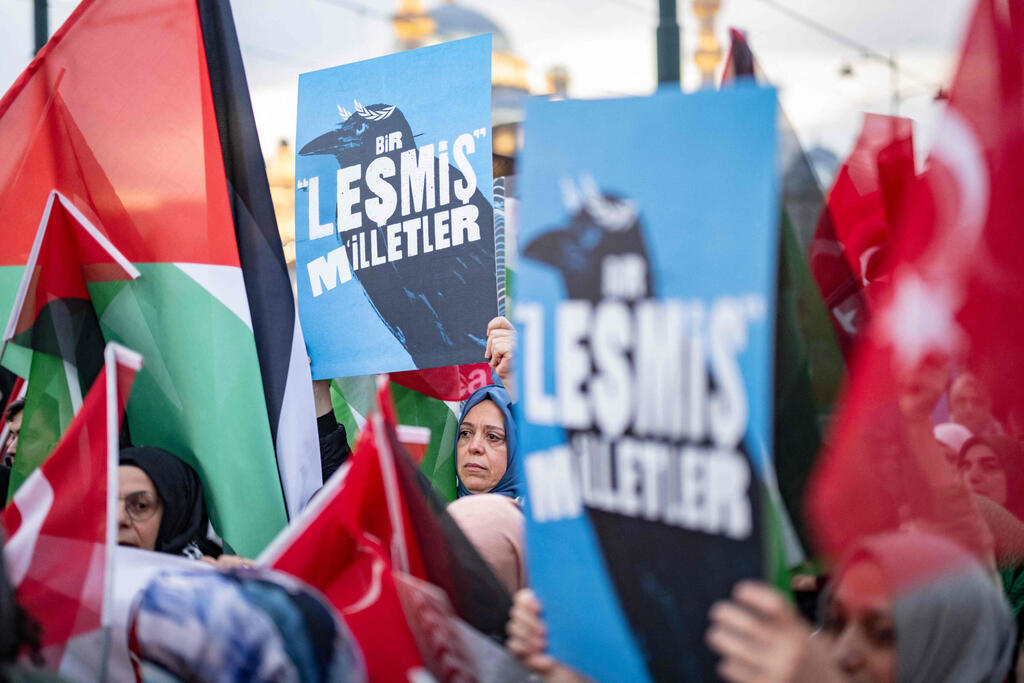
Demonstration against Israel in Istanbul after October 7
(Photo: Yasin Akgul / AFP)
Diplomatic relations returned to ambassadorial level. As a Yedioth Ahronoth correspondent, I accompanied the late ambassador Eitan Na’eh to Erdogan’s 1,000-room palace in Ankara when he presented his credentials. At the time, there was hope for a new beginning. Even in Istanbul’s bazaar, merchants missed Israeli tourists. But relations remained fragile, and in 2018 they were downgraded again against the backdrop of clashes in Jerusalem and events along the Gaza border fence.
In 2022, there was another attempt to rehabilitate relations, with President Isaac Herzog visiting Erdogan and the appointment of a new ambassador, Irit Lillian. In February 2023, the earth shook again in Turkey, and once again Israel sent a large rescue delegation, which saved the lives of 19 Turkish citizens. Erdogan awarded a medal of appreciation to the commander of the Israeli delegation, Col. (res.) Golan Vach, and for a moment it seemed as though history was repeating itself. Then came the October 7 massacre.
After the war began, Erdogan adopted an especially harsh line against Israel and became one of its loudest critics on the international stage. While he views Hamas as a legitimate part of the Palestinian struggle, Israel found it increasingly difficult to continue turning a blind eye to Turkey allowing members of the organization to conduct political and logistical activity from its territory.
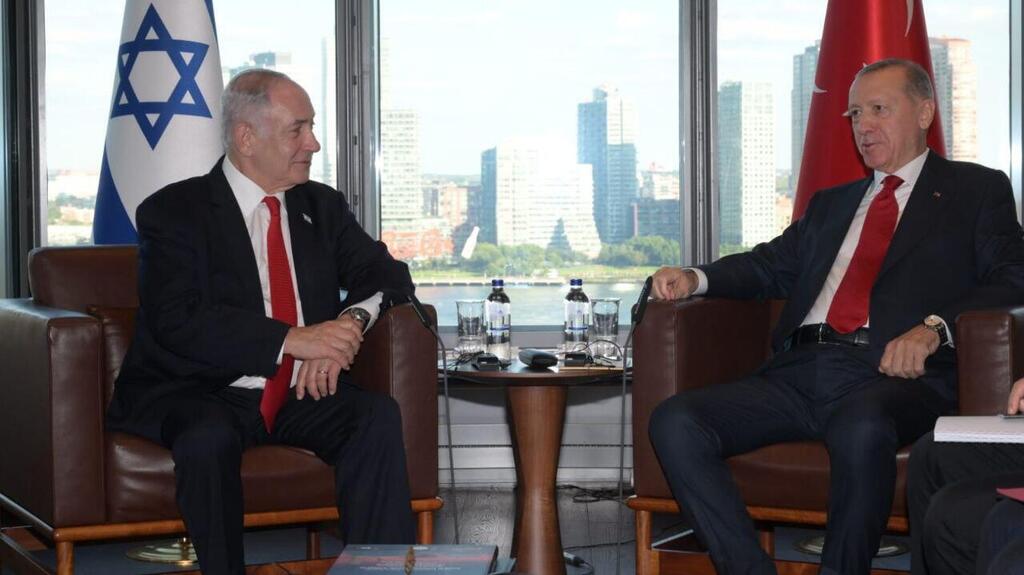
Netanyahu and Erdogan, meeting in 2023 on the sidelines of the UN General Assembly
(Photo: Avi Ohayon/GPO)
The rupture no longer remained solely diplomatic. In May 2024, Turkey announced a halt to all imports from and exports to Israel until a permanent ceasefire was reached in Gaza and humanitarian aid was guaranteed. Before that, trade between the countries was worth billions of dollars annually. It was a dramatic move because for years the economy had been one of the pillars that kept the relationship afloat even during crises.
The clash in Syria
Diplomatic relations between Israel and Turkey have not been formally severed, but they are at a deep low. The Israeli Embassy in Ankara is not operating at full capacity, and in practice there are no Israeli diplomats on Turkish soil; the embassy and consulate teams operate from a third country. In July 2026, it was reported that after Lillian stepped down the ambassador’s position remained vacant.
Still, the Turkish Foreign Ministry website lists the embassy in Tel Aviv as an active mission. The reason is simple: even when diplomatic ties collapse, security channels are still needed, and Syria is the best example. For years, Israel and Turkey were partners in efforts to curb Iranian and Syrian influence in the region. Today, the reality is the opposite.
After the fall of the Assad regime, Turkey deepened its involvement in Syria and supports the new government of jihadist, or perhaps former jihadist, al-Jolani. Israel is naturally concerned about the expansion of Turkey’s presence in its northern neighbor. Turkey currently controls 5% of Syrian territory, while Israel controls 0.1%.
Last week, the confrontation reached an unusual point when Israel struck the Abu al-Duhur base in Syria, saying there was a threat stemming from Turkish intentions there, which Turkey denied. The United States is now working to create a deconfliction mechanism, while Azerbaijan is also trying to mediate between the sides to ease tensions.
Azerbaijan also has hosted mediation talks between Israel and Turkey since April 2025. The Turkish delegation was headed by Ibrahim Kalin, the intelligence chief and a close Erdogan confidant, while the Israeli delegation was headed by Tzachi Hanegbi, then national security adviser. After several meetings in Baku, the sides agreed to establish a hotline between the IDF and the Turkish military to prevent friction in Syria, particularly between the air forces. The arrangement worked well for a period but gradually faded.
Relations have entered a sensitive period
The rift with Turkey also pushed Israel to seek other partners in the eastern Mediterranean. Strategic ties with Greece and Cyprus deepened. Cooperation developed in security, energy and infrastructure. Ankara viewed this to a large extent as an attempt to build a counterweight to Turkey. The idea of an Israel-Turkey gas pipeline, which could have turned Turkey into Israel’s energy gateway to Europe, also lost its political viability. A senior Israeli official acknowledged that the alliance with Greece and Cyprus was intended to create a “wall” against Turkey and signal that it would be unwise for the rivalry to turn into a military confrontation. The 1990s vision of Turkey as a bridge between Israel, Europe and the Muslim world collapsed.
Perhaps the most remarkable thing about the Israel-Turkey story is that this is not a story of two countries that never got along. On the contrary. They got along very well. There were years when Israel saw Turkey as a central strategic partner. Israeli pilots trained on its territory. Turkish military systems were upgraded by Israel. Intelligence personnel worked side by side. There were economic, security and personal ties. Erdogan himself visited Israel. Israel tried to mediate with Syria through Ankara. Then, within less than a decade, that same Turkey became one of Israel’s fiercest critics.
In 1999, when relations were at their peak, Israelis crawled into the rubble in Turkey to save people they had never met. In 2023, after years of crises, they did it again. Between those two earthquakes came 24 years of history: a military alliance, intelligence cooperation, aircraft, tanks, Syria, Davos, the Mavi Marmara, reconciliation, Hamas, Iran and October 7. The countries changed. The leaders changed. The region changed. But the images of Israeli rescue teams beneath the rubble in Turkey remained almost identical. Perhaps because they are a reminder that relations between countries are not always only what their leaders say. Sometimes, beneath all the interests, alliances and hostility, there remains a history of deep human connection.
And the next chapter is no longer only about Gaza or Jerusalem. It runs through Syria — and there, for the first time in years, Israel and Turkey could find themselves not merely arguing with one another but operating in the same military arena, with conflicting interests and an urgent need for coordination channels to prevent a slide into direct confrontation.
Relations have now entered a highly sensitive period tied to Israel’s election campaign. Whatever Netanyahu does, he will be suspected of trying to inflame the front for political reasons. This is where the United States enters the picture. It must act as the responsible adult and immediately lower the flames. The key to whether the escalation continues lies in Washington’s hands.