


Israel does not consider Turkey an enemy but increasingly views it as a rival, a senior Israeli diplomatic official said Wednesday, amid growing tensions over Syria, Turkish naval activity in the Mediterranean and Ankara’s economic, legal and diplomatic measures against Israel.
“Turkey is not an enemy state, but it is certainly a rival,” the official said. “It has taken steps against us in the economic, legal and diplomatic spheres.”
Gallery
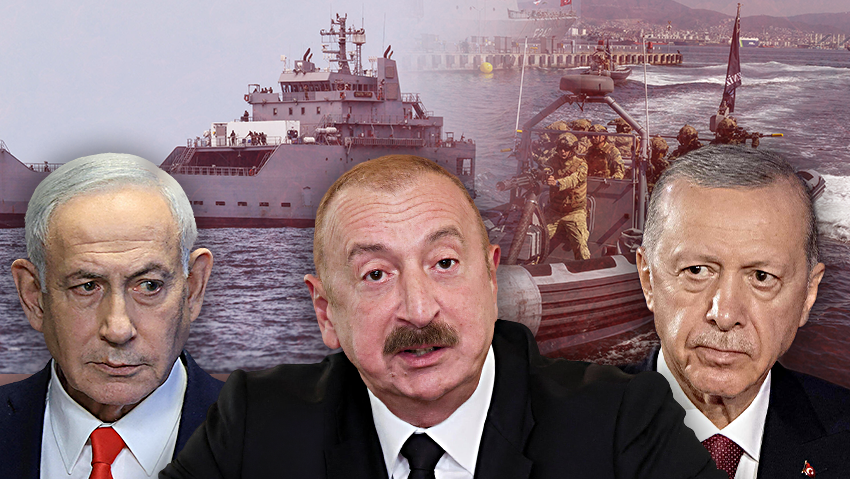
Prime Minister Benjamin Netanyahu, Azerbaijani President Ilham Aliyev, Turkish President Recep Tayyip Erdogan
(Photo: REUTERS/Kevin Lamarque, REUTERS/Ronen Zvulun, Andrew Harnik GETTY IMAGES NORTH AMERICA AFP, REUTERS/Amir Cohen, Burak Kara/Getty Images)
The official said Azerbaijan, which maintains close relations with both Israel and Turkey, had previously served at times as a channel for messages between the two countries, but that such contacts had become less frequent.
“I would say that has been happening less recently,” the official said.
Asked about reports of increased Turkish naval activity near areas where the Israeli navy operates in the Mediterranean, and whether the two sides had experienced friction, the official played down the prospect of a military confrontation.
“I don’t think anyone wants to reach an exchange of fire — neither the Turks nor us,” the official said.
Tensions rise over Syria
Relations between Israel and Turkey have deteriorated sharply in recent years, particularly since the war in Gaza, with Turkish President Recep Tayyip Erdogan emerging as one of Israel’s most vocal critics and expressing support for Hamas. Erdogan has repeatedly leveled harsh accusations against Prime Minister Benjamin Netanyahu, at one point comparing him to Adolf Hitler. Last month, Turkey sought an Interpol “red notice” against Netanyahu.
Tensions have risen further following an Israeli strike last month on the Abu al-Duhur military airfield in northern Syria’s Idlib region, not far from the Turkish border.
Netanyahu said the strike was intended to prevent Turkey from establishing a military presence at the base. Ankara denied that it was seeking to do so.
The episode has heightened concerns that Israel and Turkey, whose interests increasingly overlap in Syria and the eastern Mediterranean, could find themselves on a collision course.
Against that backdrop, Israel has been strengthening its ties with Greece and Cyprus, both of which have longstanding disputes with Turkey and concerns about Ankara’s growing military power.
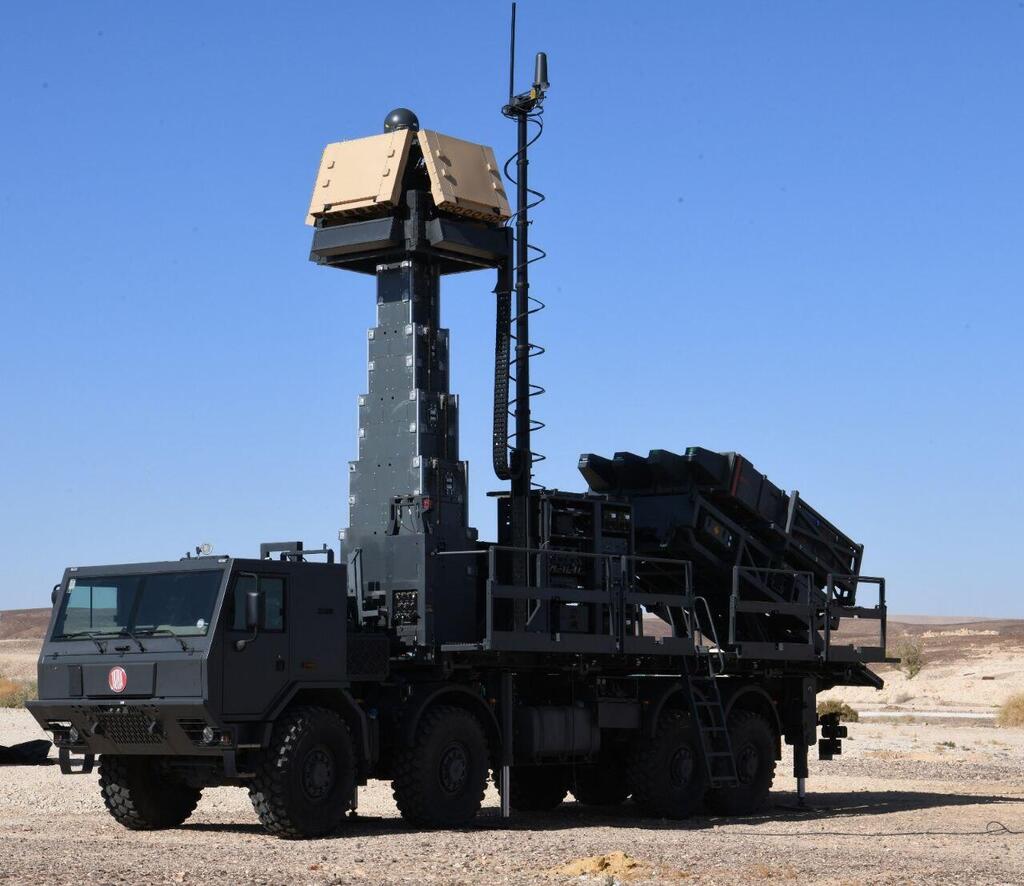
Spyder air defense system
(Photo: Rafael Advanced Defense Systems)
The Defense Ministry announced Monday that it had completed a major arms agreement with Greece known as “Achilles Shield.” Under the deal, the Greek Defense Ministry will acquire a multilayered Israeli air defense system that includes Rafael’s David’s Sling and Spyder systems and Israel Aerospace Industries’ BARAK MX.
The agreement is valued at about 3.1 billion euros and is the largest Israeli defense export deal with Greece and one of the largest defense export agreements in Israel’s history, according to the Defense Ministry.
The ministry said it was the first time Israel had agreed to provide another country with a comprehensive defense architecture designed to counter threats ranging from ballistic missiles and airstrikes to hostile drones.
The agreement also includes Israel Aerospace Industries’ MMR multimission radars for air surveillance and a new national command-and-control system led by Rafael that will integrate Greece’s various air defense capabilities.
Erdogan warns Greece over islands
Erdogan, meanwhile, issued a warning to Athens over what he described as Greece’s militarization of islands near Turkey’s coast.
Speaking to reporters aboard his plane while returning from an international summit in Kyrgyzstan, Erdogan was asked about the alleged arming of the islands.
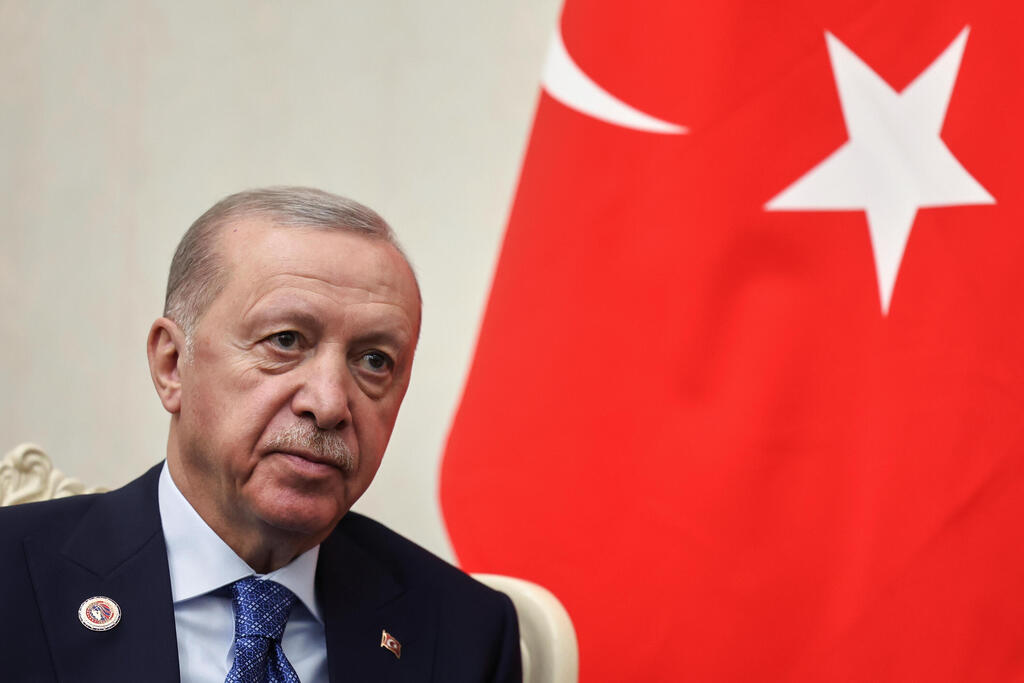
Turkish President Recep Tayyip Erdogan
(Photo: Vyacheslav Prokofyev, Sputnik, Kremlin Pool Photo via AP)
“What should we do? What is our responsibility? To do what is necessary,” Erdogan said, according to Turkey’s Hurriyet newspaper.
“We say that we want to conduct our relations with Greece on the basis of good neighborliness,” he said. “If we wanted to send a message from mainland Turkey, from Kas, to Greece — they would hear it, wouldn’t they?”
Kas is a Turkish coastal town only a few miles from the small Greek island of Kastellorizo in the southeastern Aegean.
Erdogan said Turkey had taken a constructive approach toward Greece but had often not seen its goodwill reciprocated.
“Greece needs to understand this: Turkey has no designs on the territory of any country, but it will not allow anyone to violate its own rights,” Erdogan said.
He accused Greece of disregarding international agreements governing the status of certain islands and warned that interpreting Turkey’s restraint as weakness would be “a grave mistake.”
“Greece must turn back from this wrong path and abandon the militarization of islands that have demilitarized status,” Erdogan said. “History is a very good guide for those who learn from it. We will continue to work for peace, security and stability in our region.”
There was no indication Erdogan’s comments Wednesday were directly connected to the Israeli arms deal.
Israel claims success against European pressure
The senior Israeli official also addressed Israel’s increasingly strained relationship with Europe, saying Jerusalem had spent the past year and a half fighting efforts to weaken its Association Agreement with the European Union, which provides the framework for extensive economic and trade relations between Israel and the 27-nation bloc.
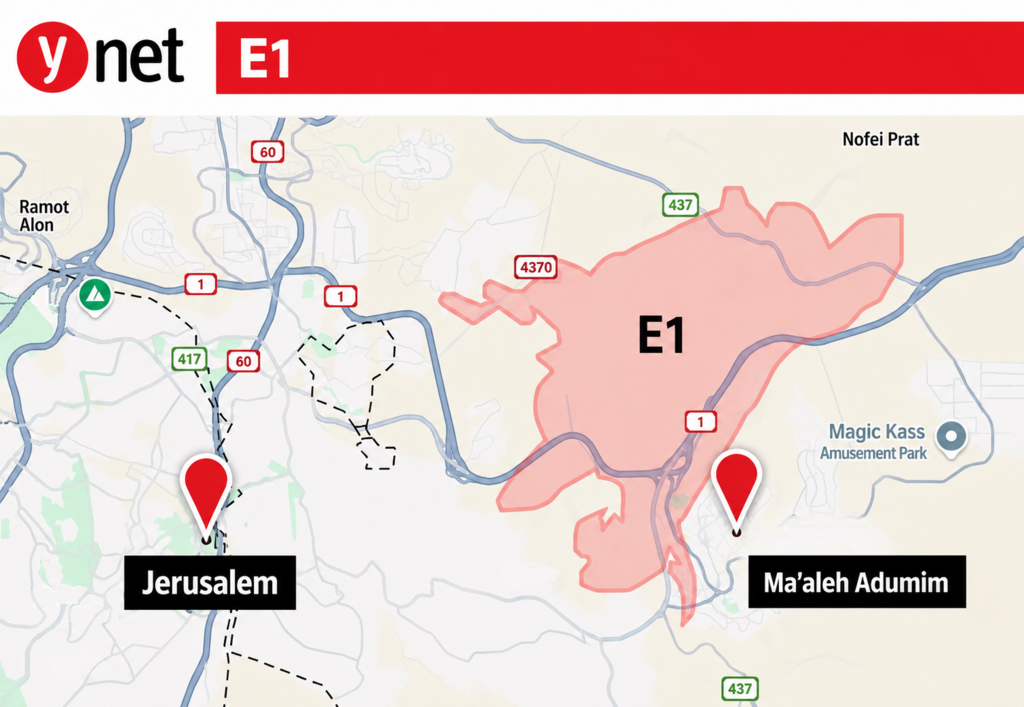
E1
The official said efforts to take action against the agreement, including at the latest meeting of EU ministers, had failed because of intensive Israeli diplomacy and support from friendly European governments.
“All the attempts failed as a result of an intensive effort and a bloc of friendly countries with close personal ties — with foreign ministers and heads of state who opposed moves other countries were trying to advance,” the official said.
The official pointed to a recent attempt to secure a unified EU statement criticizing Israel’s E1 settlement construction plan in the West Bank. Two countries blocked the statement, the official said, leaving EU foreign policy chief Kaja Kallas to issue a statement in her own name rather than on behalf of all member states.
“There are countries in the European Union — a double-digit number — that are standing with Israel during a challenging period,” the official said.
Israeli official dismisses criticism of E1 plan
The official also rejected criticism that construction in the E1 area, between Jerusalem and the West Bank settlement of Maale Adumim, was intended to prevent the establishment of a future Palestinian state.
The official called that argument “ridiculous,” despite Finance Minister Bezalel Smotrich, a leading advocate of the project, having explicitly presented preventing Palestinian statehood as one of its goals.
The E1 project has drawn international opposition for years because construction there could disrupt territorial contiguity between Palestinian areas in the northern and southern West Bank and complicate prospects for a viable Palestinian state.
“I tell European foreign ministers that the argument about a Palestinian state is ridiculous,” the official said, arguing that the Palestinian state recognized by some European countries would already be geographically divided between the West Bank and the Gaza Strip.
“What is the expectation? That we accept the dictate and say that we no longer have the right to settle the Land of Israel?” the official said. “Since 1967, every government, without exception, has settled Judea and Samaria, including left-wing governments.”
Judea and Samaria is the biblical term used by Israel for the West Bank.
The official described connecting Jerusalem with Maale Adumim as an Israeli consensus and said the E1 project dated to the government of former prime minister Yitzhak Rabin.
The proposal, however, was first presented before Rabin returned to office, in 1990. Although Rabin’s government initially expressed support for construction in the area, the plan was later frozen as the Israeli-Palestinian peace process advanced.