

While the United States and Iran publicly pursued nuclear negotiations, Israel was covertly finalizing preparations for one of the most complex operations in its history — a secret campaign involving operatives on Iranian soil, pilots on standby, advanced weaponry and pre-selected targets deep in Tehran. The mission aimed not only at nuclear infrastructure but also at the scientists behind Iran’s nuclear program.
A joint investigation by The Washington Post and PBS’s Frontline reveals new details about Israel’s clandestine “12-Day War” — a covert strike campaign designed to cripple the core of Iran’s nuclear project.
Gallery
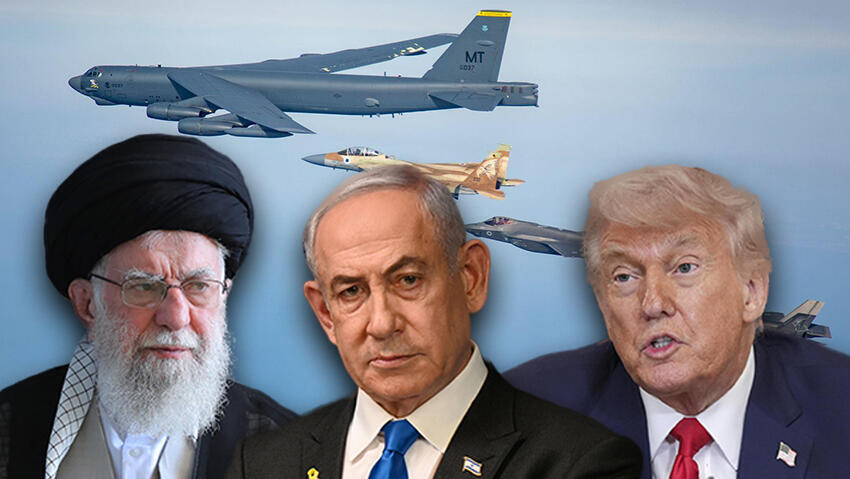
(Photo: GPO, REUTERS/Evelyn Hockstein, Iranian Leader's Press Office - Handout/Getty Images, IDF)
Drawing on interviews with current and former officials from Israel, Iran, the U.S. and Arab countries — some speaking anonymously for the first time — the report outlines the planning, execution and geopolitical impact of the operation.
According to the report, both the Biden and Trump administrations shared a common belief that Iran was advancing its nuclear ambitions, but U.S. and Israeli intelligence agencies often disagreed on the intentions and activities of Iranian scientists. As early as 2023, the CIA gathered intelligence suggesting that researchers affiliated with SPND, a covert unit within Iran’s Ministry of Defense, were exploring ways to accelerate nuclear weapon development should Supreme Leader Ali Khamenei rescind his 2003 religious edict (fatwa) against nuclear arms.
The CIA assessed that Iran had studied how to assemble a crude nuclear device using its existing stockpile of enriched uranium, a bomb that could potentially be built in about six months. Though such a device would be rudimentary, not testable and undeliverable by ballistic missile, it would still be highly destructive if completed.
U.S. and Israeli intelligence analysts also believe Iran had explored the concept of building a thermonuclear (hydrogen) bomb — a far more powerful weapon. However, both sides agreed that such technology remains out of Iran’s reach for now.
Iran significantly ramped up its uranium enrichment following U.S. President Donald Trump’s 2018 withdrawal from the Joint Comprehensive Plan of Action (JCPOA). While neither the CIA nor the Mossad believed Iran had begun weaponizing its nuclear materials, by the spring of 2025, Israeli analysts were no longer confident they would detect in time if Khamenei secretly reversed his stance and authorized bomb construction.
On June 12 — just ahead of Israel’s covert operation, dubbed Operation Rising Lion — the International Atomic Energy Agency (IAEA) formally rebuked Tehran for violating its non-proliferation commitments, marking the agency’s first official censure of Iran in two decades.
The deceptions before the strikes: 'None of the reports were true'
According to a source familiar with the details, when Prime Minister Benjamin Netanyahu visited Trump at the White House early in Trump’s second term — the first foreign leader to do so — he laid out four possible scenarios for a strike on Iran. First, Netanyahu presented a plan in which Israel would act alone. The second option involved Israel leading the operation with minimal U.S. support. The third scenario called for full cooperation between the two allies, and the fourth envisioned the U.S. taking the lead.
This visit marked the beginning of months of intensive, secret strategic planning. While Trump wanted to give diplomacy with Iran a chance, two sources said he continued intelligence sharing and operational coordination with Israel. “The thinking was, if talks fail, we are ready to go,” one of them said.

US President Donald Trump and Prime Minister Benjamin Netanyahu at the White House
(Photo: AP Photo/Alex Brandon)
In Israel, officials believed that a diplomatic overture was important to gain global legitimacy for a potential future strike — but they also feared Trump, eager for a deal, might accept poor terms. In mid-April, Trump gave Iran 60 days to agree to a new nuclear deal. That deadline expired on Thursday, June 12 — the night of the Israeli operation’s launch. Both Trump and Netanyahu engaged in calculated deception to prevent Iran from anticipating the coming strikes.
On that day, Trump told reporters that an Israeli attack on Iran “could very well happen,” while expressing his preference for a negotiated solution. Israeli officials leaked reports that Netanyahu's senior adviser Ron Dermer and Mossad chief David Barnea would soon meet with U.S. special envoy Steve Witkoff. A new round of U.S.-Iran nuclear talks was set for Sunday, June 15.
In reality, Israel had already decided to strike, with full U.S. awareness. The diplomatic moves were a ruse. Officials in both countries pushed media narratives suggesting a rift between Washington and Jerusalem. “All the reports that were written about Bibi not being on the same page with Witkoff or Trump were not true,” said a source with direct knowledge of the planning, using Netanyahu’s nickname. “But it was good that this was the general perception; it helped to move on with the planning without many people noticing it.”
Even after Israeli airstrikes and assassinations had begun, the Trump administration made one final diplomatic push. In a secret message conveyed to Iran via Qatari diplomats, Washington presented what would be Tehran’s last opportunity before American forces joined the offensive.
The deal terms, obtained by The Washington Post and previously unreported, were ambitious: Iran would have to cease support for proxies like Hezbollah and Hamas, and convert the Fordow enrichment facility — along with “any other functioning facility” — into facilities incapable of uranium enrichment. In return, the U.S. offered to lift “ALL sanctions placed on Iran,” according to the June 15 proposal.
Shortly after the offer was delivered, Tehran rejected it — and Trump gave the green light for U.S. military involvement, according to a senior diplomat involved in the process.
Decimate Iran’s 'brain trust'
As preparations for war neared completion, dozens of trained operatives working for Israel were already on the ground in Iran, armed with advanced new weapons. Israeli Air Force pilots stood by for the order to strike Iran’s nuclear infrastructure, ballistic missile launchers and air defense systems. Israel and the United States had reached a consensus on how close Tehran was to acquiring a nuclear weapon, and a diplomatic smokescreen was in place to blind Iran to the looming assault.
Waves of Israeli airstrikes across Iran during June's 12-day war


But Israeli security officials knew that to inflict more than temporary damage on Iran’s expanding nuclear program, they would also need to decimate its “brain trust” — a generation of Iranian engineers and physicists whom U.S. and Israeli intelligence believed were working on the “dark arts” of turning fissile nuclear material into an atomic bomb.
At approximately 3:21 a.m. on June 13, in the opening minutes of what became known as the “12-Day War,” the Israeli Air Force began striking buildings and residences in Tehran. Simultaneously, Operation Narnia — a targeted campaign against Iran’s top nuclear scientists — was launched.
Israeli intelligence had compiled a list of the 100 most critical nuclear scientists in Iran and narrowed the target list to about a dozen. Each was tracked through detailed intelligence files built over decades of espionage, covering their movements, work and residences.
Among the first to be killed was Mohammad Mehdi Tehranchi, a physicist and explosives expert sanctioned by the U.S. for his role in Iran’s nuclear weapons efforts. He was killed in his sixth-floor apartment in a building known locally as the Professors Complex. Two hours later, another prominent nuclear figure, Fereydoun Abbasi — a former head of Iran’s Atomic Energy Organization who had been sanctioned by both the U.S. and the UN — was killed in a separate strike in Tehran.
In total, Israel killed 11 senior Iranian nuclear scientists on June 13 and in the days that followed.
Amir Tehranchi, the brother of the slain physicist Mohammad Mehdi Tehranchi, told PBS’s Frontline that his brother’s work would not be in vain. “With the killing of these professors, they might be gone,” he said, “but their knowledge isn’t lost to our country.”
The special weapons and sleeper agents behind Operation Rising Lion
As part of Operation Rising Lion, Israeli fighter jets and drones, working in coordination with undercover operatives inside Iran, destroyed more than half of the country’s ballistic missile launchers and much of its remaining air defense systems. Senior commanders in Iran’s military and the Islamic Revolutionary Guard Corps were also killed. Israeli aircraft bombed power stations and ventilation systems critical to operating centrifuges at Natanz and Fordow, Iran’s two primary uranium enrichment sites. These strikes were followed by a massive barrage of U.S. B-2 Spirit stealth bombers and Tomahawk cruise missiles.
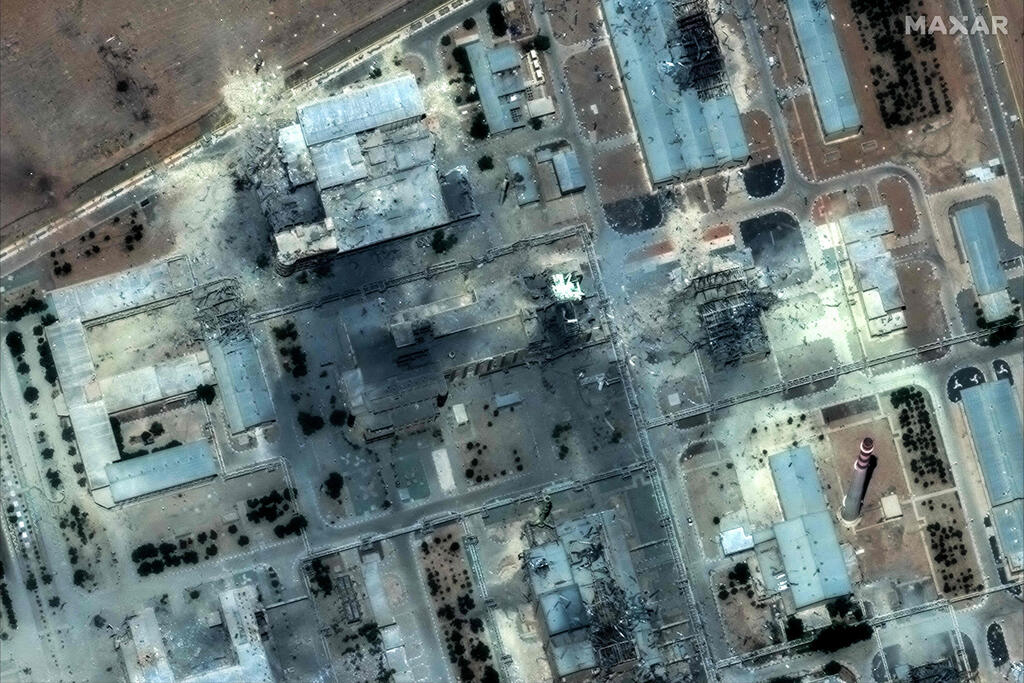
Iran’s nuclear facility in Isfahan, seen damaged in satellite imagery following US airstrikes
(Photo: SATELLITE IMAGE ©2025 MAXAR TECHNOLOGIES / AFP)
Mossad reportedly recruited more than 100 Iranian agents inside Iran and equipped some of them with a three-part "special weapon" designed for precision strikes on military assets, a senior Israeli security official directly involved in the operation told the Post. According to the official, Iranian authorities managed to recover parts of some of the launchers, but not the missiles or the weapon’s secret third component.
The Iranian operatives were trained in Israel and elsewhere. They were briefed only on their individual missions, without being told the full scope of Israel’s broader operation. “This operation is unprecedented in history,” the official said. “We mobilized our own assets and agents to go close to Tehran and launch the ground operation before the [Israeli] Air Force could enter Iranian airspace.”
The civilian toll
The operation was far from flawless. The Post and Bellingcat, an independent investigative organization specializing in open-source intelligence, independently verified that 71 Iranian civilians were harmed in five targeted strikes on nuclear scientists. The findings were based on satellite imagery, geolocated videos, obituaries, cemetery records and Iranian media coverage of funerals.
The Post and Bellingcat confirmed that 10 civilians, including a two-month-old baby, were killed in the strike on the Professors Complex in Tehran’s Saadat Abad neighborhood. Eyewitness accounts, footage and photos of the explosion and resulting damage indicate that the blast had the force of approximately a 500-pound bomb.
Israel reportedly attempted to kill another scientist, Mohammad Reza Sedighi Saber, during the opening wave of strikes. However, he was at his home in Tehran at the time, and his 17-year-old son was killed instead. On the war’s final day, June 24, Saber was killed at a relative’s home in Gilan Province, roughly 320 kilometers (200 miles) from Tehran. A resident there told The Post that Saber had returned for a mourning ceremony for his son and died along with several relatives. The outlet confirmed 15 civilians were killed in that strike, including four minors. Two homes were destroyed, leaving craters where they once stood.
Israeli security officials said they took extensive measures to limit civilian casualties. “One of the major considerations for the planning of Operation Narnia was to try to minimize as much as possible the collateral damage,” said a senior officer in Israeli military intelligence.
Iranian government spokespersons said in July that 1,062 people were killed in the Israeli strikes during the 12-day war, including 276 civilians.
So what was the damage?
Israeli, U.S. and IAEA officials say Israel’s operation dealt a significant blow to Iran’s nuclear program—delaying it by years—but fell short of Trump’s claim that the program was “obliterated.”
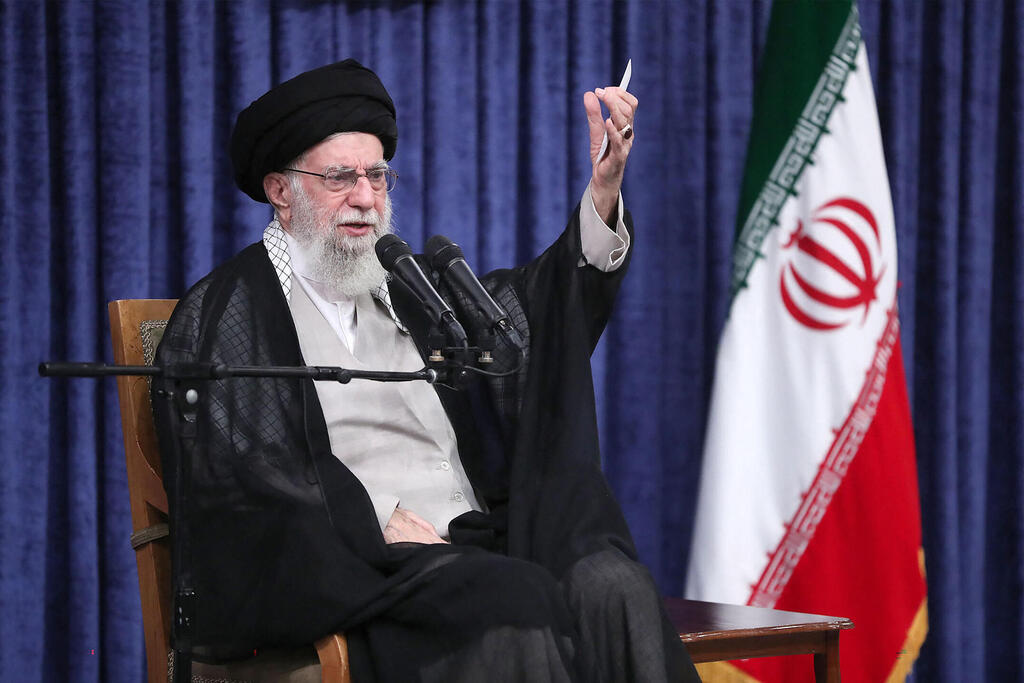
Iranian Supreme Leader Ali Khamenei
(Photo: AFP PHOTO / HO / KHAMENEI.IR)
American and Israeli officials, along with the IAEA, assert that although the mission did not entirely eliminate Iran’s nuclear infrastructure, it inflicted substantial damage. They believe it has set back Tehran’s uranium enrichment capabilities for the foreseeable future, halting its ability—for now—to produce weapons-grade material.
A November assessment by the Institute for Science and International Security, partially based on satellite imagery, concluded that “Overall, the damage caused by airstrikes to numerous nuclear sites was extensive and, in many cases, catastrophic.”
Israeli officials say Iran’s program was “significantly delayed,” with the Natanz enrichment site destroyed, major parts of the nuclear research center in Isfahan wiped out and the deeply buried enrichment facility at Fordow heavily damaged.
IAEA Director General Rafael Grossi told Frontline the damage was “very substantial.” He confirmed that Iran still possesses around 400 kilograms of uranium enriched to 60% purity—just one step away from the 90% needed for a nuclear weapon. Most of this material, he said, remains at Isfahan, Fordow and Natanz. However, it remains unclear whether Iran still has access to the material, as IAEA inspectors have been denied entry to key facilities since the strikes. “Obviously, without having physical access to a place, any evaluation is partial,” Grossi said.
The Post reported in September that, following the end of the 12-day war, Iran accelerated construction of a secret underground facility south of Natanz known as Pickaxe Mountain. Israeli and U.S. analysts told The Post that Iran is also trying to rebuild its ballistic missile arsenal with assistance from China. Trump, meanwhile, has warned he would authorize military strikes if Iran resumes high-level uranium enrichment.
What is certain is that the joint U.S.-Israeli strikes shocked the Middle East, triggered threats of Iranian retaliation, and for now, have wiped out any immediate prospect of a new diplomatic deal to limit Iran’s nuclear activities and bring them under strict international supervision.
Still, Ali Larijani, secretary of Iran’s Supreme National Security Council, appeared unfazed. In his first interview with foreign media since the June conflict, he told Frontline: “Iran’s nuclear program can never be destroyed, because once you have discovered a technology, they can’t take the discovery away.”