

Just 48 hours after U.S. President Donald Trump signed the memorandum of understanding in Paris, Iran announced the closure of the Strait of Hormuz “due to the nonstop violations in Lebanon.” Despite that, and although no new announcement has been issued since, negotiations between Iran and the United States are expected to begin Sunday in Switzerland.
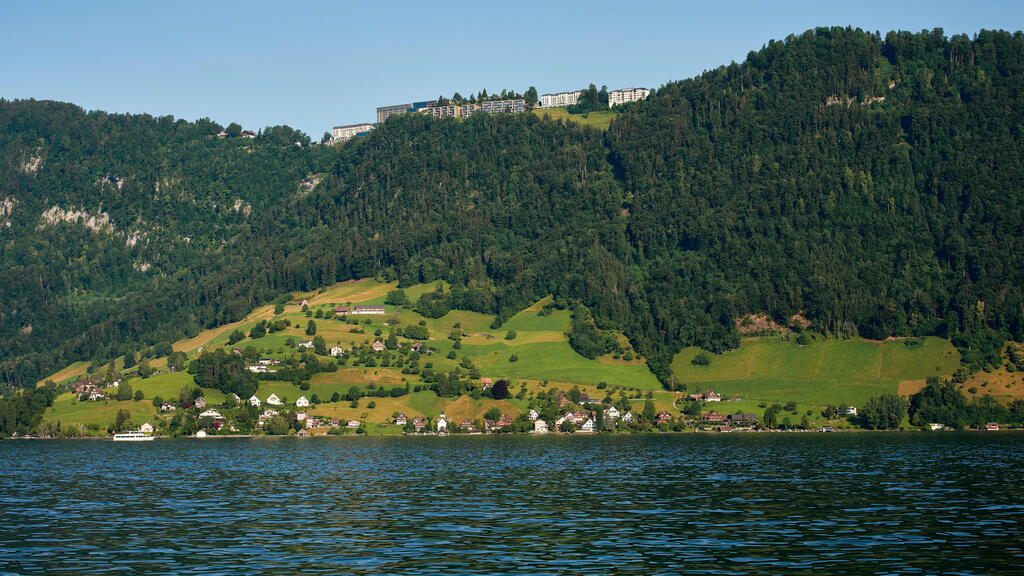
Both the Iranians and the Americans confirmed that they would take part in the talks at the Bürgenstock resort. If direct meetings do indeed take place, they will be the first face-to-face talks between Washington and Tehran since the signing of the 14-point memorandum of understanding. In Tehran, officials accused the Americans and Israel of violating its first clause, which also relates to Lebanon, but they nevertheless arrived for the talks.
Vice President JD Vance gives an update on the talks to Fox News
(Video: Fox News)


Meanwhile, U.S. President Donald Trump claimed that even after the 60-day cease-fire period, Iran would be barred from collecting transit fees in Hormuz, posting on Truth Social: “There will be NO TOLLS in the Hormuz Strait for 60 days during the Cease Fire Period, and there will be NO TOLLS after the 60 day period has expired, unless they are imposed by and for the United States of America, should the deal not be completed, for services rendered as the Guardian Angel to the countries of the Middle East for purposes of both past, present, and future reimbursement of costs..”
Iranian parliament speaker Mohammad Bagher Ghalibaf will lead the Iranian negotiating team, alongside Foreign Minister Abbas Araghchi, whose expected meeting with Trump envoy Steve Witkoff was attacked by the Tasnim news agency, which is close to the Revolutionary Guards. On the American side, Witkoff and Jared Kushner will attend, and U.S. Vice President JD Vance also will fly to Switzerland. Qatar and Pakistan will again serve as mediators, with Pakistan’s delegation headed by Prime Minister Shehbaz Sharif and army chief Asim Munir.
All this will happen after a weekend in which more than 110 people were reported killed in Lebanon in IDF strikes, and after Iran’s dramatic announcement that it was closing the Strait of Hormuz and threatening missile fire at Israel. The U.S. military later denied that the strait had been closed, saying the vital shipping lane remained open and that U.S. forces were monitoring the situation to ensure it stayed that way.
Destruction in southern Lebanon, after IDF attacks on Saturday
Israel’s ambassador to the United States, Yechiel Leiter, said Hezbollah had fired 147 rockets, 20 explosive drones and nine anti-tank missiles at Israeli forces within a single day. One of the combined attacks killed Maglan fighter Master Sgt. Nir Ben Ari and wounded 13 others, a day after the disaster involving the battalion commander’s tank, in which Lt. Col. Dor Ben Simhon, Sgt. Maj. Yoav Klein, Sgt. Maj. Liav Kababia and another fallen soldier whose name has not yet been released were killed.
In Israel, officials believe Iran is trying to deepen the wedge between Israel and the United States and exploit the situation to establish a new equation preventing Israel from operating throughout Lebanon. Even before the official Iranian announcements, Israeli officials assessed that the Iranians would show up for the talks in Switzerland despite their threats and would not launch missiles, because they know that in such a case Israel would respond forcefully.
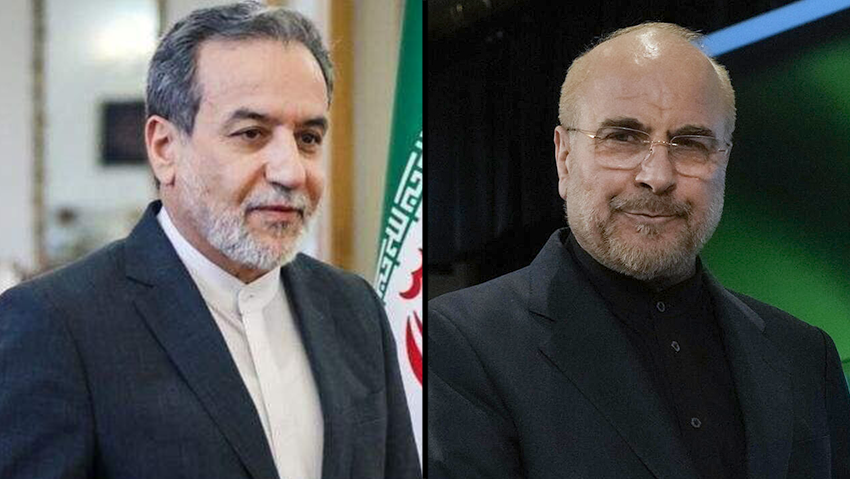
Iranian negotiators: parliament speaker Mohammad Bagher Ghalibaf and Foreign Minister Abbas Araghchi
(Photos: Vahid Salemi/AP)
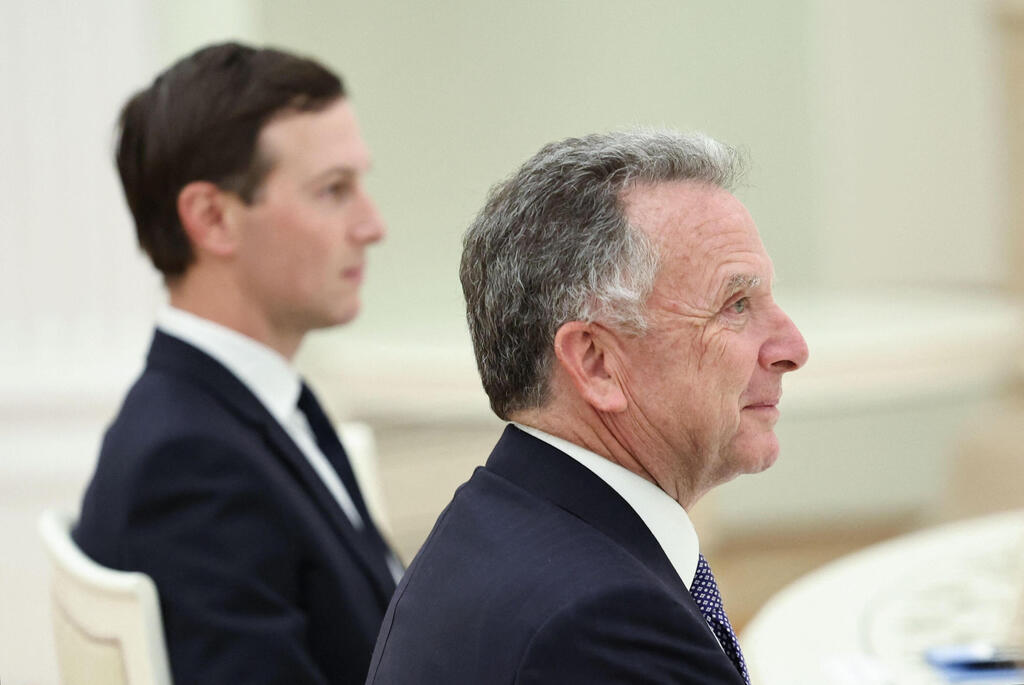
US negotiatiors Steve Witkoff and Jared Kushner
(Photo: Alexander Kazakov / Pool/ AFP)
In addition, Israeli officials claim Iran is encouraging Hezbollah to violate the ceasefire and attack, knowing Israel will respond, thereby trying to make the Americans angry at Israel for supposedly “sabotaging the agreement.” With this move, Iran is also trying to raise the price of the agreement with the Americans. Israel is stressing to the United States that everything the IDF is doing is in response to Hezbollah fire.
The Americans, for their part, want to calm the region so they can move ahead with the agreement, and as part of that chose to hold the talks in Switzerland as planned. The talks had been expected to open Friday, but were postponed then against the backdrop of IDF strikes. Despite the Iranian claims, the United States is not talking with Israel about a withdrawal from Lebanon, and Israel is telling the Americans and everyone else that 'quiet will be met with quiet.” CNN reported on some of the issues expected to be on the agenda in the Bürgenstock talks:
The fighting in Lebanon
Iran has repeatedly insisted that it will not sign any agreement with the United States as long as Israel continues bombing Lebanon, as part of its attempt to “unify the fronts.” Following those strikes, Iran announced the closure of the Strait of Hormuz because of “Israel’s ongoing violations, and the United States’ failure to stop them.”
An Iranian source told CNN that the Lebanon issue is the most important item on the agenda of the negotiating team. According to the source, Sunday's talks are not defined as part of the official negotiations set out in the memorandum of understanding, because parts of it have not been fulfilled, namely ending the war in Lebanon.
The nuclear issue
The future of Iran’s nuclear program will be at the center of the new phase of negotiations. But, according to the Iranians, tomorrow’s discussions are not part of the official talks. Under the initial agreement, Tehran agreed that it “will not acquire or develop nuclear weapons.” The United States and Iran also agreed to decide during a 60-day window, intended for negotiations over the terms of the final agreement, what will be done with Iran’s stockpile of enriched nuclear material. The fate of that enriched uranium was one of the central points of dispute in previous discussions.
The Strait of Hormuz
Maritime traffic in the Strait of Hormuz had only just begun to recover after Iran ended, earlier this week, the de facto closure of the vital waterway. Even before Tehran announced that it intended to close the strait again, negotiators sought to set the conditions that would guarantee the continued opening of one of the most important shipping routes for the global economy.